I have an app idea. Where do I start? Eight steps from an idea to a first release

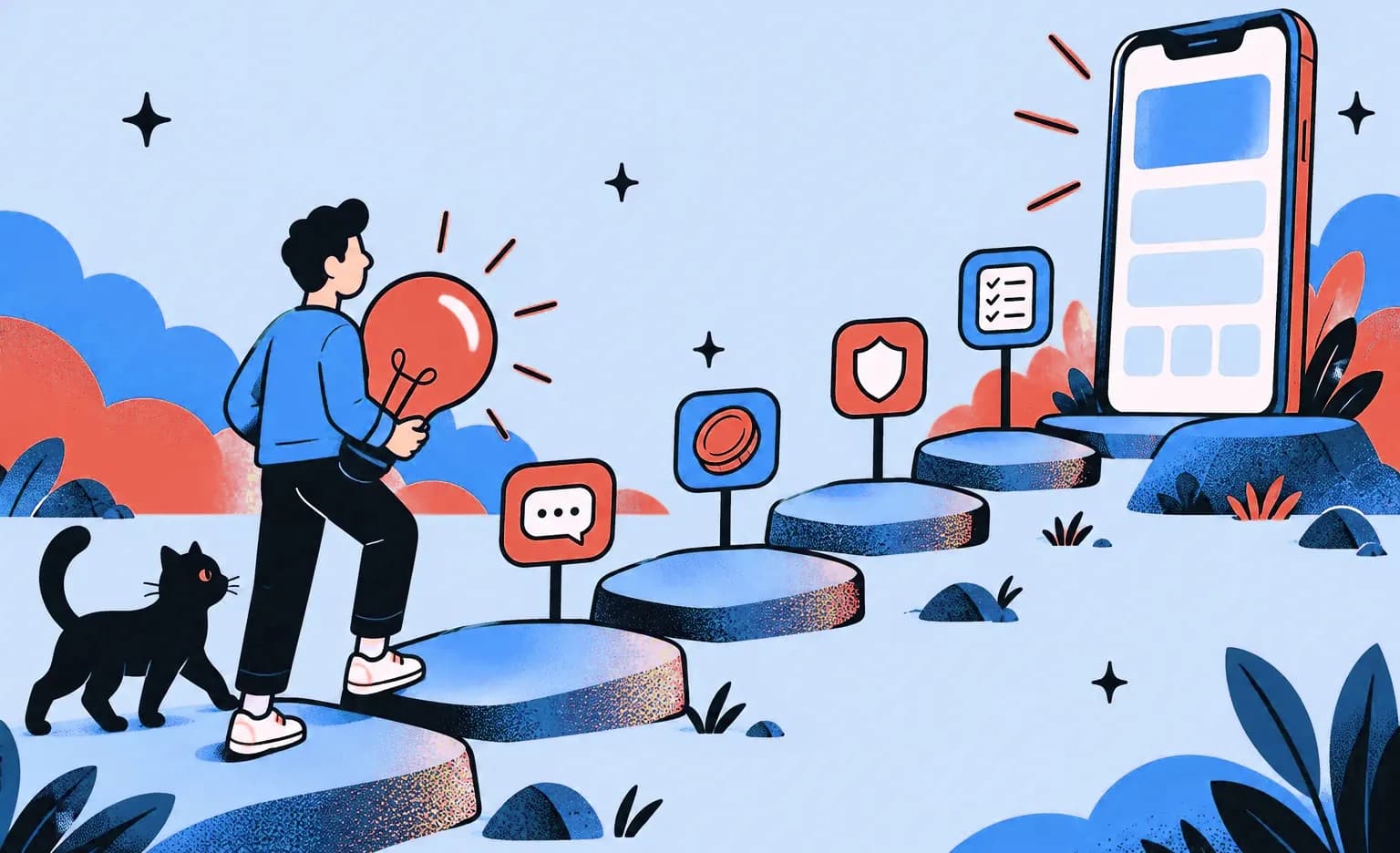
Start with the problem, not the app: write down who has it and how they solve it today, talk to those people, choose how the app will earn money, and only then plan the smallest first release. At Ronas IT, an analysis phase that turns an idea into a written scope, budget, and timeline costs $1,000-$2,000, and a basic minimum viable product (MVP) with only the core features starts at $5,000 for a web app or for one app on iOS and Android, with the design and backend inside that price.
This guide is for founders who have an idea and no development team yet. It goes through the steps in the order we would take them, with what the paid stages cost, when you need each of them, and examples from our client projects.
- Write the problem down in one sentence.
- Check that people want it before you build.
- Decide how the app will make money.
- Protect the idea in the ways that work.
- Cut the idea down to a first release.
- Turn the first release into a plan you can price.
- Choose who will build it.
- Launch, measure, and plan the next version.
1. Write the problem down in one sentence
Describe the idea as a problem: who has it, how often, and what they do about it now. “Parents of young children lose an evening every week planning meals” is a problem. “A meal planning app” is a solution, and a solution is hard to test because everyone imagines a different one.
- The user. One group of people you can find and talk to this month, not “everyone with a phone”.
- The current workaround. What they use today: a spreadsheet, a competitor, a phone call, or nothing. The workaround is what your app replaces.
- The cost of the problem. Time, money, or risk that the user loses without a better tool. If you cannot name it, the problem may be too small to pay for.
If the app has two sides, such as buyers and sellers or students and tutors, write one sentence for each. Every side is a separate group of users with its own reason to come back.
2. Check that people want it before you build
Test demand with the people from your sentence before you spend money on design or code. You are looking for proof that the problem is real and that people will change their habits to solve it, and you can get most of that proof for the price of your own time.
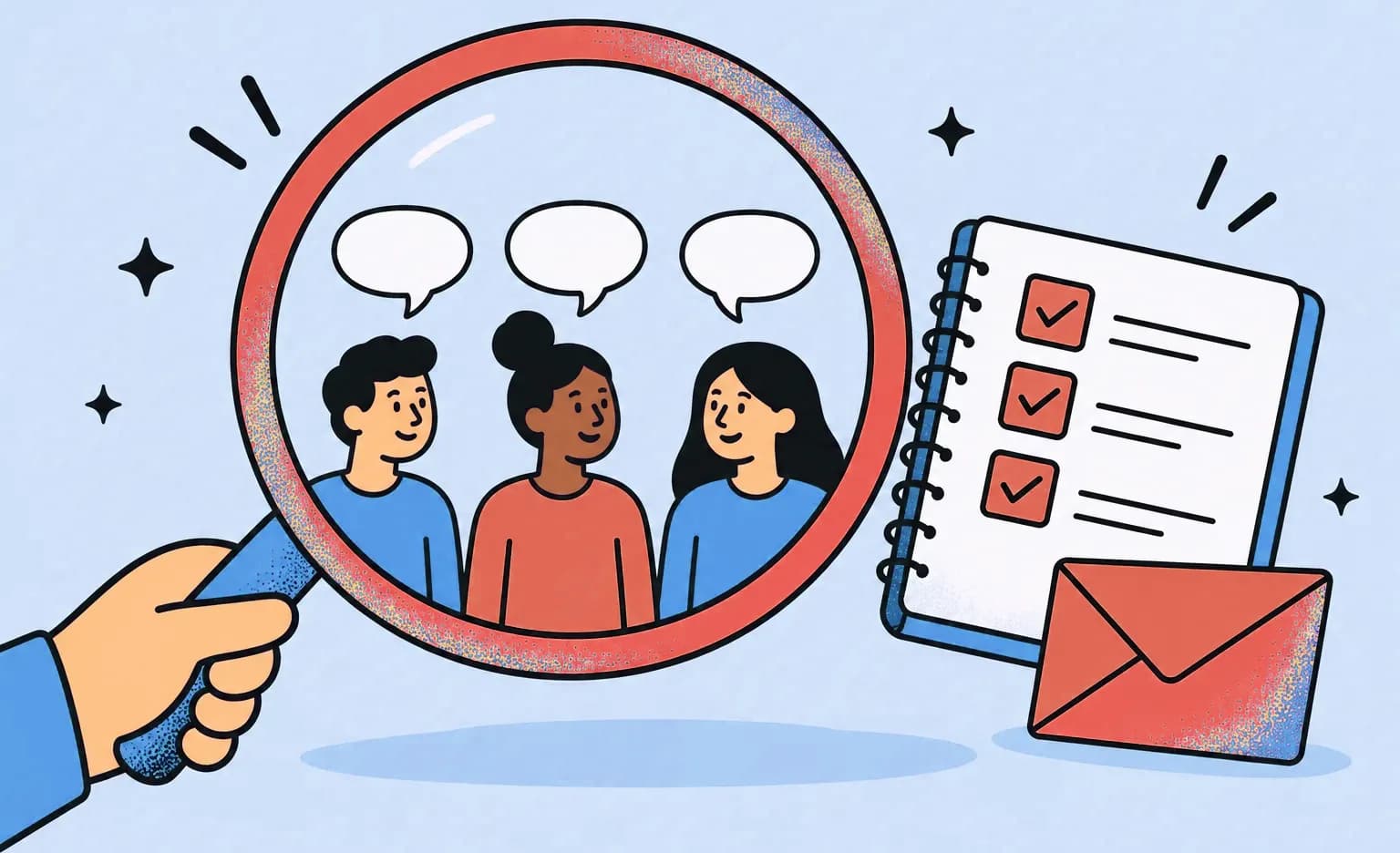
- Interviews about the past. Ask people how they dealt with the problem the last time it happened and what it cost them. Do not ask whether they like your idea: a polite yes about an idea tells you nothing about what people will do.
- A look at competitors. Search the app stores and the web for the problem, not your app name. Competitors with paying users are a good sign: they prove the demand. If nobody solves the problem at all, find out why before you assume you are first.
- A landing page. Describe the app as if it existed and ask for an email, a waitlist spot, or a pre-order. Visitors who leave a real email address are a stronger signal than any survey answer.
- A clickable prototype. Screens linked together without code, tested with a few people from your target group. Our guide to interactive prototypes and user testing covers how to run these tests.
Write down what you learn. The notes from this step become the input for the business model, the scope of the first release, and later the pitch to investors.
3. Decide how the app will make money
Choose the revenue model before the scope, because the model decides which features are necessary. A subscription app needs payments, plans, and a reason to renew; a marketplace needs payouts to sellers and rules for refunds. Start from who pays, which is not always the person who uses the app.
| Revenue model | Who pays | What the first release needs for it |
|---|---|---|
| Subscription | The user, every month or year | Plans, recurring payments, and content or features that give a reason to renew |
| Commission on transactions | One or both sides of a marketplace, through a share of each deal | Payments with payouts to sellers, plus rules for cancellations and refunds |
| One-time purchase or in-app purchases | The user, once or per item | Store billing for digital goods and a free part that shows the value |
| Advertising | Advertisers | An audience large enough to interest advertisers, which takes time to build |
| License for businesses | A company, per team or per user | Accounts for several users, roles, and an admin panel |
A model can also build on an audience you already have. UK Retreats, a service that helped people find unusual holiday stays in the UK, wanted to turn its social media following into paying members. The web app we built for them gave access by subscription, so the first release had a clear job: turn followers into subscribers.
If the app sells digital content or features, the app stores take a share of each purchase made through the store. Apple's App Store Small Business Program reduces the commission on paid apps and in-app purchases to 15%. Developers new to the App Store can qualify, and so can those who made up to $1 million in proceeds in the prior calendar year across all their apps and associated developer accounts. Both groups qualify until their proceeds pass that amount in the current year. Google Play sets its service fees by transaction type and by the region of the user. Check each store's current fee page for your case and include the fee in the price you plan to charge.
4. Protect the idea in the ways that work
You cannot own an idea, so protect what you can own: the name, the code, and the details you share. The U.S. Copyright Office states that copyright does not protect ideas, concepts, systems, or methods of doing something. Copyright can cover your written description of the idea, but not the idea itself.
- Patents. The U.S. Patent and Trademark Office lists abstract ideas among the things that cannot be patented, together with “only an idea or suggestion”. Ask a patent attorney whether a specific technical solution in your app qualifies.
- Trademark. A trademark identifies the source of your goods or services. Check that the app name is free before you build a brand on it.
- Non-disclosure agreements. Ask for one before you share details that are not public, such as a data source or a partner deal.
- The development contract. Make sure it gives your company the rights to the code and the designs, and ask a lawyer to read that clause.
Keeping the idea secret has a price too: every conversation you avoid is feedback you do not get. Share the problem freely and keep the non-public details for people who have signed.
5. Cut the idea down to a first release
The first release is the smallest version that tests your main assumption with real users. List every feature you have in mind, mark the ones without which the user cannot solve the problem from step 1, and move the rest to later versions. The first release is often called an MVP.
“Every feature in the first release is one more thing we have to retest and keep working each time something else in the app changes. A short feature list at launch makes each later change quicker and cheaper.”
Evgeny Leonov, CTO at Ronas IT
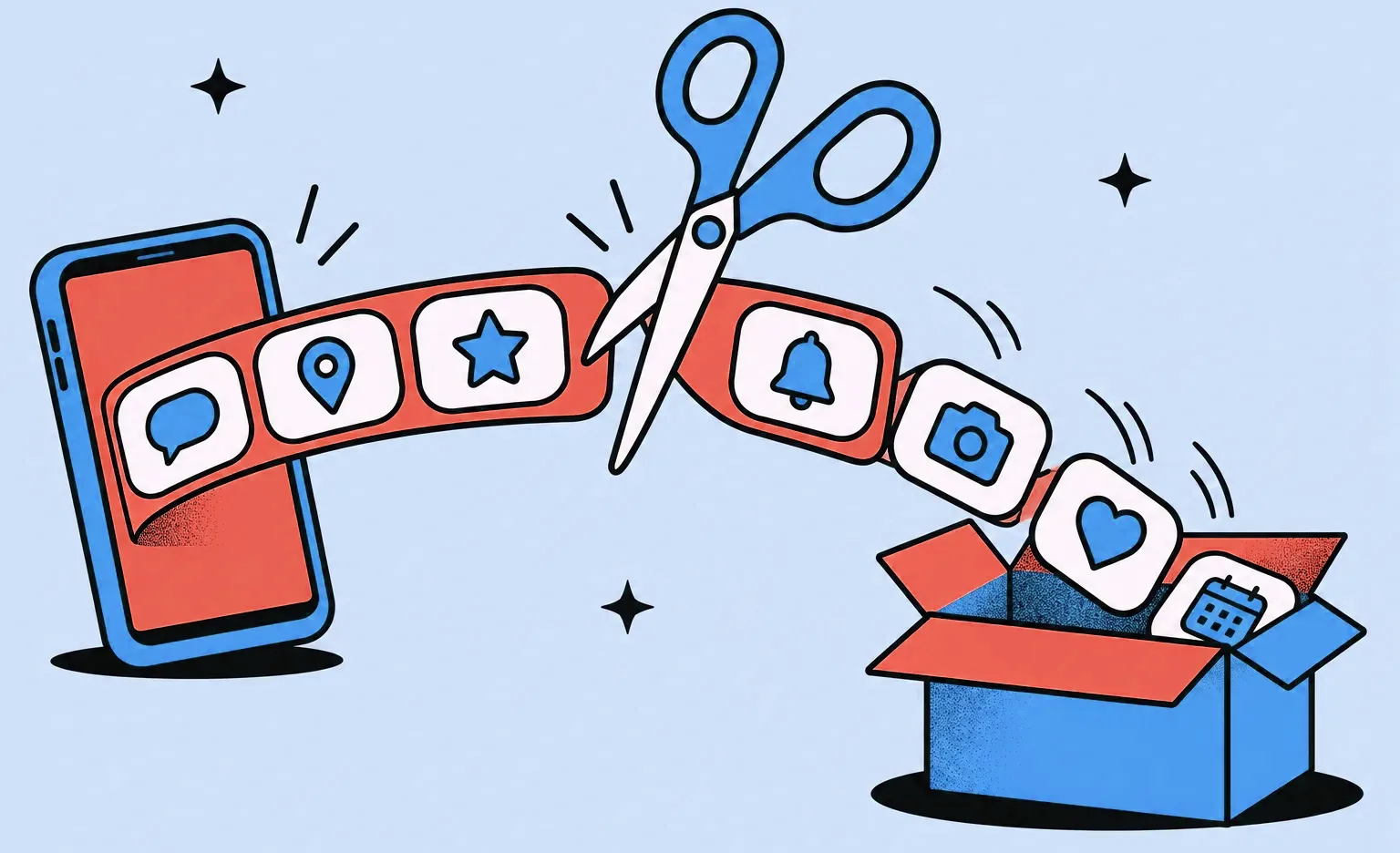
Lainappi, a peer-to-peer rental app from Finland, came to us needing to launch quickly and test the idea on the market without extra costs. We dropped an “I want to rent” section, where users could post requests for items, because it was an unlikely scenario. The plan was an iOS app first and Android later; to reduce costs, the client chose one cross-platform app that reached both audiences at once. The lower budget kept the first release to the core features: item management, owner verification, map search, the chat between owners and renters, and the renting and payment flow.
Three questions shape the first release:
- Which platform? A web app, an iOS app, an Android app, or one cross-platform app for both phones. Start where your users are: an app that people open once a month may work as a web app, and an app used on the go usually needs to be on the phone.
- Which side first? A two-sided product can start with the side that is harder to win, and bring in the other side once the first one is active.
- Is there a technical unknown? If the idea depends on something nobody is sure can work, such as a matching algorithm or a data source, test that part first with a proof of concept. With us, a proof of concept that has to run as working code is built like a basic MVP, from $5,000 and two weeks.
For a detailed walk through scoping, see our step-by-step guide to building an MVP.
6. Turn the first release into a plan you can price
A feature list is not enough for a fixed estimate: two teams will read it differently. Before development, the idea needs user roles, the flow of each role through the app, and the rules for money and edge cases. At Ronas IT, a rough estimate from a description of the idea is free. When the scope is still unclear, our analysis phase, also called a discovery phase, does this work: it is optional, costs $1,000-$2,000, lasts at least one week, and produces a scope document that includes the budget and the timeline.
A tutoring agency owner brought us a Canva prototype of the dashboard for her platform. It showed the idea, but design and development could not start from it. In the discovery phase for her tutoring website, our business analyst:
- defined three user roles, students, tutors, and administrators, with a journey map for each;
- wrote user stories for every role and grouped the features into versions;
- wrote the rules for holding and charging money, refunds, and lesson cancellations;
- suggested web interfaces for all three roles, with a student interface that works on phones, instead of a separate mobile app.
We then estimated the cost and timeline from the features grouped into versions. In a discovery phase, moving a feature from one version to another costs an edit to a document instead of a rewrite of code.
To get the most from the first call with any team, bring:
- the one-sentence problem from step 1 and your notes from step 2;
- the revenue model and who pays;
- your feature list, with the must-haves marked;
- apps you like or dislike, and what exactly you like about them;
- your deadline, if there is one, and the budget range you can commit.
An estimate rests on assumptions, so ask the team to list them. Ours come with a page that names what they assume: the technologies we suggest, the team size and roles we plan for, and the external services the product relies on. Our article on how development estimates are made explains what else to check.
7. Choose who will build it
Pick the builder by what the first release needs and by how much of the management you can take on.
| Option | When it fits | What stays with you |
|---|---|---|
| No-code app builder | Testing demand with a simple flow and standard screens | Building it yourself and moving off the platform when you outgrow it |
| AI app builder | A demo or a first version you can show early users within days | Security, access to user data, payments, and deployment before real users arrive |
| Freelancers | A landing page, a prototype, or one well-defined piece of work | Writing the tasks, checking the work, and connecting the pieces |
| Development company | A first release that needs design, development, testing, and management at once | Product decisions, accepting each result, and technical review |
| Your own team | A technical co-founder who has time to hire and lead engineers | Hiring, salaries, and management before the first release exists |
Tools such as Lovable, Bolt, and Replit generate an app from a description in plain words, and Rork does the same for iOS and Android. They are a fast way to put the idea in front of people.
The gaps show up later, when strangers sign up and pay: who can see which data, how payments are confirmed, and what happens when the app goes down. If your first version already runs in one of these tools and is starting to break, our AI-built app rescue reviews its code and security and fixes those parts, from $2,500 and 2 weeks.
When nobody on the founding team has a technical background, hire a reviewer on your side as well: a part-time advisor or a CTO as a service from outside the company that builds the product, even if that company is us.
With a development company, ask how often you will see working results. On our projects a sprint usually runs one to three weeks, and at its end you get something to try yourself, such as a new build on the dev server, screens ready for testing, or new designs. Also ask who is responsible for code an AI agent writes, and whether the speed agents bring shows up in the price. On our projects, an engineer sets the agents' tasks and accepts each result, and that engineer answers for it. Our guide to choosing a software development company covers these and other questions about how a team uses AI.
8. Launch, measure, and plan the next version
The launch starts the real test of the idea. Before release, decide what success looks like in numbers you can track: how many people finish the main task, how many come back, and how many pay. Then read those numbers and the feedback, and let them decide the next version.
- Measure the main flow. Add analytics to every step of that flow, so you can see where people stop.
- Talk to the first users. The people who signed up in step 2 are your first testers, and they are the easiest to reach for feedback.
- Cut as well as add. A feature nobody uses after launch is a candidate for removal.
- Plan the money for version two. Keep part of the budget for the changes the first users ask for, instead of spending all of it before launch.
“The flow a founder draws before launch is a guess, and so is ours. When the first users take a different path, the plan has to follow them, even if that means redoing a screen we have just built.”
Alexander Storozhevsky, Lead Developer at Ronas IT
What it costs to go from an idea to launch
Here is what the paid stages cost at Ronas IT. The shortest paid path from an idea to a first release with our MVP development service is a basic MVP from $5,000. A basic MVP holds a small number of simple features on one platform. A marketplace that serves both sides from the start, such as a tutoring marketplace that matches students with tutors, is complex product development and begins at $20,000. If the scope of the first release is not written down yet, the analysis phase described in step 6 can write it, from $1,000; you can skip it, and together with a basic MVP it comes to about $6,000. A proof of concept is a separate build, from $5,000 like a basic MVP, and you need it only when the core of the idea is technically unproven.
| Stage | When you need it | Starting price at Ronas IT | Timeline |
|---|---|---|---|
| Analysis phase | Optional, before development, when the idea has no written scope, budget, and timeline yet | $1,000-$2,000 | At least 1 week |
| Proof of concept | Only if the core of the idea is technically unproven | From $5,000, as a basic MVP | At least 2 weeks |
| Basic MVP | A small number of simple features and the main user flows, built by a team instead of on a no-code builder, to test the market on one platform | From $5,000 | At least 2 weeks |
| Extended MVP | A first release that needs more features, user roles, and integrations | From $10,000 | At least 5 weeks |
| Second platform | The same MVP on the web and in an app for iOS and Android at launch | From 50% of the first | Set in the estimate |
If you already know the product is a phone app for both iOS and Android, a cross-platform app costs the same as a web app, from $5,000 for a basic MVP, and its one codebase serves both stores. A travel or booking product with complex logic starts at $20,000, and only products under financial or medical regulation, such as lending or telemedicine under HIPAA, start at $30,000.
Some costs continue after launch. Maintenance of one app, its backend included, starts at $1,000 per month and covers monitoring, bug fixes, and platform updates; new features are priced separately. When the product has a web app and mobile apps, support for the whole system starts at $2,000 per month. Hosting is paid to the cloud provider. Publishing also needs store accounts: the Apple Developer Program is $99 per membership year, and Google Play charges a $25 one-time registration fee.
What to do next
Take the steps in order. Before you pay anyone for design or code:
- Write the problem in one sentence: the user, the problem, and today's workaround.
- Talk to people who have the problem and put up a landing page.
- Prepare the list from step 6 for the first call with any team.
An app idea turns into a business when every step above has answered a question with evidence instead of hope.


Frequently Asked Questions (FAQs)
I have an app idea. What is the first thing I should do?
How do I know if my app idea is good?
Can you patent an app idea?
How do I protect my app idea before I share it?
Can I sell an app idea?
How much does it cost to turn an app idea into an app?
How long does it take to go from an app idea to launch?
Do I need a technical co-founder to build an app?
How do I pitch an app idea to get funding?
Bring evidence along with the idea: what you learned from users, the revenue model, and a first release with a price. Some founders build that first release to raise money. When we worked with the founders of 365daysbooking.com, a booking platform for hotels and accommodation providers, they began with an MVP of the control panel just for these providers, to secure investment. They planned to add more user roles later.
Related posts





Related Services
React Native App Development Services
Save time and costs with Ronas IT's React Native app development, allowing cross-platform capabilities for iOS and Android. Our team has built 20+ React Native apps since 2020, ensuring rapid development, flexible maintenance, and cost-effective solutions.
MVP Development Services
Need to launch your startup quickly? Ronas IT offers urgent MVP development services, allowing you to get a fully-functional app in 4 to 12 weeks, depending on scope. Ideal for testing business ideas, presenting to investors, or entering the market swiftly. Benefit from our extensive experience and accelerated development process.
Custom Web App Development Services
Build secure, scalable web applications with Ronas IT’s custom web app development services. Our team covers the full cycle — from concept and UI/UX design to development, testing, and ongoing support — using leading tech like React and Laravel. With 200+ custom apps delivered across various industries, we ensure intuitive interfaces, smooth integration, and solutions tailored to your business goals.