Buke
We designed and developed Buke, an anonymous dating product, first as a secure MVP and then as a full product with iOS, Android and web apps and an admin panel. Three months after launch, it had 4,000 active users.
We build the first version of your product as a web, cross-platform or native app, with design, project management and testing included. With AI agents, our engineers get it to your users sooner, and nothing goes into the product without their review. A basic MVP for one platform starts at $5,000 and takes at least 2 weeks.
Build an MVP when you need real users to try a working product before you pay for the full version. A proof of concept or a prototype answers an earlier question. We price a proof of concept that answers a technical question as an analysis phase, at $1,000-$2,000, and a prototype as a design concept and UI kit, from $1,000. Read what an MVP is in software development or the full PoC, prototype and MVP comparison.
| Criteria | Proof of concept | Prototype | MVP | Full product |
|---|---|---|---|---|
| Question it answers | Proof of conceptCan this technology work? | PrototypeHow will users move through it? | MVPWill real users use it? | Full productHow does the product grow? |
| Working code | Proof of conceptPartly: one feature or check | PrototypeNo: clickable mockups | MVPYes: core features end to end | Full productYes: the full feature set |
| Who tries it | Proof of conceptYour team | PrototypeTest users on mockups | MVPReal users in a public launch | Full productYour whole market |
| Choose it when | Proof of conceptOne technical risk blocks the plan | PrototypeYou need to show the flow first | MVPYou need demand data from users | Full productDemand is already proven |
| Our price | Proof of concept$1,000-$2,000 for a technical check, from $5,000 with working code | PrototypeFrom $1,000 for a concept and UI kit | MVPFrom $5,000 for a basic MVP | Full productFrom $20,000 for a complex product |
Every MVP price includes design, project management and testing, and the backend, integrations and admin panel when your product needs them.
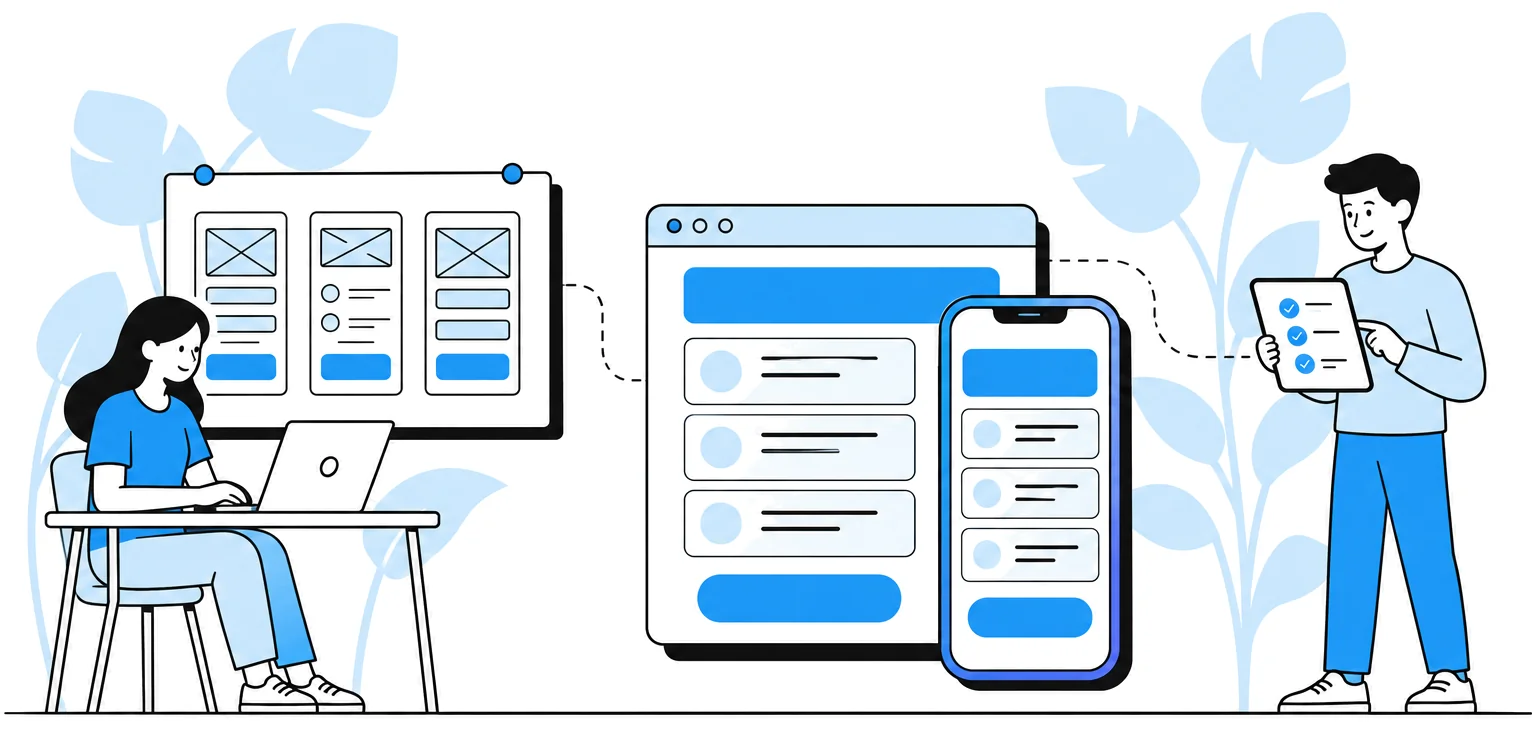
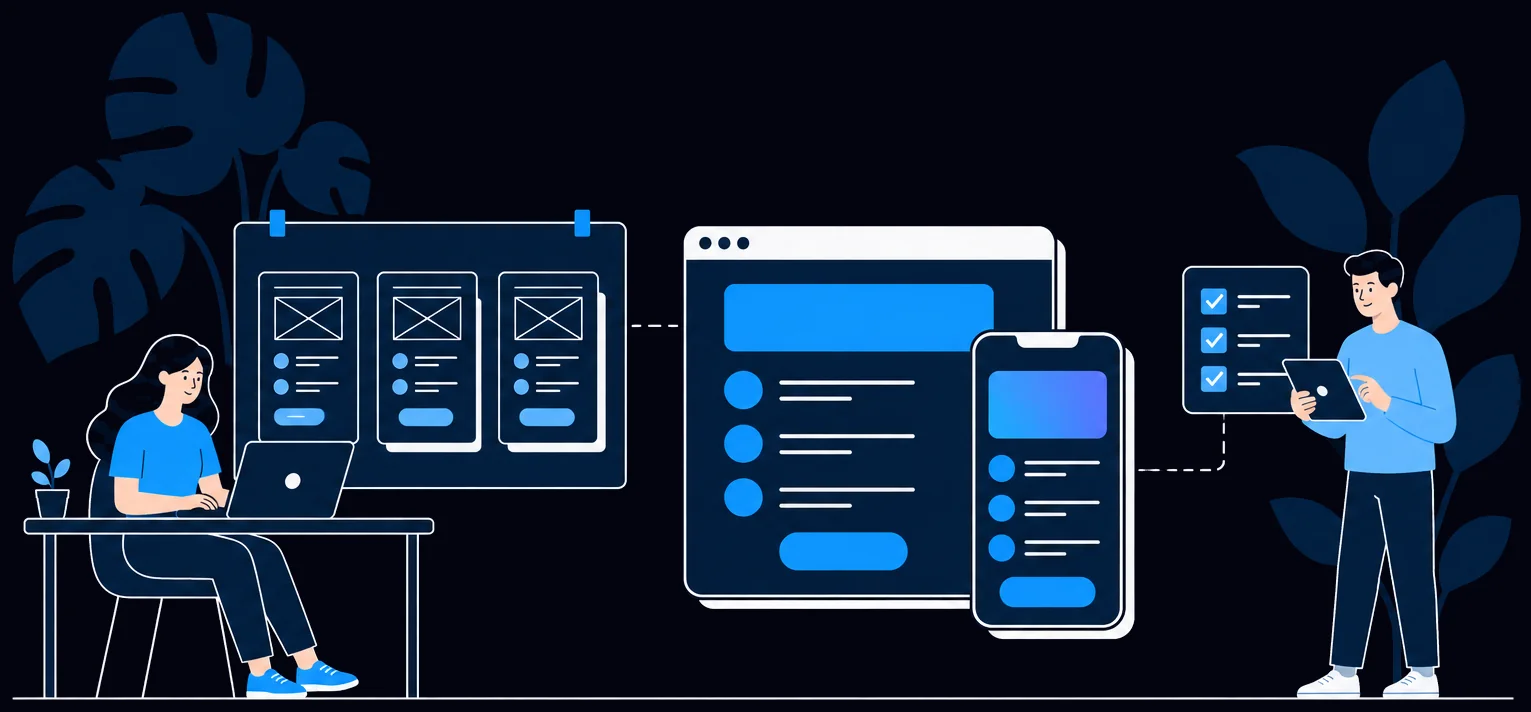
We build a web app in React and Next.js, a native app in Swift or Kotlin, or a cross-platform app in React Native or Flutter. React Native is our mobile default: one app and one price cover the App Store and Google Play.
We build the backend on Laravel, or Python and Django, with PostgreSQL or MongoDB, and connect sign-in, Stripe or in-app payments, chat and push notifications. In the admin panel, your team manages content and users without a developer.
When your MVP needs analytics, we build tracking with Mixpanel, Firebase Analytics or PostHog into the main flow, so from launch day you see how many users sign up, return and convert. Sentry shows our engineers errors from the first build.
Our in-house designers map the user flows, build a UI kit and design every screen following Apple and Google guidelines. You keep the Figma file, the UI kit and a DESIGN.md file, so whoever builds screens later can follow the same style.
We run automated unit, integration and end-to-end tests on every commit. Then the developer, the team lead and the project manager review each feature, and you try it on a staging build before your users get it.
We set up web environments and share TestFlight and Google Play test builds before the public release. Every app we have shipped has cleared review in both stores. Over-the-air updates let us ship eligible React Native fixes without a new store review.
MVP prices cover one platform, such as a web or cross-platform app. An optional 1-week analysis phase costs $1,000-$2,000 and ends with a scoped estimate.
The first platform costs the same whichever you choose, so you pick it by where your users are. Each extra platform costs from 50% of the first one, because it reuses the backend, admin panel and design system. For example, a web MVP plus a cross-platform app starts at $7,500.
Your price depends on the scope we estimate. When you compare quotes, check that each includes design, project management and testing, as ours does, and covers the same number of platforms. See our MVP development prices
Our engineers and designers set the AI agents' tasks at each step below and check the output before you see it, from analysis to release.
1 week, optional.
Our engineers run your brief or prototype through AI agents to find gaps in the requirements and weigh architecture options. They propose one and agree the scope and estimate with you. You keep the user stories and estimate, even if another team builds it.
Starts first and runs ahead of the code.
Our designers speed up research and clickable prototypes with AI agents. You can test the prototype with your users while it is still cheap to change. Developers start on each screen you approve while the designers move on to the next ones.
1-3 weeks each.
Our engineers build each sprint's features with AI agents. They review every pull request. Autotests and QA agents run on each commit. Each sprint ends with a new build for you to try or new designs to review.
At the end of the MVP timeline.
Our engineers configure CI/CD with AI agents and approve every production deployment. They submit the app for store review, launch the web version and run smoke tests after each release to check that the main flows work.
From launch day.
With analytics in the MVP, you see whether users sign up, return and finish the main flow. On a support plan, our engineers go through Sentry errors and logs with AI agents, suggest which fixes come first and agree the order with you.
Examples of our MVP work for founders, from a rental marketplace to an anime community.
We designed and developed Buke, an anonymous dating product, first as a secure MVP and then as a full product with iOS, Android and web apps and an admin panel. Three months after launch, it had 4,000 active users.
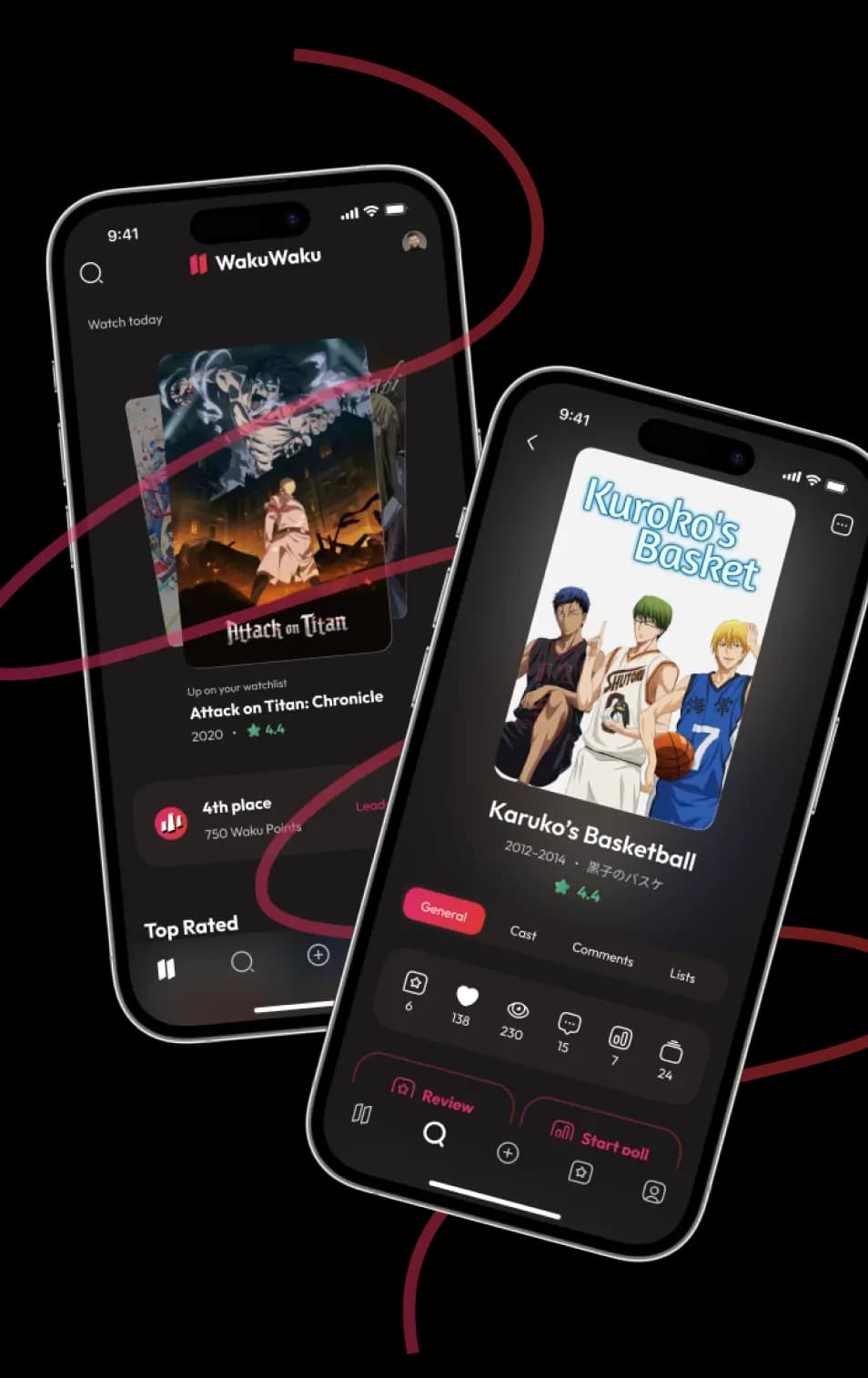
We designed and developed the first version of Waku Waku, where anime fans rate and discuss films and series and earn points for their reviews. The release covered a React Native mobile app and a web app.
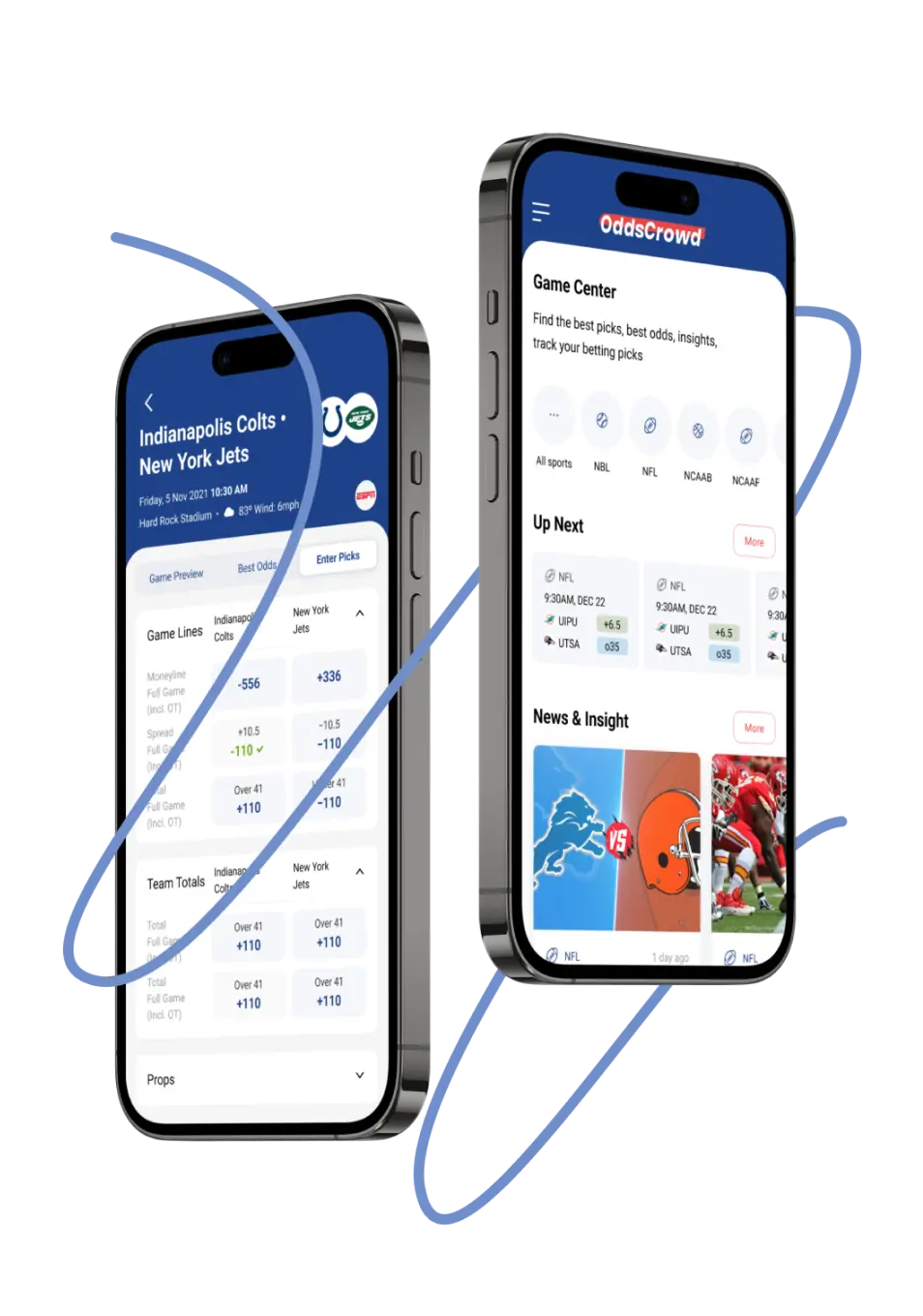
We designed and developed a React Native app with Expo for a community of sports bettors, who follow other players, enter picks and compare odds. Design to first release took 10 weeks, in time for the start of the Super Bowl. Monthly users grew tenfold soon after the release.
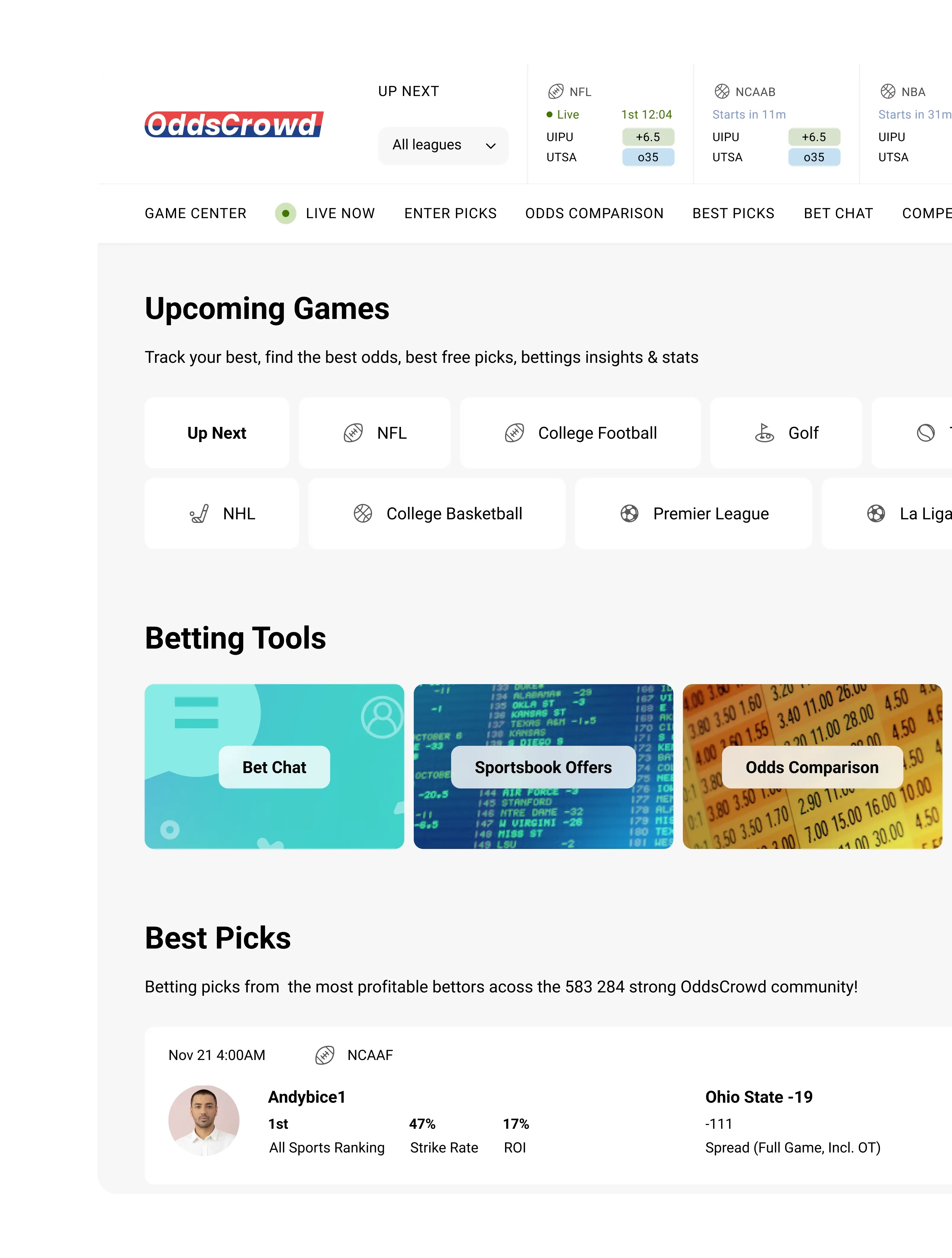
We designed and developed the OddsCrowd web app on Laravel and Vue, with forecasts, leaderboards, odds comparison and an admin panel. The first version was ready in 14 weeks.
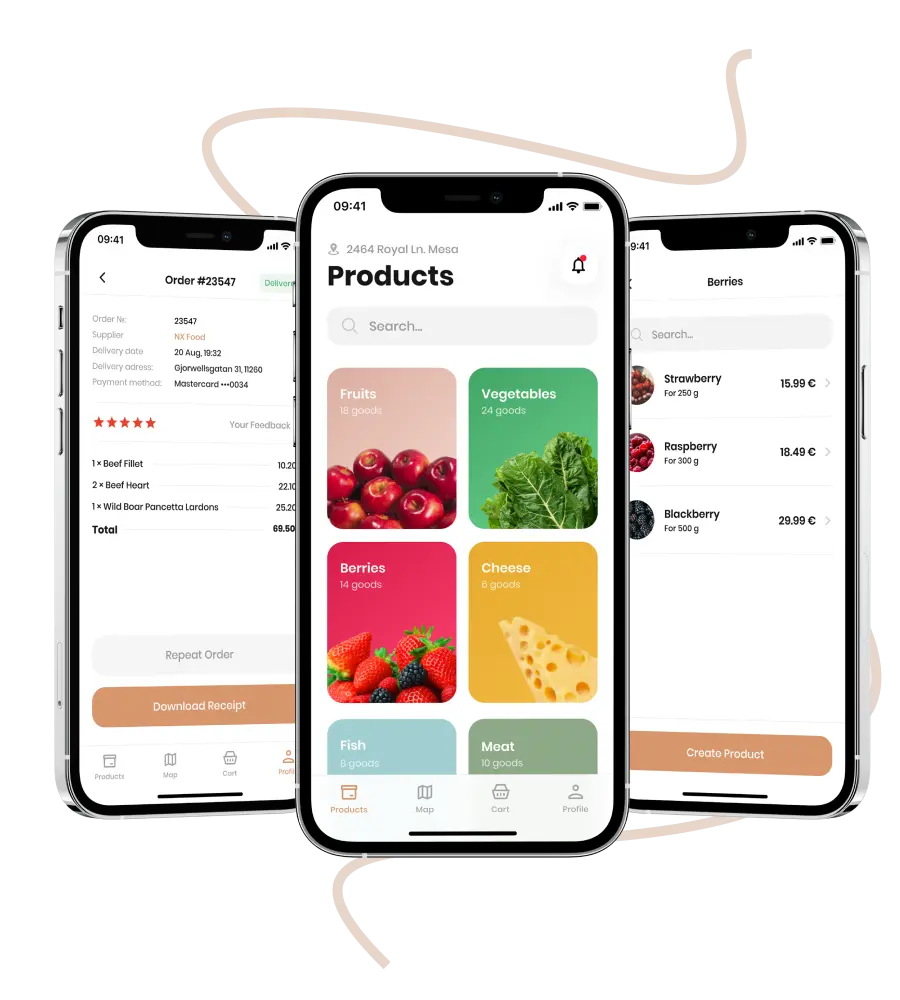
We designed and developed the first version of Noah, a marketplace that connects local food producers and consumers in Sweden. Four interfaces in 4 months: native iOS and Android apps for consumers, an app for producers and a web admin panel.
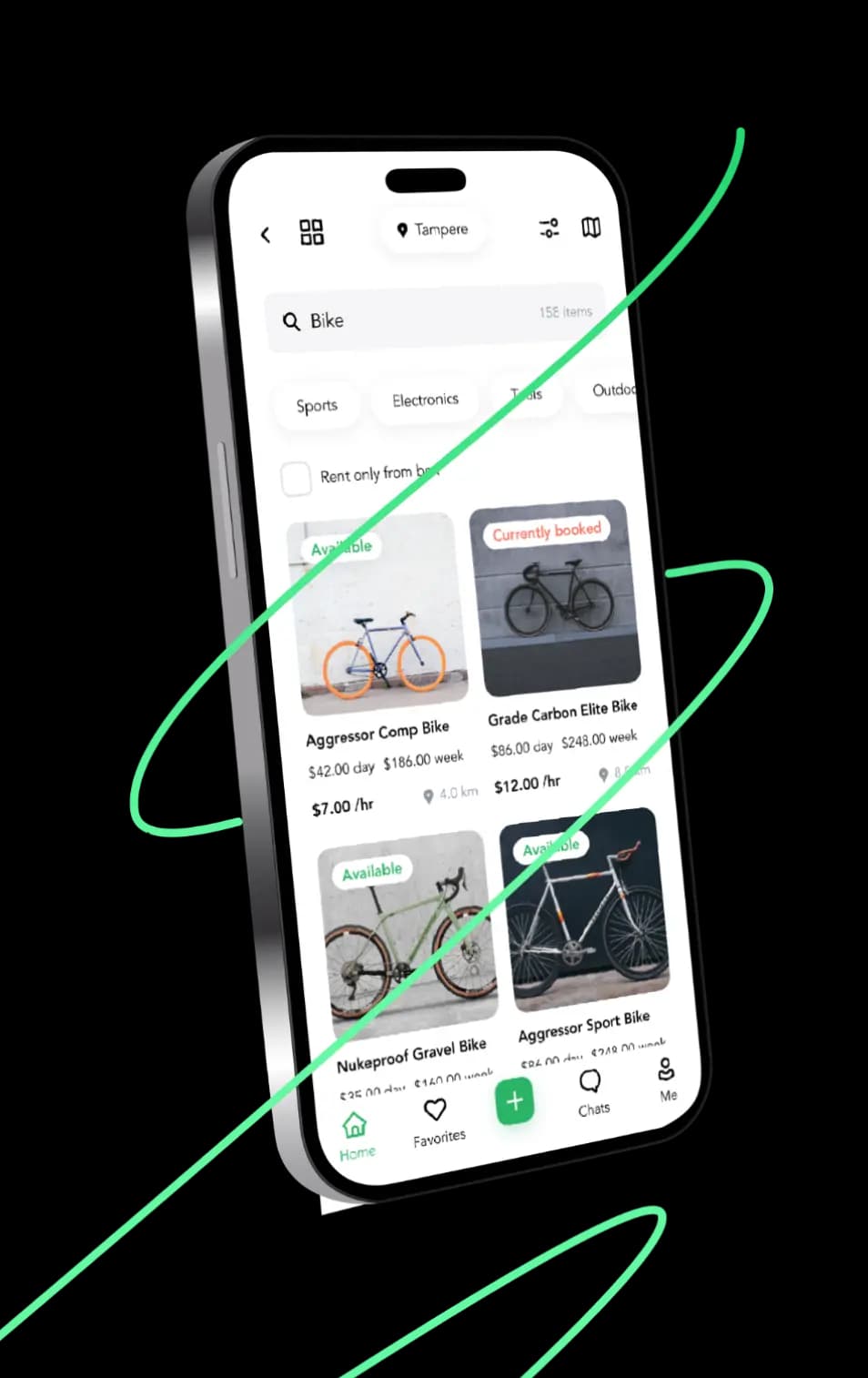
We designed and developed Lainappi, a rental marketplace MVP where people rent out and borrow items. We rebuilt the client's design prototype and shipped one React Native app for iOS and Android with owner verification through Stripe Connect, renting in chat and map search.

We designed and developed the MVP of a reading service under an NDA: Android, iOS and web apps for readers and an admin panel for books and users. Readers get bookmarks, notes, highlights and reading statistics. After the release, the client stayed with us for maintenance.

We designed and developed the MVP of a web control panel for accommodation providers, one of the project's four user roles. We built it to help the founders secure investment. It runs on Angular and Django and manages bookings, properties, staff and payments.
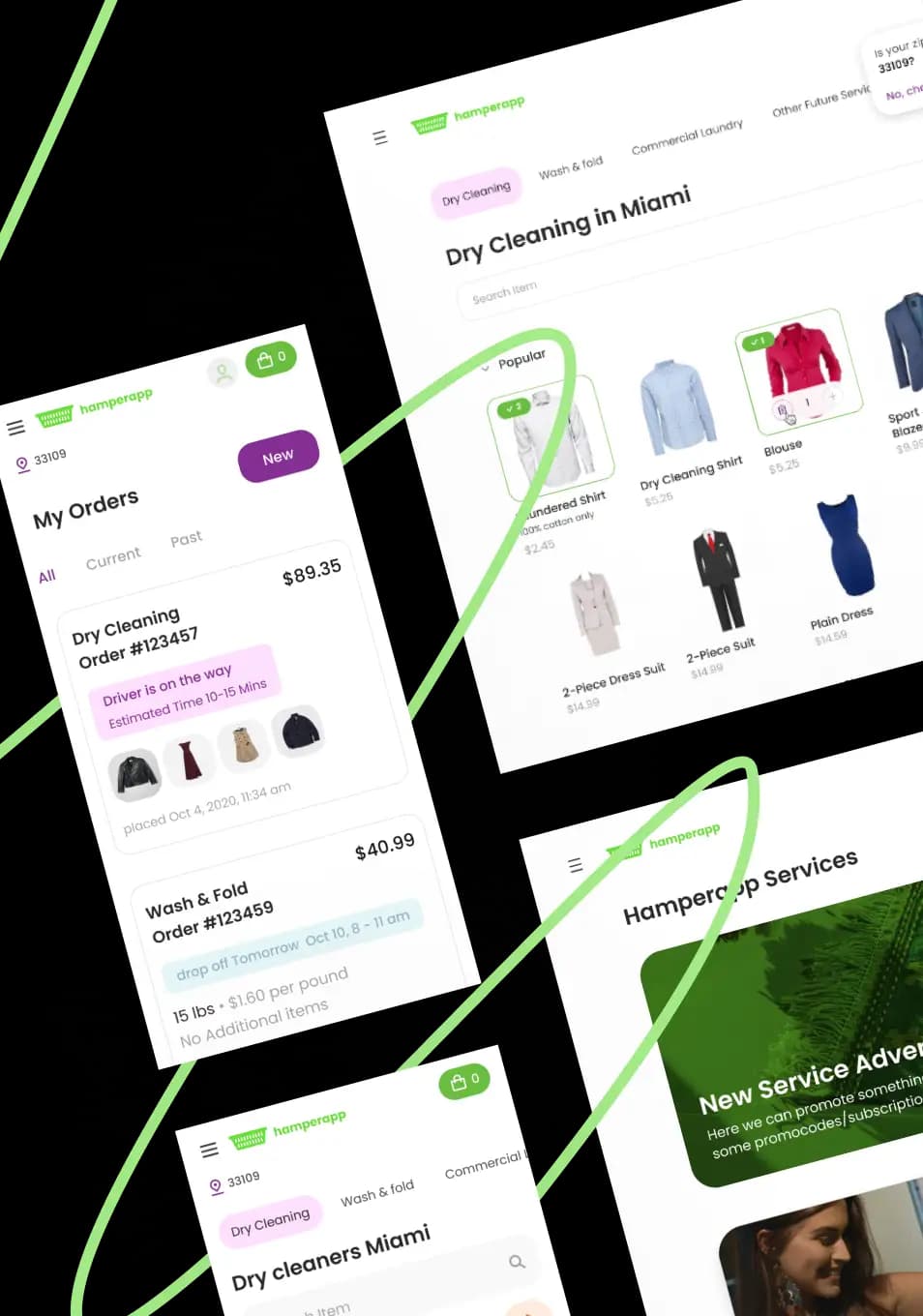
We designed and developed the first version of Hamperapp, a service that connects people and businesses with local laundries: all four of its interfaces, including native iOS and Android apps. We continued scaling the product at the client's request.
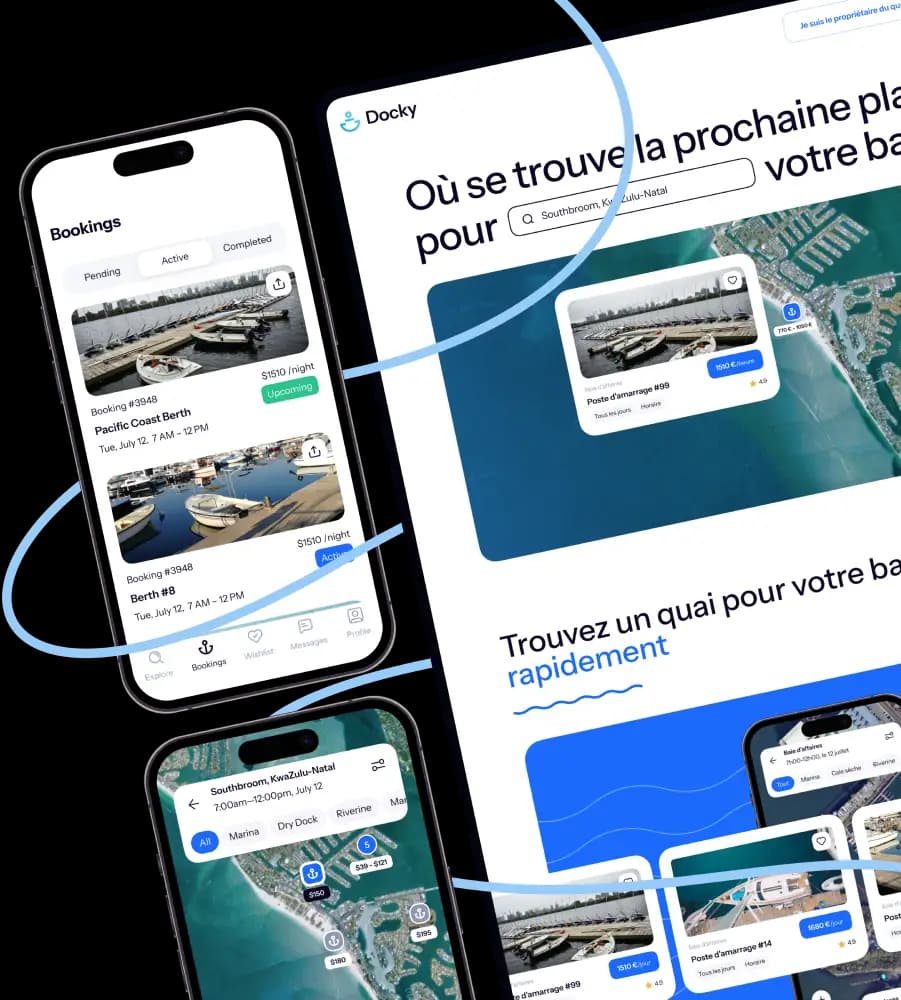
We designed and developed Docky, a marketplace where yacht owners in Malta book berths: a web app for berth owners and a mobile app for yacht owners, with KYC, payments and bookings. A working MVP was ready in the first three months.
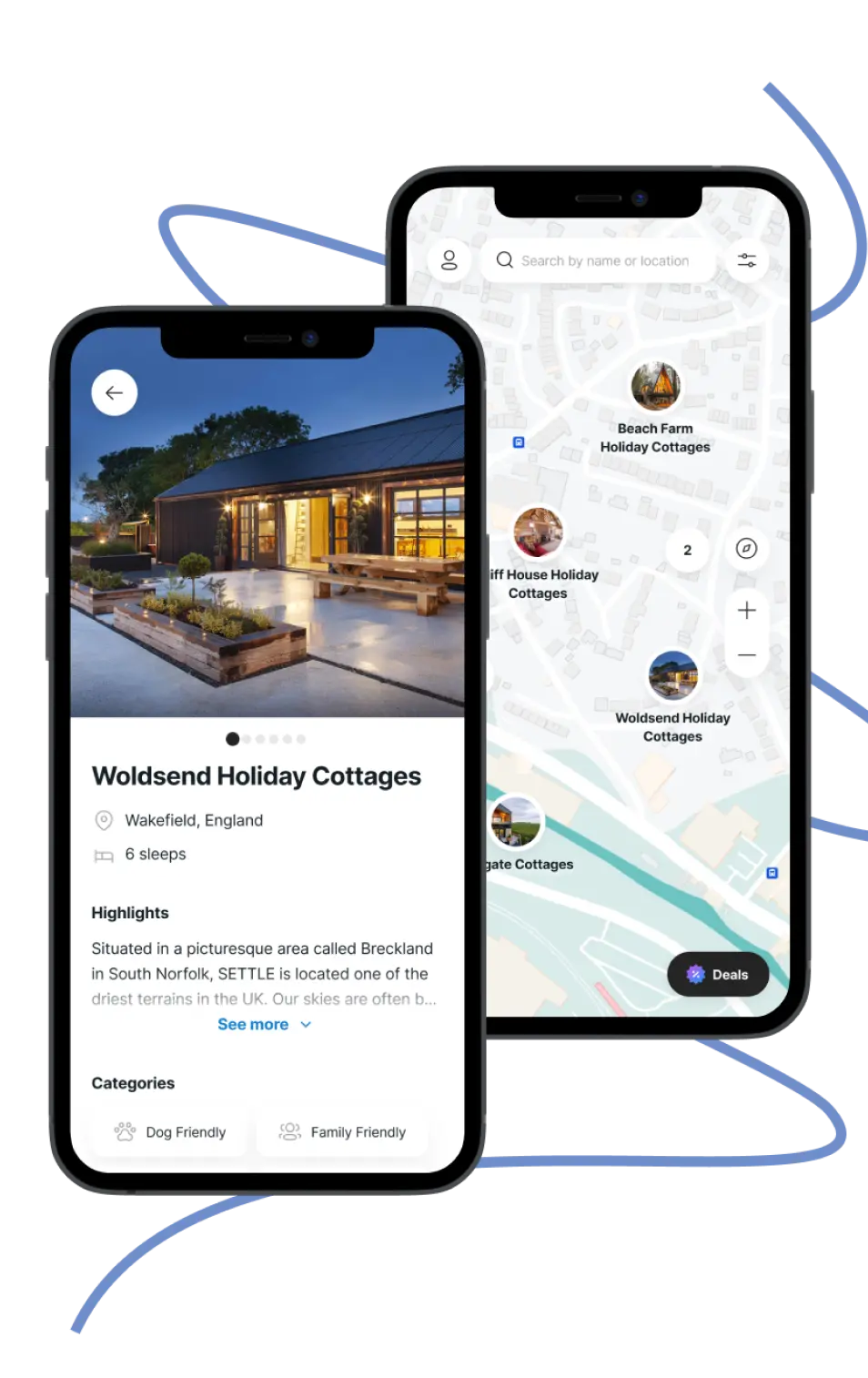
We designed and developed the MVP of UKR Club, UK Retreats' subscription service for holiday stays in the UK. To fit the budget, we suggested one mobile-first web app instead of a native app and a website. The MVP was ready within 3 months.

We designed and developed the first version of a web platform and an admin panel under an NDA: patients upload lab test results and get health reports and recommendations from healthcare professionals. After the first release, the client decided to work with other healthcare businesses as well.
The team that built your MVP can keep developing it, so no new team has to learn your code first.
Two developers, usually frontend and backend, and a part-time project manager add features to your product every month. The team can also take over an existing app you bring.
$8,000 per month
We monitor the product, fix bugs and update it when platforms and dependencies change. New features are quoted separately.
$300 per month for a website
$1,000 per month for an app
$2,000 per month for the whole system
We run hosting, environments, CI/CD and monitoring in your own cloud account on GCP or AWS. The infrastructure lives as code in its own repository, so another team can take it over without a migration.
$200 per month for one project
If you have no CTO yet, ours helps you choose the technology, plan the architecture and roadmap, prioritise features and set up code review and QA. Read more about our CTO services for startups.
After launch, we add each next release as new modules, without rebuilding the MVP. A product with complex business logic or real-time features under high load is priced as a complex product: from $20,000 and at least 8 weeks.
For each product type: what the first release covers and what changes the scope.
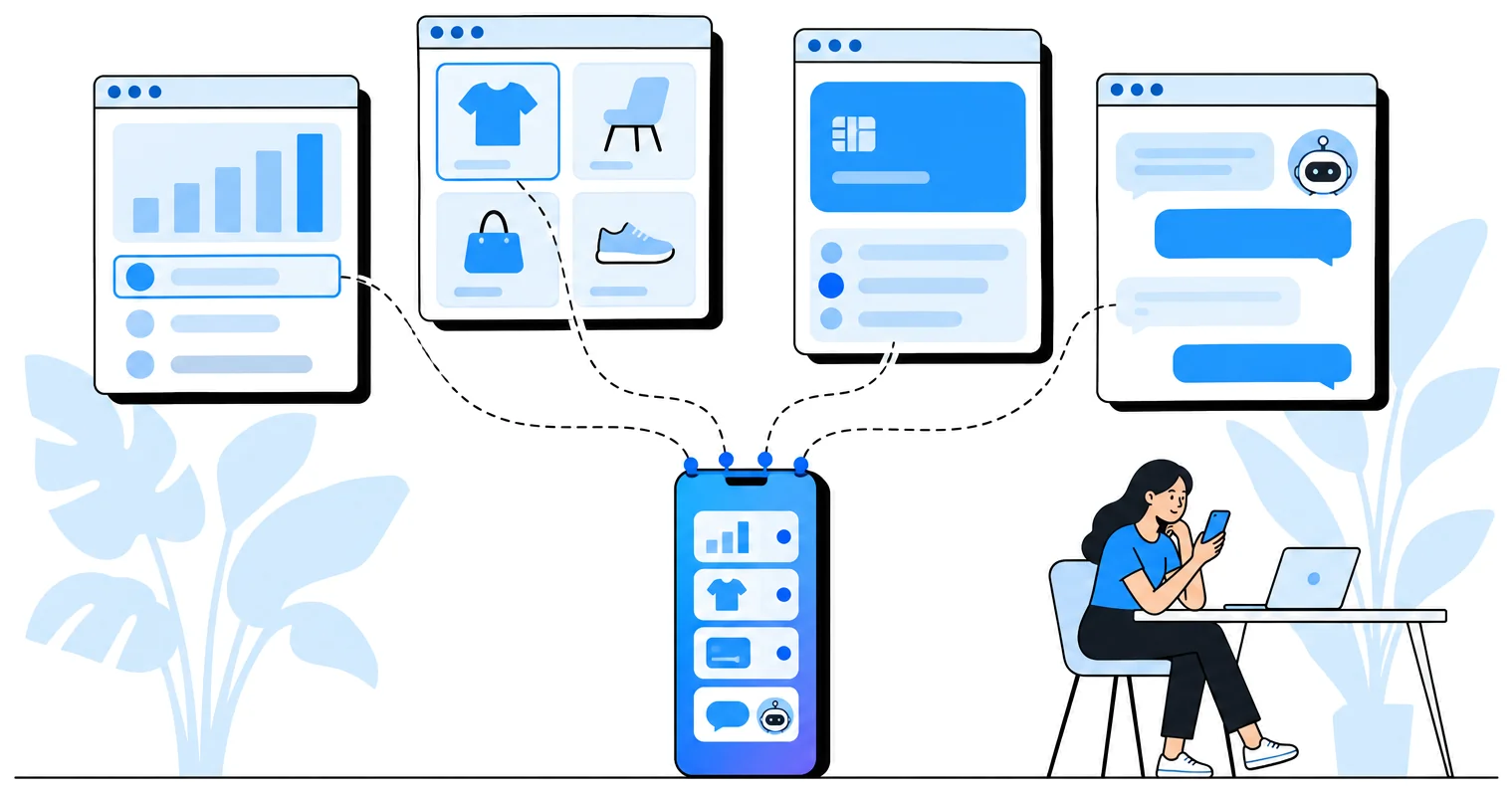
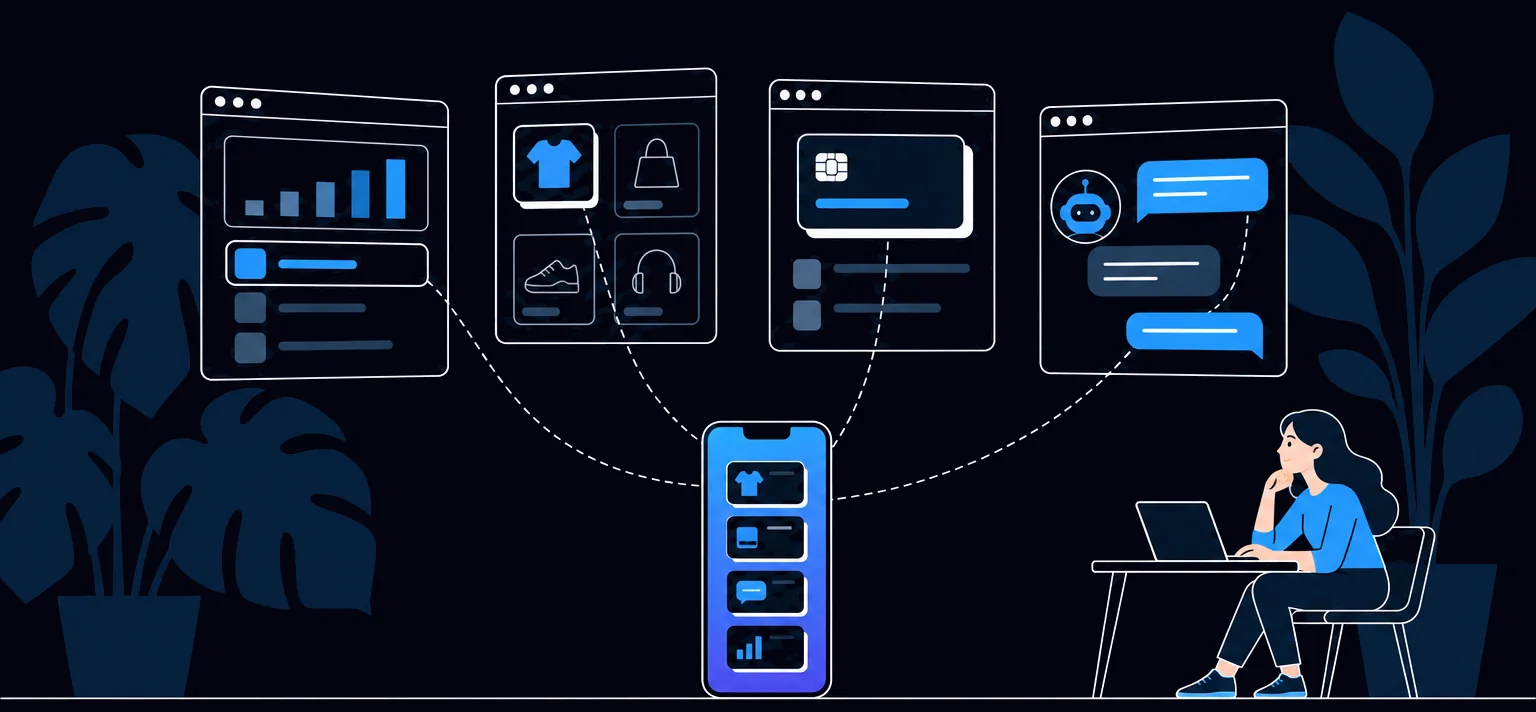
A first SaaS release covers sign-up, the core workflow and billing. Tenants, plan tiers and SSO usually make it a complex product, from $20,000.
A narrow first release fits an MVP: Lainappi, a rental marketplace, launched with chat-based renting. A full two-sided marketplace is a complex product, from $20,000. Our guide on building a custom marketplace covers the steps, payments and cost.
Trackers, non-custodial crypto wallets and Stripe payments fit an MVP. Regulated banking, lending and KYC products need our fintech development service.
AI features can be part of a basic MVP. When the logic can be written as fixed rules, we suggest ordinary code instead of AI: it is cheaper and gives the same answer every time.
We build community MVPs with profiles, ratings, discussions and points, so people who share an interest have a place to meet and take part. When the MVP needs in-app chat, we build it on our own Laravel chat module.
We also build MVPs for other products, with the same team and process described above.


Roman Surikov founded Ronas IT after working as a software developer, and he leads the company as CEO. On a call with him, you can discuss both the business side of your product and its architecture.
When a founder brings us a long feature list, the useful conversation is about the few things a user cannot do without, and the things someone on your team can do by hand while the user base is small.
Founders and project managers of products we built describe working with us, in their own words on Clutch.
Numbers
Not always. If the risk is technical, start with a proof of concept. If you only need to see whether people care, a landing page from $1,000 or a clickable prototype answers sooner. A prototype starts from $1,000 for a design concept and UI kit, or from $2,000 with every screen designed. A no-code or AI app builder can also test demand with a simple flow and standard screens.
Build a custom MVP when people outside your team will sign up and pay, because sign-in, access to user data and payments then have to hold up. Also build a custom MVP when the product needs its own logic, several user roles or integrations a builder does not support.
The number and complexity of features move the price above $5,000 for a basic MVP or $10,000 for an extended one. Custom backend logic, payments, data security and GDPR requirements add work, and so does each extra platform. The estimate states the full price and the real timeline. It comes with a page of assumptions that lists the stack, the team and the third-party services. We never charge by the hour.
Third-party fees are not part of our price: store accounts, payment providers, identity checks (KYC), paid APIs, hosting in your own cloud account and AI model usage. You pay the AI model provider directly, or we re-invoice that cost.
Yes. For a fixed date, we suggest limiting the scope to the demo scenarios and tell you what will not be ready. We can also add developers who work in parallel, so more of the scope fits before the date.
We cannot control how long Apple's first review takes, so for a demo the main deliverable is a TestFlight build and an Android test build, with the public store release as a second goal.
Register the Apple and Google developer accounts under your company in the first week: the store release depends on them. Answering our team's questions within a day also keeps the schedule on track.
We can build a mobile-only MVP on top of your existing backend API, so you do not pay for a new backend.
To take over an app another team built, we need its repository with full history and access to the cloud and store accounts. A code audit runs as an analysis phase at $1,000-$2,000 and ends with a written verdict on what to keep, refactor or rewrite.
Yes. An AI-built app rescue starts from $2,500 and takes at least 2 weeks. We audit the code and security, fix sign-in, data access rules and payments, and add tests, deployment and monitoring. Missing features are priced as an MVP.
If you have a no-code prototype, for example in Bubble, we use it as the brief and build the MVP as a new product.
We build web apps in Next.js or React. Mobile apps use React Native, our default for iOS and Android, or Flutter, Swift and Kotlin. Redux Toolkit with RTK Query handles state and API data.
Laravel runs most of our backends, with Python and Django where needed, on PostgreSQL or MongoDB. Admin panels use Laravel Backpack by default.
We define infrastructure in Terraform on GCP or AWS and deploy from GitLab CI. The API validates inputs, applies per-user access rules and returns only the data needed. Admin panels sit behind a project VPN, so they are not open to the public internet.
On an MVP, our engineers and designers bring AI agents into analysis, design, development, testing and DevOps. They decide what each agent works on and review its changes before anything is merged. Among the tools they use are Claude Code, Codex, Cursor, OpenCode, Gemini and Ollama.
Every commit goes through autotests and QA agents. Each feature then goes through the same team review and staging check as before we used agents.
We can sign an NDA before discovery, on our template or yours, within 1-2 business days. You own 100% of the code and IP from day one.
The repository lives in your GitHub, Bitbucket or GitLab organisation, or in our GitLab with transfer on request. At handover you get the source code, documentation, designs, credentials and deployment instructions, so another team can continue without us. If you move to an in-house team, we run a structured handover that takes 2-4 weeks.
Our AI agents run on business or API plans from AI model providers, and your data is not used to train AI models.