Next.js development services
Remote Next.js developers from our team can build fast-loading, scalable web applications, and static websites with strong SEO capabilities. We are skilled in various JS development technologies to create applications for any businesses.
Why choose Next.js development?
Next.js is an open-source JavaScript framework that is primarily used in web development. Its key features are server-side rendering (SSR) and static site generation (SSG) that boost the performance of web apps and websites by delivering pre-rendered pages that load quickly. Major companies like Twitch, Hulu, and GitHub trust Next.js for web app development. They use it to ensure their products are responsive, scalable, and perform well under high user volumes.
Next.js development companies benefit from a vast ecosystem of libraries and tools, which allows them to accomplish projects of different scales with this versatile framework.
The framework includes numerous built-in features that improve web development solutions by providing faster load times, which lead to better SEO rankings and a more convenient experience for users.
Next.js works with JavaScript, which is one of the most popular coding languages primarily used for frontend development. This makes it easier for businesses to find a skilled JS development company for their projects.
Apps built in the process of Next.js development can easily scale to accommodate growing user bases and increased traffic, which results in apps remaining reliable and responsive under heavy loads.
Next.js offers features that speed up the production cycle. Its development environment includes hot module replacement and fast refresh, allowing developers to see changes instantly and accelerate the process of Next.js custom development.
Solutions that our Next.js development company can create
E-commerce platforms
Corporate websites and landing pages
Blogs and news sites
Progressive web apps
Dashboard and data visualization tools
Social media and community platforms
Media and streaming services
Our expertise in Next.js development
Web application development expert team
Our team consists of 50+ developers, including Next.js experts. All of them have an educational degree in maths and computer science. With so many software development specialists on our board, we always have enough people to fulfill the needs of your project.
Each of the remote Next.js developers we hire also goes through our internship, where they work on a software development project similar to a real one. During this process, they obtain best industry practices, work with our team leads to share experience, and align with our in-house workflow.
Our team has been in the market for 19+ years. During this time, our software development company has accomplished a lot of projects of different scales using Next.js, from PWAs to feature-rich enterprise apps covering several in-house workflows of large enterprises.
Our team can work with a broad ecosystem of technologies compatible with JavaScript. In addition to Next.js, this includes React, Angular, Vue.js, Node.js, Redux, MongoDB, and others. This makes us an experienced JS development company ready to adapt to your project's needs.
Tech stack
Our team has accomplished many projects with the help of Next-compatible technologies and frameworks. During the lifetime of our software development company, we have been researching and testing new tools so we can always fulfill the needs of different projects quickly and efficiently. Here’s the list of technologies we use for Next.js development:
Frameworks and languages
NextJS
A leading React framework for production. It enables server-side rendering (SSR) and static site generation, ensuring lightning-fast load times, superior SEO, and an exceptional user experience.
React
A powerful library for building dynamic user interfaces. Its component-based architecture is the core of Next.js, allowing for the creation of scalable and interactive web applications.
Node.js
A cross-platform JavaScript runtime environment. It powers the server-side logic of Next.js apps, providing a fast and scalable foundation for modern web backend services.
TypeScript
A typed evolution of JavaScript that catches errors during development. It improves code maintainability and is essential for building reliable, large-scale Next.js applications.
E-commerce solutions
Next.js Commerce 2.0
An all-in-one starter kit for high-performance e-commerce sites. It provides a flexible, headless architecture that allows us to build fast, SEO-optimized online stores.
Data Fetching
Axios
A promise-based HTTP client for the browser and Node.js. It simplifies the process of sending asynchronous requests to APIs and handling server data within your application.
Styling
CSS
The standard style sheet language for the web. We use it to create responsive, visually appealing designs that work seamlessly across all devices and screen sizes.
Sass
A powerful CSS preprocessor that adds features like variables and nesting. It allows us to manage complex stylesheets more efficiently and ensures a clean, maintainable design code.
Authentication
Auth0
A robust identity management platform. It provides secure, out-of-the-box authentication and authorization services, ensuring your users' data is protected with industry-leading standards.
Firebase
A comprehensive development platform by Google. Its authentication services offer a quick and secure way to manage user sign-ins and identity across web and mobile platforms.
Databases
MongoDB
A flexible NoSQL database designed for high performance and scalability. It excels at handling unstructured data, making it ideal for rapid development and evolving project requirements.
PostgreSQL
An advanced open-source relational database. It is renowned for its reliability and data integrity, providing a solid foundation for applications with complex data relationships.
MySQL
One of the most popular and reliable relational databases. It offers a proven and secure solution for web applications that require structured data storage and high-speed access.
Deployment
Vercel
The native platform for Next.js, optimized for frontend developers. It provides seamless deployment, instant scaling, and global performance for high-end web applications.
AWS
The world’s most comprehensive cloud platform. It offers a massive range of tools for hosting and scaling Next.js apps, providing enterprise-grade reliability and security.
Google Cloud
A suite of modular cloud services by Google. It provides a secure and highly scalable infrastructure, perfect for hosting data-intensive and global-scale web projects.
Azure
Microsoft’s cloud computing service. It offers a robust environment for building, managing, and deploying applications through a global network of managed data centers.
Testing
React Testing Library
A library for testing React components from the user's perspective. It ensures that your application's UI behaves correctly and stays accessible throughout updates.
Jest
A delightful JavaScript testing framework. We use it to write fast and reliable unit tests, ensuring that every function and component in your project works perfectly.
Cypress
A modern end-to-end testing framework. It enables us to simulate real user interactions in the browser to verify the stability of entire application workflows.
Performance monitoring
Sentry
A real-time error tracking platform. It helps us identify, prioritize, and fix software bugs instantly, ensuring a smooth and uninterrupted experience for your users.
Datadog
A comprehensive monitoring service for cloud-scale applications. It provides deep visibility into your infrastructure and application performance to prevent downtime and optimize speed.
State management
Redux
A predictable state container for JavaScript apps. It helps manage the global state of complex applications, making data flow consistent, easy to track, and simple to debug.
CI/CD integration
GitHub
The world’s leading platform for software development. It serves as our central hub for version control and CI/CD, enabling seamless collaboration and automated code deployment.
The workflow of our Next.js development company
Over our 19+ years in the market, we've refined a workflow that is convenient for us and ensures transparency in the Next.js custom development process for our clients.
- 1
Requirement gathering
In our Next.js development company, we begin by scheduling an initial call to understand your specific requirements and the desired outcomes of our collaboration. During this phase, we gather information to discuss with our team, develop a detailed feature breakdown, and estimate the timeline and cost of the web development project.
- 2
UI/UX design
During the UI/UX design phase in our software development company, we focus on crafting a completed interface mockup. We develop wireframes and prototypes to ensure the design aligns with your vision. After these preparatory visuals are approved, we create a full-fledged design and hand it off to our developers.
- 3
Development environment setup
Before coding, our JS development company sets up a development environment, which includes installing Node.js, configuring Yarn, and implementing version control with Git. This setup ensures a smooth development process, minimizes errors, and maintains consistency for all remote Next.js developers.
- 4
Development
During this phase, our Next.js experts turn a design into a functional app. They run frontend development with React components and style them with CSS or Sass. The backend is crafted with server-side logic through API routes. The app can be integrated with the database if needed. We use Next.js features for efficient data fetching and implement state management using tools like Redux.
- 5
Quality assurance
Quality assurance is an integral part of our Next.js development process. Our web development company conducts testing using Jest and React Testing Library to ensure that the application is reliable, secure, and performs optimally. Also, after each development iteration we complete, we conduct code reviews to maintain code quality and consistency.
- 6
Deployment
As a part of JS development services, we assist our customers with the deployment process. Within this procedure, we set up an IT infrastructure where an application can be deployed. When the web app development process is completed, the created app will be deployed in the production environment where it can be accessed by users.
- 7
Post-release maintenance
When the web development of your product is completed, our commitment continues as we provide maintenance services. Remote Next.js developers fix bugs, add new features, and make enhancements based on user feedback. We also manage the infrastructure where your software is deployed. By providing you with this support, our NextJS development company guarantees that your app evolves with your business needs.
Cases
We’d love to share stories from clients who have already experienced working with our web development company.
Waku Waku
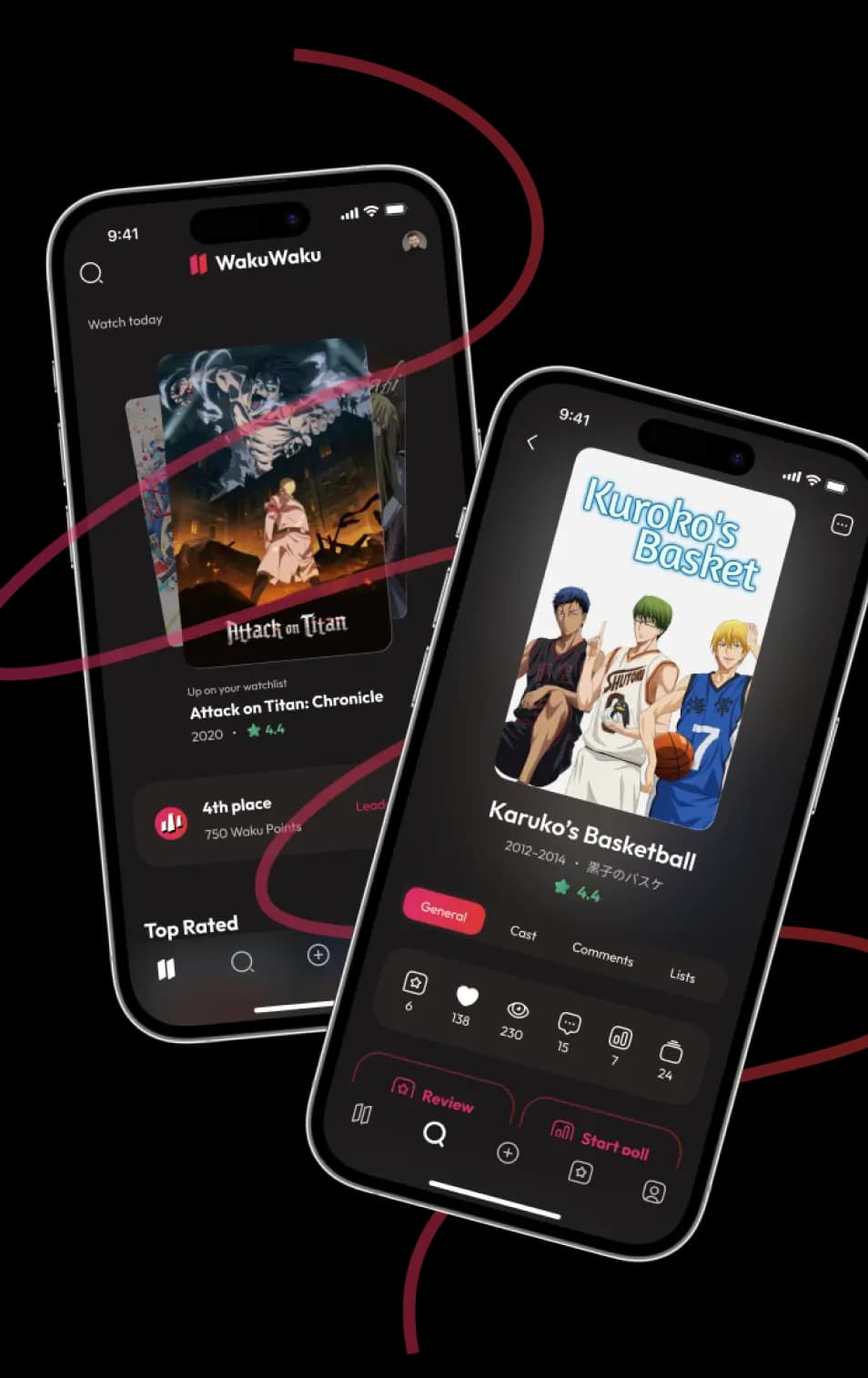
An anime blogger partnered with our Next.js development company to monetize their blog by creating a lively online platform where enthusiasts can discuss movies and discover new episodes. We crafted a mobile app for iOS and Android using React Native. for the web application development, we utilized Next.js, leveraging its SSR and SSG to improve SEO visibility. Next.js's superior image optimization and customization options were instrumental in creating this visually rich community app.
Our JS development team accomplished the Waku Waku project within 5 months, it's now a lively and active in-app community.
UK Retreats
UK Retreats, a company that helps people find unique stays across the UK, challenged our Next.js development company with creating a mobile-first web app and a promotional landing page. We built the web app using React and React Router. These JS development technologies provide the flexibility needed for an MVP and simplify the addition of new features. for the landing page, we used Next.js, taking advantage of straightforward routing and built-in functions for improved SEO optimization, which is ideal for one-page websites.
Our team completed this web development project within 3 months, and the app now serves over 10,000 users.

Docky
Docky, a service based in Malta, connects berth owners with yacht owners for easy rental and booking of berths. The business owner approached our Next.js development company to design and develop a web application for berth owners and a mobile application for yacht owners. To meet the client's requirements, we used a monorepository setup with React Native and Next.js during JS development. This approach allowed us to share code between the web and mobile apps.
As a result, we managed to accomplish an MVP for this mobile and web application development project within 3 months.

Hamperapp
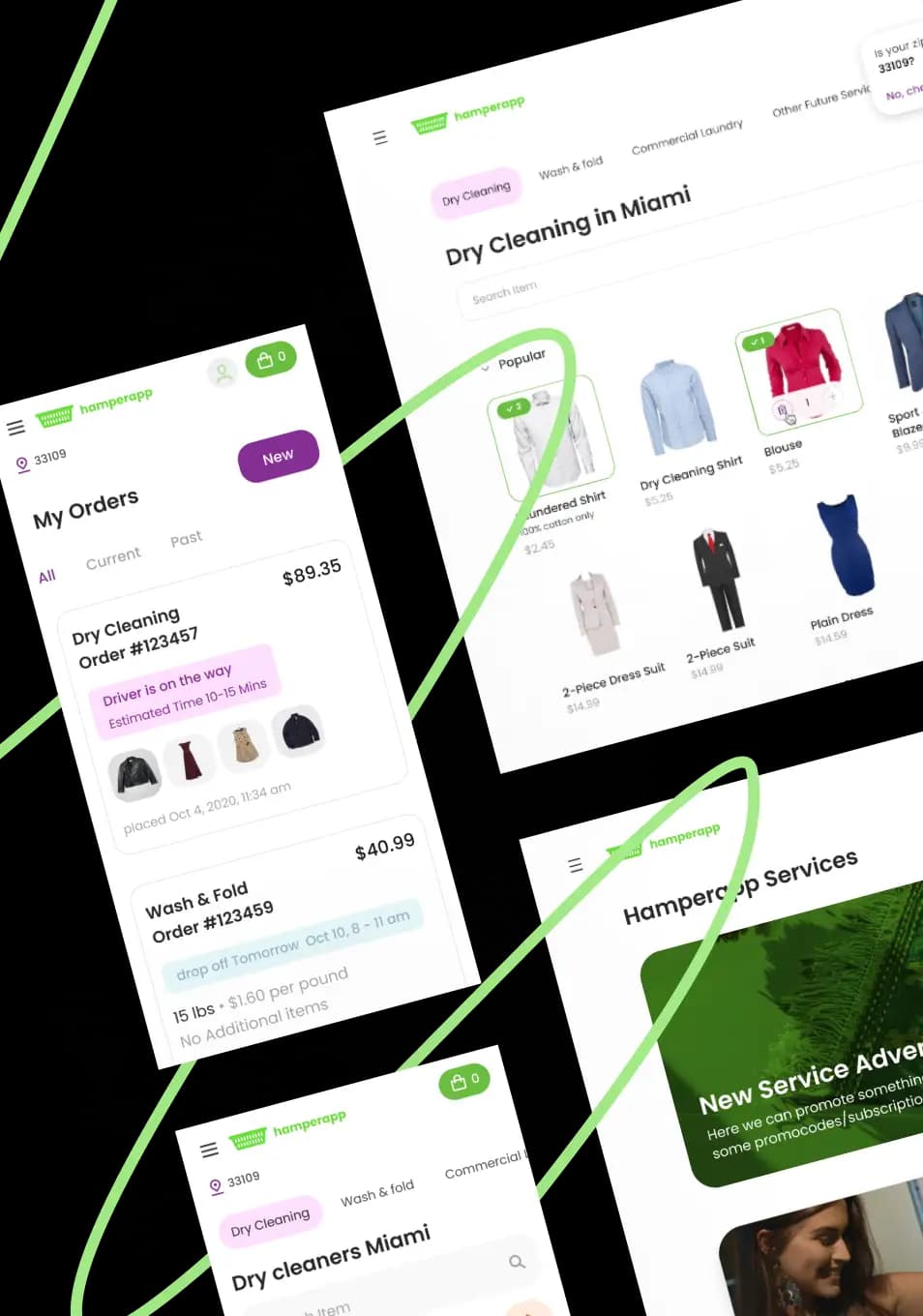
Hamperapp, based in Florida, delivers online laundry services to consumers and large enterprises. The client’s team tasked our software development company with developing an ecosystem that includes mobile apps for users and drivers and key panels for managers and administrators. Although we specialize in Next.js development, this time, we opted for Angular as a frontend development technology. Our large library of pre-built code components allowed us to expedite the JS development.
As a result of our collaboration, Hamperapp expanded its laundry network to 78 locations across two states in the U.S.



Why choose our Next.js development company?
As part of our web application development, we also provide some other facilities that ensure a transparent and convenient project workflow for you.
Full-cycle development
Our Next.js development company offers full-cycle development services from initial concept to final release. Our project teams consist of dedicated Next.js developers, designers, backend and mobile specialists, and DevOps engineers. This versatile expertise enables us to deliver web development solutions tailored to meet the specific requirements of your business.
Built-in project management
In our Next.js development company, every project is guided by a dedicated project manager. They will provide you with weekly updates on the web application development process, answer your questions, and communicate your requirements to the project team. This approach provides transparency throughout the development lifecycle.
Clear communication
Our managers will respond to all your inquiries about the software development project within 24 hours. We regularly hold video meetings via platforms like Skype or Zoom to align on project goals and promptly address any concerns.
Freedom from vendor lock-in
We provide Next.js development using open-source technologies, which means you’re not restricted to any specific vendor. This approach allows you to transition smoothly to another JS development company or continue with an in-house team if desired.
Rapid development
In our JS development company, we typically complete projects within 3–6 months. We can expand your project team with remote Next.js developers to meet the objectives of your software development project more quickly.
Compliance with security laws and regulations
In our JS development company, we adhere to regional and industry-specific regulations when working on web application development projects. Our team makes digital products compliant with:
GDPR
Data Protection Act 2018
ISO 27001
Privacy Act 1988
Australian Privacy Principles
PIPEDA
HIPAA
CCPA
SOC 2
Reviews
Numbers
across 4 platforms


Other tech services you may require

Web development
Beyond Next.js, we use a wide array of technologies for web development. We are ready to build web products, including corporate websites and engaging landing pages. Within this field, we offer both full-cycle development and standalone consulting services.
Web application development
We use our expertise in JS development to build custom web applications, such as e-commerce platforms, booking systems, and management tools. In the process of web application development, we can create everything from social media platforms to healthcare solutions, all while adhering to industry-specific standards and requirements.

Custom ecommerce website development
In our Next.js development company, we offer solutions for rapid launch of online stores. As a part of this web development service, we provide you with a custom UI/UX design and development, combining Next.js Commerce 2.0 for the frontend with Shopify's robust backend. This approach can be used for hypothesis testing, enabling a swift launch within 5–15 days.
Teams of dedicated developers
Our dedicated development team approach offers long-term collaborative partnerships that simulate an in-house setup without the complexities of permanent hiring. By hiring a dedicated Next.js developer or full team, businesses benefit from focused expertise that’s committed to building specific products quickly and effectively.
Urgent MVP development
For entrepreneurs with a unique business idea or startups needing to present concepts to investors, our express minimum viable product (MVP) development service is invaluable. Our JS development company can help launch your application in just 1–3 months. We achieve this by assembling an enlarged team of dedicated Next.js developers and other specialists.