SaaS development services: from MVP to paid product
Ronas IT handles SaaS product development end to end, from the first MVP to a product customers pay for: web and mobile clients, a backend with tenants, roles and billing, and an admin panel. Our engineers build with AI agents at every stage, so you see a working build sooner. They review and accept every change the agents make.
SaaS we build
These are examples from our projects for businesses and their teams, on web, iOS and Android.
B2B workflow platforms
Each customer organization gets its own members, roles and workflows with stages, tasks, notes and attachments, so the whole team runs its process in one product.
Team collaboration tools
Projects, tasks and comments, with Kanban, List and Timeline views, for teams that work together on web and mobile.
Subscription data products
Paid access to data and reports on monthly or annual plans, with add-ons such as a paid concierge service sold next to the plan.
Partner platforms
One core platform with a separate instance for each B2B partner, so every partner gets its own catalog, prices and users.
Lead-generation tools
Lead-generation products connected to each customer's marketing CRM, with a free plan and paid plans that add more features.
Utility billing platforms
Meter data becomes charges for each building occupant. Each billing run lists fees and sales tax as separate lines and is reviewed before the bills go out as PDF or Excel files.
Mobile apps for an existing SaaS
A new iOS and Android app for a SaaS you already run, with sign-in through your identity server, so users keep the account they have.
And more
We also build other SaaS products, with the same tenants, roles and billing described below.
What we handle in your SaaS: tenancy, access and billing
Customers pay for a SaaS product only when their data stays separate, each person has the right access and billing runs without manual fixes. We build and support each of these parts, so you do not need separate specialists for data isolation, access or billing.
Tenancy and data isolation
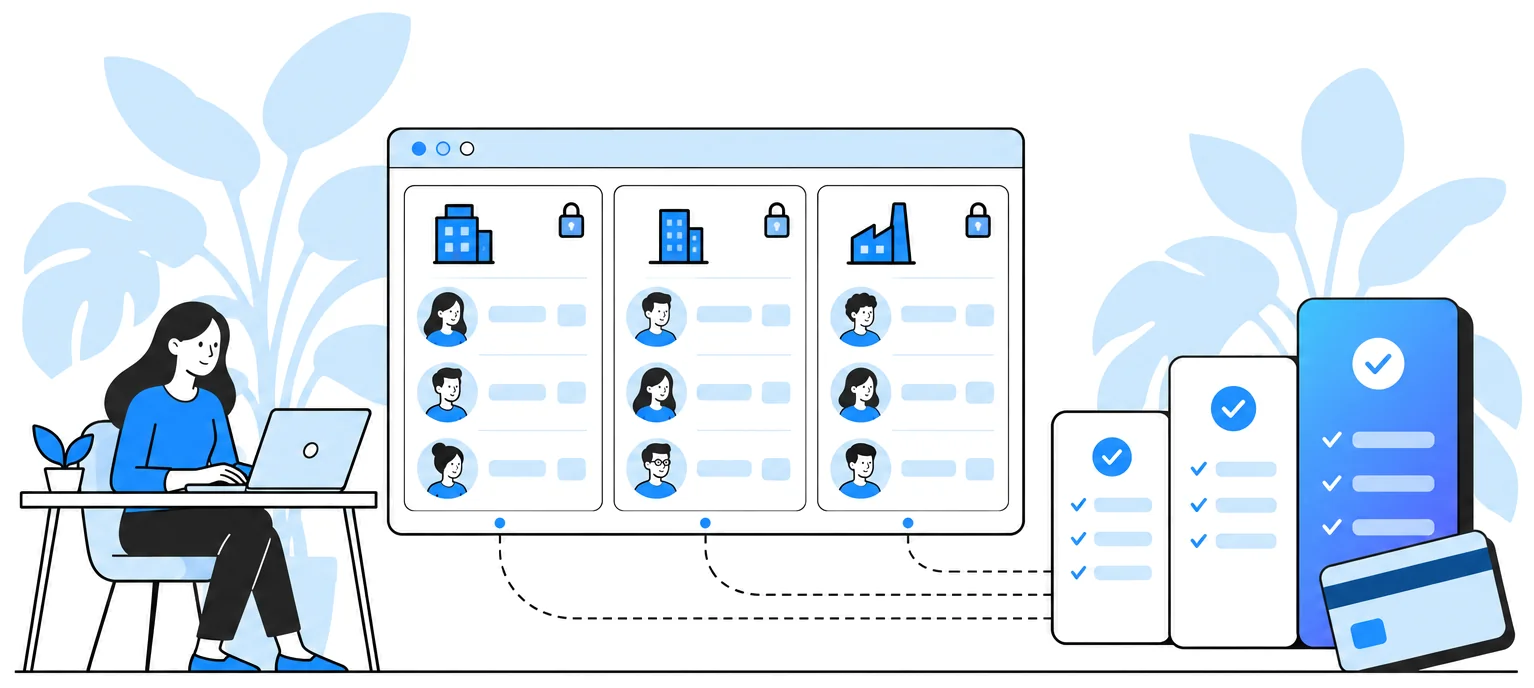
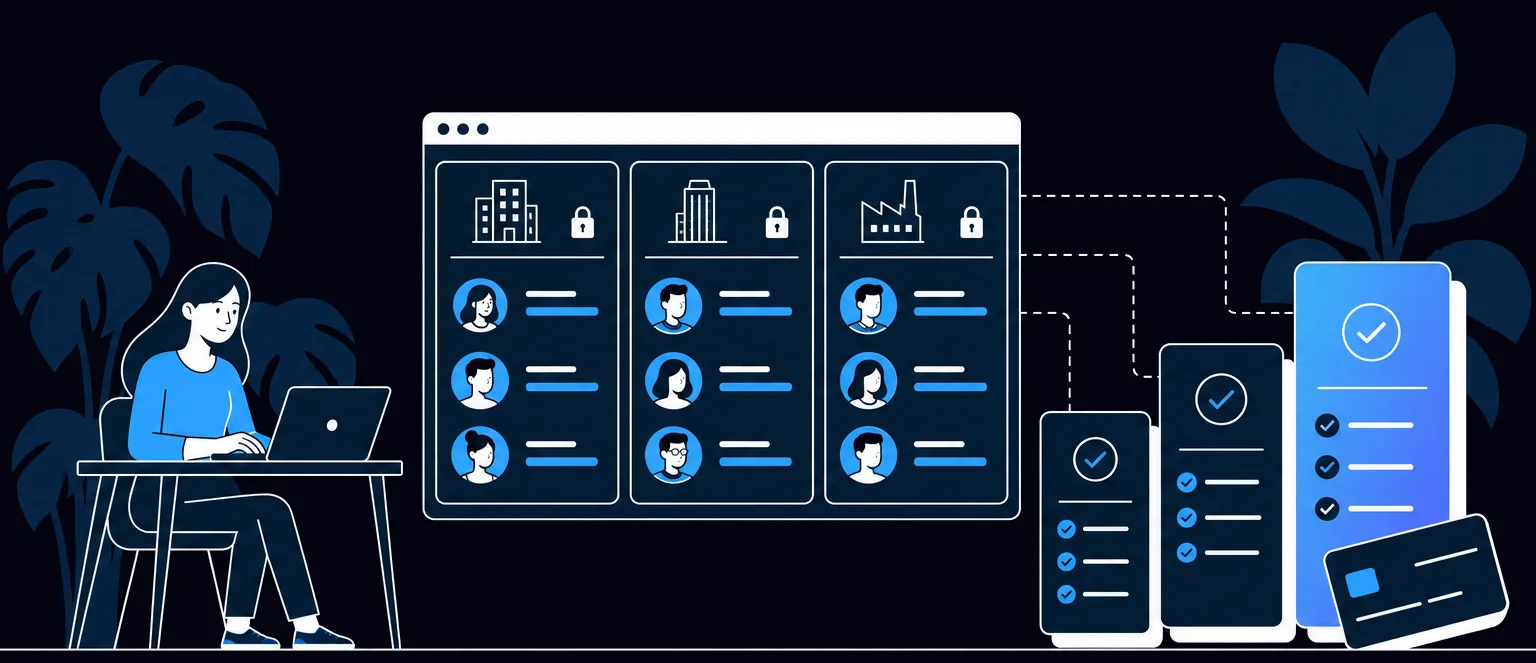
Every SaaS product needs tenant isolation, so we keep each customer's data separate. Users belong to an organization, and their role there decides what they can see and change. A partner that needs its own environment gets a separate instance. On the staging build you can check this yourself: open the same screens with accounts from two different customers.
Plans and billing
We connect web billing to Stripe, Paddle or Chargebee: the provider takes the payments, and your code holds the plans, limits and what each plan unlocks. On Stripe, customers subscribe in Checkout and manage plans in the Customer Portal. After a failed invoice payment, webhooks mark the account past due without a manual check. Mobile apps bill subscriptions, trials and promo codes through App Store and Google Play.
Trials and onboarding
We set up the trial model you choose: trial users get paid features until the trial ends, or selected paid sections stay locked with an upgrade button. Admins invite their team, and built-in guidance takes a new user from sign-up to the dashboard.
Roles and sign-in
We set up roles such as Admin, User and Read-only, which decide who can edit and who can only view. Users sign in with email, Google or Apple, or keep the login they already use: your company's identity server over OAuth, or SAML SSO through Okta or Microsoft Entra ID.
Audit logs and activity history
We record changes to business records with who made them and what changed, separately for each organization or, where a partner has its own instance, for that instance. Your support team can review the history and revert a change when a customer asks.
Real-time updates
We deliver task changes, comments and attachments to every user in the same organization who has access, without a refresh, on web and mobile.
Usage limits and quotas
We enforce free-plan caps on projects or storage, per-user storage quotas and credit balances. At the limit, the user sees a clear message and a prompt to upgrade, so they do not have to ask support why an action is blocked.
Admin panels and back office
We give your staff one admin panel to manage users, roles and plan status without a developer: the one your product already has, Laravel Backpack, or a custom panel in React or Next.js. Each customer's admins get their own controls inside the product.
Analytics and reporting
We build dashboards and reports for your customers inside the product. Your team sees which features customers use in Mixpanel, PostHog or Firebase Analytics, and gets business reporting in Metabase.
From MVP to a paid SaaS product
Our engineers set up the pipeline AI agents work in, give them tasks and check every result before it reaches you. Each sprint, usually one to three weeks long, ends with a working build or designs you can open.
- 1
Discovery and design
Our engineers use AI agents to check your requirements for gaps and compare architecture options, then propose the architecture and agree the scope and estimate with you. You can order this analysis as a separate stage and keep its user stories, flow maps, architecture and estimate, whether you build with us or with another team. Our designers build clickable prototypes and a design system for you to approve, so later features need no interface rebuild.
- 2
MVP release
The first release covers the core workflow and can run as our MVP development service, so you can test the market before you build full billing. Our engineers write the code with AI agents, review every pull request and run autotests and QA agents on each commit. You accept each milestone on a staging build.
- 3
Pilot with early users
We open the product to a cohort of pilot users and hold a checkpoint before the wider rollout, so problems show up with a small group first. Our engineers use AI agents to sort the errors pilot users run into, check each bug report and suggest what to fix first. Our project manager suggests features for the paid plans based on what pilot users do and ask for. The priorities and the final choice are yours.
- 4
Plan tiers and billing
We add the pricing model you choose: a free plan with limits, paid subscriptions, trials, and a top tier with SAML SSO and audit logs when enterprise customers need them. Our engineers write end-to-end tests for plan limits and payments with AI agents and check every database migration. They accept every change before it reaches production.
- 5
Scale and support
After launch, the product grows in scoped phases or with a dedicated team, and we keep supporting it in production. Our engineers use AI agents to sort logs, alerts and Sentry errors, so they see problems without waiting for customer reports. They prepare dependency updates with the agents, check each update before it ships and agree priorities with you. You can start with us at any stage above, from discovery to support, whether you have an idea, an MVP or a launched product.
SaaS development cost
A SaaS product starts at $20,000 for one client platform and takes at least 8 weeks. It is priced as Complex product development: a product beyond an MVP with complex business logic, high load and real-time features. The final price depends on the number of user roles, third-party integrations, and payment or compliance requirements.
The price covers one client platform: a web app, a cross-platform app for iOS and Android, or a native iOS or Android app
Each extra client platform costs from 50% of the first one
Included: design, project management, testing, and the backend, integrations and admin panel your product needs
SaaS development case studies
Examples of our SaaS work, with their scope and timeline.
Project management SaaS
We designed and built a real-time project management app for a European SaaS company: React web and React Native mobile apps with a Free, Team and Business plan model. Pilot users got early access, and over 100 teams were onboarded within the first three months of launch. Timeline 7 months, cost $130,000 +.

Membership web app
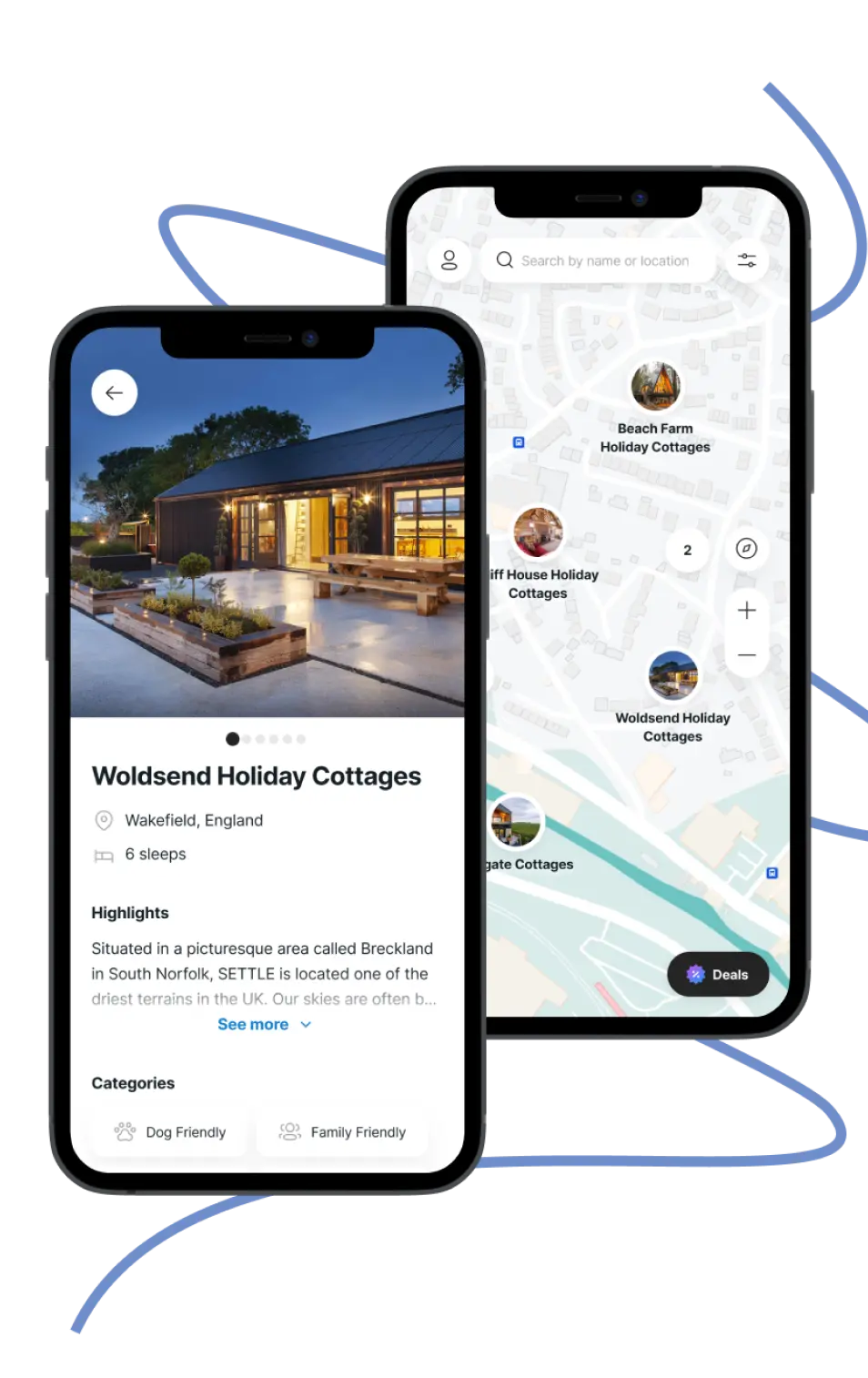
We designed and built a mobile-first web app for UK Retreats with subscription access to holiday stays: free, £1.50 and £3.00 monthly plans on Stripe, a map of stays and an admin panel for new listings. The MVP was ready within 3 months.
SaaS tech stack
We pick the stack for each product from the technologies our teams use every day, so your project starts on tools we know well.
Web and mobile apps
Next.js or React for the web app and React Native for iOS and Android, so one team covers web and mobile. Redux Toolkit with RTK Query handles state and API data.
Backend and API
Laravel for most backends, Node.js with NestJS for real-time products, and Python for data and AI-heavy services. Plans, permissions and business logic live in the API, so web and mobile apps follow the same rules.
Data and real-time
PostgreSQL stores accounts and records. Real-time updates run on Laravel Reverb in Laravel products, or on WebSockets with Redis pub/sub.
Cloud and monitoring
Docker on AWS or another cloud, with Kubernetes or Docker Swarm and a managed database such as Amazon RDS. Sentry reports production errors to our engineers.


Talk to our CEO

Roman Surikov
Roman Surikov worked as a software developer before he founded Ronas IT. He is an engineer, so on a call with him you can discuss your product's architecture and technical constraints right away.
Before a SaaS build starts, I ask the founder who pays, for what, and how often. The answer shapes the plans, the billing and the first release more than the feature list does.
I started as a developer, so I also look at what the product will cost to run and to change. If plans and billing can wait until the pilot shows what customers pay for, we leave them out of the first release.
Reviews from SaaS and product clients
These Clutch reviews come from the CTO of a SaaS company, the founder of a SaaS logo maker and the co-founder of a platform that grew from an MVP into a full product.
Numbers
across 4 platforms


Services related to SaaS development
MVP development
A first release that tests your SaaS idea.
Web apps
Custom web apps for business workflows.
UI/UX design
Product design and design systems for your app.
SaaS FAQ
How much does SaaS development cost?
How long does it take to build a SaaS product?
Should I start with an MVP or build the full SaaS product?
Start with an MVP if you still need to prove that customers will use and pay for the product. The MVP covers the core workflow, and plans, billing and SSO follow once the pilot shows what customers value.
Build the full product when the workflow is already proven, for example when you replace a tool your customers already use.
Skip the MVP when a small version cannot meet legal or safety requirements, or when the only open question is technical: then start with discovery. If a ready-made product or a no-code tool can test your idea first, we say so on the first call.
Which pricing model should my SaaS use?
Do you build multi-tenant or single-tenant SaaS?
Can our SaaS pass an enterprise customer's security review?
Can you take over a SaaS built with Lovable or Bolt?
How do you use AI agents in SaaS development?
Is my product data used to train AI models?
Who owns the code and IP of my SaaS product?
What support do you provide after launch?