

React Native runs apps you already have on your phone. Facebook, Instagram on Meta Quest, Microsoft Office, Outlook, Teams and Xbox Game Pass, Amazon Shopping and Alexa, every Shopify app, the whole Wix suite, Discord, Coinbase and Bluesky. Meta open-sourced the framework in 2015, and a decade later it carries commerce, finance, messaging and productivity products at global scale.
Most lists of React Native apps repeat the same names without saying who confirmed them or when. This one separates two kinds of evidence: apps the companies confirm on React Native today, and engineering reports those teams published themselves, with dates and numbers. Every entry links to its source, so you can check it before you quote it in a technology decision.
Apps confirmed on React Native today
Five companies have their own section on the framework’s official showcase: Meta, Microsoft, Amazon, Shopify and Wix. A section means the company named its own apps, which is why these entries are the safest ones to quote. Between them they cover social networks, office software, retail, entertainment and website building, on iOS, Android, desktop and VR headsets. We checked the showcase in July 2026, and these were the entries.
| Company | Apps built with React Native | Platforms |
|---|---|---|
| Meta | Facebook, Instagram on Meta Quest, Facebook Ads Manager, Meta Horizon, Messenger Desktop | iOS, Android, desktop, Meta Quest |
| Microsoft | Microsoft Office, Outlook, Teams, Xbox Game Pass | iOS, Android, desktop |
| Amazon | Amazon Shopping, Amazon Alexa, Amazon Photos, Kindle | iOS, Android, Kindle e-readers |
| Shopify | Shopify, Shop, Shopify Inbox, Shopify Point of Sale | iOS, Android |
| Wix | Wix Owner, Spaces, Dine by Wix, Fit by Wix | iOS, Android |
Meta: the company that built the framework
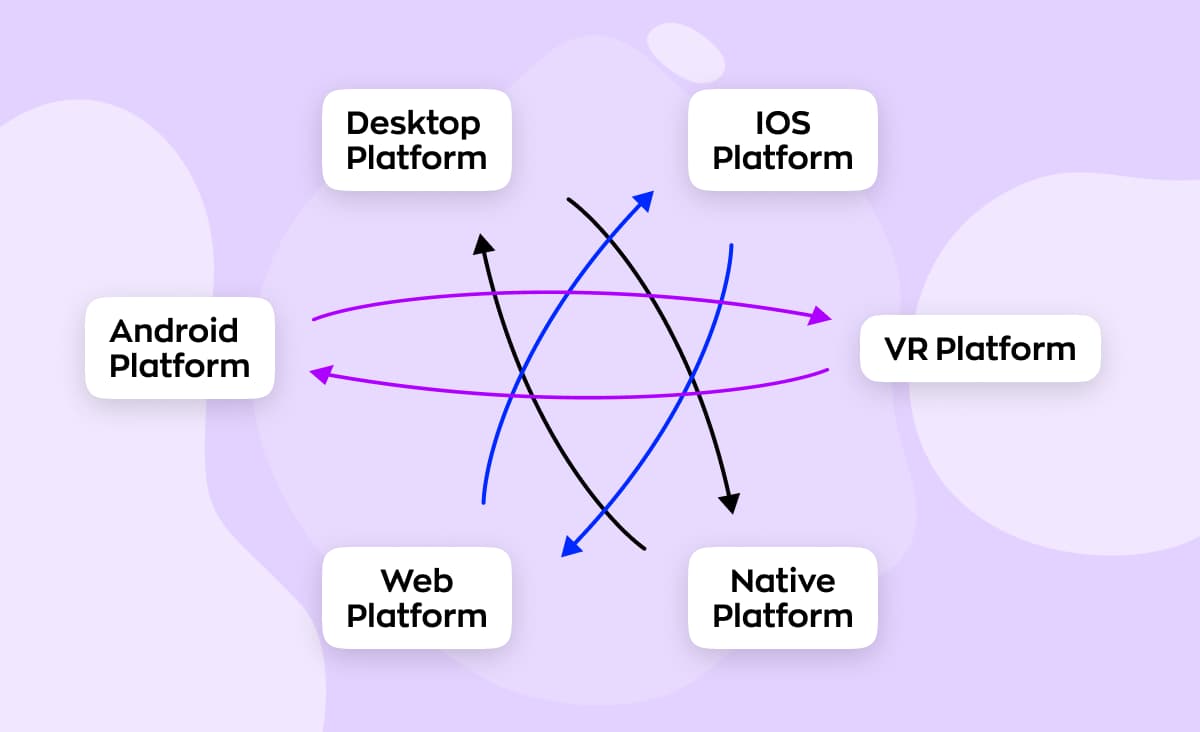
Facebook Ads Manager was the first product Meta shipped with React Native, and the company described the framework’s first year in its 2016 engineering review. The showcase now lists Facebook, Instagram, Meta Horizon and Messenger Desktop, which makes the original promise literal: the same team can build for a phone, a laptop and a headset.
Microsoft: Office, Outlook, Teams and Xbox Game Pass
Microsoft ships four flagship apps with React Native, and it also maintains React Native for Windows and macOS, the extensions that let the same components render as desktop apps. If your roadmap has a desktop client on it, this is the part of the ecosystem to read about first.
Amazon: shopping, Alexa and Kindle devices
Amazon started using React Native as early as 2016 to get new features to customers faster. Kindle is the unusual entry here: Amazon says it uses the framework on the e-readers too, so it reaches hardware that has nothing to do with phones.
Shopify: every mobile app the company ships
Shopify is the most useful case to study, because it publishes numbers. In a January 2025 retrospective on five years of React Native, the company reported sub-500 ms screen loads at the 75th percentile in the Shopify app, and crash-free sessions above 99.9%.
In September 2025 Shopify also described migrating Shopify Mobile and Point of Sale to the New Architecture without pausing its weekly release train. App launch improved by about 10% on Android and 3% on iOS. The same report notes load times up to 20% worse on some complex components until the team tuned them, which is the kind of detail most lists leave out.
Wix: one of the largest React Native code bases
Four Wix apps run on the framework, from the Wix Owner app for site builders to Dine and Fit, and the company describes the result as one of the largest React Native code bases in the world. For a business whose product is a website builder, the appeal is the same one that draws product teams: one team, one code base, four apps.
What about Bloomberg, Walmart, Pinterest, Flipkart, Foreca and Bolt?
Older lists of the best React Native apps name all six. Below its five company sections, the showcase also keeps an open grid of around 25 more apps, and Bloomberg, Flipkart, Foreca and Bolt Food sit in it today, next to Tesla, Klarna and the PlayStation app. A grid tile carries no date and no statement from the team. It tells you the app was added at some point, which is a lead to check rather than proof of what that app runs on this quarter. Walmart and Pinterest are not in the grid at all; their names come from engineering posts and conference talks from the framework’s first adoption wave.
That is why the table above stops at the five documented sections. A decision taken on a version of React Native from that era says little about the framework in 2026, and repeating it as current is how these lists go stale.
Engineering reports companies published themselves
Three companies published the mechanics of their React Native work, with dates, team sizes and measured results, and a fourth publishes its entire codebase. These reports matter more than any list, because they state what the work cost as clearly as what it returned.
Coinbase: 200 screens and 30 native engineers
Coinbase rebuilt its iOS and Android apps from scratch instead of mixing React Native into the existing native code. The rewrite meant reimplementing more than 200 screens and retraining over 30 native engineers. The Android rewrite started in March 2020 and shipped about six months later; the iOS rollout finished in late January 2021. Coinbase reported positive results on the metrics it targeted at each stage, and 113 contributors in the React Native repository afterwards, many of them web engineers who previously could not touch mobile.
The company was explicit about why it chose a full rewrite: a partial, screen-by-screen migration created the risk of getting stuck between two codebases. For a team planning a full migration, that is the most transferable lesson in the report, which is worth reading in full: the Coinbase engineering post from May 2021.
Mercari: from four engineers to a full rollout

The Japanese marketplace Mercari started with four engineers in January 2021, put its native Android app into maintenance mode a year later, and completed the iOS rollout in June 2022. It reported app start on Android speeding up by 52%, plus better item view conversion rate, home view rate and keyword searches per user than the native app it replaced. The full timeline is in Mercari’s report on its React Native evolution.
Discord: 60 FPS with three iOS engineers

In a 2019 engineering post, Discord credited React Native with letting three core iOS engineers hold a 4.8-star app at 99.9% crash-free sessions and a consistent 60 FPS. The post is also an honest catalogue of the profiling work that got them there, including a 90% cut in message parsing time. If you are planning a messaging product, our guide on building a chat app with React Native covers the same ground from a build perspective.
Bluesky: a React Native app you can read the source of
Bluesky publishes its whole client on GitHub under a permissive licence. In July 2026 the repository builds on React Native 0.81 with Expo 54, and it serves web, iOS and Android from one codebase. If you want to see how a production app of that size handles navigation, state and releases, this is the best open-source React Native app to read: the bluesky-social/social-app repository.
What the list proves, and what it doesn’t
The list proves one thing well: React Native can carry a shopping app, a crypto exchange, a chat network and an office suite for millions of users, maintained by teams that ship weekly. It does not prove the framework is right for your product. Scale evidence transfers only when your constraints look like theirs.
The evidence transfers when:
- You already have a React web team, and you want the same people on mobile.
- Your app is mostly screens, forms, lists, payments, chat and maps.
- You need iOS and Android at the same time, from one team and one budget.
- A web version is on the roadmap and should share business logic with mobile.
It does not transfer when:
- The product is custom rendering: 3D scenes, video editing, a game engine.
- Deep hardware or operating system integration is the product itself rather than one feature of it.
- A platform-specific design language is a hard requirement from the client side.
Airbnb stopped using React Native in 2018, and that decision still anchors most of the scepticism you will read. It was taken six years before the New Architecture became the default in React Native 0.76, released in October 2024. The latest stable version, 0.86.2, shipped in July 2026. Shopify frames the current answer better than any list can: think native and React Native, not native or React Native, and keep a native module where the hardware demands one.
“When a client asks whether React Native is a safe bet, I don’t start from the framework. I start from their product. If the app is screens, data and payments, the big names on this list are real evidence and we will move faster than two native teams would. If the app is a video editor or a game, I will say so on the first call and recommend native for the parts that need it. The question I actually care about on that call is which parts of the app have to be native.”
Roman Surikov, CEO at Ronas IT
For how that split works in practice, see our cross-platform app development page.



How to check whether an app is built with React Native
App stores do not disclose the framework, so every claim in a list like this one comes from somewhere else. Four checks are enough to verify any entry yourself:
- The official showcase. A company section names the company’s own apps, which is the strongest signal available. Treat the open grid below those sections as a lead to check, not as proof.
- The company’s engineering blog. Look for a date. A 2016 post proves what was true in 2016.
- Open-source repositories. If the client is public, the dependency list settles it in seconds.
- The app bundle. An unpacked Android build of a React Native app contains a JavaScript bundle, and usually the Hermes engine library next to it.
React Native apps by Ronas IT
We have been shipping React Native products since 2020, more than 20 of them. The three below are public case studies with the numbers our clients agreed to publish.
OddsCrowd: 10 weeks to the Super Bowl
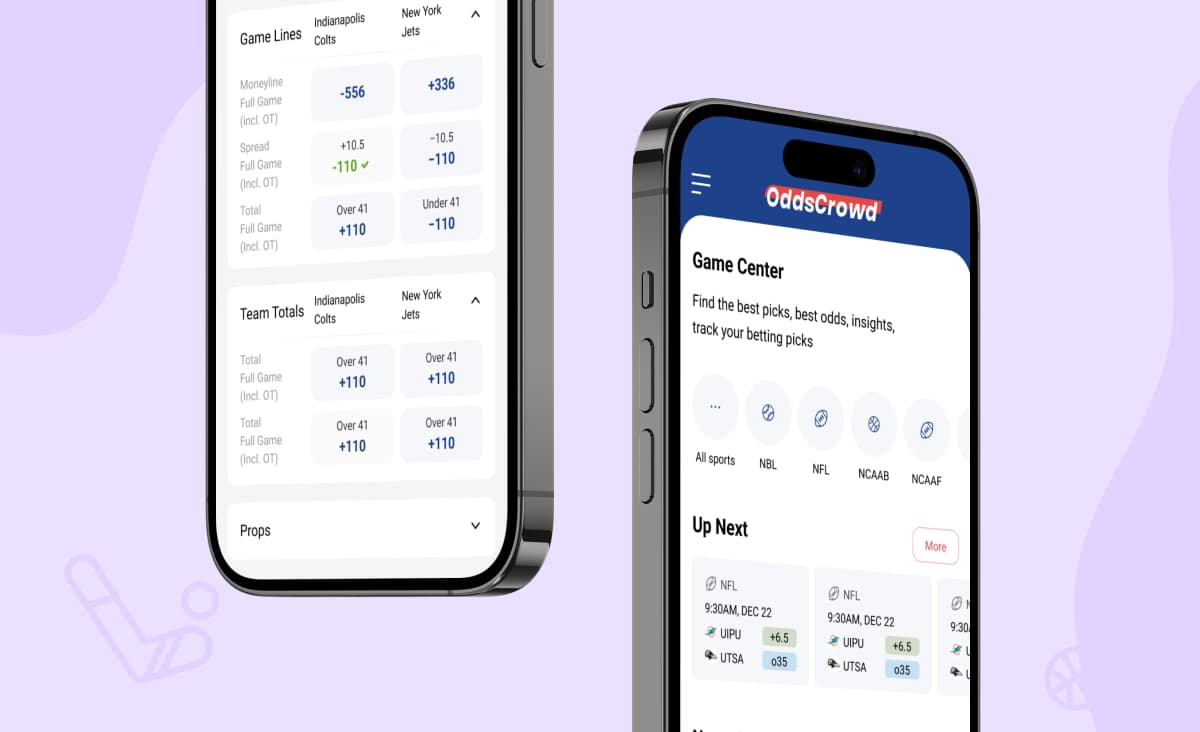
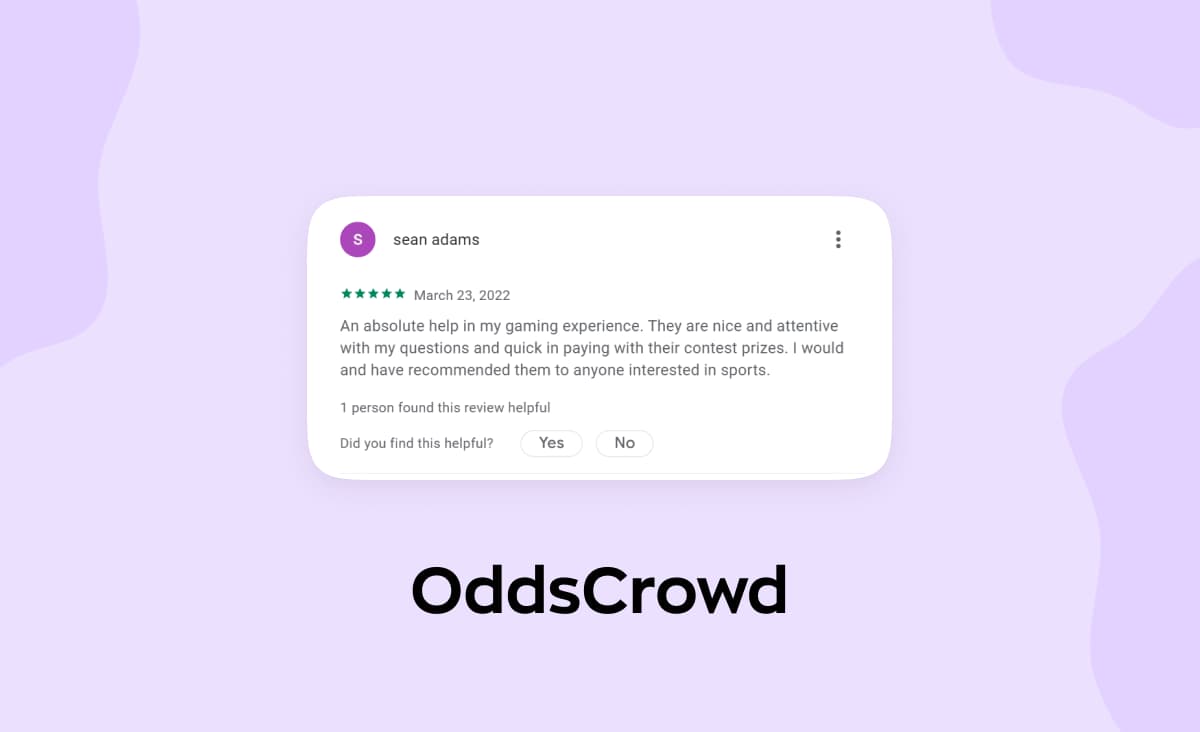
OddsCrowd is a community app for bettors, built for the web, iOS and Android. The web platform came first; for mobile, the client came to us 10 weeks before the Super Bowl, so React Native with Expo let one team ship both mobile platforms inside that window; Expo Notifications, Firebase and Sentry covered push, in-app behaviour and error tracking. The app passed 2,000 downloads across both stores, and the case study records the monthly number of users on the platform growing tenfold shortly after release. The full breakdown is in the OddsCrowd case study.
Lainappi: a rental marketplace on a modest budget
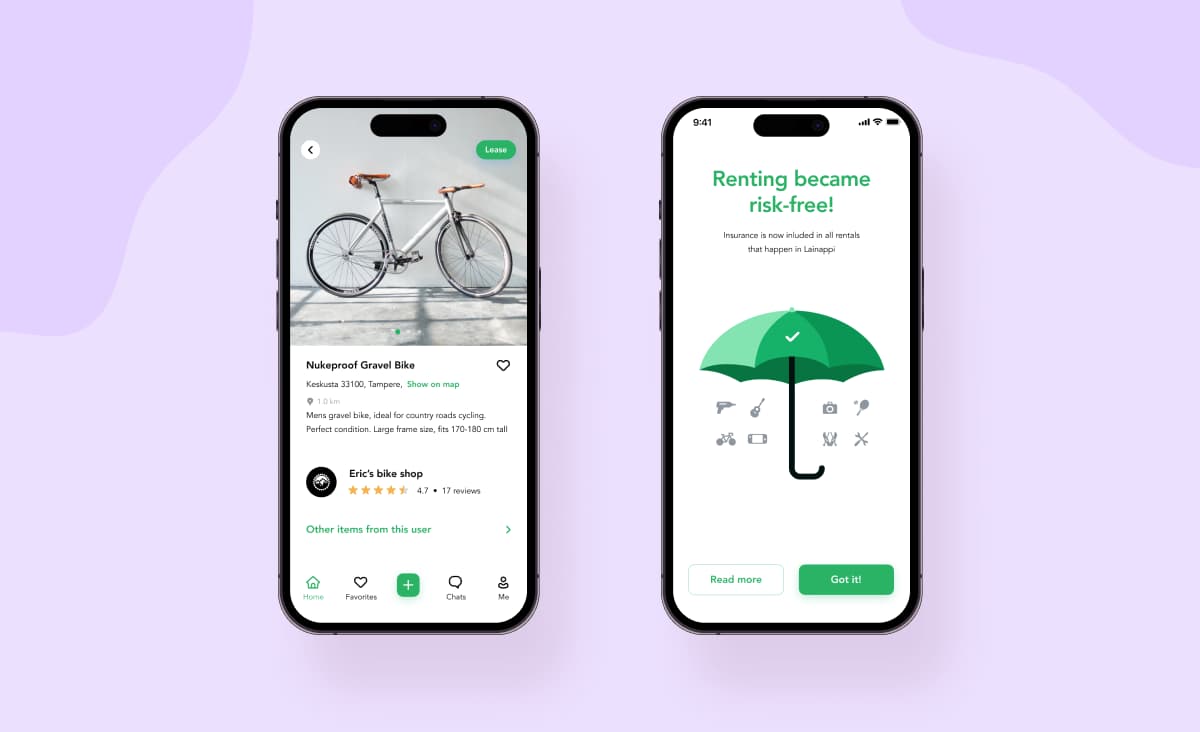
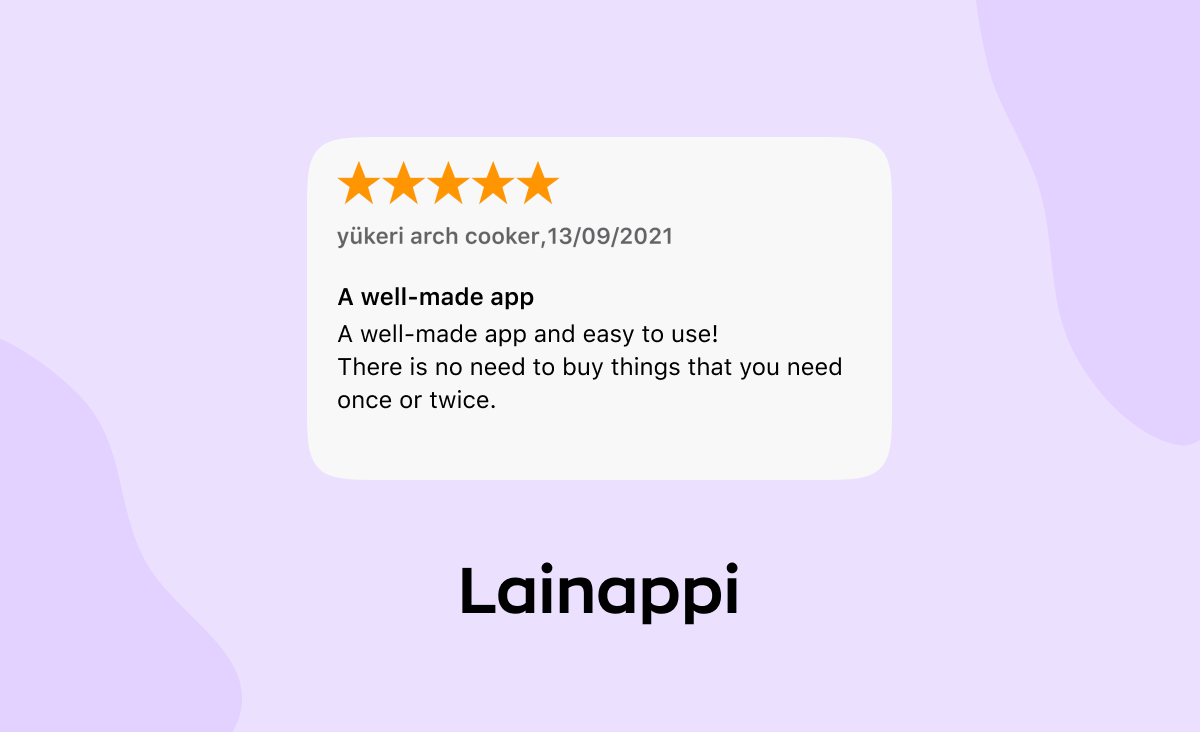
Lainappi is a Finnish rental service: owners list items with an hourly, daily, weekly or monthly price, and renters find them, book them and pay inside the app. Choosing React Native gave the client both platforms at once for one budget, and we delivered the first version in three months, with react-native-maps and expo-location covering map search on both platforms and Stripe Connect handling owner verification. The app recorded 5,685 launches and 2,397 registered accounts; we stayed on as Lainappi’s development partner after that release. The details are in the Lainappi case study and in our write-up of how we developed an eco-friendly rental app in three months.
“Both of these projects had a hard deadline and a small budget, and that is exactly where React Native pays for itself. On Lainappi, expo-location and react-native-maps gave us map search on both platforms in days instead of weeks. What we reuse between projects is the whole delivery setup rather than screens: navigation, state, error tracking, release pipeline. That is what makes the second app cheaper than the first.”
Alexander Storozhevsky, Lead Developer at Ronas IT
Buke: a dating app with a disclosed budget
Buke is an anonymity-first dating app for iOS and Android, built on a shared React Native codebase. It reached 4,000 active users within three months of launch, and it is the only one of the three with a published cost: five months and $60,000+ for the app, three months and $30,000+ for the companion web version built while the mobile release waited on App Store review. The full breakdown is in the Buke case study.
Open MobileUI: our own app you can read the source of
The test we applied to Bluesky applies to us as well. Open MobileUI is a mobile client for self-hosted Open WebUI assistants, and we develop it in public: the whole React Native app sits on GitHub, it runs React Native 0.85 with Expo 56, and the iOS build is live on the App Store. It is our own product rather than client work, so nothing is redacted: the navigation, the state layer and the release setup are all readable before you talk to us.
OddsCrowd and Lainappi also anchor a second article of ours, organized by what the app has to do rather than by company name: our React Native app examples by product type covers marketplaces, dating, real estate and fitness apps, each with its own cost and build timeline.
What to do with this list
Three steps turn it into a decision. First, find the entry closest to your product and read its source, not the summary: Shopify for commerce, Coinbase for a regulated rewrite, Discord for real-time, Bluesky for code you can open. Second, run your product through the two lists above and count how much of it falls into the “does not transfer” column. Third, scope your first release around one shared codebase, and plan native modules only for the parts that genuinely need them.
If that scoping conversation is the next thing you need, our React Native app development services page explains how we run it, and what affects React Native app cost at each stage covers the budget side.
Frequently Asked Questions (FAQs)
What are the most popular apps built with React Native?
Is React Native still used in 2026?
Which companies confirm their apps run on React Native today?
Are there open-source React Native apps I can study?
Did any large company move away from React Native?
Is React Native fast enough for a production app?
How long does it take to build a React Native app?
Related posts




Related Services
React Native App Development Services
Save time and costs with Ronas IT's React Native app development, allowing cross-platform capabilities for iOS and Android. Our team has built 20+ React Native apps since 2020, ensuring rapid development, flexible maintenance, and cost-effective solutions.
MVP Development Services
Need to launch your startup quickly? Ronas IT offers urgent MVP development services, allowing you to get a fully-functional app in 4 to 12 weeks, depending on scope. Ideal for testing business ideas, presenting to investors, or entering the market swiftly. Benefit from our extensive experience and accelerated development process.
Cross-platform App Development
Ship to iOS and Android from one React Native codebase instead of funding two native teams. Ronas IT handles UI/UX design, development, and the releases to Google Play and the App Store, delivering high-performance, secure apps within 2 to 4 months.