Development

Rapid custom ecommerce website development

Combine the convenience of Shopify's robust backend with our design expertise to launch a visually captivating, fully functional e-commerce store that reflects your brand values, all within an exceptionally short timeframe.

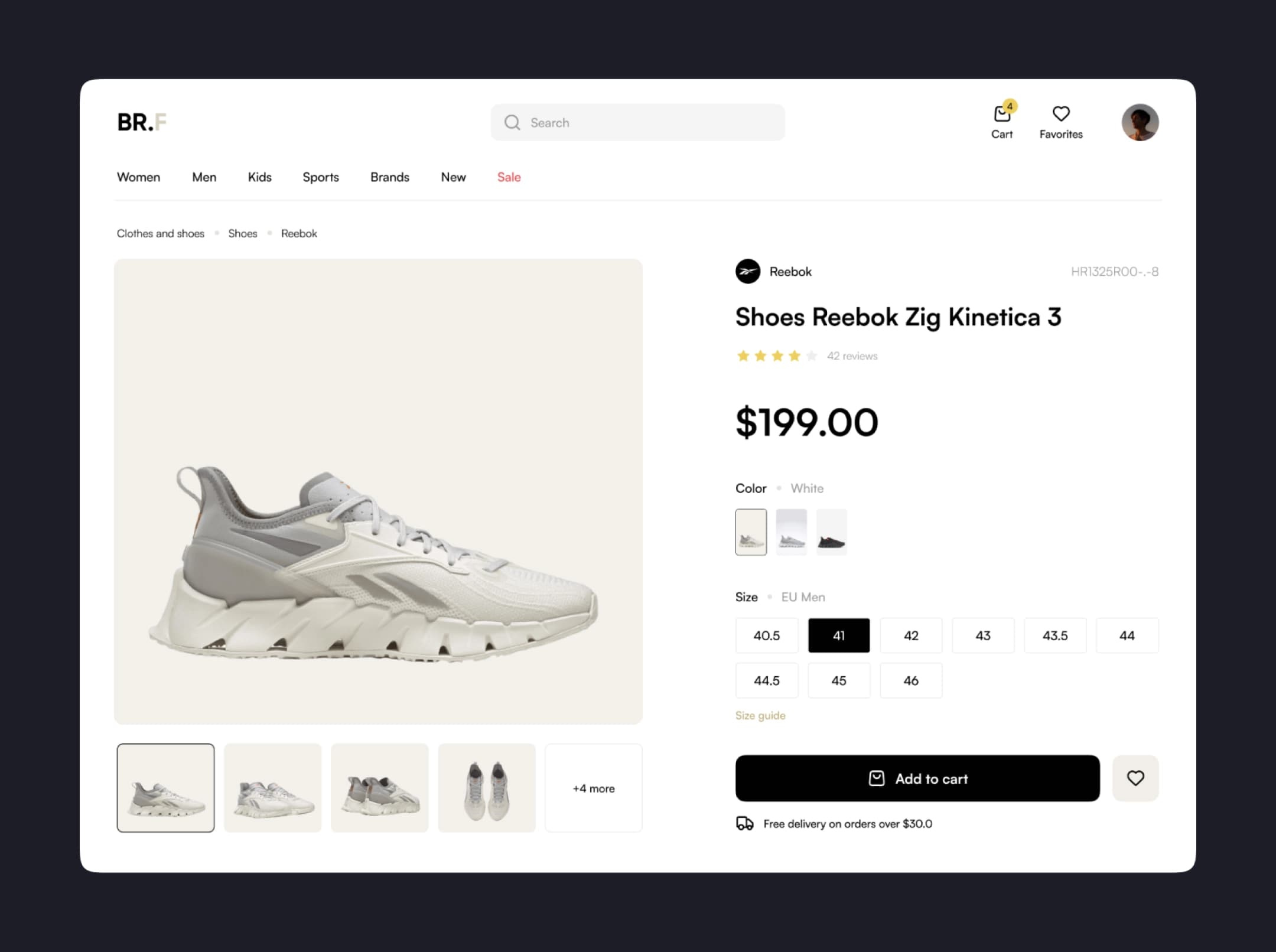
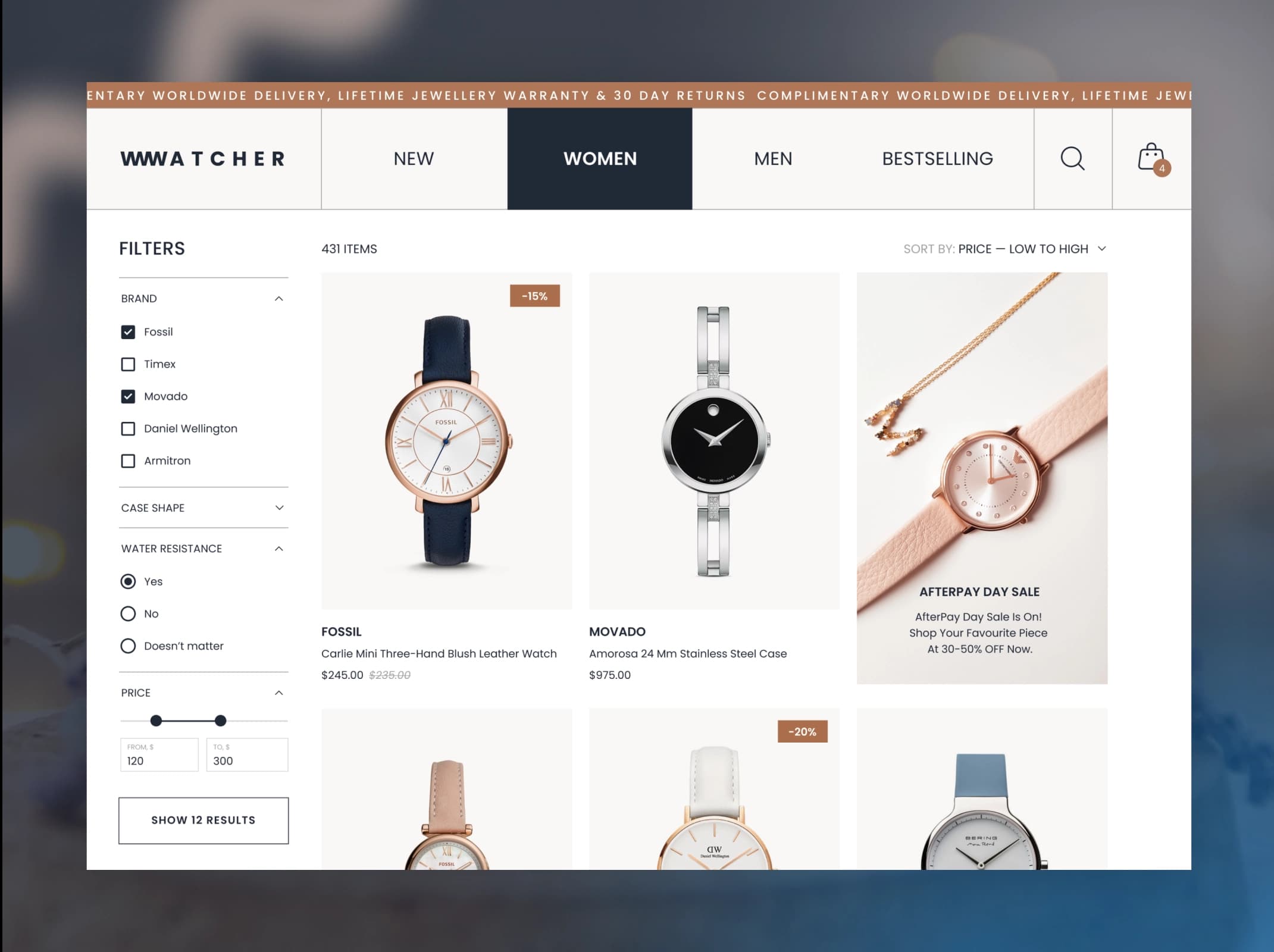
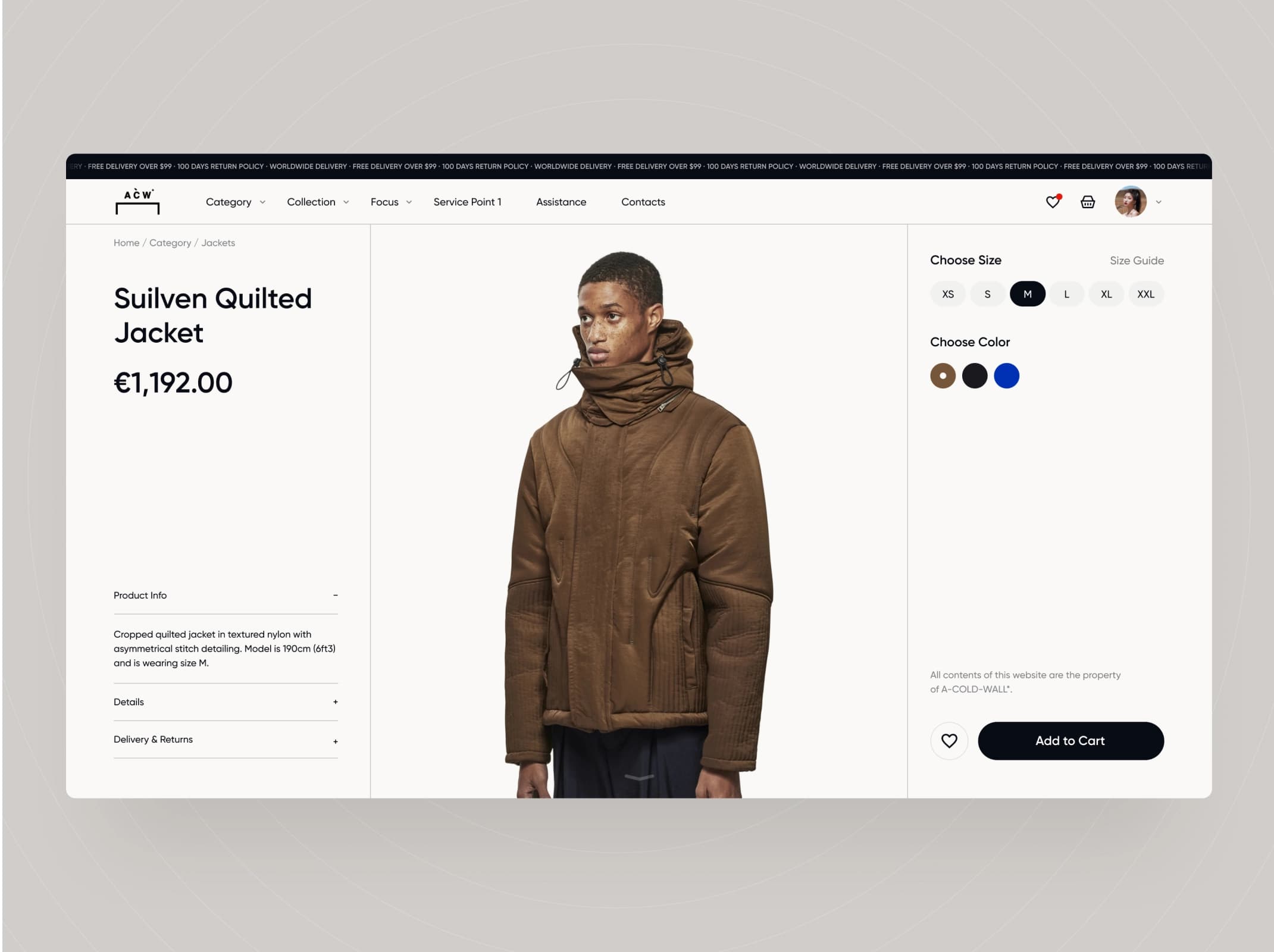
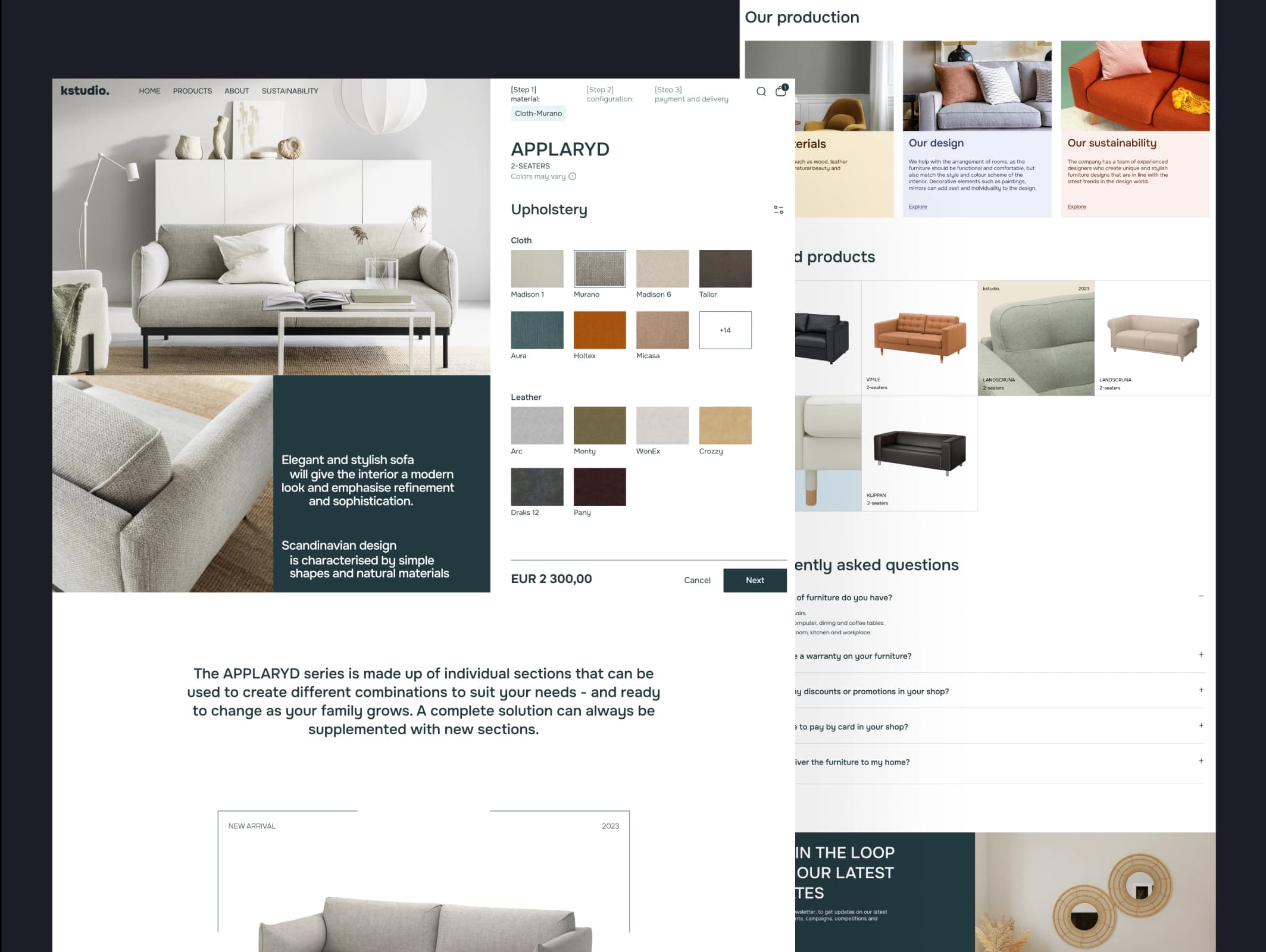
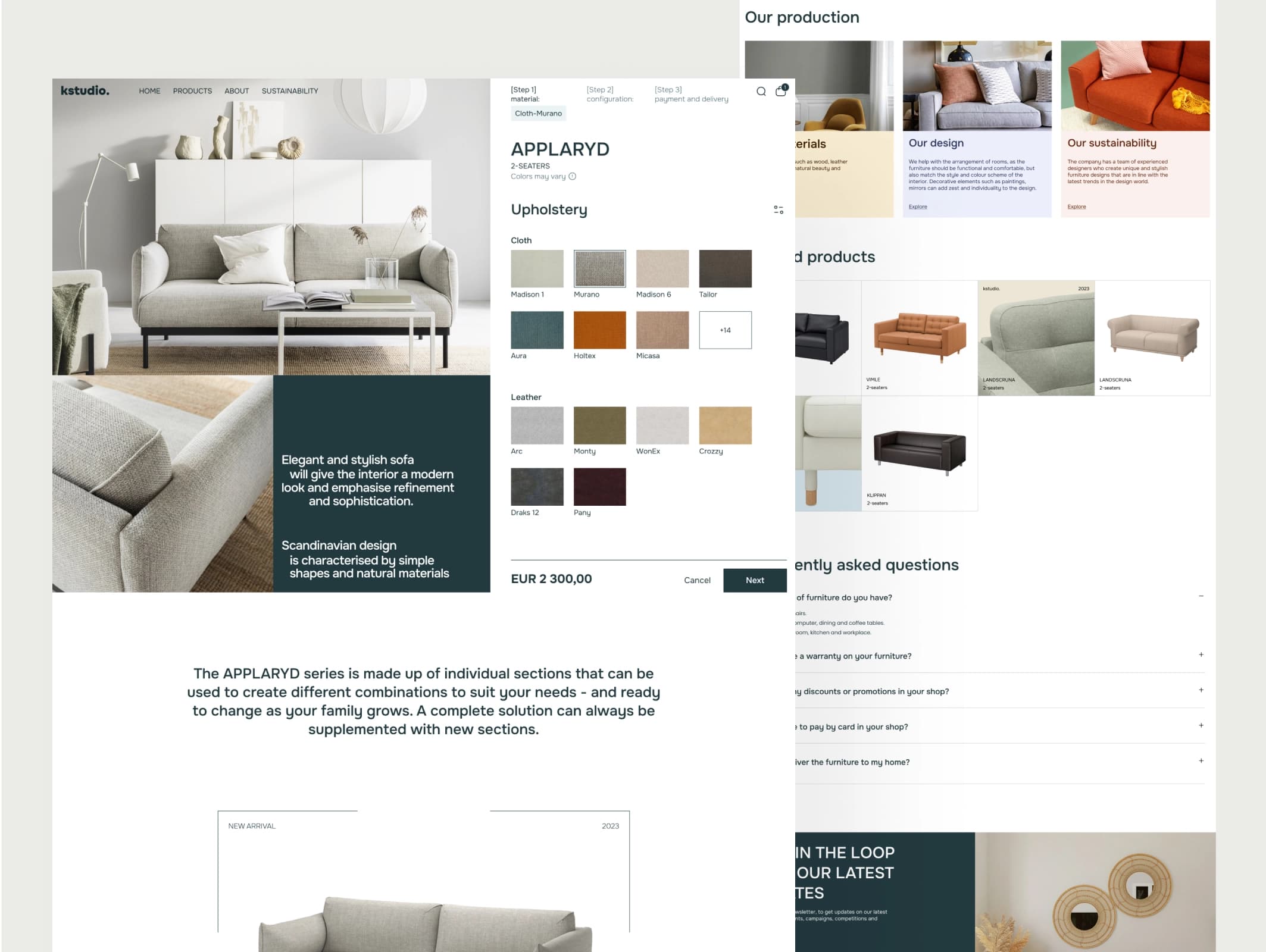
concept
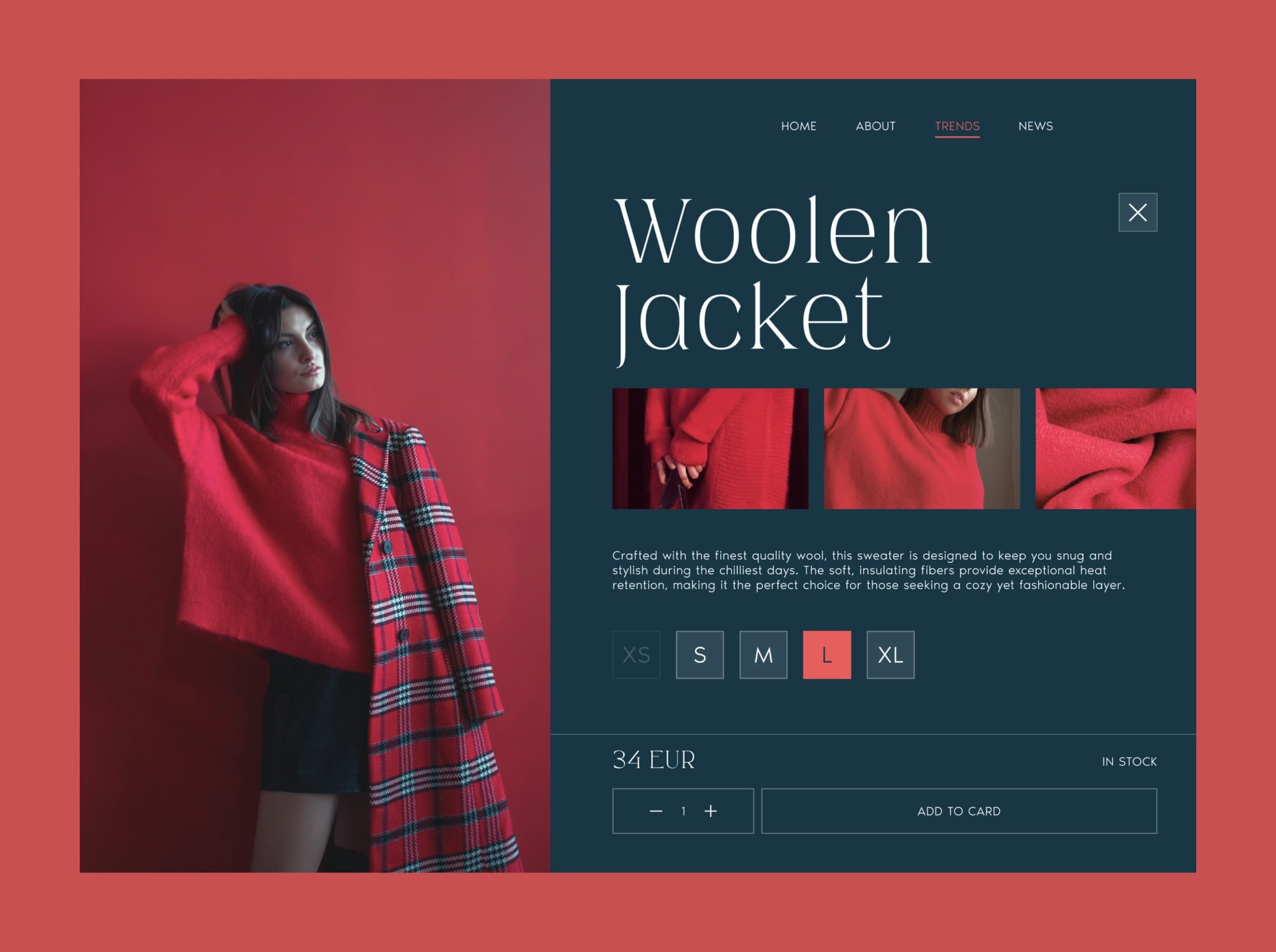
concept
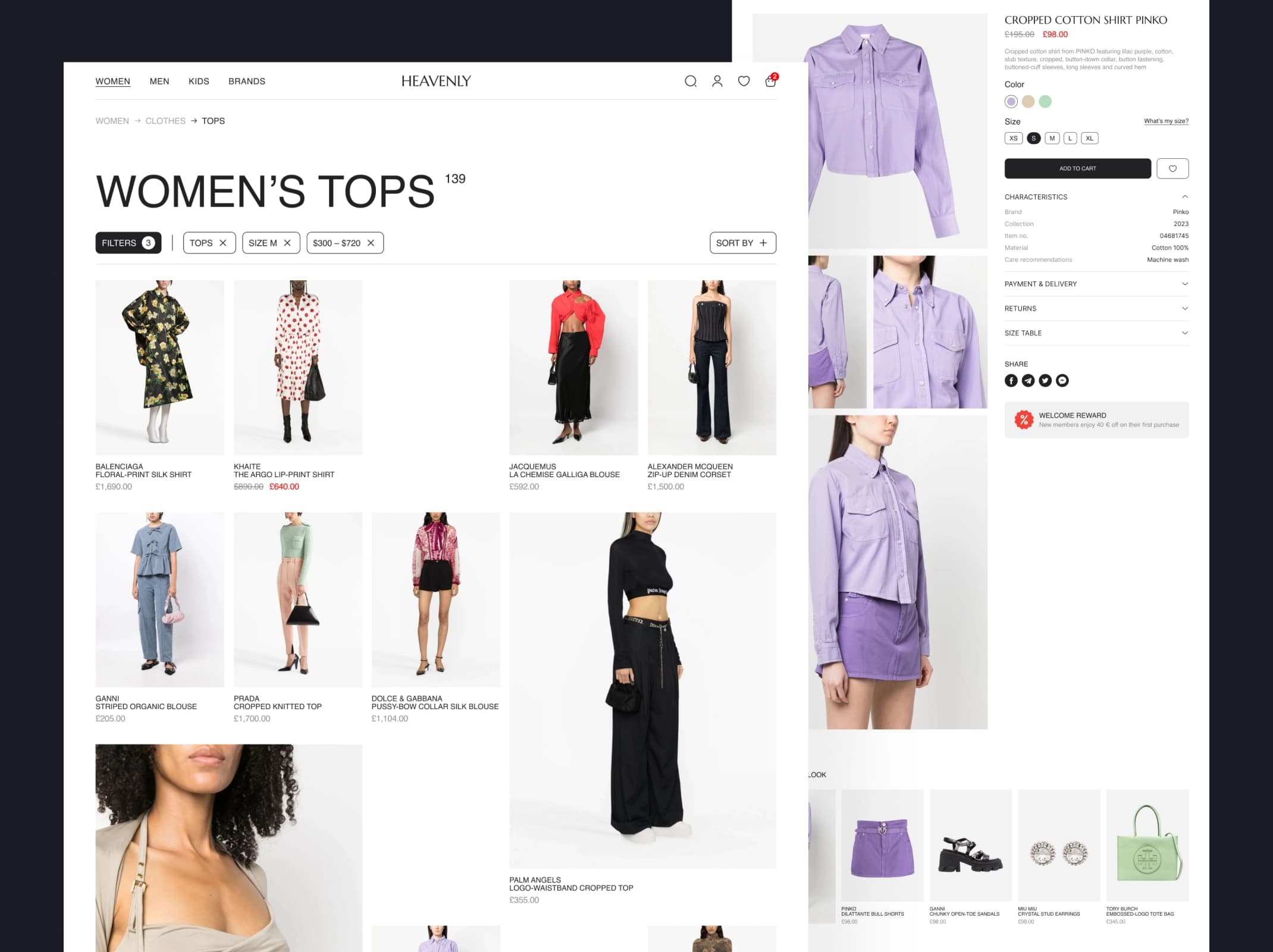
concept
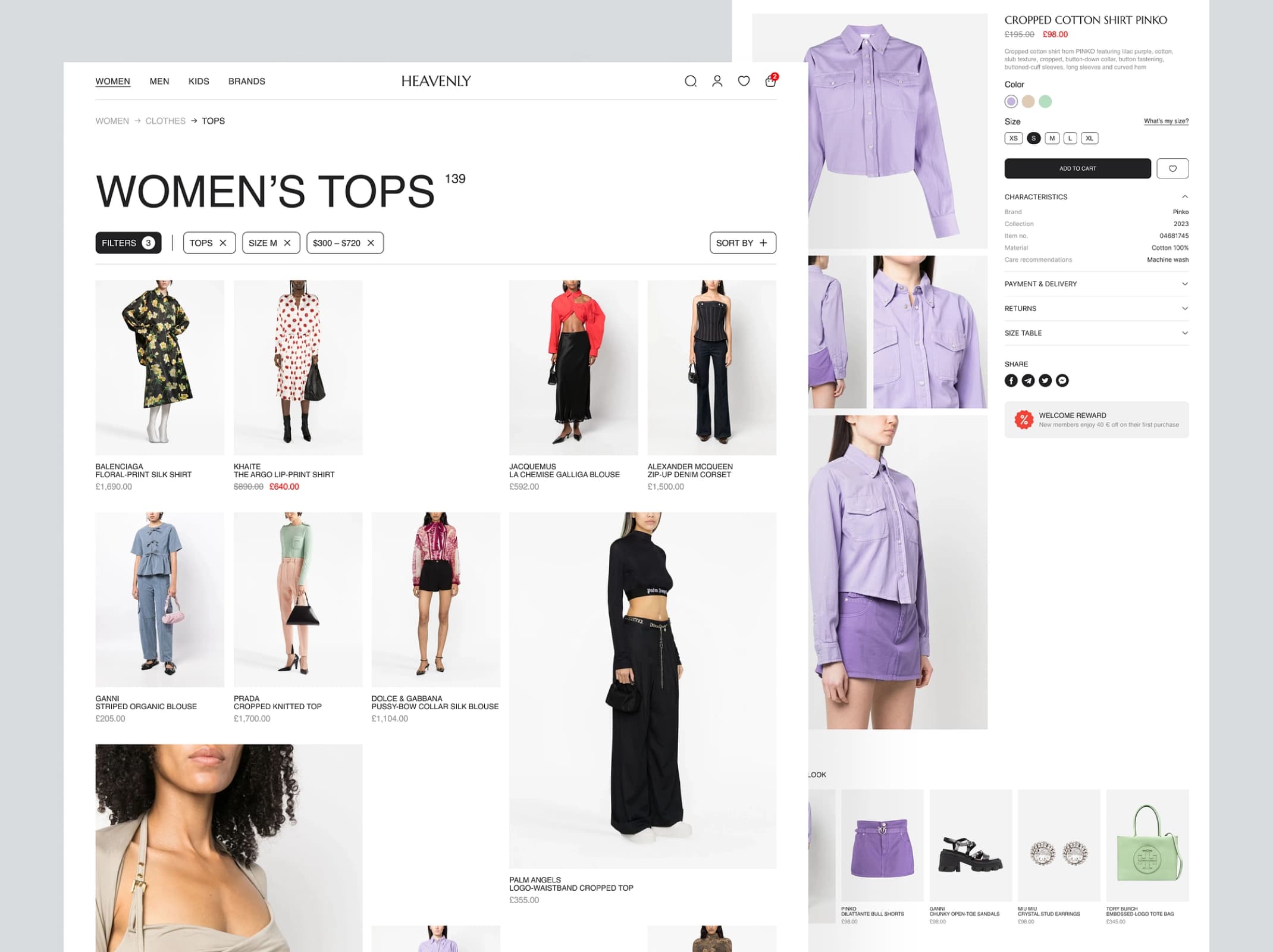
concept
About the service

We understand that every business is different. With our custom ecommerce development subscription, you get an ecommerce platform with all necessary functions and a unique design.

How is it different from the familiar website builders?

Design customization for your brand

Our custom ecommerce development services transform your online store into a one-of-a-kind experience that truly represents your brand. We use Next.js Commerce 2.0 framework for frontend development — it allows us to use best patterns for building ecommerce solutions fast while customizing the web design. Website builders only offer design templates, we create a unique and engaging brand experience.

Lightning-fast performance and seamless user experience

One of the key advantages of using Next.js Commerce 2.0 for custom ecommerce development is its exceptional performance. It’s designed to deliver lightning-fast page loading times and reduced latency, ensuring that your custom ecommerce website performs exceptionally well on both mobile and web devices. Your customers will never experience any lag or delays when browsing through your online store, they will enjoy a seamless shopping experience.

Efficient admin panel solution

Instead of developing an admin panel from the ground, we integrate Shopify's backend into the ecommerce website development to save you time and resources. You can maintain complete control over your store's operations without the need for custom backend development, which frees your resources to focus on your business. While website builders come with admin panels, their functionality isn’t tailored to fit custom ecommerce solutions.

Owning the results

When you create an ecommerce website with a builder, your website is dependent on the builder's platform. If the service experiences downtime, price changes, or policy adjustments, your website might be affected. If the platform shuts down, you might lose your site entirely. Even if you decide to migrate your site to another platform later, you will need to rebuild the design and functionality entirely. With our custom ecommerce development, you won’t depend on a particular platform and will own the website completely.
By choosing us as your next ecommerce development company, you’ll gain access to the design and development expertise we’ve been cultivating since 2007. Let’s discuss your idea and find a solution that fits your business.

Perfect for:

Accelerated launch

For the ecommerce web development of your platform, all we’ll need to do is create the design and develop the frontend part. for the backend, we integrate ready-made APIs that provide the necessary functionality. When you create a custom ecommerce solution with us, you get a personalized interface with a rapid backend rollout in 5-15 days.

Hypothesis testing

Our method requires fewer resources than custom website development, which makes it more cost-effective and suitable for hypothesis testing. Ecommerce website costs when building the product from scratch would include development of an admin panel, and functionality such as payments, sales, and managing products —- all of which increase the overall expense considerably.

Market expansion

Imagine, you came up with an idea to expand your business with the help of a new product, and you need to do it quickly. The average ecommerce development takes over two months from concept to release in the stores. Even with website builders, it might take time to understand how they work and the design you create on your own might not stand out from competitors. With our ecommerce website development, you can launch the product quickly and make it unique.

B2B and B2C

Our custom ecommerce development caters to the needs of both B2B and B2C ecommerce businesses. With development using Next.js Commerce 2.0, we enable seamless integrations and handle high loads while providing a speedy, dynamic storefront with App Router, essential for B2B ecommerce solutions that require flexible functionality. for B2C ecommerce, our rapid development approach ensures a fast time to market, coupled with eye-catching website design and personalized customer experiences.

What features will your ecommerce solution have?

Inventory management

Products that are out of stock are properly labeled and restocked when available so that users don’t experience any inconveniences.

Multiple option availability

While shopping, customers are offered a wide range of options to choose from, which enhances the user experience and improves sales.

Hassle-free checkout

A one-click checkout, powered by Shopify Checkout, provides simple and secure payments for customers. The checkout can be customized with any information you desire.

Detailed order record

The ecommerce solution enables customers to keep track of their order history, allowing them to refer back to previous transactions.

Hidden items

You can “hide” certain products on the platform for exclusive releases and limited-edition products. These cannot be found by browsing the website and are accessed through direct URLs.

Customizable design

Your platform will be not only functional but also eye-catching. Our ecommerce website development services can extend to creating illustrations and designing a logo if you don’t have one.

Real-time order status

Customers will be able to receive updates on the status of their orders, including details like dispatch, shipping, and estimated delivery times.

Dynamic Shopify-driven features

Ecommerce website development with Shopify allows for a variety of dynamic features, such as product categorization, menus for convenient navigation, and pages customized for different products.

Comprehensive ecommerce facets

Ecommerce development includes features like product search, a shopping cart accessible from any page, detailed product pages, overview pages for quick product summaries, and more. With rapid ecommerce web development, we don't compromise on functionality.

How we launch your ecommerce solution in 5-15 days

Project kick-off

Before we start your ecommerce website development, we ask you questions to understand your vision, budget expectations and goals for the future platform. This way, we make sure that our ecommerce website development aligns with your business objectives.

Custom web design

Our designers work closely with you to figure out your brand image and create visually appealing and unique custom ecommerce solutions for your online store. The time needed to design the interface depends on your requirements. If you opt for a simple minimalistic website design, we can complete the project within the 5-day timeline. However, if your ecommerce website needs to have a lot of screens or you have more complex design requirements, we dedicate up to 15 days. Our goal is to provide you with a design that not only represents your brand and looks beautiful but also makes your ecommerce platform user-friendly.

Admin panel preparation

The functionality of Shopify's admin panel allows us to set up backend operations without building them from scratch. As an ecommerce development company, we configure the panel and prepare it for the integration with the frontend of the platform. This way we ensure that the communication between the ecommerce website’s components will be smooth and efficient.

Client introduction

Before we start your e-commerce website development, we believe in establishing a strong foundation by understanding your vision and goals for the future platform. Our team takes time to listen and comprehend your unique requirements so that we can provide you with an e-commerce solution that aligns with your business objectives.

Frontend development

Our ecommerce development team uses Next.js framework to render the design. Their ecommerce development template allows us to use its ready-made functionality to complete the frontend development within a few days. By using Next.js, we ensure a seamless integration with the admin panel, resulting in a cohesive and user-friendly ecommerce platform.

Deployment

We understand the importance of a quick deployment process right after ecommerce website development. That's why we choose to use Vercel, which offers a template specifically designed for ecommerce platforms. With the help of Vercel, we can swiftly deploy your ecommerce website, getting you up and running within minutes. This means minimal downtime and maximum efficiency for your business.

Built-in SEO optimization

Our custom ecommerce solutions have built-in SEO optimization. This means that your website will be optimized for search engines, ensuring better visibility, higher organic rankings, and optimal performance across various devices. Even with a substantial catalog of products, your site will load lightning fast, achieving a 90+ score on Page Speed tests. This not only improves user satisfaction but also helps your custom ecommerce website drive more organic traffic and potential customers.

Result

At the end of our ecommerce development process, you will receive a fully-functional and customized ecommerce platform that is crafted to your specific needs. Unlike off-the-shelf websites, your platform will stand out with its unique design and robust functionality. After the ecommerce website development, we can support your product and fix any appearing issues.

Test the capabilities and loading speed of a website built with Next.js Commerce 2.0
Illustration 1
Illustration 1
Illustration 2
Illustration 2
Illustration 3
Illustration 3
Illustration 4
Illustration 4

Why do we choose Next.js Commerce 2.0 for your ecommerce website development?

Enhanced user experience

With Next.js Commerce 2.0, we can create dynamic storefronts that offer a personalized and engaging experience for the end client. By creating a recognizable design without compromising performance, we ensure a fast and smooth shopping experience.

Improved performance

The template is designed to deliver exceptional performance by providing ecommerce development features such as React Server Components, data fetching and caching, and edge runtime. This results in faster page loading times and reduced latency.

Ease of scaling

Scaling to new regions can be effortless with the Edge Runtime feature. We can expand your platform’s reach to more regions in ‘one click’ by adding a single code line, without any complex programming. This makes ecommerce web development easier and allows you to expand your business with very little expenses.

Shopify compatibility

Next.js Commerce 2.0 is perfectly compatible with the Shopify ecommerce platform. Our team can easily combine custom design with the Shopify functionality, providing you with a convenient management solution. However, if you have a preference for other ecommerce platforms, we can integrate any other platform within our advanced customization subscription.

Custom design vs. pre-built templates

With the many opportunities to create your own marketplace with the help of website builders, we understand the doubts you may have when choosing a service that is partly based on custom development, which is usually associated with high prices. Here are a few arguments that may cast our custom ecommerce development service in a different light for you.

  • 1

    Lower prices on ecommerce development

    You'll only have to pay for our frontend work and primarily for the design, while prices for the Shopify backend remain the same as if you were building the website on your own. We never charge extra and always provide estimates before the start of the project.

  • 2

    Streamlined development for business efficiency

    The main goal of our service is not to provide you with the same offer as website builders but rather to give you an independent ecommerce solution and free you from the complex work associated with frontend development or Shopify marketplace setup. What we do is take on the ecommerce website development job for you, saving your time while you focus on partnering with products providers, logistics, and building pickup points.

  • 3

    Brand representation through custom design

    While with Shopify you have a choice of different templates to create a nice design on your own, it may happen that different facets don’t complement each other, or you find it difficult to match the interface design with your logo. There might also be a problem of becoming a visual copy of similar websites that are fully based on the out-of-the box templates. Choosing our custom ecommerce solutions, which offer a pre-build admin panel with a customized design, appears to be a good alternative.

  • 4

    Experience and expertise
    We've been creating designs for websites and apps in different industries for over 19 years now and have extensive experience in adjusting to very different requirements. We show our design works on our Dribbble and Behance accounts — check them out to see our concepts and design cases. We also share our expertise with designers through our Instagram account. If you wish to evaluate our experience in custom software development, you can read our blog or check the cases page on our website.
  • 5

    Thorough review and adherence to design standards

    In creating our custom ecommerce solutions we follow strict design standards and rules we've elaborated over time. All our designers practice mutual reviews to make sure our interfaces are consistent and follow the best industry practices. Additionally, we have a design system that includes checklists covering every aspect from text to background images. We embrace a culture of perpetual learning — our designers share knowledge with each other and meet every week to catch up with the latest trends to implement them in your e-commerce platform design.

Cost and time
E-commerce platform

Starting at

$35,000

/per project

Timeline

From 2 months

Scalable architecture with high performance and mobile responsiveness

Full ownership of your website, independent from website builders

All essential e-commerce features including inventory, payments, and order management

Option for an accelerated launch with Shopify and Next.js Commerce 2.0 integration

Request a personalized quote for your future project by simply filling out a short form on our website.

How we adhere to global compliance and security standards

Every digital product we develop is designed and built in full accordance with international and regional security and privacy requirements. Our technology stack, development practices, and partner toolsets are selected to help you pass regulatory audits worldwide, and launch your product in any region.

Our projects comply with and are built according to the requirements of:

General

SOC 2 (International)

ISO/IEC 27001 (International)

CCPA/CPRA (USA)

GDPR(EU)

NIS2 Directive (EU)

PIPEDA (Canada)

Australian Privacy Act

DIFC (MENA)

ADGM (MENA)

PDPL/PDPPL (MENA)

Fintech

PCI DSS (International)

GLBA (USA)

FFIEC (USA)

GDPR(EU)

PSD2/PSD3/PSR (EU)

DORA (EU)

OSFI Guidelines (Canada)

APRA/ASIC guidance (Australia)

ISO/IEC 27001 (International)

SOC 2 (International)

Healthcare

HIPAA & HITECH (USA)

HITRUST CSF (USA)

ISO/IEC 27001 (International)

ISO 13485 (International)

MDR/IVDR (EU)

GDPR (EU)

PIPEDA (Canada)

Australian Privacy Act

Edtech

FERPA (USA)

COPPA (USA)

CCPA/CPRA (USA)

GDPR (EU)

PIPEDA (Canada)

Privacy Act (Australia)

ISO/IEC 27001 (International)

SOC 2 (International)

NIST (USA)

ISM (Australia)

DPIA-driven or contractual privacy programs

All software solutions we deliver follow secure‑by‑design principles, privacy by default, and DevOps methods that meet the latest requirements of these frameworks. This ensures your product is ready for regulatory review and trusted by users and partners across any region or industry.

Take a look at the feedback from our clients who have experienced our custom development services.

FAQ

What is the best platform for ecommerce: headless Shopify vs custom?
There is no single best ecommerce platform — the right choice depends on your budget, catalog size, and business logic. Choose headless Shopify if you need a faster launch, a budget from $15,000, a catalog of up to around 10,000 SKUs, and standard checkout. Choose fully custom development if your budget starts from $35,000 and you need a larger catalog, custom pricing, roles, approval flows, or deep ERP, warehouse, and compliance integrations.
What if I am interested in fully custom ecommerce development with building both backend and frontend from scratch?
We can do it for you. Fully custom ecommerce development means we build both the backend and frontend from scratch, so you own the data model, business logic, and product architecture. Unlike headless platforms, this removes platform limits, recurring platform commissions, and dependency on a third-party commerce backend. It also makes sense when you need custom pricing, roles, approval flows, checkout logic, or integrations that would be hard to build around platform restrictions.
Why build a custom storefront instead of using an off-the-shelf Shopify theme?
An off-the-shelf Shopify theme can limit your layout, checkout flexibility, performance, and brand experience. We build a custom frontend with Next.js on top of a commerce backend, such as Shopify or another SaaS used through API. This gives you full control over the storefront, branding, speed, and non-standard user flows without building and maintaining the backend from scratch. We don’t build theme-based Shopify stores: the storefront is always custom.
What are the benefits of customization in ecommerce development?
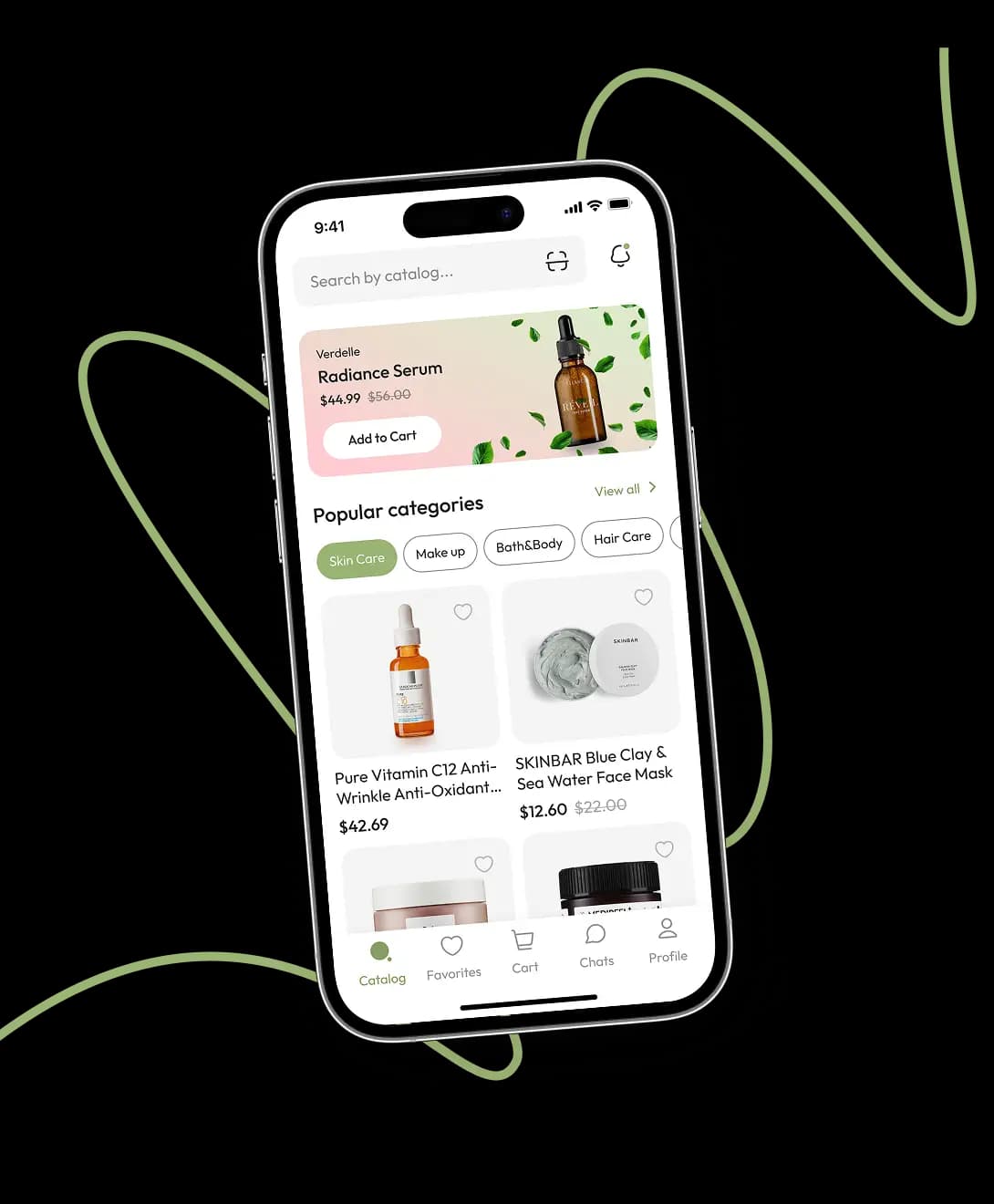
Customization in ecommerce development lets you build around real operations, not template limits. It can cover a non-standard checkout, custom search and filters, recommendation logic, multi-warehouse inventory, special pricing, user roles, or order approval flows. In our eco cosmetics marketplace case, custom design helped the client stand out from template-based competitors, highlight certified local brands, and make product discovery easier through filters for skin type, ingredients, and certifications.
What are the must-have features in any ecommerce solution?
Any ecommerce solution should include these core features: product catalog, search and filters, shopping cart, secure checkout, online payments, order management, warehouse or inventory integration, and basic sales reports. Mobile-responsive design is also essential, because buyers often browse and complete purchases from phones. More advanced features can be added later, but these are the baseline for a working store.
Is a headless ecommerce store good for SEO?
Yes. A headless ecommerce store can be strong for SEO when implemented correctly. A custom Next.js frontend gives control over server-side rendering, static generation, page speed, metadata, structured data, and clean URLs. These are the technical elements search engines crawl and rank. In many cases, a well-built headless storefront performs better than a heavy theme.
Can you integrate my store with payment, ERP, warehouse, and shipping systems?
Yes. We can connect your storefront to the systems your business already uses, including payment gateways such as Stripe or PayPal, ERP systems, warehouse or inventory tools, shipping services, analytics, and CRM platforms. The exact integration scope depends on your current stack, data structure, and how much automation you need between the store and back-office systems.
What technologies do you use for ecommerce development?
For headless ecommerce, we build a Next.js frontend on top of a commerce backend such as Shopify or another SaaS platform connected through API. For fully custom ecommerce development, we build the backend with Laravel and the frontend with React or Next.js. Our design team works in Figma, and we usually deploy frontend applications on Vercel.
How much does ecommerce development cost?
A headless ecommerce store, with Shopify or another SaaS backend and a custom Next.js frontend, starts from $15,000. A fully custom platform with a Laravel backend and React or Next.js frontend starts from $35,000, with complex projects reaching $60,000+. The final budget depends on the number of SKUs, catalog structure, business logic, checkout rules, ERP or warehouse integrations, payment systems, shipping setup, analytics, and regulatory requirements such as tax, privacy, or industry-specific compliance.
How long does ecommerce development take?
A headless ecommerce project usually takes about 6-8 weeks when the backend is based on Shopify or another SaaS and we build a custom frontend on top of it. A fully custom ecommerce platform usually takes 12-24 weeks. Timelines grow with non-standard business logic, data migration, multilingual content, complex catalogs, ERP or warehouse integrations, payment providers, delivery services, and analytics.
Can you migrate or replatform my existing store?
Yes. We can migrate your existing store to a new headless or fully custom setup. This usually includes transferring the product catalog, customer data, and order history to the new backend, rebuilding the storefront, and preserving SEO through redirects from old URLs and migrated metadata. Replatforming makes sense when you have outgrown a theme, hit platform limits, or need custom checkout logic.
Can you develop mobile applications or do you only develop ecommerce websites?
We’re experienced in developing cross-platform mobile apps using React Native. If users need to access your ecommerce platform from their phones, we can go two ways: mobile app development or web development with a mobile-first approach — users will be able to launch the platform from a browser, without a mobile client. A mobile app is better when you need native UX, push notifications, App Store and Google Play presence, or offline features. A mobile-first web store is lighter and faster to develop and launch.
Can you provide examples of UI/UX designs you have created for different business sectors?
Yes. Our portfolio includes UI/UX design for ecommerce and marketplace products across different sectors: Noah marketplace for farmers, a UAE marketplace for indoor plants, and an eco cosmetics marketplace. Each project had different product discovery flows, user roles, catalog structures, and interface priorities, from seller onboarding to search, filters, product cards, and mobile-first browsing. You can review more examples in our cases section.

Getting started is simple!

Just get in touch with us through our contact form or email hello@ronasit.com and our team will reach out to you for a detailed discussion about your app requirements.