How much does it cost to redesign a website?


At Ronas IT, a website redesign starts at $1,000 for a landing page and at $3,000 for a corporate website, and both prices include the new design. For a web product such as a client portal or a SaaS app, the redesign of the interface alone starts at $2,500, and a rebuild of the product with its new design starts at $5,000 and grows with its scope. What you pay depends on how deep the change goes: the look, the page structure, the code, or the content.
Website redesign cost by project type
The type of site sets the starting price, because it decides how many different page layouts, integrations, and user roles the redesign has to cover. A web product costs more than a landing page, and a new design for its current code and a rebuild each have their own starting price.
| Project | What the price covers | Starting price | Timeline |
|---|---|---|---|
| Landing page | The new page, design included | from $1,000 | at least 1 week |
| Corporate website | The new multi-page site, design included | from $3,000 | at least 2 weeks |
| Online store on Shopify or another SaaS platform | A new storefront in front of the store you already run | from $6,000 | at least 3 weeks |
| Web product, design only | A check of how the current interface looks and works, a new design of the key screens, and a UI kit for the rest; redrawing every screen is priced by the number of screens in the estimate. Handed over as a Figma file with the UI kit and a DESIGN.md file your developers' AI tools can build from; development extra | from $2,500 | at least 1 week |
| Web product, rebuilt | New code for the core features, with its new design, backend, and admin panel | from $5,000 | at least 2 weeks |
The design-only row applies when the current code stays and only the interface changes. When a web product gets new code as well, the design is part of the rebuild price, so there is no separate design line. A narrow product with a few core features is rebuilt from $5,000, one with more roles and integrations from $10,000, and one with complex logic, high load, or real-time features from $20,000 and at least 8 weeks.
The prices for sites and rebuilt products already cover project management, testing, and connections to services such as a CRM or a booking tool, so none of them is added on top. When the scope is unclear, we recommend an optional analysis phase first, at $1,000 to $2,000 and at least one week.
Refresh, redesign, or rebuild: decide what you are changing
A refresh, a redesign, and a rebuild go from the smallest change to the largest, and each costs more than the one before it. Choose the smallest change that fixes your problem.

- Refresh: new colors, fonts, images, and components on the pages you already have. The structure and the URLs stay, and the changes go into the current code. It fits a site that works but looks dated. A new design for the pages of a corporate site starts at $1,500, and applying it in the current code is a separate estimate on top. When the code is old or the site runs on a builder, a new corporate site from $3,000, design included, can be the cheaper route.
- Redesign: new page layouts and often a new navigation, usually with the front end rebuilt. Most content and URLs stay. It fits a site where visitors cannot find things or new services do not fit into the structure.
- Rebuild: new code as well, often on a new platform or content management system (CMS). It fits when the current code cannot be changed safely or the platform limits what the business needs.
A redesign can also stop at design when the code is sound. Our example of that choice is an app rather than a website: Mind Easy, a mental health mobile app, came to us with a design that was outdated, did not adapt to different screens, and did not follow App Store and Google Play guidelines. The client was happy with the technical side, so we did not go on to development: one designer made three concepts, and we prepared a UI kit, a set of interface components, for the client's developers to build the new design. The Mind Easy case study shows the concepts and the final screens. If your product is a mobile app, our guide on how to redesign a mobile app covers the same choice between a refresh, a redesign, and a rebuild.
“I would not rebuild a site only because it looks old. If the current code can work with the new design, a rewrite moves your budget from the pages people see to code they never will.”
Alexander Storozhevsky, Lead Developer at Ronas IT
Factors that affect website redesign cost
Scope drives the price more than the page count. Designers draw one template for all pages that share a layout, so a corporate site with many blog posts on one post template can need less design work than a smaller corporate site where every page looks different. These factors move the estimate:
- Unique templates: each different layout, such as a home page, a service page, a case page, or a blog post, needs its own design and its own build.
- Content: pages, images, and posts have to move into the new design. It takes longer when the platform changes and content moves between two systems, or when old content needs cleaning up by hand.
- Integrations: forms that send leads to a CRM, payments, or a booking tool connect to third-party services. Each integration is part of the scope and is included in the website estimate.
- Custom visuals: illustrations, animation, and custom icons add design time beyond the layouts.
- Accessibility: meeting WCAG 2.2 at level AA adds checks to every template, such as a contrast ratio of at least 4.5:1 between normal-size text and its background.
- Approvals: every round of changes and every person who has to approve a stage adds time. One owner who signs off each stage keeps the number of rounds low.
For example, a corporate website with a new design, a contact form that sends leads to your CRM, and a booking tool starts at $3,000. That figure already covers the design, both integrations, and project management; the number of forms and how the booking data has to reach your CRM move the final estimate.
Costs that appear after the first estimate
A redesign budget can grow for reasons that were visible at the start but were not priced: new content, redirects, changes after approval, and running costs such as hosting and support. Ask about each of these before you sign, and check whether the estimate includes it or leaves it to you.
- New copy and images: a new structure often needs new text and photos. If your team does not write them, budget for a copywriter or a photographer.
- Redirects: every URL that changes needs its own redirect, and someone has to test the redirects after launch.
- Changes after approval: an edit that seems minor in a mockup can change the development work. We tell you about design changes as they happen, and we re-estimate at the stage we agreed on, not after every comment.
- Hosting and paid plans: servers, the CMS plan, and paid services are billed to you by their providers.
- Support after launch: monitoring, fixes, updates, and scheduled speed and accessibility checks start at $300 per month for a website and at $1,000 per month for a web product with a backend. New features are estimated one by one.
How to protect SEO during a website redesign
Keep the URLs that bring search traffic, and send every URL you change to its new address with a permanent redirect. Google's guide to site moves with URL changes says that 301 and other permanent redirects do not cause a loss in PageRank, and that rankings can fluctuate while Google crawls and indexes the site again. Google's guide to its ranking systems describes PageRank as one of its core ranking systems, one that looks at how pages link to each other.
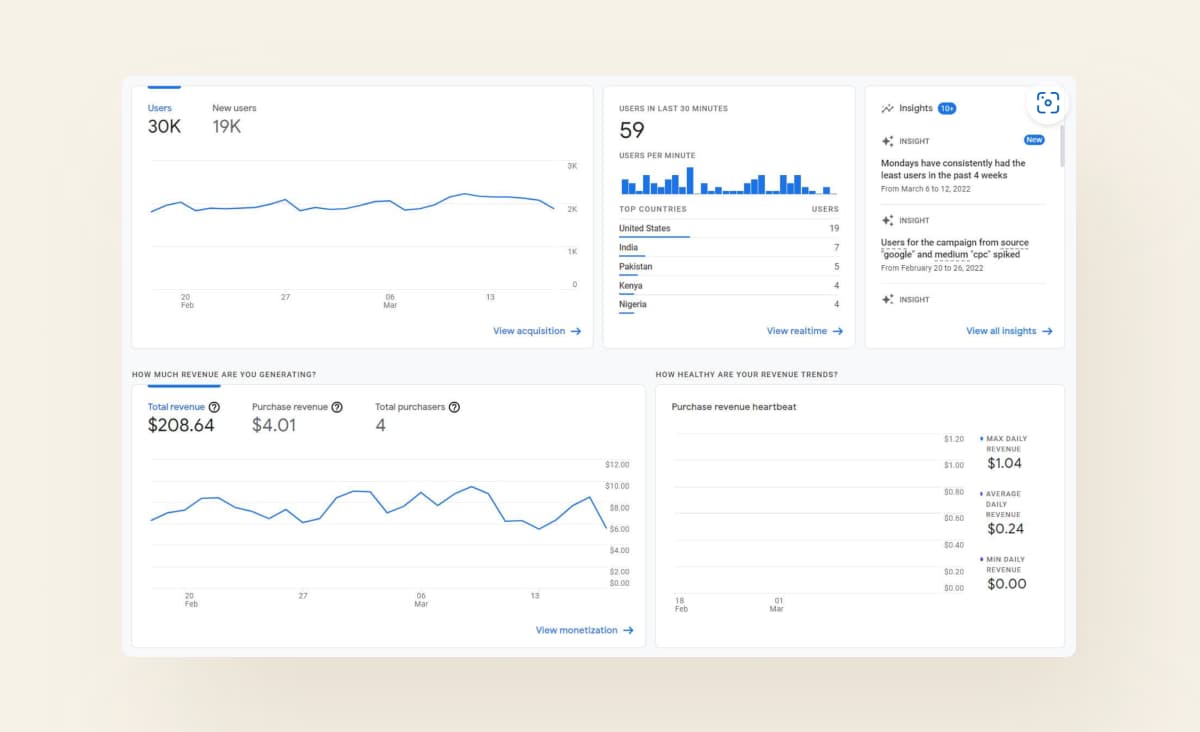
Check each of these steps yourself, even when a team builds the new site:
- Before you change anything, export the pages that get search traffic from Google Search Console.
- Map every old URL to its new one. Pages you remove permanently should return a 404 or 410 error, as the site-move guide advises.
- Redirect each old URL straight to its final address, not through a chain of redirects.
- Keep the text of pages that rank. A new layout around it is fine, but rewriting the text changes what Google ranked.
- After launch, submit the new sitemap and watch those pages in Search Console. Google says that for medium-sized websites it can take a few weeks or more before Google Search gradually starts showing the new URLs instead of the old ones.
New pages can wait for a first crawl too. When we rebuilt our own site around service pages with supporting guides, new service pages went a week without a single crawl, even though the sitemap and internal links pointed at them. Plan the launch so that a few quiet weeks in search do not fall in your busiest season.
Who should redesign your website: a builder, a freelancer, or an agency?
Choose by the depth of the change and by who will manage the work. A website builder fits a refresh of a simple site you run yourself. A freelancer fits a clear task that needs one skill. A team fits a redesign that needs design, development, content moving, and project management at once.
| Option | Fits when | What to watch |
|---|---|---|
| Website builder template | A simple site you edit yourself, with no custom features | Other sites use the same template, and custom features need a developer anyway |
| Freelancer | One skill and a clear brief, such as a new design for a few pages | Design and code often need two people, and you coordinate them |
| Agency or development team | Design, code, content, and SEO in one project | Who works on your project, how you see the progress, and how the team uses AI and who checks its output |
Rates vary widely by country and seniority, so compare offers by the scope they cover, not by the price alone. Two quotes for “a website redesign” can describe a refresh and a rebuild.
How we estimate and run a website redesign
We start from the goal the redesign has to reach and price the work that reaches it. For a project with an unclear scope, we recommend the paid analysis phase, which takes at least one week and ends with a written scope and an estimate of the budget and the timeline; the rough estimate before it is free. Our UI/UX design services cover the design side, and our web development services cover the build.
“Without a number to move, nobody can say when a redesign is done. The team redraws the pages until everyone is tired, and that is the most expensive way to redesign.”
Roman Surikov, CEO at Ronas IT
- Goal and metrics. We agree on what should change and how you will measure it, such as leads from the contact form. The project manager confirms these success criteria with you, and the tech lead checks that they can be reached before work begins.
- Estimate with its conditions. The development estimate comes with a page that lists the proposed stack, the team, and the third-party services it assumes, so you can see what the number depends on.
- Design in short cycles. The designer first sets a concept on the key pages, then designs the rest. Each sprint, usually one to three weeks long, ends with designs you can open and comment on.
- Build and content. Developers work with AI agents to build the templates, move the content into the new design, and set up the redirects. An engineer checks the redirect map and accepts each part before it ships.
- Launch. The new site goes live with the redirects in place.
A redesign does not have to end with one launch. Zuplo, an API management company, hired us to update its website in quick rounds while its team tested which calls to action and customer journeys worked best. Julie Gatt from the Zuplo marketing team wrote on Clutch: “I appreciate the speediness and quality of work Ronas IT provides!”
What to do next
- Write down the one number the redesign should move and where you measure it.
- Decide how deep the change goes: a refresh, a redesign, or a rebuild.
- Count your unique page templates and the services the site connects to.
- Export the pages that bring search traffic before anything changes.
- Ask for an estimate that lists the work it covers and the stack and team it assumes.
First published 2025-05-07 by Elizaveta Denisova, Lead designer at Ronas IT. Rewritten by Alexander Kontsevoy.


Frequently Asked Questions (FAQs)
How much does it cost to redesign a website?
At Ronas IT, a new landing page starts at $1,000 and a corporate website at $3,000, with the new design included. For a web product, a redesign of the interface alone starts at $2,500, and a rebuild with its new design is priced by its scope like a new product: from $5,000 for a narrow one, from $10,000 with more roles and integrations, and from $20,000 with complex logic. A new storefront for a Shopify store starts at $6,000. Integrations with services such as a CRM, testing, and project management are already inside these prices, not extra lines.
How long does a website redesign take?
A new landing page takes at least 1 week and a corporate website at least 2 weeks. For a web product, a product redesign takes at least 1 week, and redrawing every screen is scheduled in its estimate; both come before development starts. Content, approvals, and integrations add time. Google says that after launch it can take a few weeks or more before its search results start to show the new URLs of a medium-sized site instead of the old ones.
Is it cheaper to redesign or rebuild a website?
A redesign on the current code is cheaper as long as that code can take the new templates. A rebuild costs more because it replaces the code as well, and it is worth it when every change to the old code breaks something else, or when the platform does not let you add what the business needs.
Will a website redesign hurt my SEO?
It does not have to. Keep the URLs that bring traffic, and send every changed URL to its new address with a 301 redirect. Google says permanent redirects do not cause a loss in PageRank, but rankings can move up and down for a while as Google crawls the new site again.
Why did my website traffic drop after a redesign?
Look for three causes first: old URLs that now return an error instead of redirecting, text that ranked and was removed from the page, and pages that still block indexing after launch because a setting from the test site went live with them. Compare the list of pages that had search traffic before the launch with what those URLs return now.
How often should you redesign a website?
There is no fixed cycle. Redesign when the site stops doing its job: visitors cannot find what they need, leads from the site fall, new services do not fit into the structure, or the pages are hard to use on a phone. If only the look is dated, a refresh on the current code can be enough.
What should a website redesign estimate include?
It should list the page templates, the content to move, each integration, and the redirect work. It should also say which stack and team the numbers assume. Ask for the timeline of each stage and for the costs that start after launch.
Should I redesign my website all at once or in stages?
Stages cost less at a time and let you measure each change before the next one. Change everything at once when the structure or the navigation changes. You can also do both: one launch for the new structure, then small updates tested one by one.