iOS app development services
We engineer native iPhone apps using Swift and handle App Store release as part of the service











What you get from our custom native iOS development
Ronas IT builds native iOS apps in Swift and SwiftUI, from analysis and design to the App Store release. A single-purpose iPhone app usually costs $25,000 to $45,000 over 8-12 weeks, and a multi-role product with payments and an admin panel runs $45,000 to $90,000 over 3-5 months. We have completed 80+ App Store releases. If you need iOS and Android at the same time, we usually recommend React Native to launch both apps with one shared codebase.
You get a full native app, not a website hidden inside an app shell like WebView. That shows in the details: instant launch, smooth scrolling, and the swipe and tap gestures iPhone users already know.
The design follows Human Interface Guidelines, which helps the product move through the App Store review without surprises.
The app reaches the iPhone's full hardware — GPS, camera, microphone, and motion sensors — for products where these features are core, not a nice-to-have.
One team builds the ecosystem around the iOS app: backend, web app, and admin panel if needed.
Typical iOS development budgets by scope
Custom iOS development budgets depend on scope, user roles, backend complexity, integrations, and release requirements. A single client-facing app can fit into a lean MVP budget, while marketplaces, booking products, on-demand apps, and larger ecosystems need more roles, admin tools, payments, analytics, and scaling.



Analysis phase
Your rough estimate is always free. If your scope isn't defined yet, you can also start with an analysis phase: a separate paid step that gives you a clear feature breakdown, delivery plan, and a sharper, more reliable estimate before full production starts.
To see a full cost breakdown of our services, check the Pricing page.
$2-3K
1-2 weeks
Your iOS app will be in the App Store
App Store launch is part of our service — not an extra. For every iPhone app we build, we prepare the assets, manage App Store Connect, submit for review, and handle Apple's feedback — something we've done 80+ times.
Our iPhone app development cases
These are live App Store products we built with Swift. Some products need native apps; many work better with one codebase, and the Lainappi case shows that choice in practice.
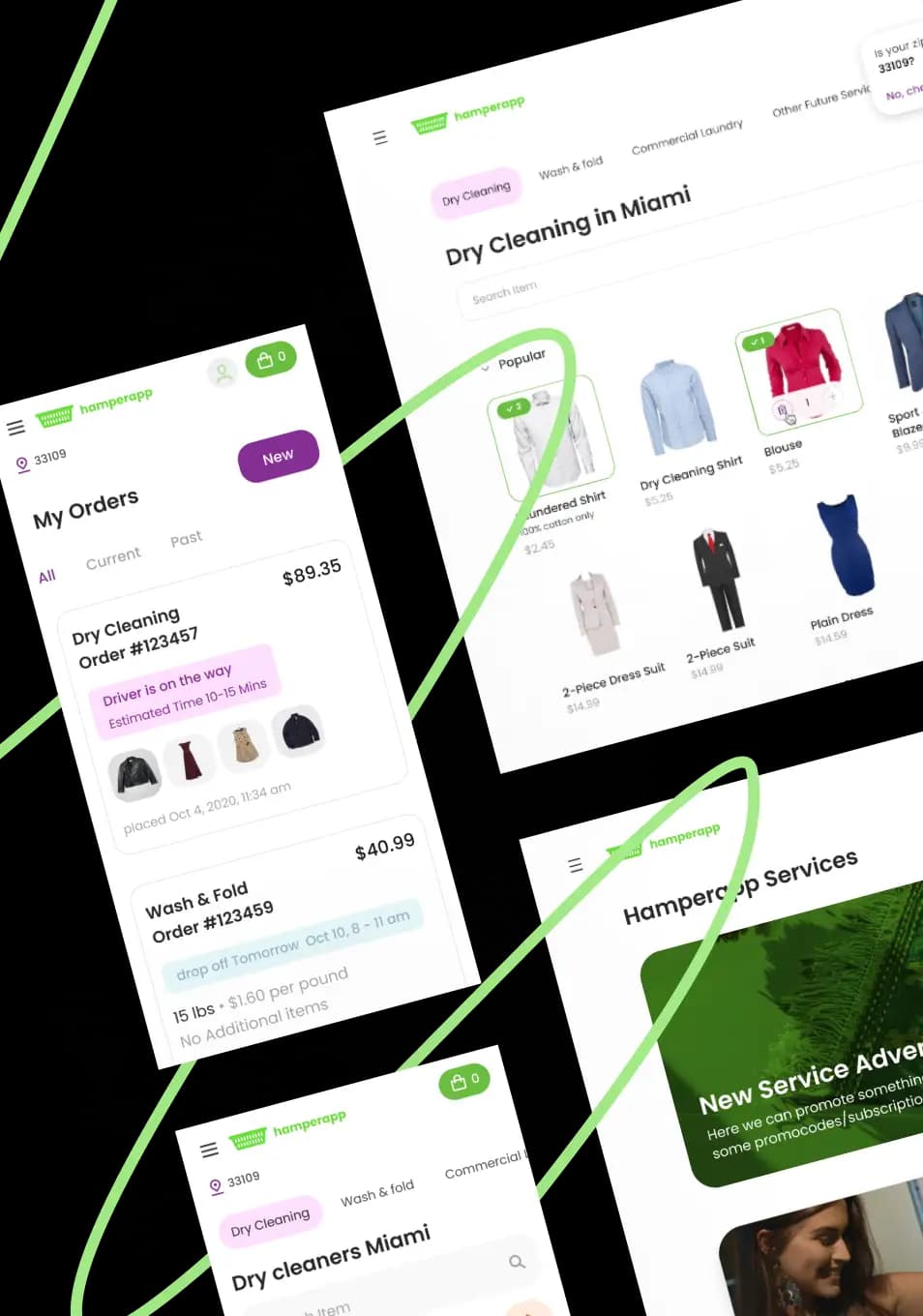
Hamperapp
Hamperapp is an on-demand laundry service from Florida, USA. We developed the iOS app in Swift, and the Android app with Kotlin. We also used Laravel for the backend, and Angular for the web panels. Stripe handles online payments, Ably sends real-time order updates to drivers, and Mapbox powers route optimization for pickups and deliveries.
The result is a native mobile and web ecosystem built for consumers, drivers, managers, and admins. The service now works with almost 80 local laundries and continues scaling.
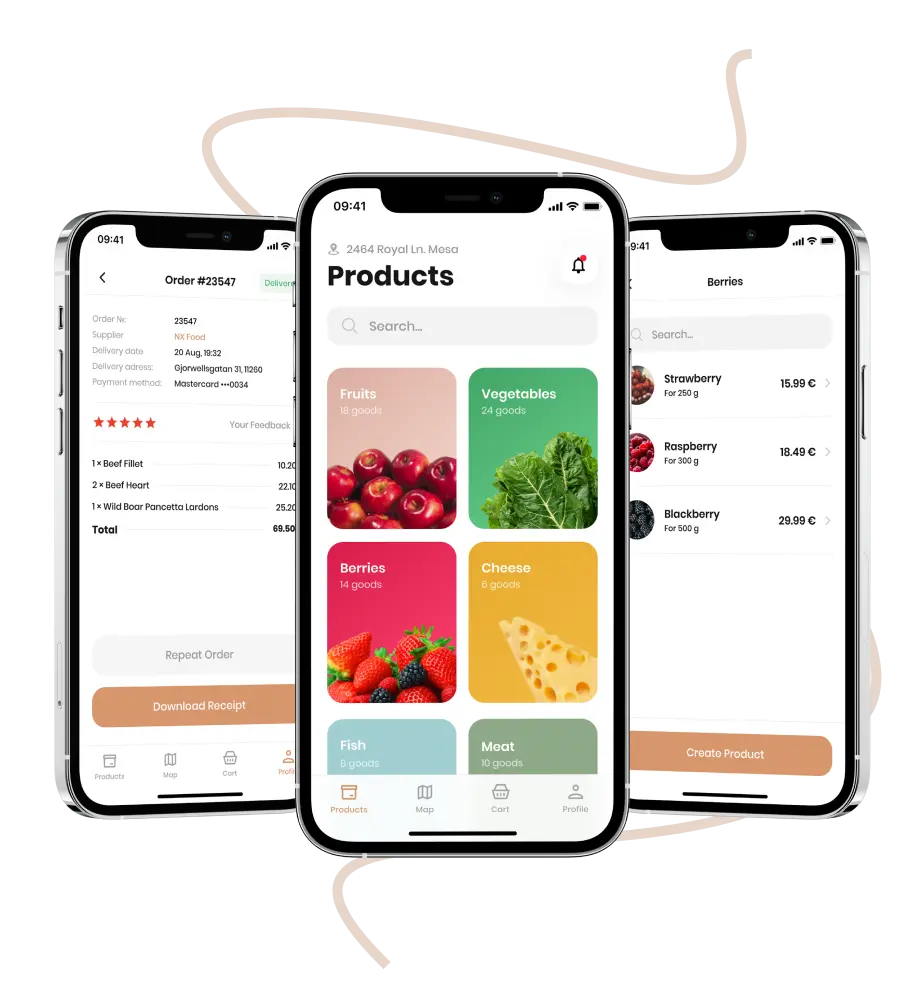
Noah
Noah is a farmer marketplace from Sweden that connects local food producers with consumers. We used Swift for iOS, Kotlin for Android, Laravel for backend. The admin panel was built with Angular and Laravel. Stripe SDK powers in-app payments, Firebase supports analytics and authentication, and Google Maps SDK helps users search by location.
The product was released in 4 months, in time for the harvest season the business depended on.
ShipMe
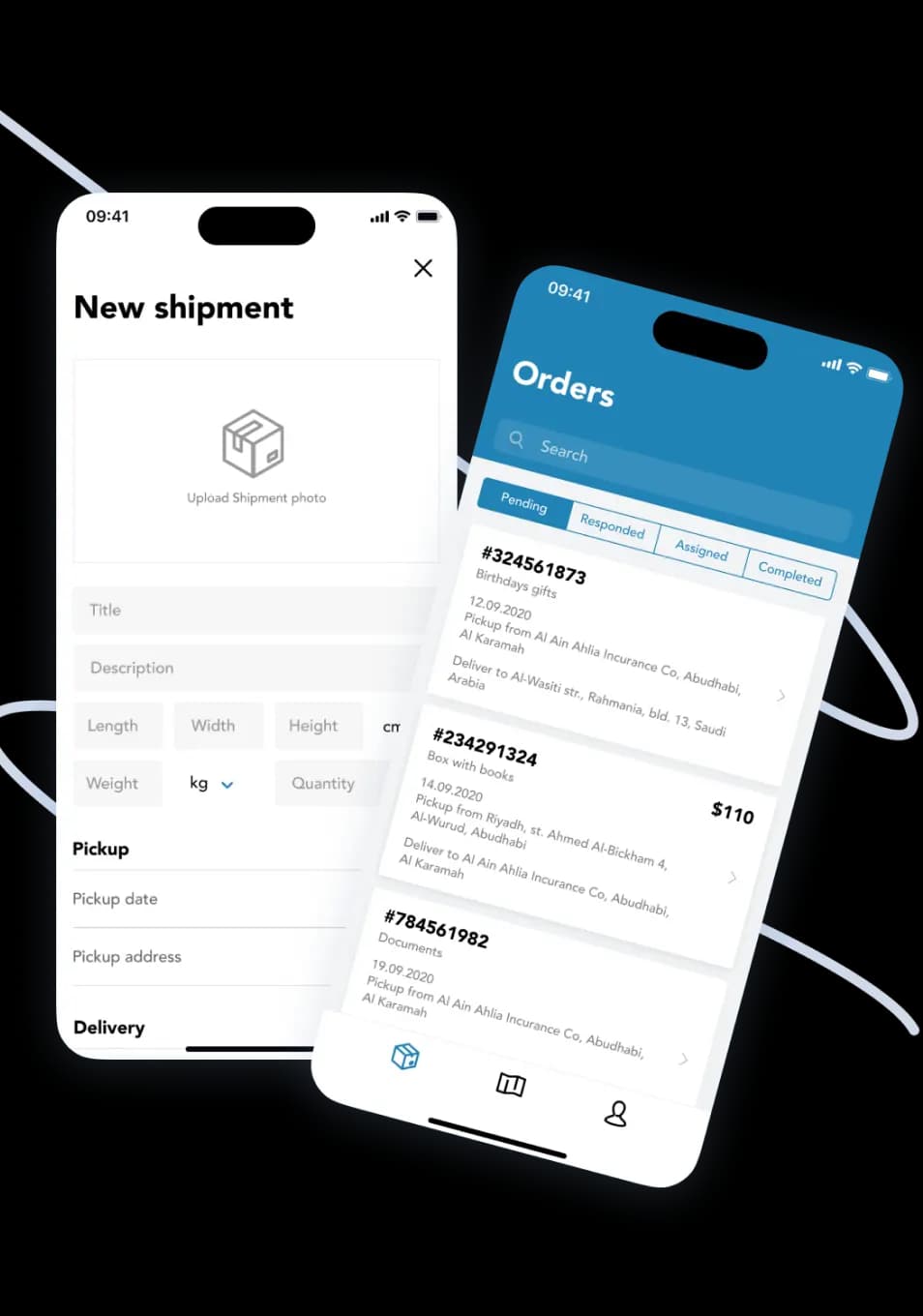
ShipMe is a delivery auction service for Saudi Arabia, built around a reverse auction flow for customers, individual shippers, corporate shippers, and corporate managers. We developed the iOS app in Swift, with Kotlin for Android, plus Angular web interfaces and a Laravel backend. The mobile app uses Firebase Analytics and Crashlytics to track behavior and stability, and Google Maps for location tracking, routing, and navigation.
During a delivery, the app shared the shipper’s location in the background and updated the customer’s map in real time. Built in Arabic and English, the app shipped to both the App Store and Google Play.
Lainappi
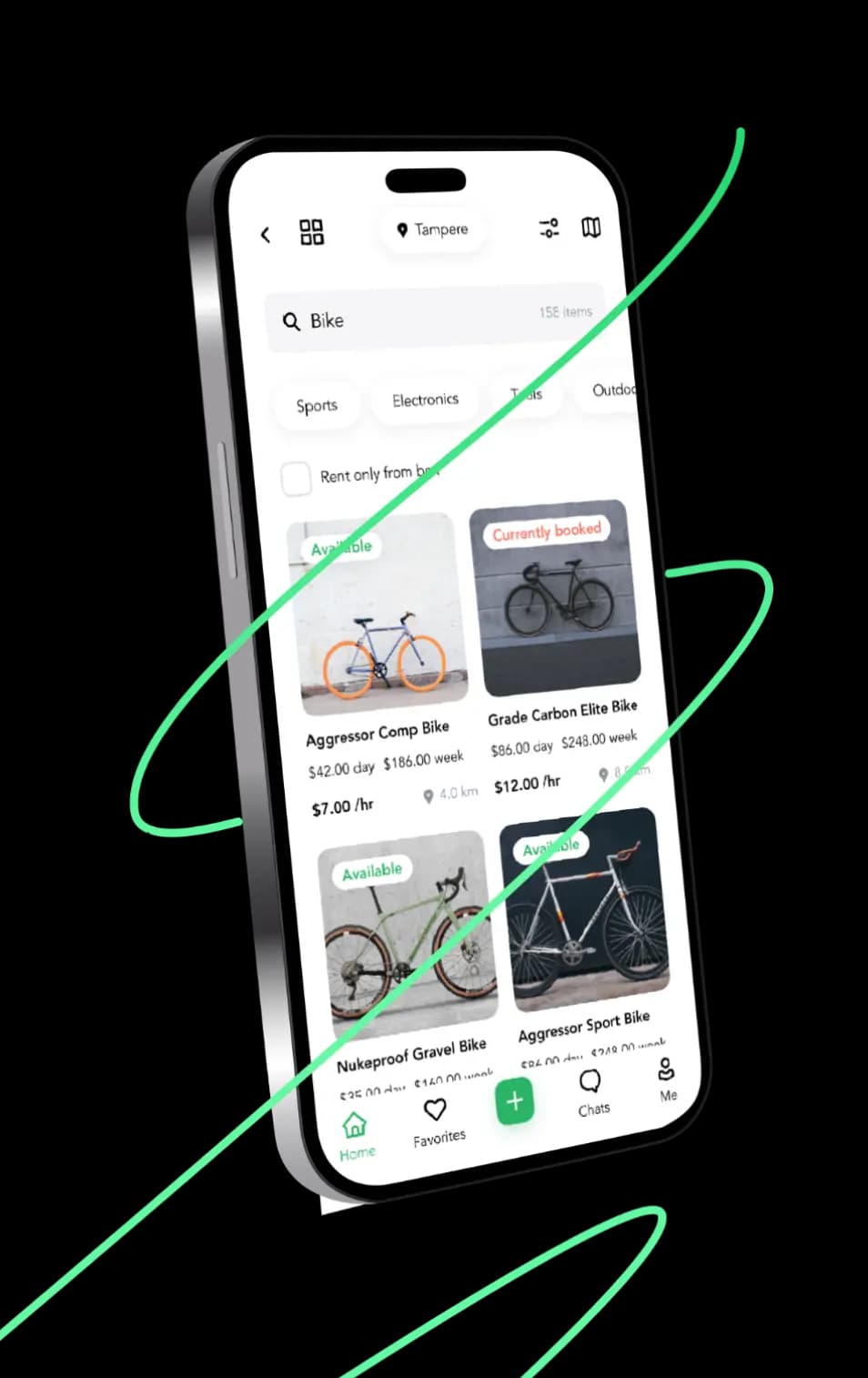
Lainappi is a Finnish rental startup that first came to us for native iOS development services. After analysis, we recommended React Native instead: one shared codebase, lower cost, and releases in both the App Store and Google Play.
The project became a long-term partnership and a good example of choosing what benefits the product, not what sells more development hours.
iOS decisions we lock in before development
Three platform decisions shape an iOS app's architecture and budget — and we settle them with you during the analysis phase, before any code is written.
App Store fees
The fees are not always 30%: Apple’s Small Business Program can reduce commission to 15%, standard terms are typically 30%, while EU/US routes may allow external purchase flows. During analysis, we choose between in-app purchases, web payments, or a hybrid model. This affects subscriptions, backend logic, and reporting.
Apple Developer account
The app belongs to you, not the Ronas IT development team. We publish it under your Apple Developer account, so the App Store page, reviews, ratings, and app history stay with your company. If your account is still being approved, we can start under our account, then transfer the app without losing momentum. No vendor lock-in.
App Tracking Transparency (ATT) rules
User tracking must be permission-based and privacy-first from day one, with clear consent built in to meet Apple’s ATT rules. We plan SKAdNetwork, server-side attribution, and first-party events to measure growth without following users around.
How do we deliver iOS app development services?
- 1
Gather requirements
We start with your business idea, target users, and constraints, and turn them into a free rough estimate. If the scope still has open questions, we recommend an analysis phase before the build: a separate paid step ($2,000-$3,000, 1-2 weeks) that reduces uncertainty and turns that estimate into a sharper, more reliable one. It's optional, with no obligation to continue with development.
- 2
Create UI/UX design
Designers create the app interface and a UI-kit that can be reused as the product grows. We follow Apple’s Human Interface Guidelines, so the interface stays intuitive and easy to use.
- 3
Plan 2–3 week sprints
We work in short 2-3 week iterations. At the end of each sprint, you receive a working app version to review, test, and track progress.
- 4
Establish scalable architecture and write clear code
We build features by priority and keep the architecture flexible for future changes. At this stage, iOS and backend developers work together to implement core app functionality, connect APIs, and integrate the product with iPhone hardware when needed.
- 5
Make sure the software runs stably
Before release, we run a TestFlight beta on real devices, profile performance with Xcode Instruments, and set up crash reporting. This helps us catch stability issues, memory problems, and critical crashes before users meet the app in production.
- 6
Release the software to the store
We plan the App Store review as part of the release timeline: it usually takes 1-7 days, and first submissions run longer than updates. First-submit rejection can happen, so we prepare metadata, permissions, and content policy details in advance, then iterate quickly if Apple asks for changes.
- 7
Provide post-launch maintenance
After the first release, we can keep supporting the iOS app: fix issues, improve stability, adjust the product based on user feedback, and add new features as the roadmap grows.
Tech stack
For native iOS development, we use Apple-first technologies selected around interface complexity, data storage, API communication, and App Store release needs.
iOS mobile app development
The coding language used for iPhone app development
The framework for building user interfaces across all Apple platforms
Open-source database
Tool for making data requests
Cross-platform app development
For teams that need iOS and Android from one shared codebase, we can build the product with React Native.
A framework that allows creation of iOS and Android mobile apps from a shared codebase
A platform that simplifies the maintenance of mobile apps
Coding language compatible with React Native
A tool that ships JavaScript and content fixes to users in hours, without waiting for App Store review
Before we write code, we need to understand what your product actually needs from the Apple ecosystem — and what it doesn’t.
During the analysis phase, we look at distribution, payments, privacy, user flows, and long-term ownership, so the iOS app starts with the right product decisions, not just the right code.
Reviews
Numbers
across 4 platforms