Eco cosmetics marketplace app
An Australian marketplace that connects manufacturers of eco-friendly, organic, and cruelty-free cosmetics with eco-conscious customers.
Project idea
Our client produces organic make-up and skin care products in Australia. Selling their cosmetics on large platforms like Sephora and eBay, they noticed that eco brands get lost in the wide assortment of products.
Australian consumers prioritize natural and ethical cosmetics, sustainable brands, and local producers. Although there are many brands in Australia that meet this demand, they often find it difficult to ‘match’ with the buyer. There are local marketplaces that only promote eco-friendly brands but they don’t provide mobile apps and are less convenient for consumers than Sephora.
So our client came up with the idea of creating a mobile app where local producers of eco cosmetics could easily distribute their products. Buyers will be able to find what they need effortlessly through search and convenient filters. This online marketplace will feature only verified and certified products, ensuring quality and authenticity. Our client will generate revenue from the marketplace through commissions on sales made by vendors.

Our task
We agreed with the client to start marketplace app development with an MVP to quickly enter the market. The project should focus on developing a mobile app instead of a web one to distinguish the online marketplace from its competitors. Additionally, we needed to reduce costs wherever feasible while also ensuring compliance with local laws and securing the platform.
Our approach included the following steps:
Conduct a business analysis and prioritization of features for the first product version
Think through the UX for the application, catering to three roles: seller, buyer, and admin
Create a strong brand identity for the company and design a UI that aligns with the branding
Develop the mobile applications and an admin panel

Business analytics
Firstly, we worked with the client to define the online marketplace's target audience:
Local manufacturers of eco cosmetics:
These businesses aim to increase their visibility and establish a strong market presence. They need a marketplace focusing on a niche market and ensuring their products are represented accurately.
Conscious consumers:
This group includes people concerned about health, the environment, and animals, as well as those with sensitive skin. They care about biodegradable packaging, the absence of harsh components, ethical and eco-friendly production. To meet their needs, we needed to show relevant certifications and offer easy-to-use filters.
As a marketplace app development company, we also conducted an analysis of the main competitors to understand how to stand out from them:
* the interface of these platforms is based on Shopify
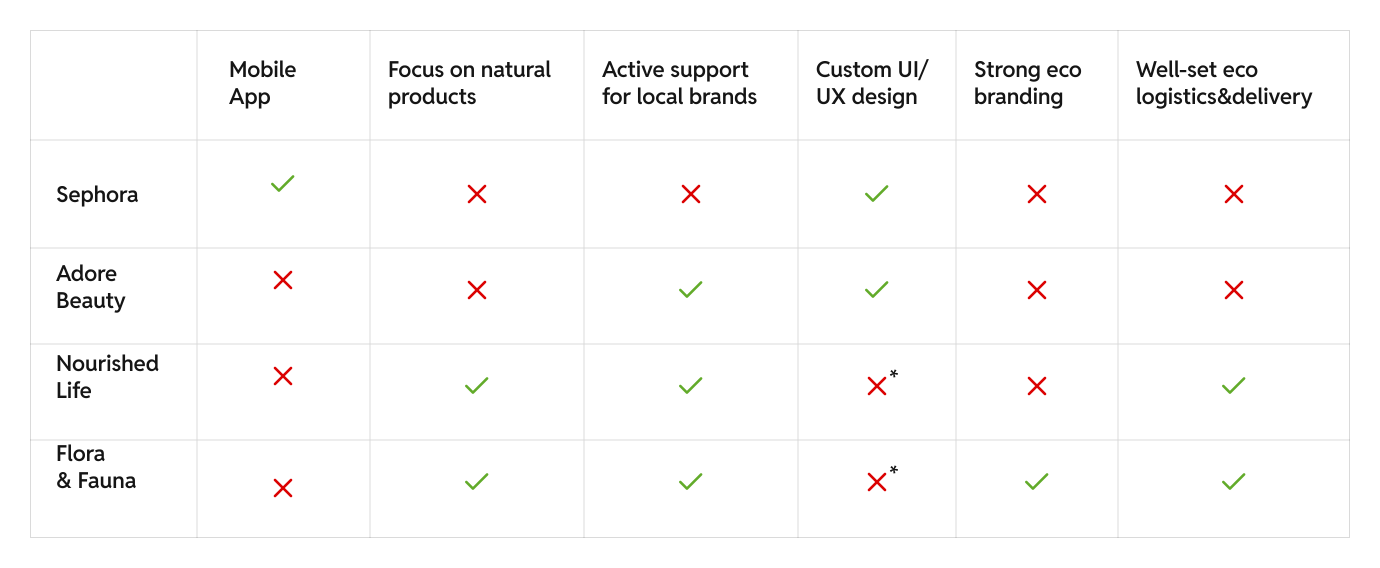
To help the marketplace stand out and successfully enter the market, we needed to develop a mobile app with a custom design and eco branding. The marketplace should focus on ethical cosmetics and local brands, and include delivery options. To reduce the platform's logistical burden, we decided to implement a dropshipping system — at the initial stage, sellers will handle packaging and shipping orders to customers themselves.
Next, we created a list of vital and desired features, described them as user stories to understand the workload, and prioritized them. Together with the client, we selected the features for the first release and then estimated the approximate app development cost and timeline.
UX design
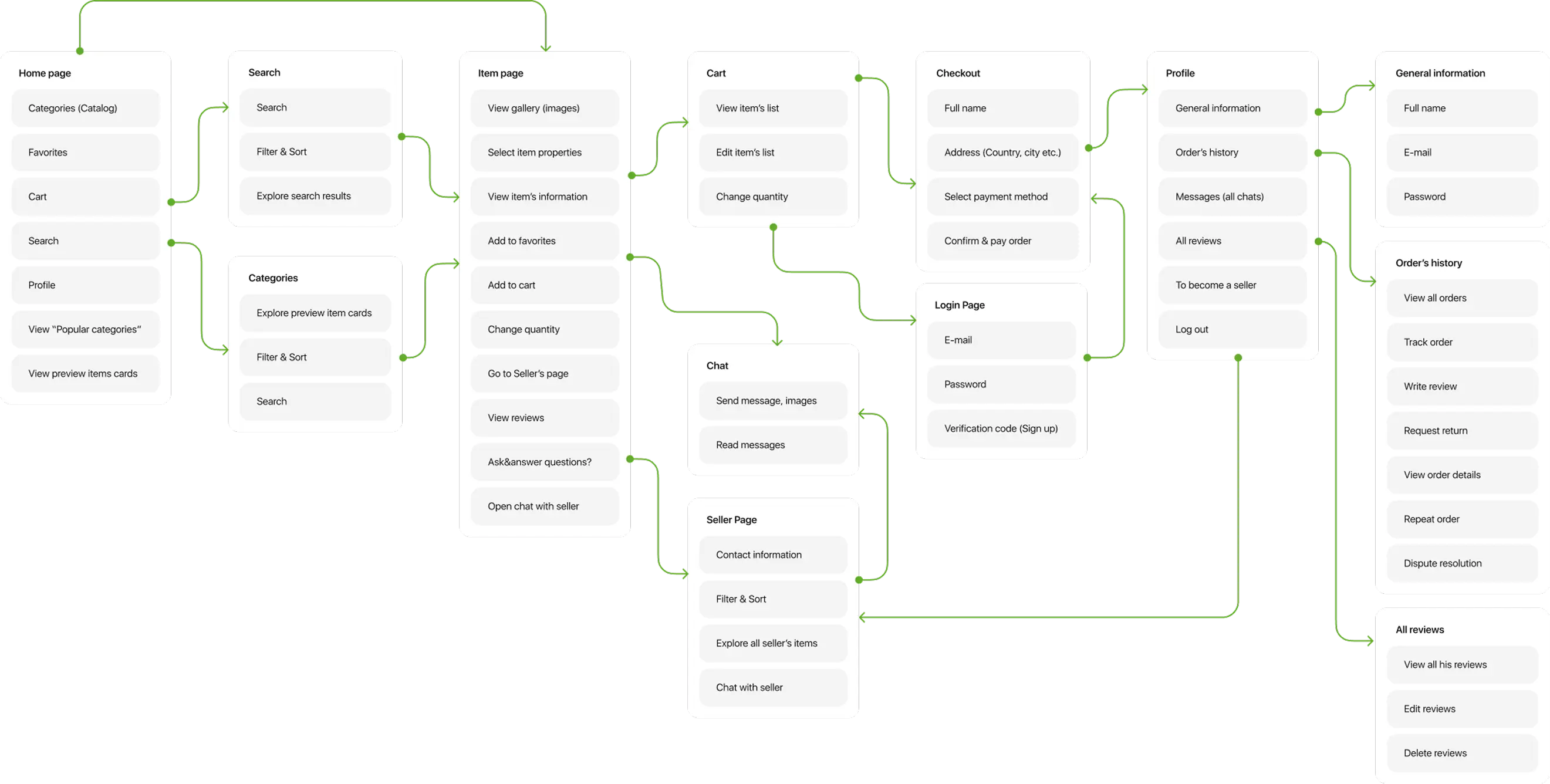
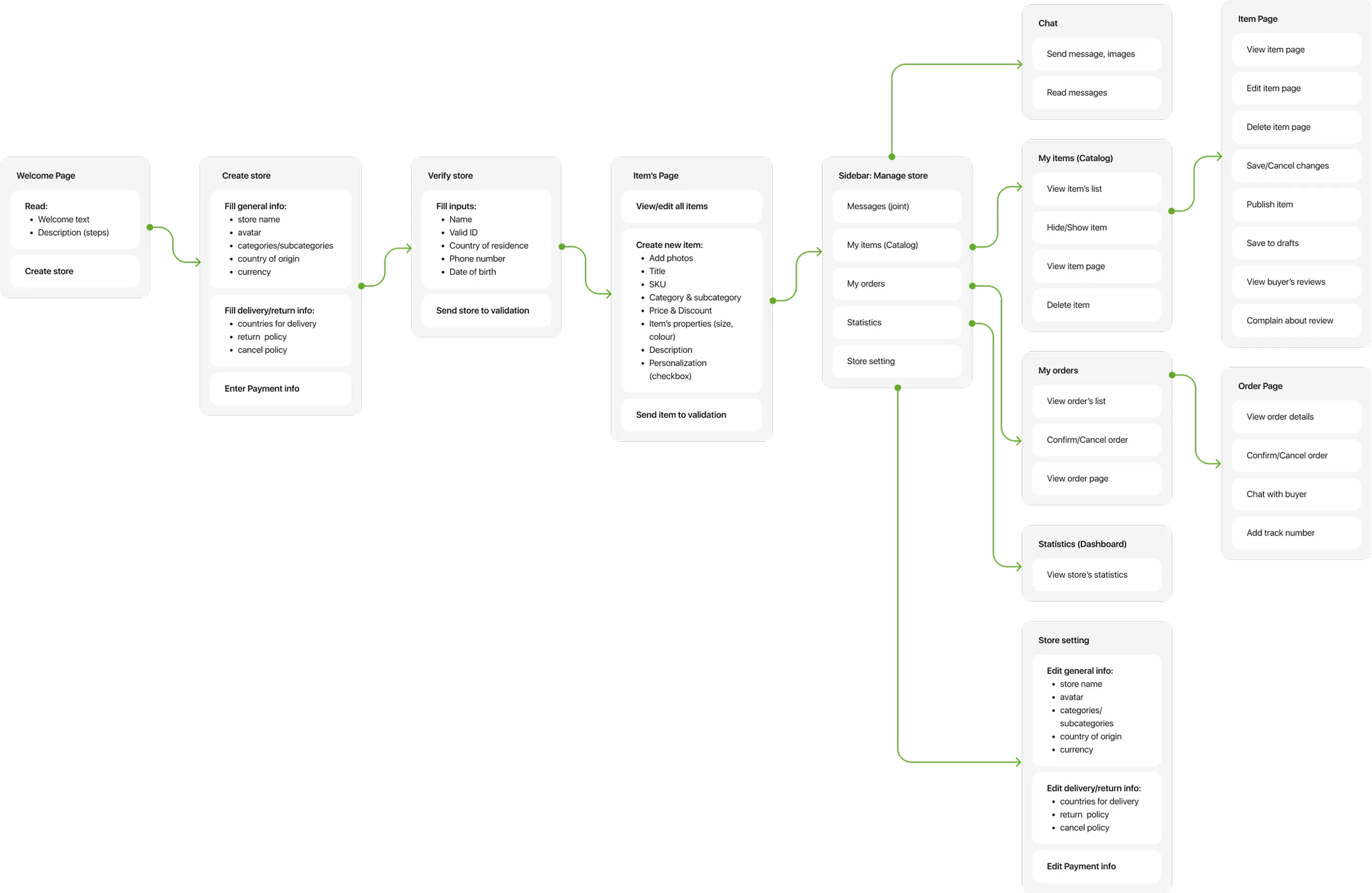
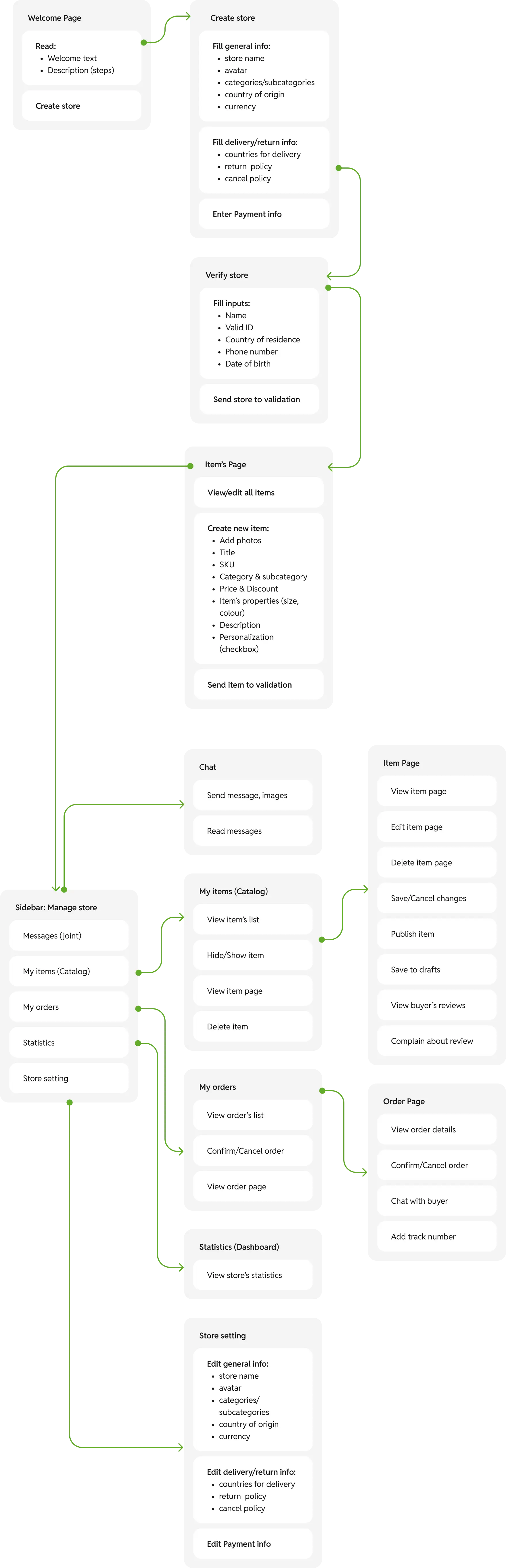
Our first step in custom marketplace development was breaking down functionality for different types of users based on key features. We created flowcharts for customers, sellers, and admins to plan the navigation and visualize how users move through the app.
Customer’s user flow

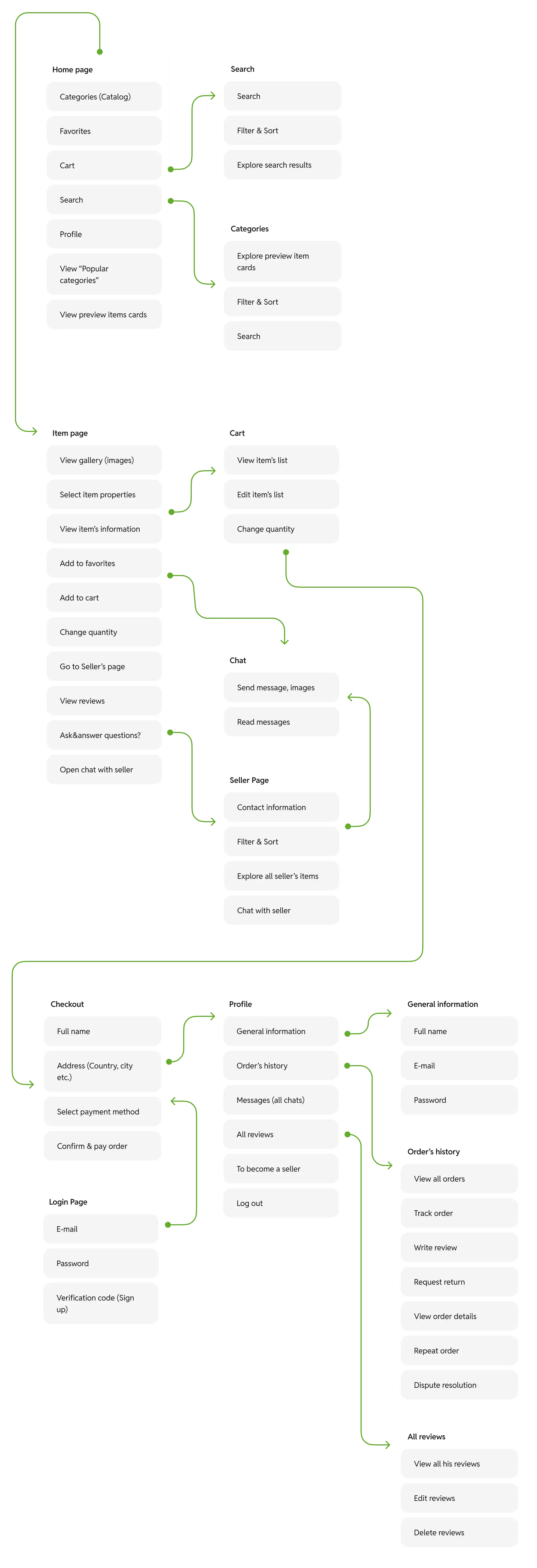
Seller’s user flow
Then we designed low-fidelity wireframes to create the app’s structure and plan how design elements will be placed. At this stage, we only focus on functionality and user flows without paying attention to visual details.
Branding and UI
After discussing the wireframes with our client, we moved forward to the UI design stage. Our task was to create a brand identity for the online marketplace and design the app’s interfaces in accordance with the branding.
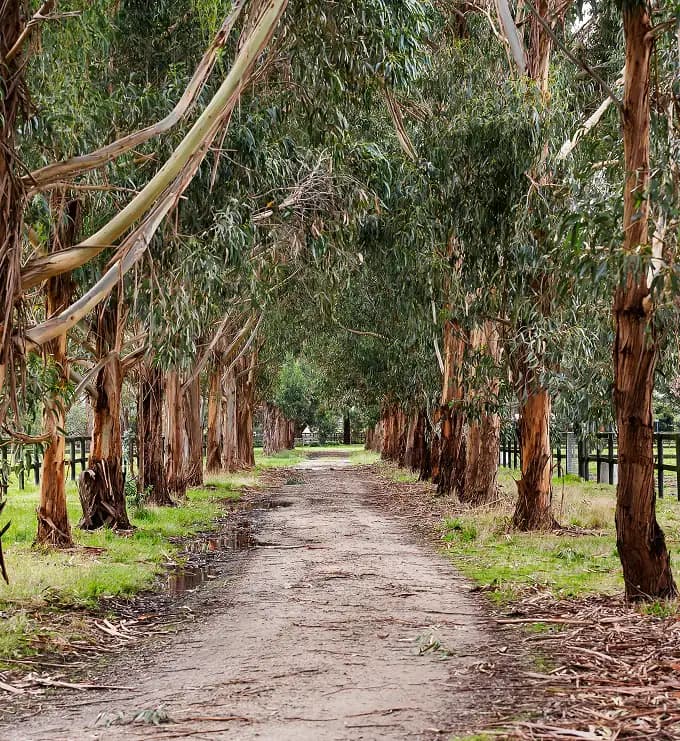
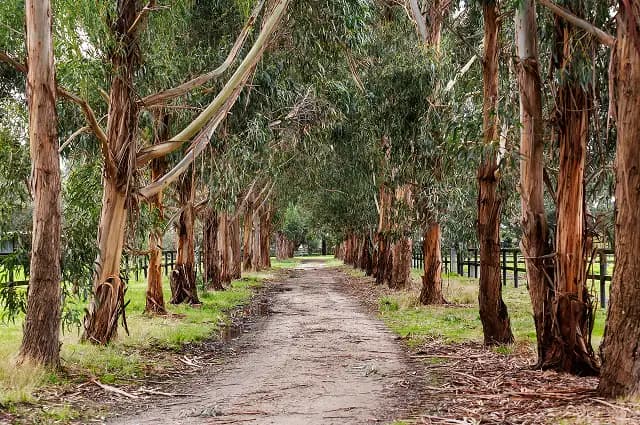
We asked our client to share with us examples of interfaces they like and dislike to help us understand their vision. Then we created a moodboard to elaborate a visual style of the marketplace that corresponds to brand values and goals. The moodboard included images of eucalyptus forests and Australian coastlines, natural and fresh tones, and samples of biodegradable and recycled packaging.
Color palette
and typography
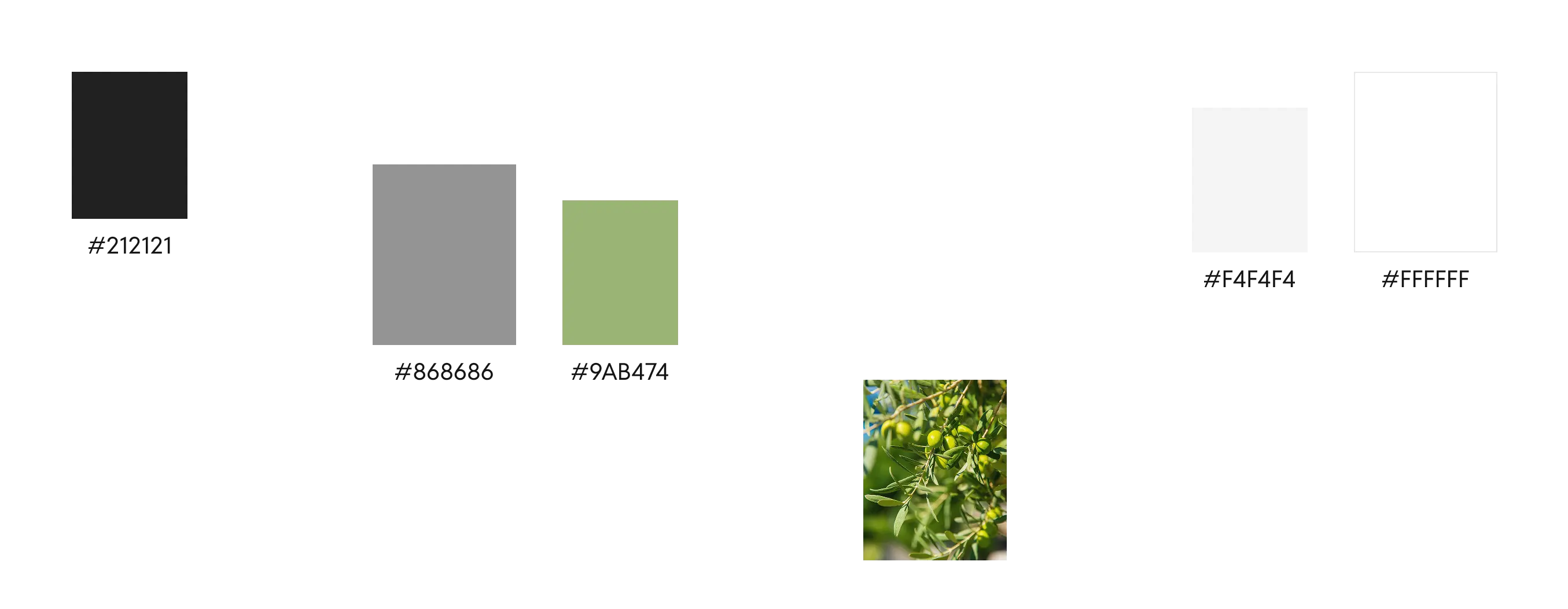
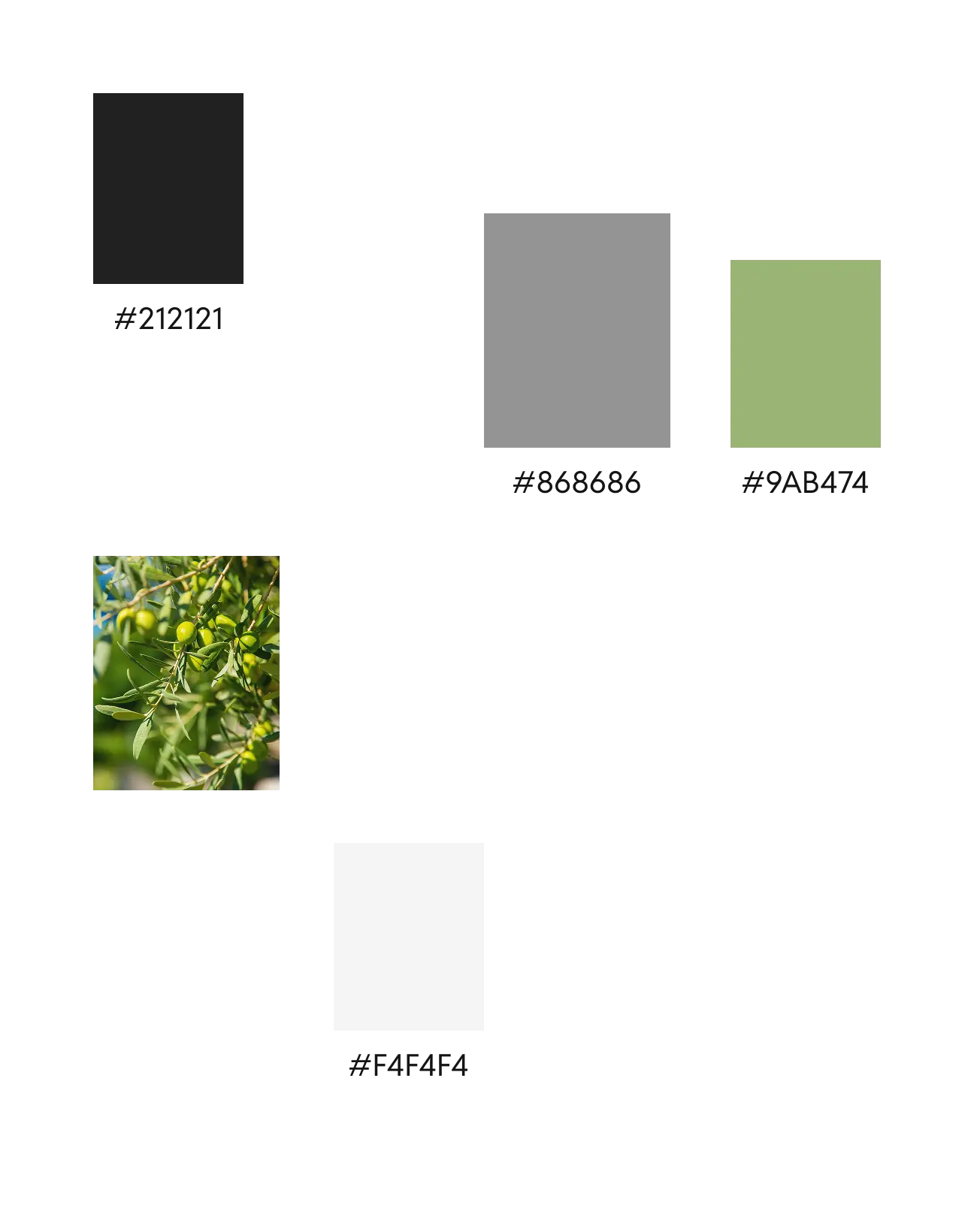
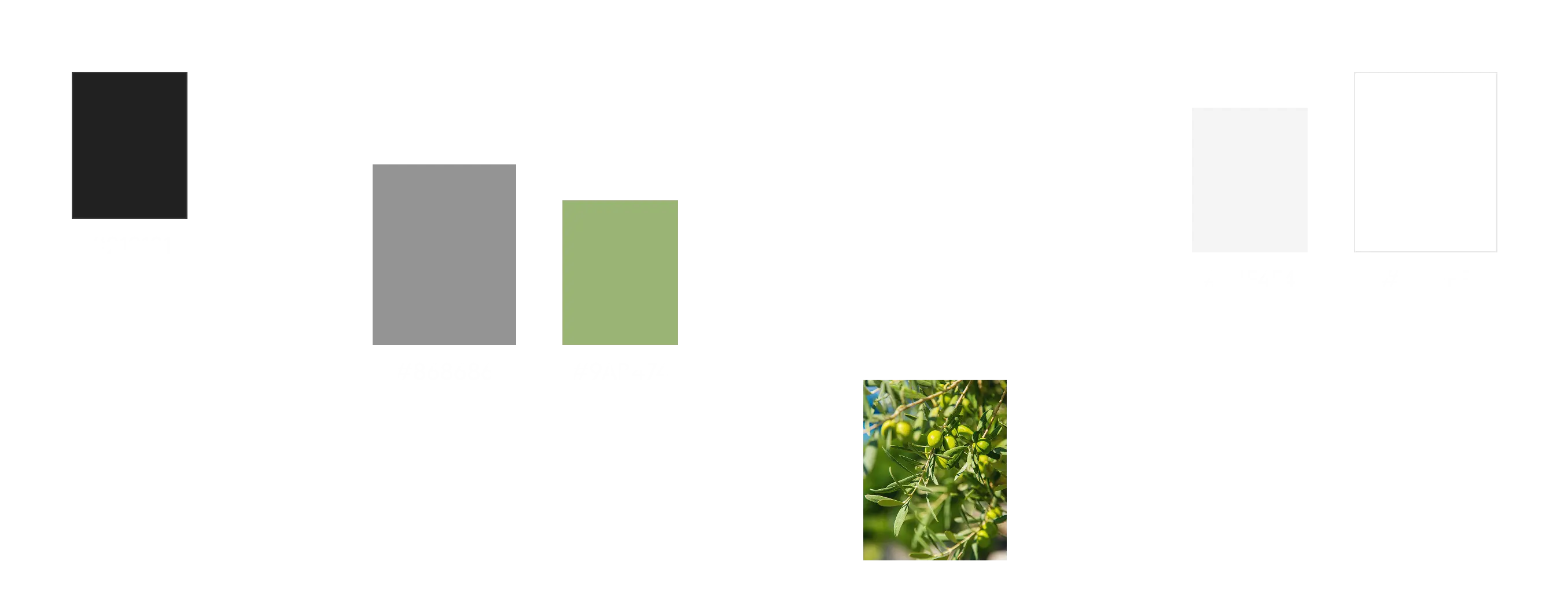
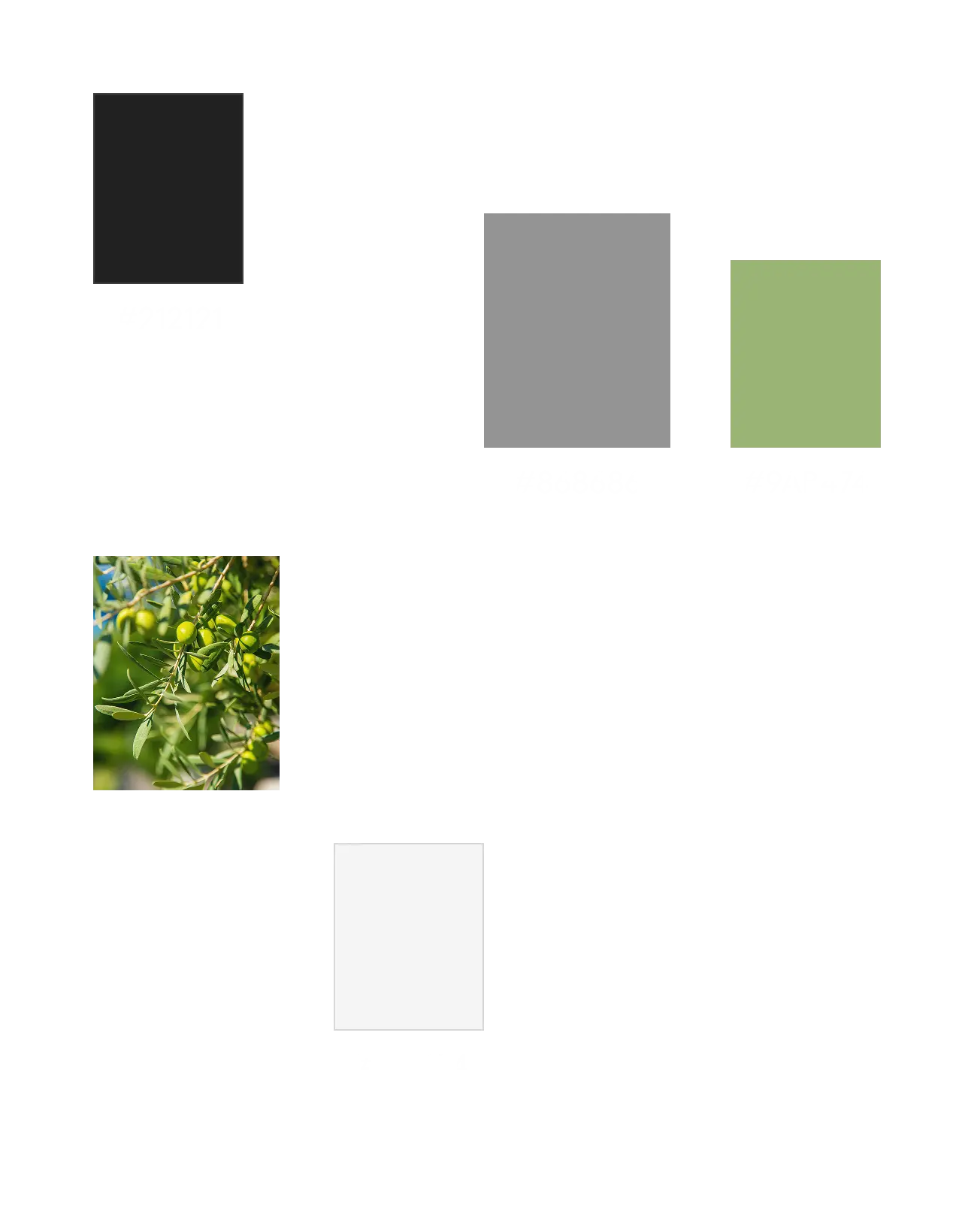
To emphasize the natural and eco-friendly qualities of the products, we selected colors associated with nature. We created two different design concepts with key screens to help the client decide on the design direction. One had soft green and gray shades, while the other one had marine tones — our client preferred the first one.
We used contrasting colors to make the text well visible for people with color deficiency and problems with vision. The sans-serif font that we chose looks modern and clean and is easy to read on all devices. The sellers can add their logos and photos to their profiles and product cards, so we made the UI of the app minimalistic to better represent the brands.
Logo
Due to the NDA, we can't show the logo, but we can describe it. The logo features a stylized eucalyptus branch, symbolizing natural purity and its Australian origin. Eucalyptus highlights the brand's values of sustainability and naturalness.
Illustrations
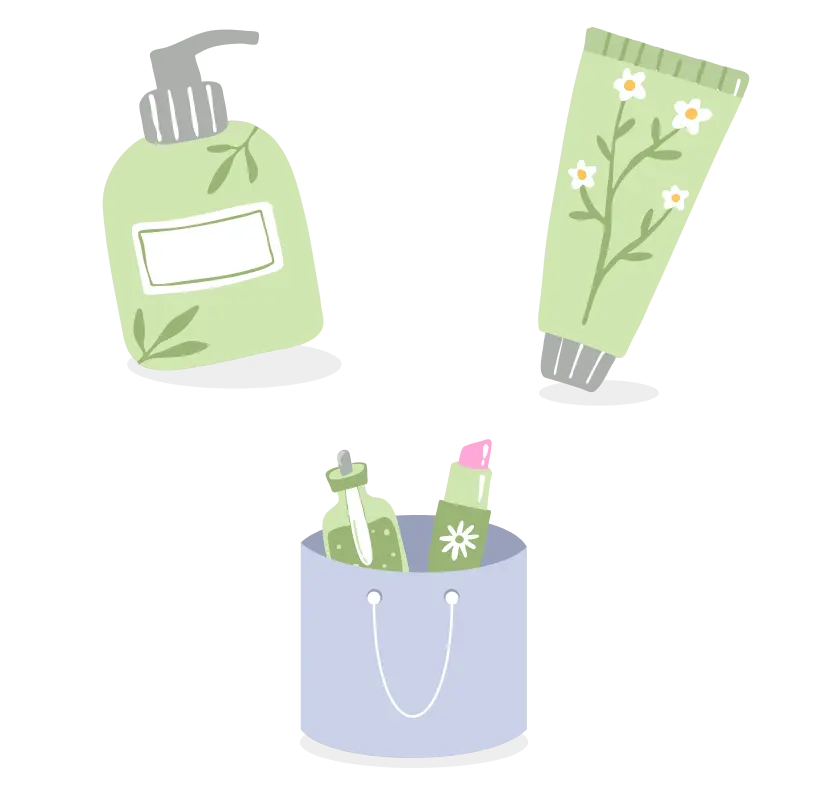
We also designed simple illustrations of makeup products that complement the custom marketplace app’s aesthetics without overcrowding the interface.
Key Features
Authorization
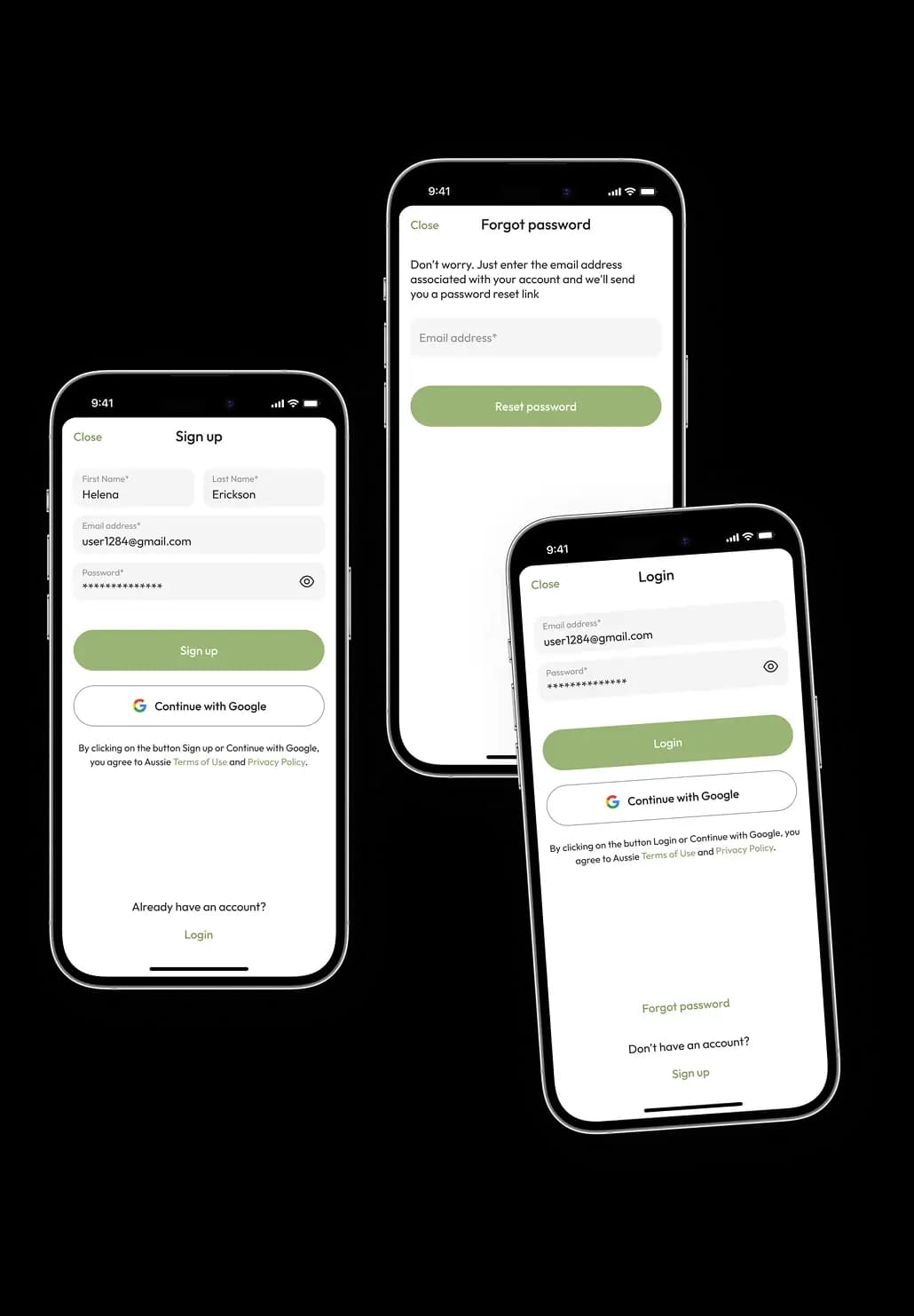
Users can sign up and login using a Google account or an email address.
Profile
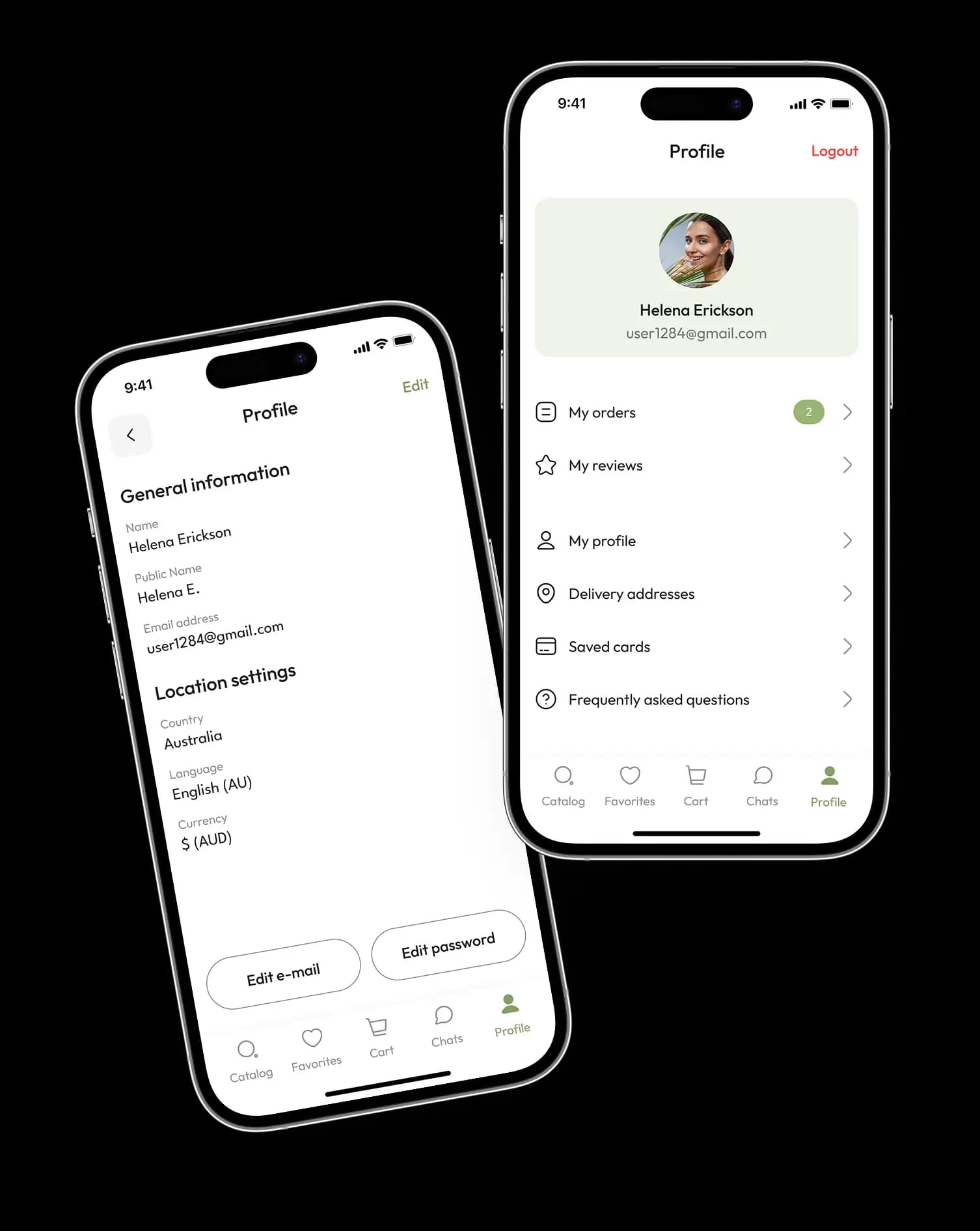
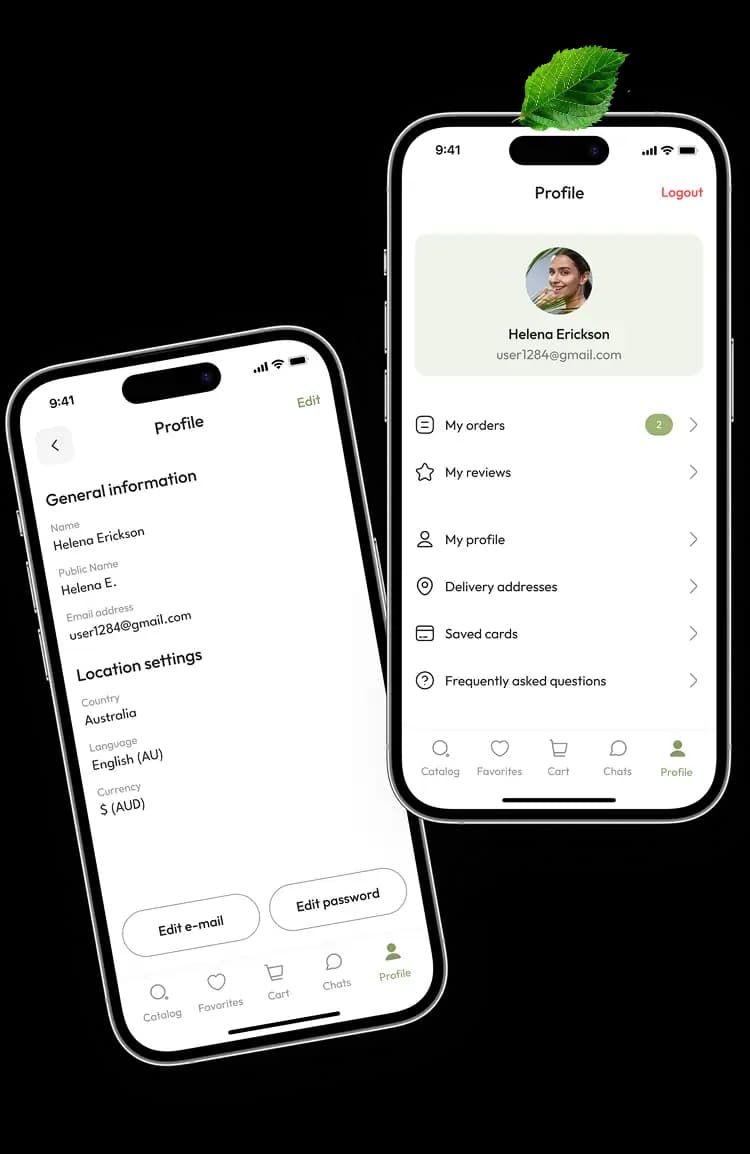
Buyers have a profile where they can see their orders and reviews and change their info like delivery address and cards.
Catalog
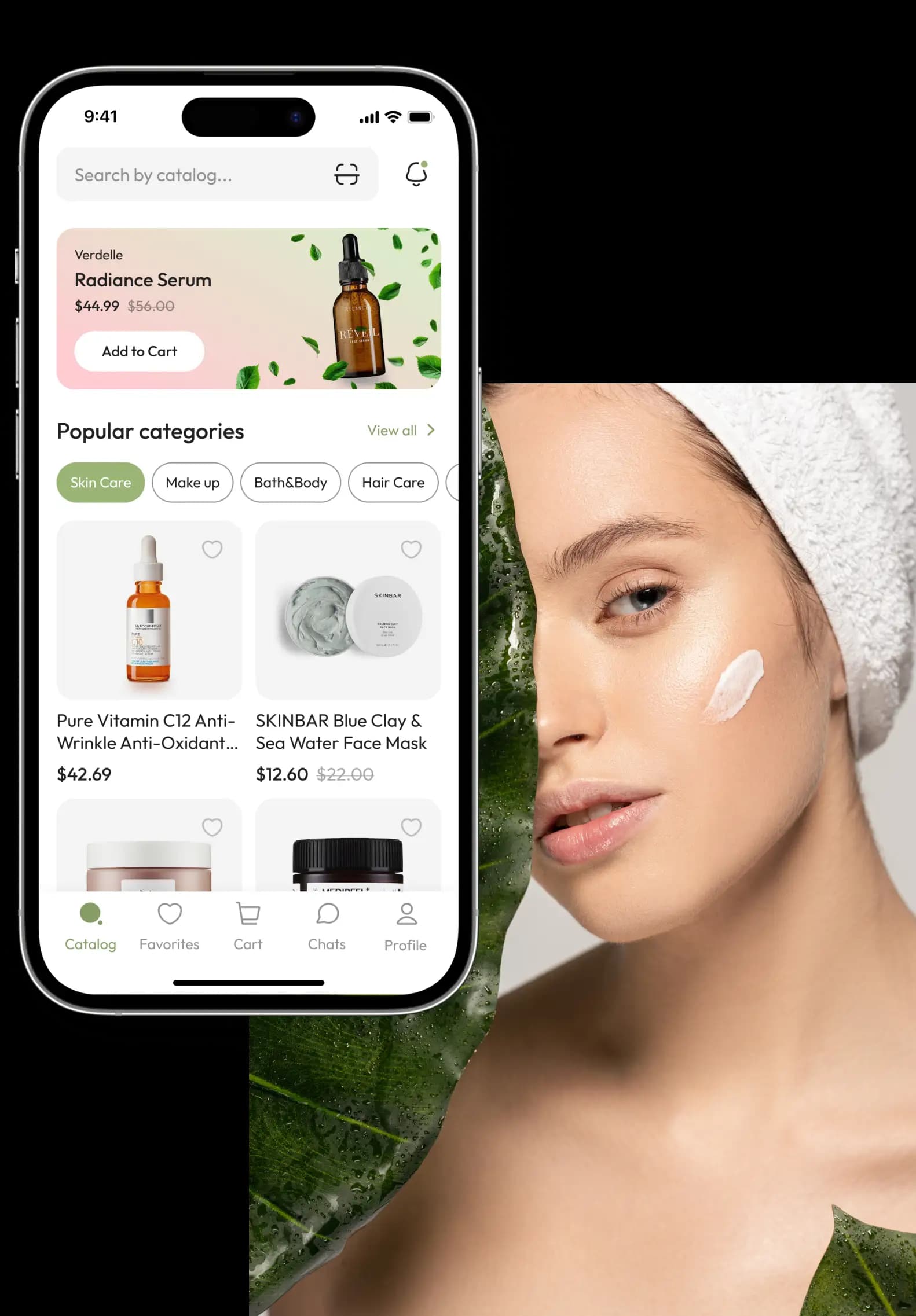
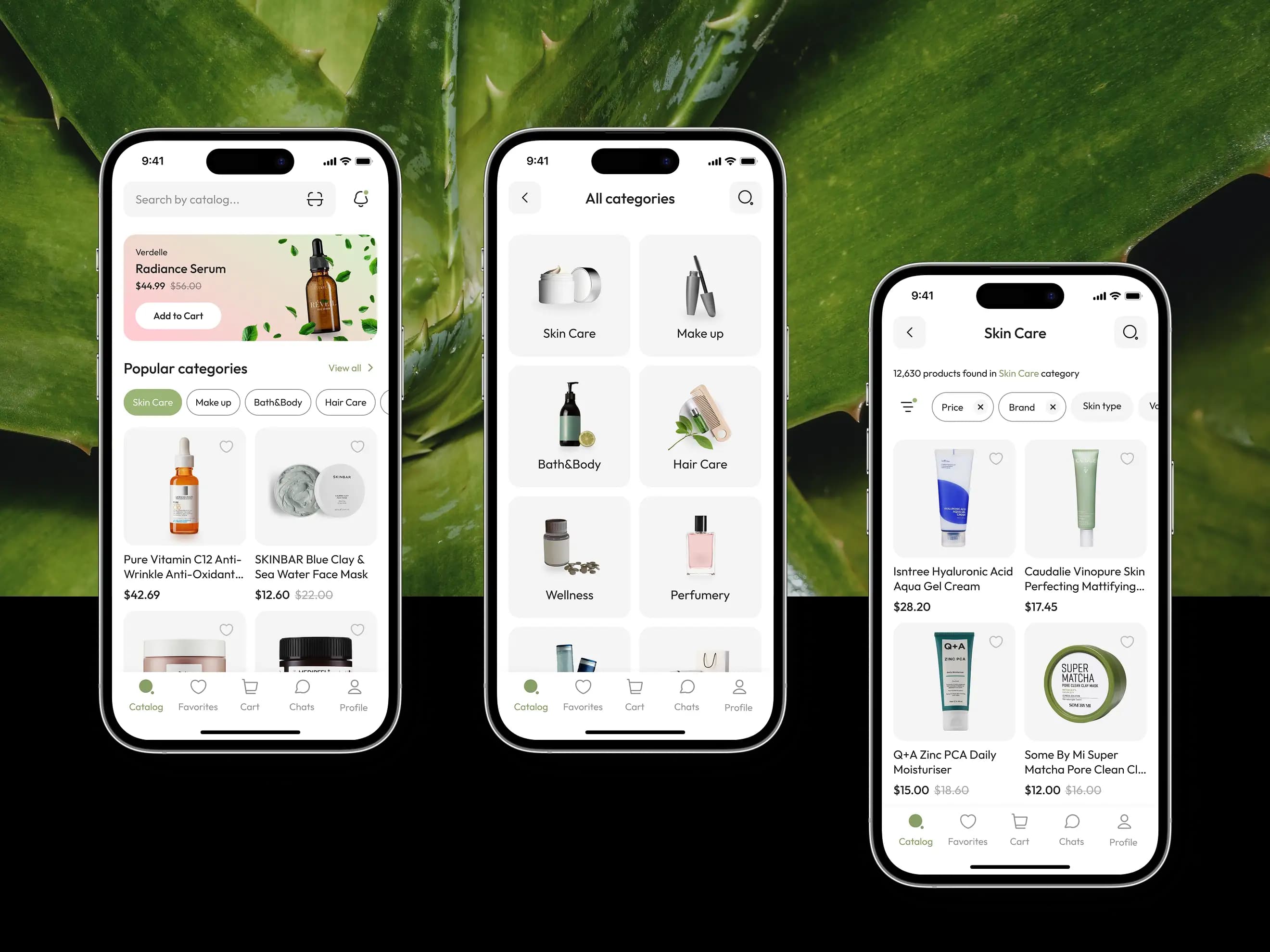
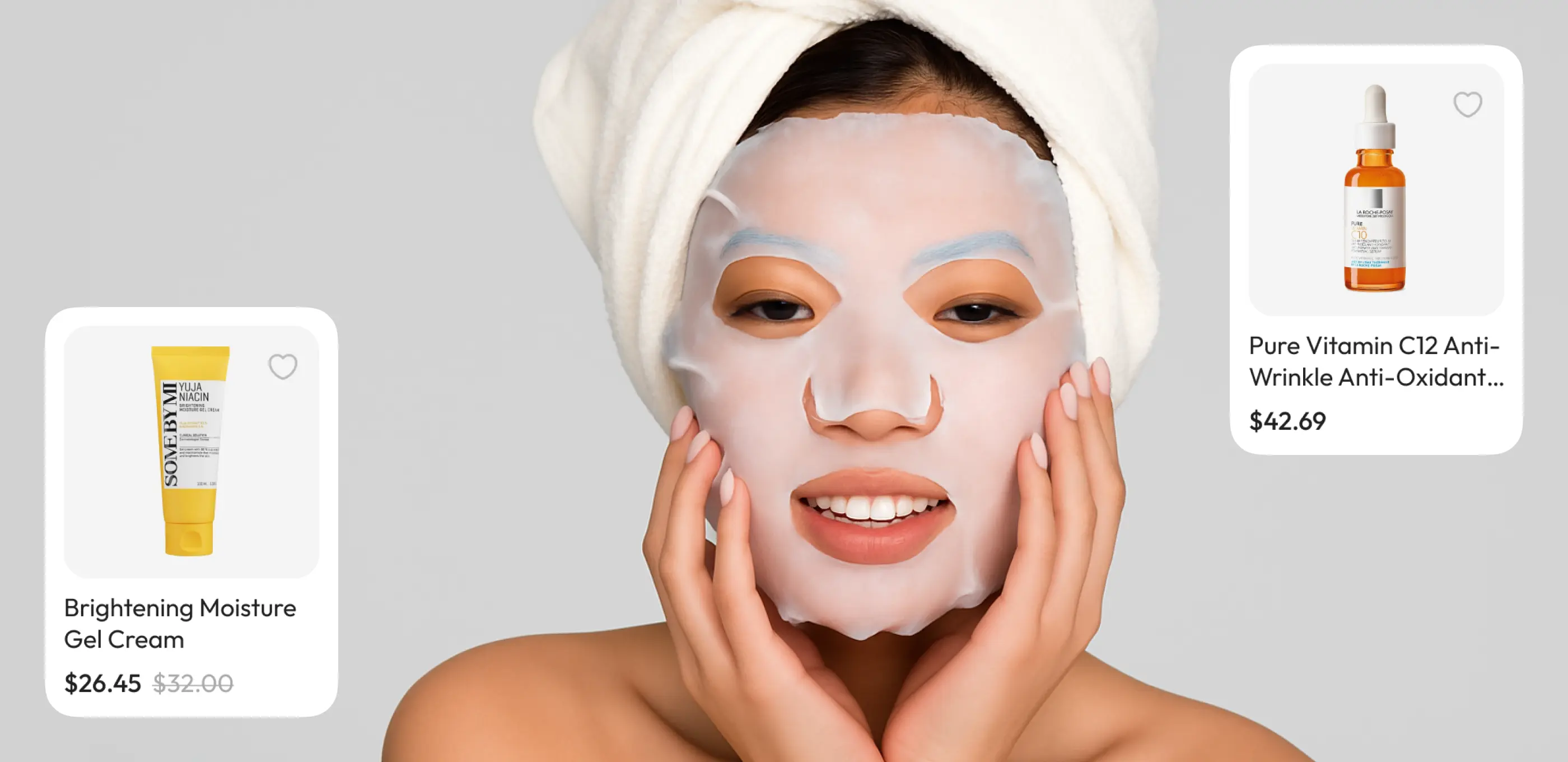
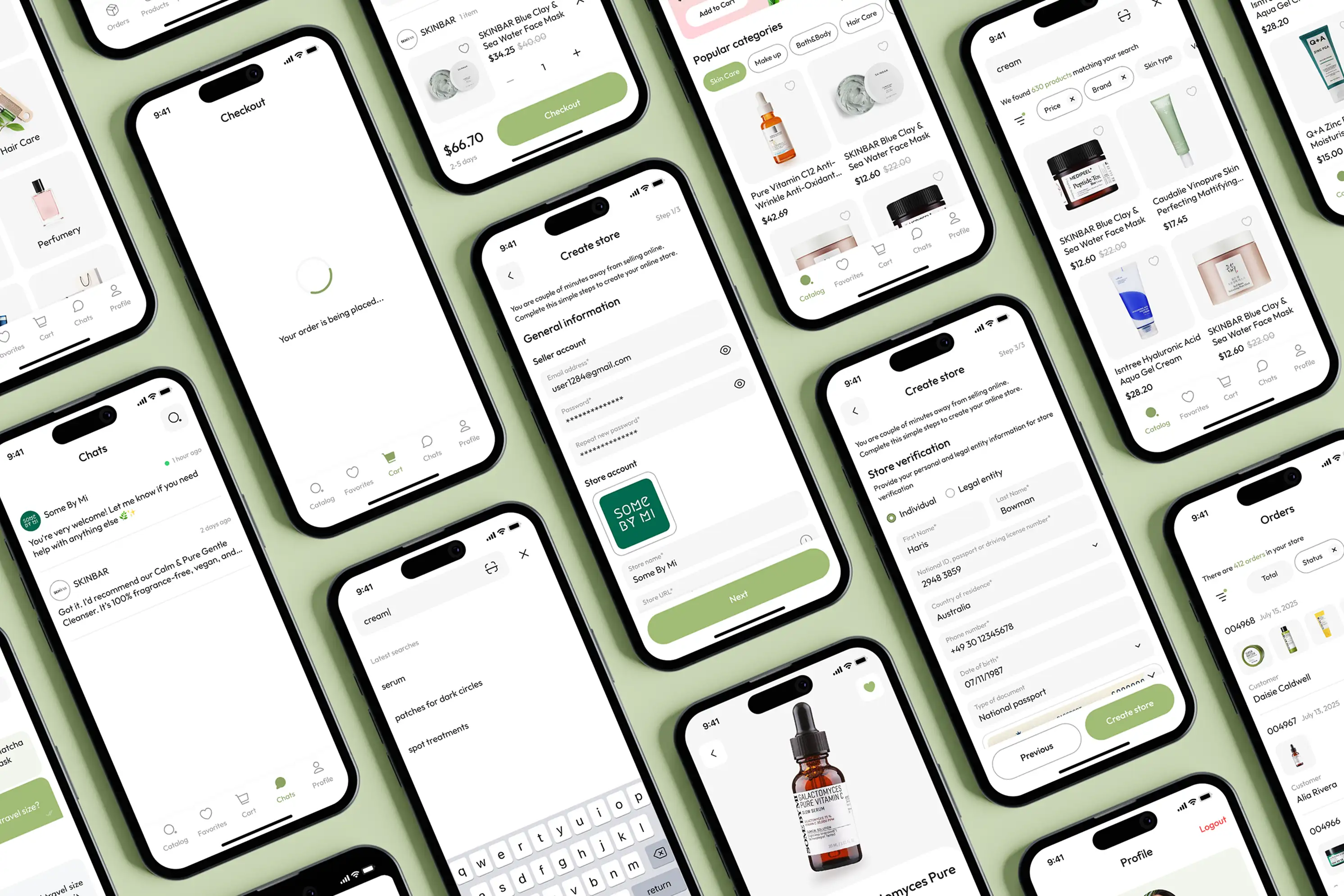
On the main screen, customers see the catalog of top rated products and popular categories, as well as products they recently viewed.

Search and filters
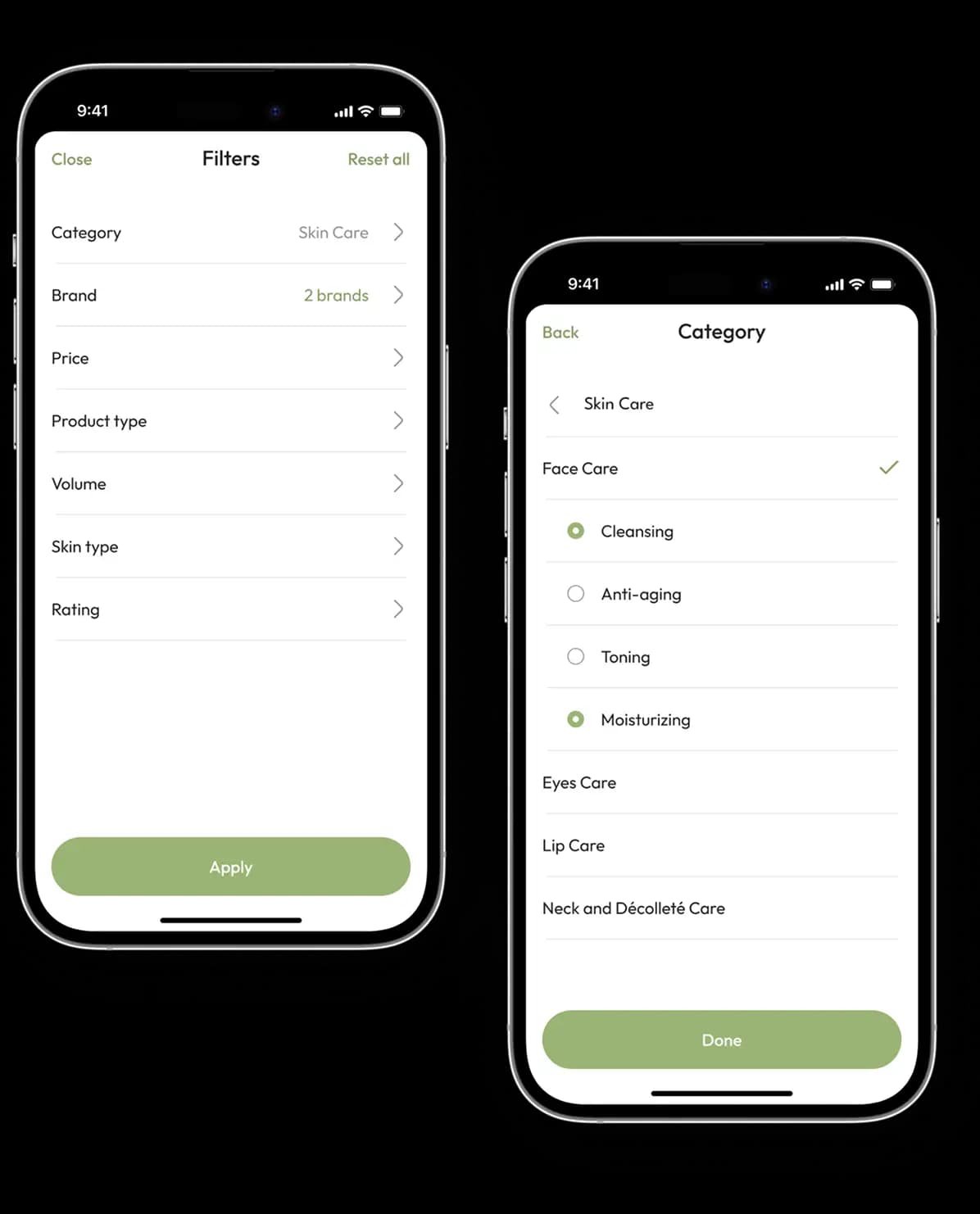
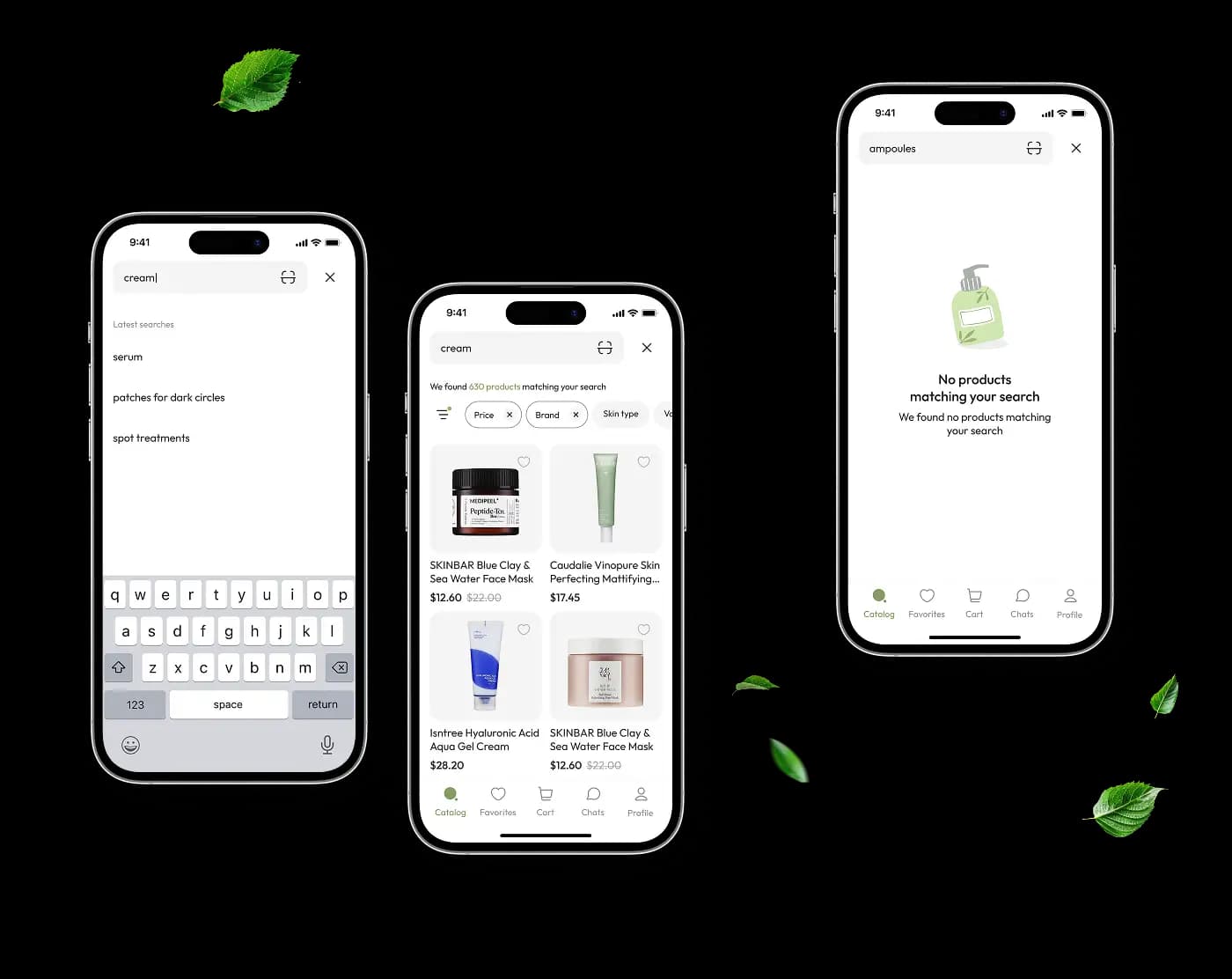
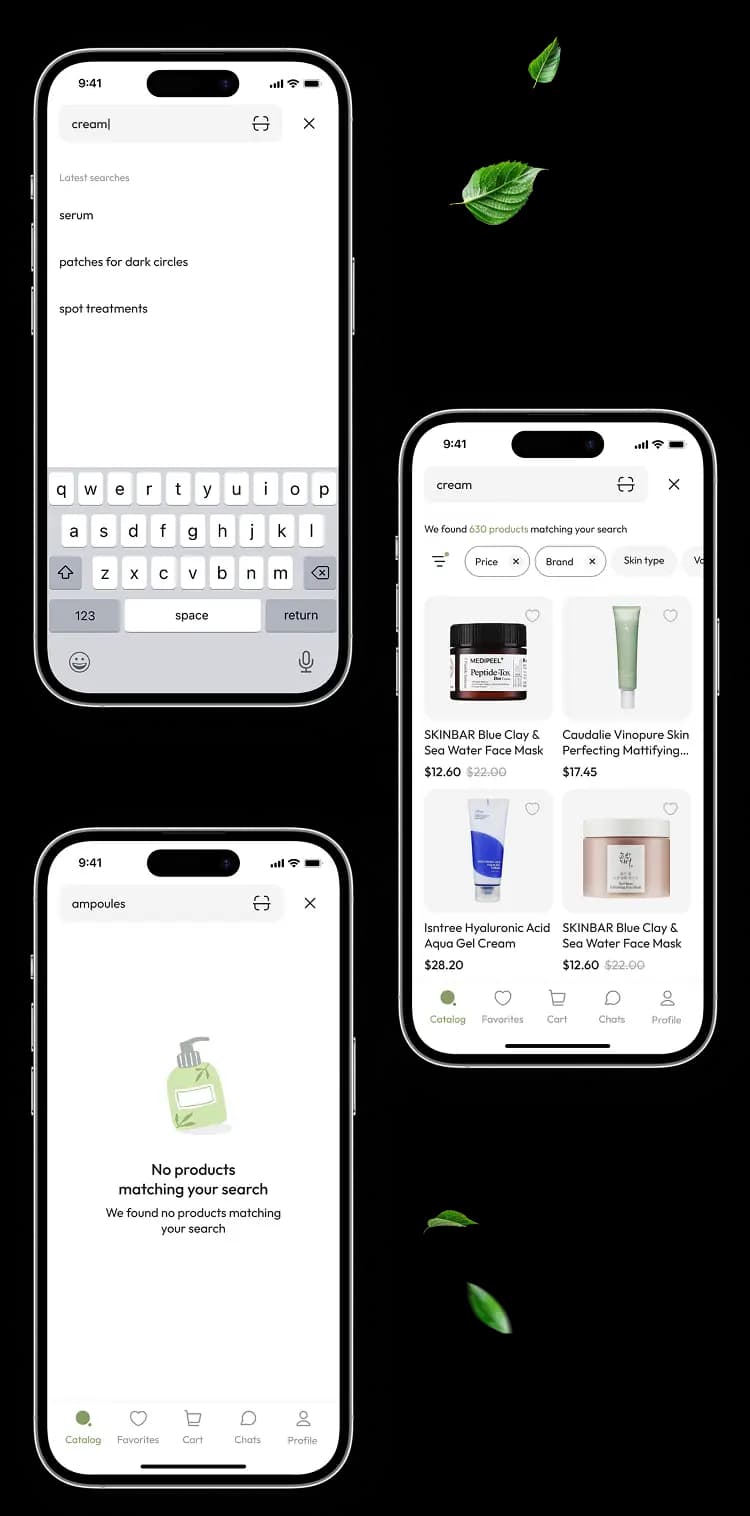
We designed a simple and intuitive search with sorting options and filters. Customers can select cosmetics based on skin type, hair type, desired ingredients, and even certifications.
Item details
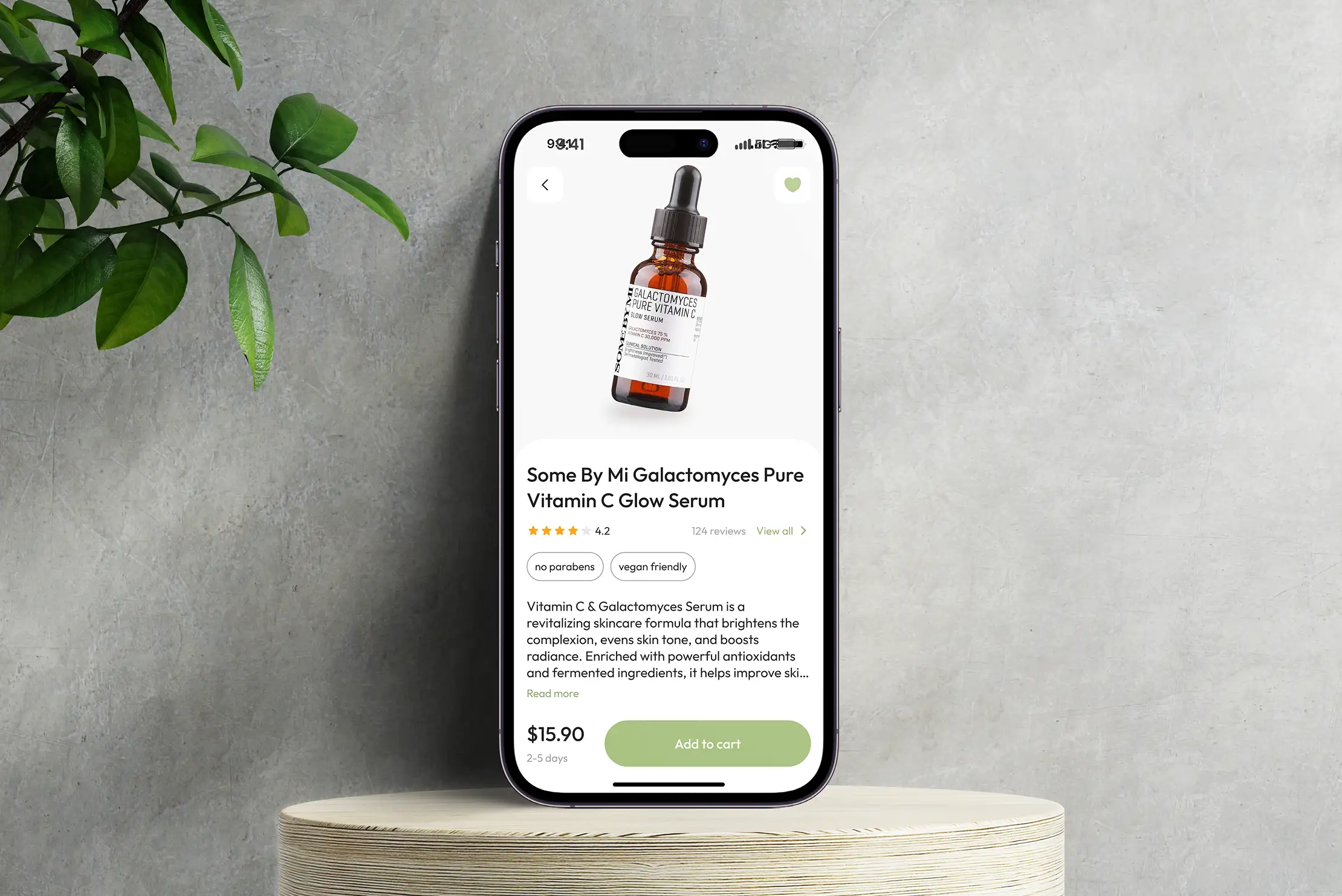
The item card contains important information like certifications, item description, delivery and return policies.
Cart
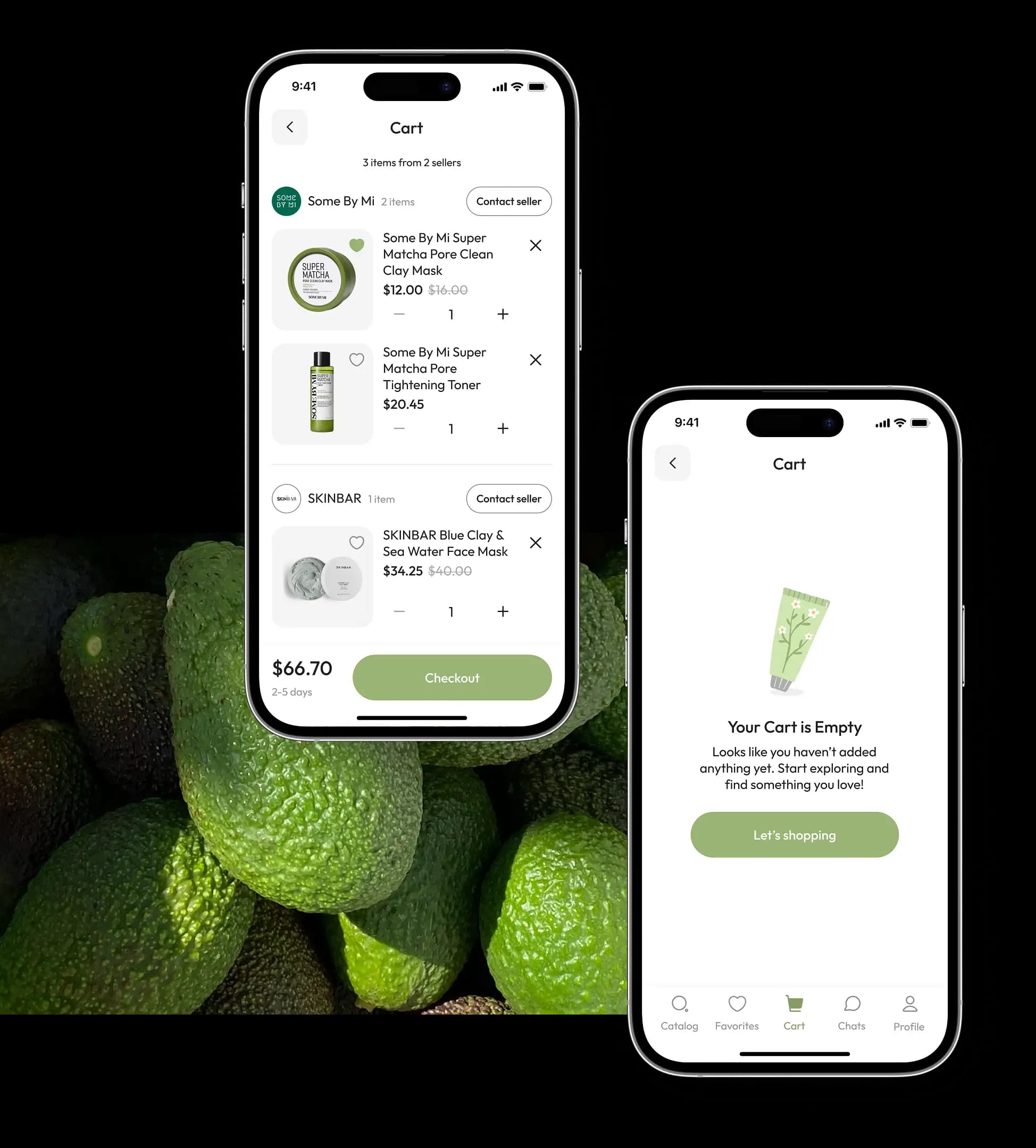
The cart groups items by seller, showing product details, with options for quantity adjustments. It features clear checkout and contact buttons, along with an empty state prompt to continue shopping.
Chat
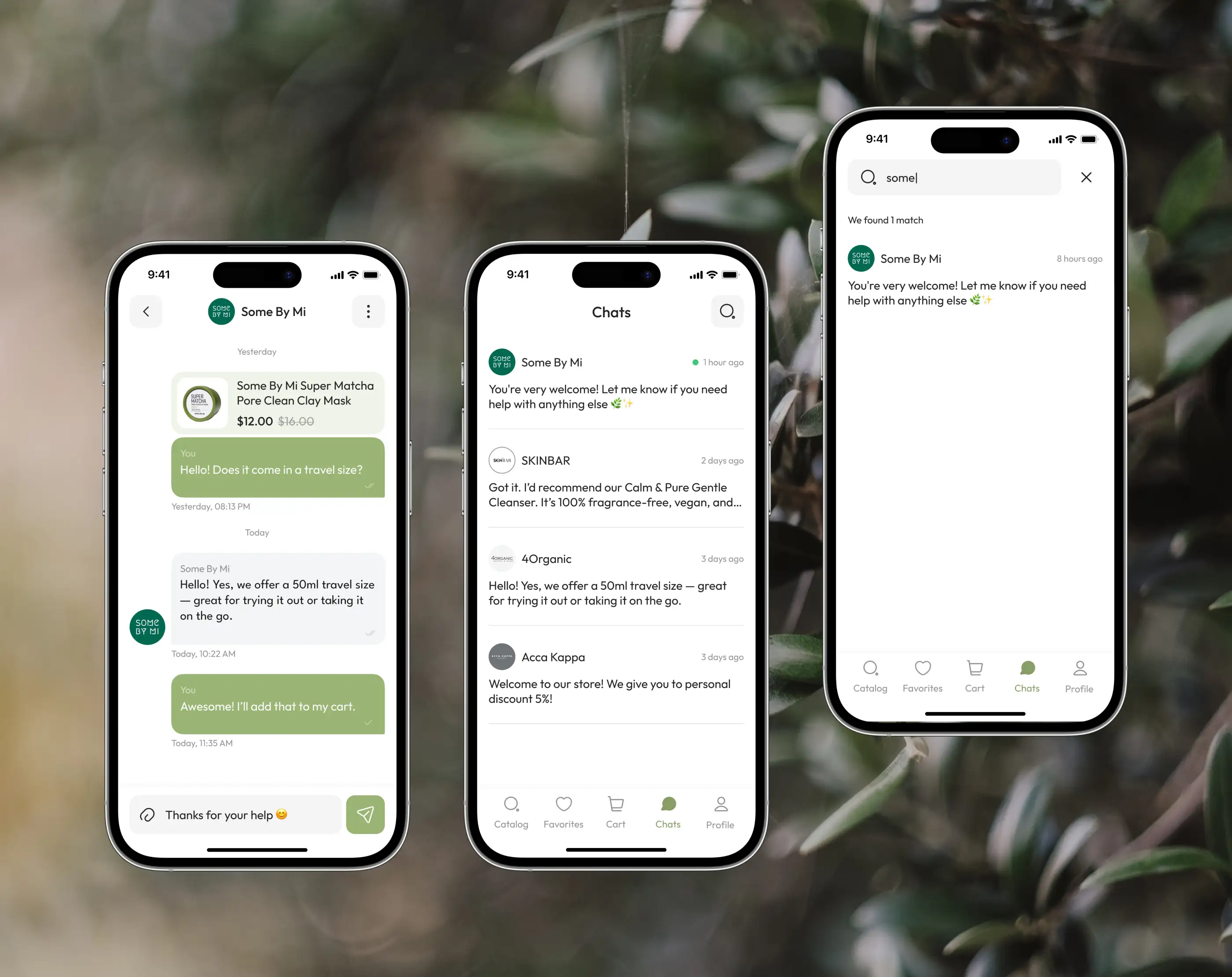
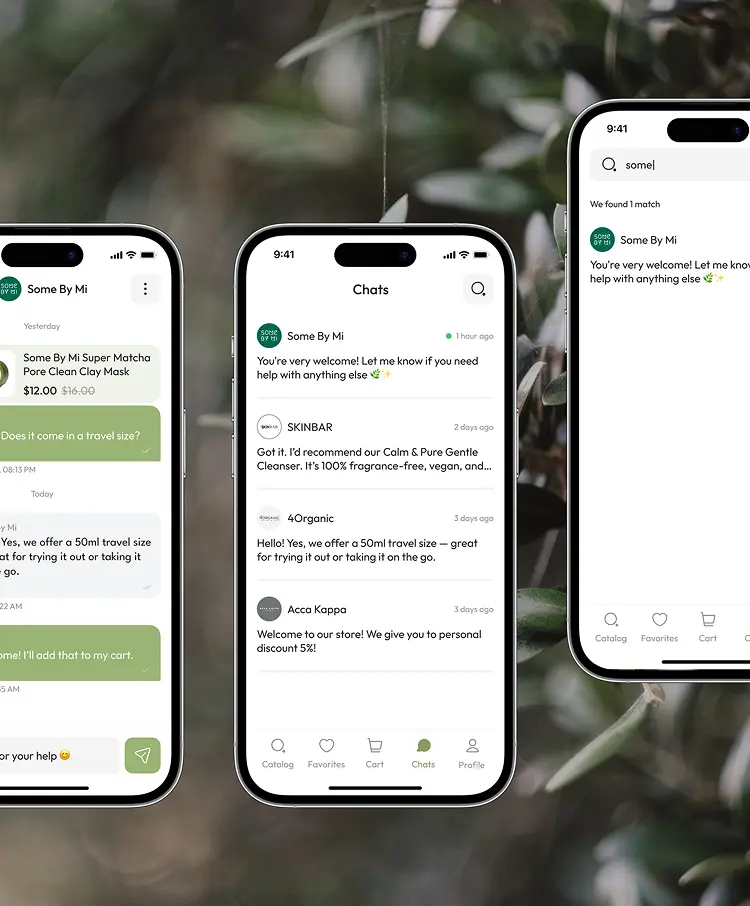
The chat features recent conversations, a search function, product details for context, and an easy option to delete chats.
KYB
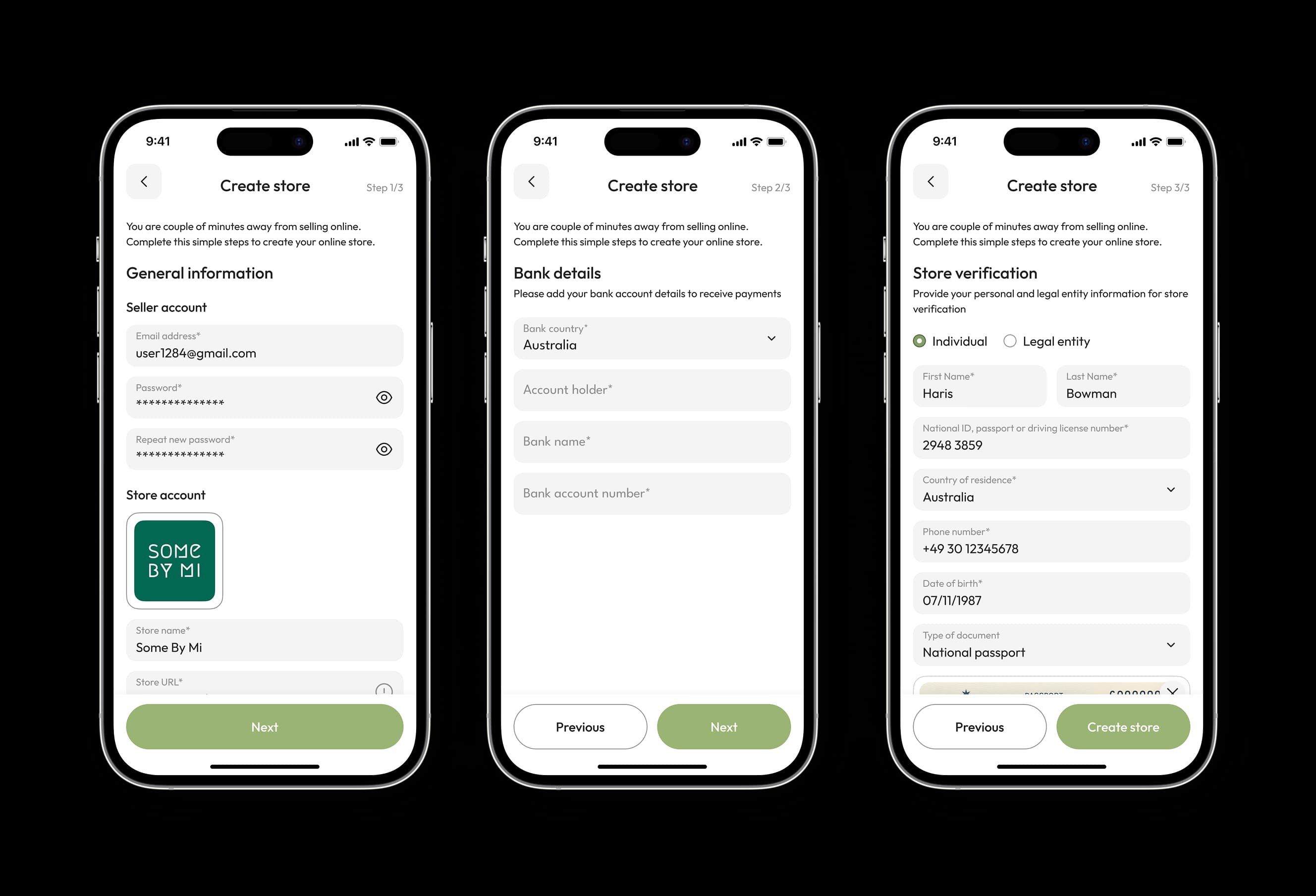
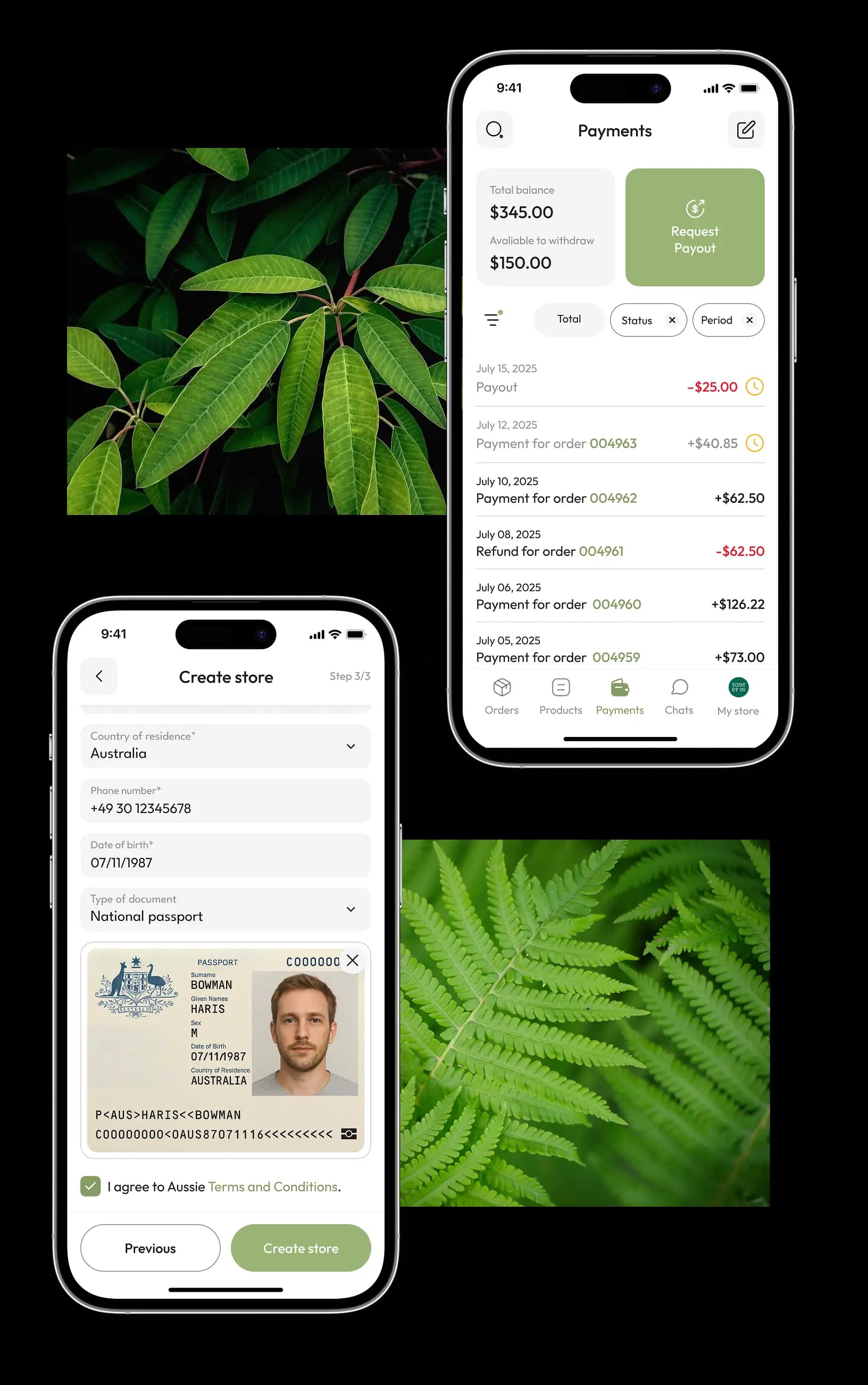
The KYB process is divided into three clear steps:
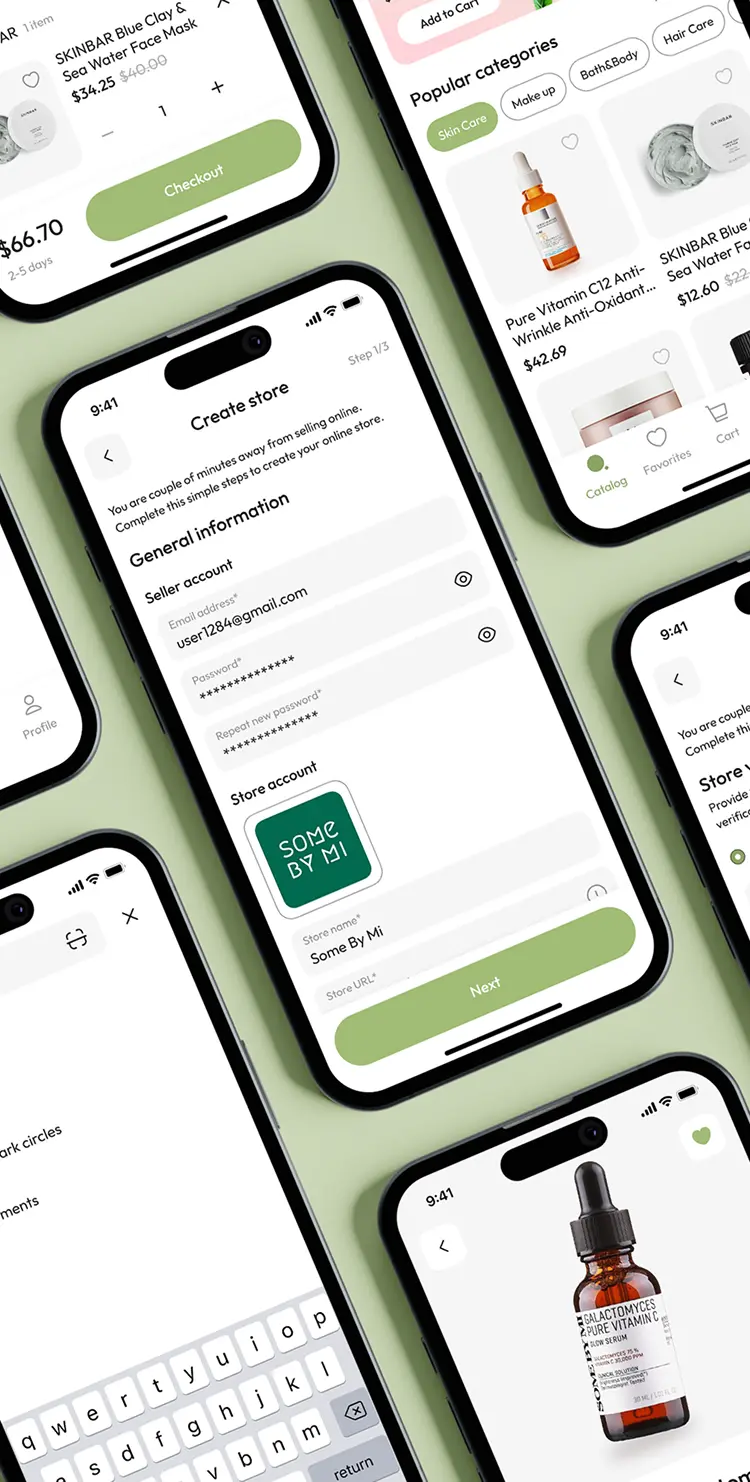
1. General information:
Users upload their store logo and provide basic store details, such as the store name, country, and currency.
2. Bank details:
Users input essential banking information needed to receive payments, including bank country, account holder, bank name, and account number.
3. Store verification:
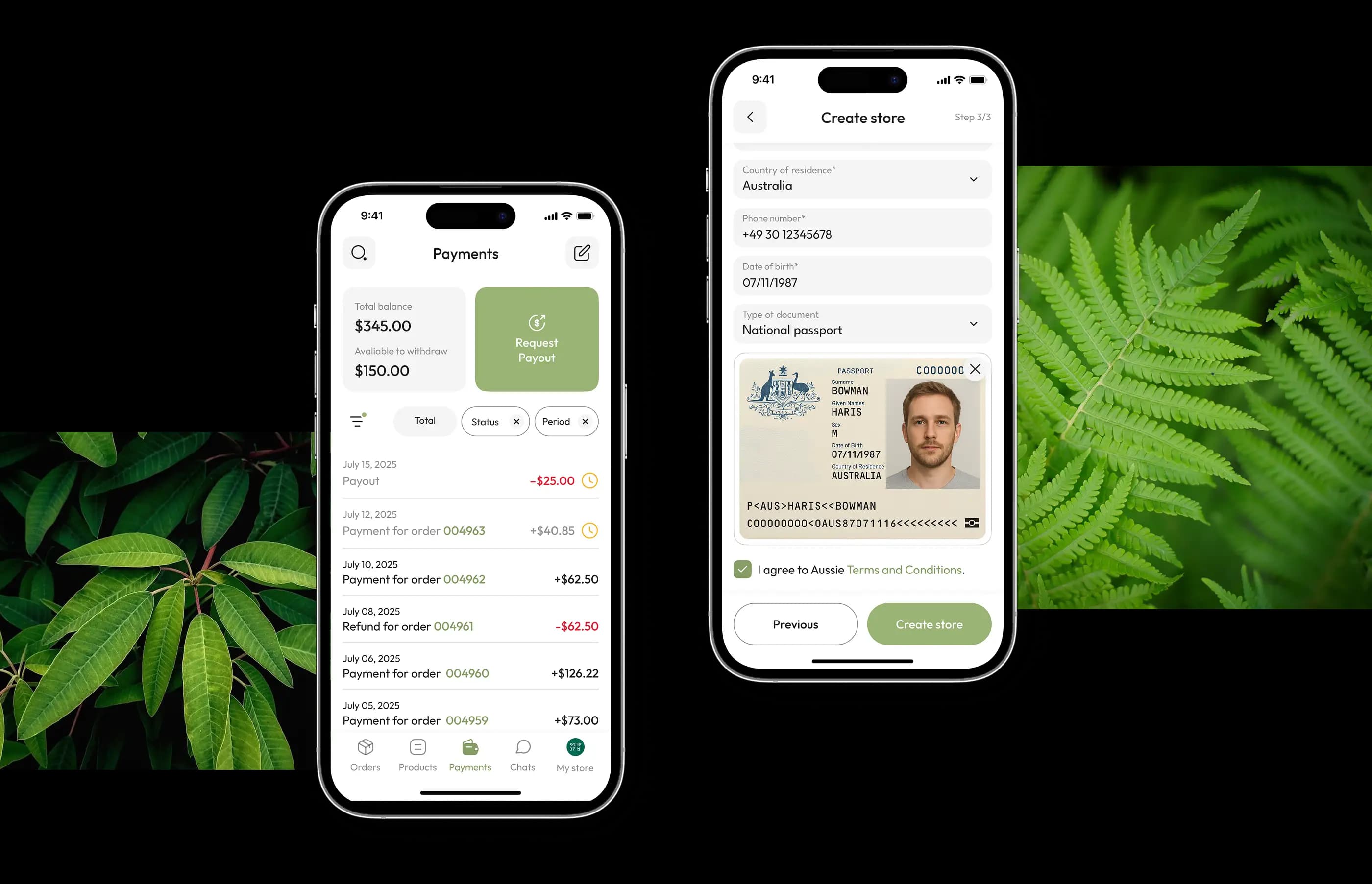
Users choose between individual or legal entity verification, providing personal/legal details and ID verification, including uploading front and back photos of their ID documents.
Item management
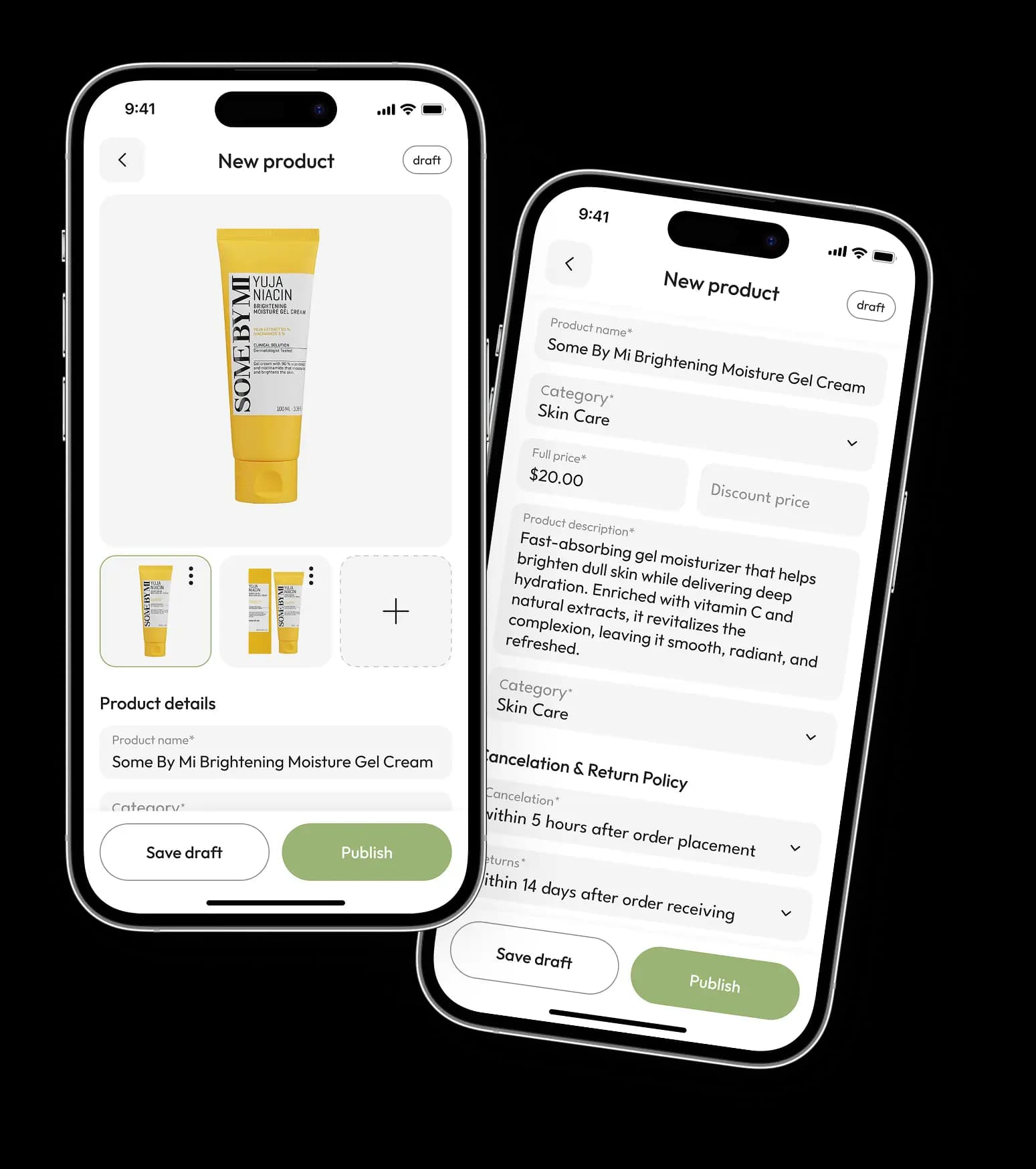
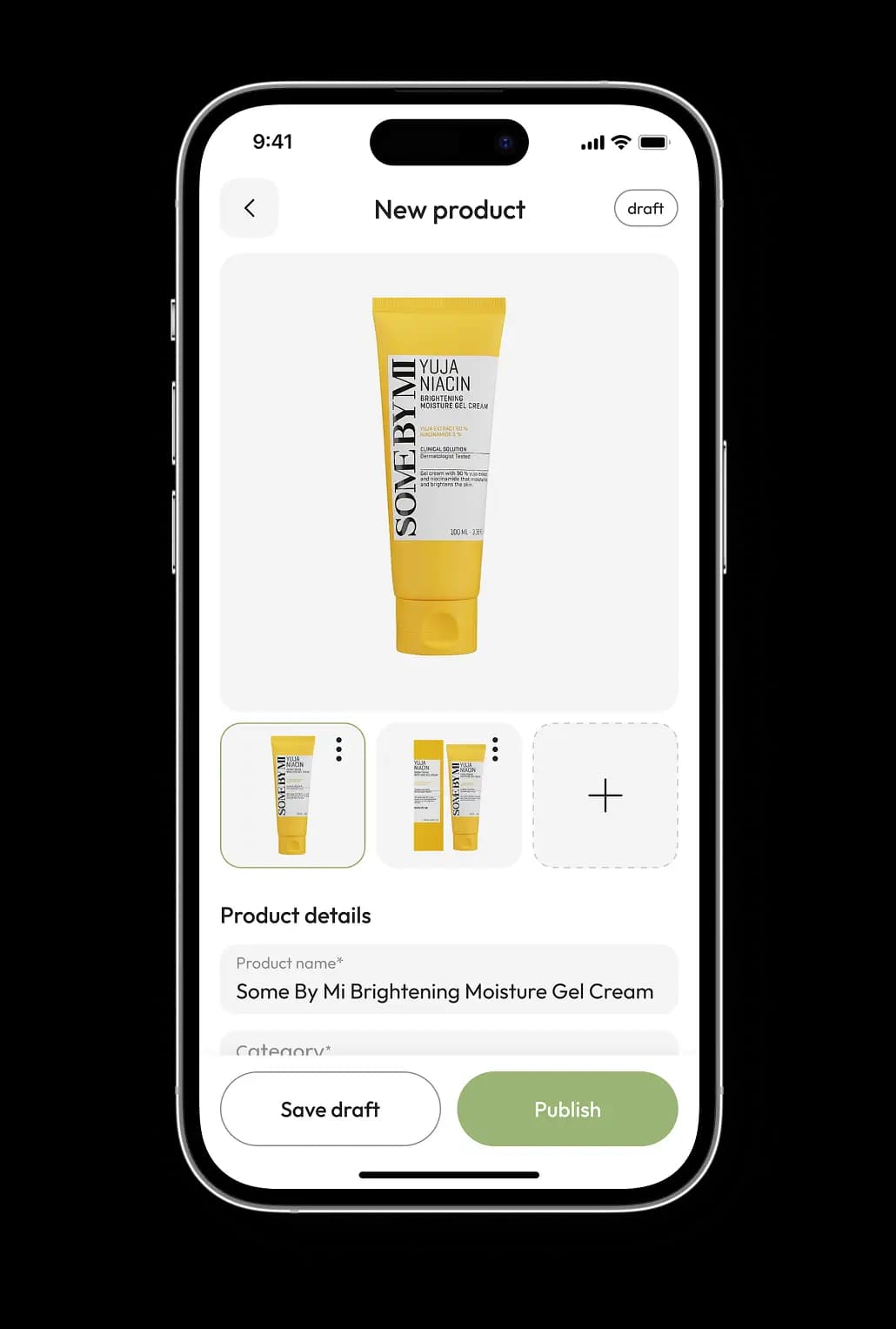
Sellers can upload images, enter product details like name, pricing, and provide descriptions. They can also set a category, as well as cancellation and return policies.
Order management
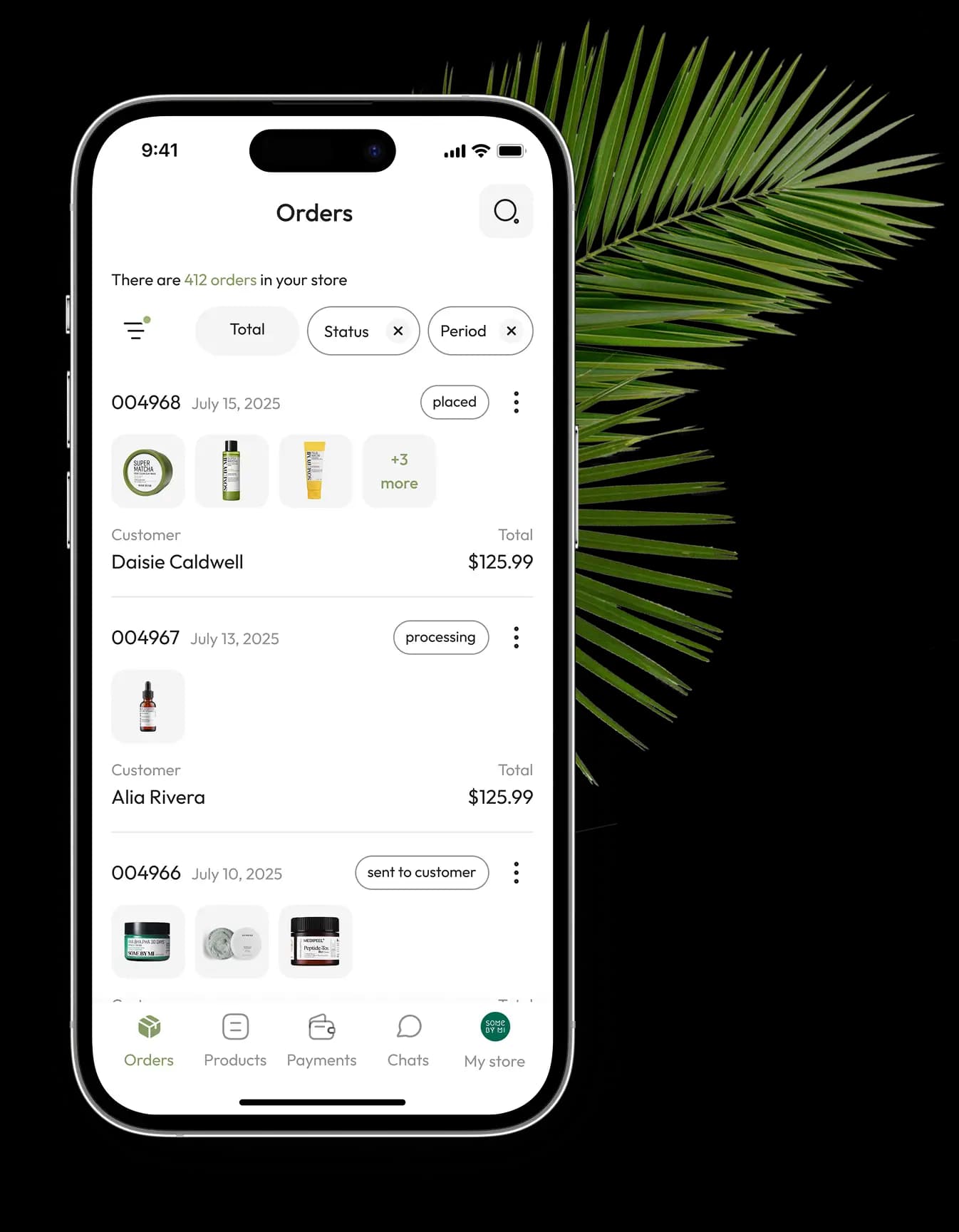
The order management screen has search functionality, concise order summaries and color-coded status badges. Thumbnail images provide a quick content view, while consistent design and spacing ensure readability.
Analytics
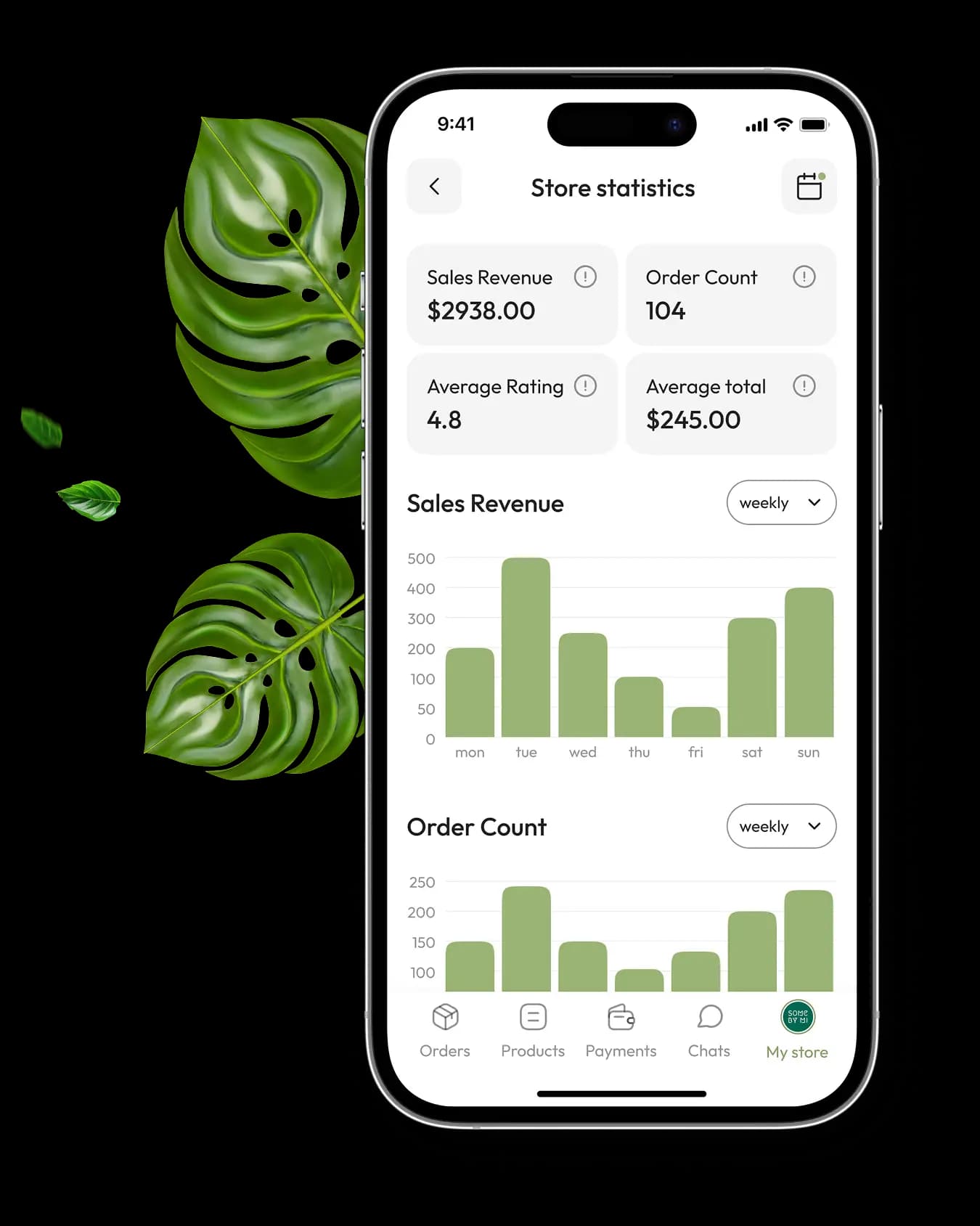
The analytics screen shows key metrics displayed in distinct rectangles and a simple bar graph using green bars. Ample white space enhances readability, while a tidy footer keeps navigation links accessible.
Software development
We needed to choose technologies and integrations to cut the costs and enter the market faster while making the platform reliable and secure. The tech stack for marketplace app development should also allow our client to scale the platform easily.
We chose React Native to develop mobile apps for both iOS and Android using a single codebase. This approach reduced marketplace app development time and costs without compromising on user experience.
Laravel is our favourite backend framework with an elegant syntax, which speeds up marketplace development while maintaining quality. Its built-in security features and database management ensure the platform is protected against SQL injections. Laravel's packages also simplified integrating features like payment gateways and managing user data securely.
Laravel Nova for the admin panel — it seamlessly integrates with Laravel, and allows us to build feature-rich panels quickly. It manages resources, metrics, and all entities of the marketplace including buyers, sellers, catalogs, and discounts.
Payments
In Australia, the Buy Now, Pay Later (BNPL) system is extremely popular and widely used in successful marketplace apps. To meet this demand, we needed to implement a solution that supports Australian payment options like Afterpay or ZipPay. We integrated Stripe Connect, as it supports BNPL and operates efficiently in Australia and New Zealand.

KYB procedures
We needed to ensure that only legitimate businesses can sell on the platform. Stripe Connect provides KYB procedures as part of the onboarding for users — since we’ve already used Stripe as the payment gateway, we also decided to verify the identity of sellers with its help. It supports automated verification checks in Australia and complies with local and international regulatory standards. This way we saved the mobile app development time, because we didn’t need to integrate another solution.

Compliance and security
To comply with Australia's Privacy Act, we implemented key measures like data encryption, ensuring personal data security in transit and at rest. We established strict access controls and integrated consent management tools to protect sensitive information and ensure user consent. Additionally, we collect only the data necessary for the platform’s functionality — for example, since the KYB procedure is performed on the Stripe side, we don’t need to store sellers’ documents on the platform.
State management
With Redux, we centralized app data, making it easy to manage and update without affecting design. This setup simplifies fixing issues, ensures consistent search results across the mobile app, and allows sellers to edit products without losing progress. The app always pulls the latest data from Redux.
Integrations
- Firebase for analytics to capture events like sales transactions, product views, and conversions.
- Auth0 for secure authentication with various methods.
- AWS S3 for data storage — it securely handles large volumes of user data and media, ensuring quick access and backup capabilities.
- Socket.io to enable real-time messaging within the app.
- Expo for push notifications — the service delivers notifications on Android or iOS platforms and can be easily used with React Native.
Challenges we faced
During marketplace app development, we faced a challenge with the time zone difference between Australia and Estonia.
To address this, we adjusted our schedule, used tools like Slack and Google Meet for communication, maintained clear documentation, and provided weekly updates to our client.
Results
We finished marketplace development in 4 months and helped the client release the apps in the app stores. Currently, the platform is being tested with initial users — our client has pre-arranged cooperation with several cosmetic brands and they already sell their products on the marketplace. We support the platform and our client plans to continue collaborating with us to scale the platform.
Further, they aim to expand into the New Zealand market and partner with courier services providing eco-friendly logistics, such as Australia Post, CouriersPlease, Sendle, and NZ Group.
Project in numbers
Marketplace app development cost
~ $60.000
Timeline
~ 16 weeks for design and mobile

