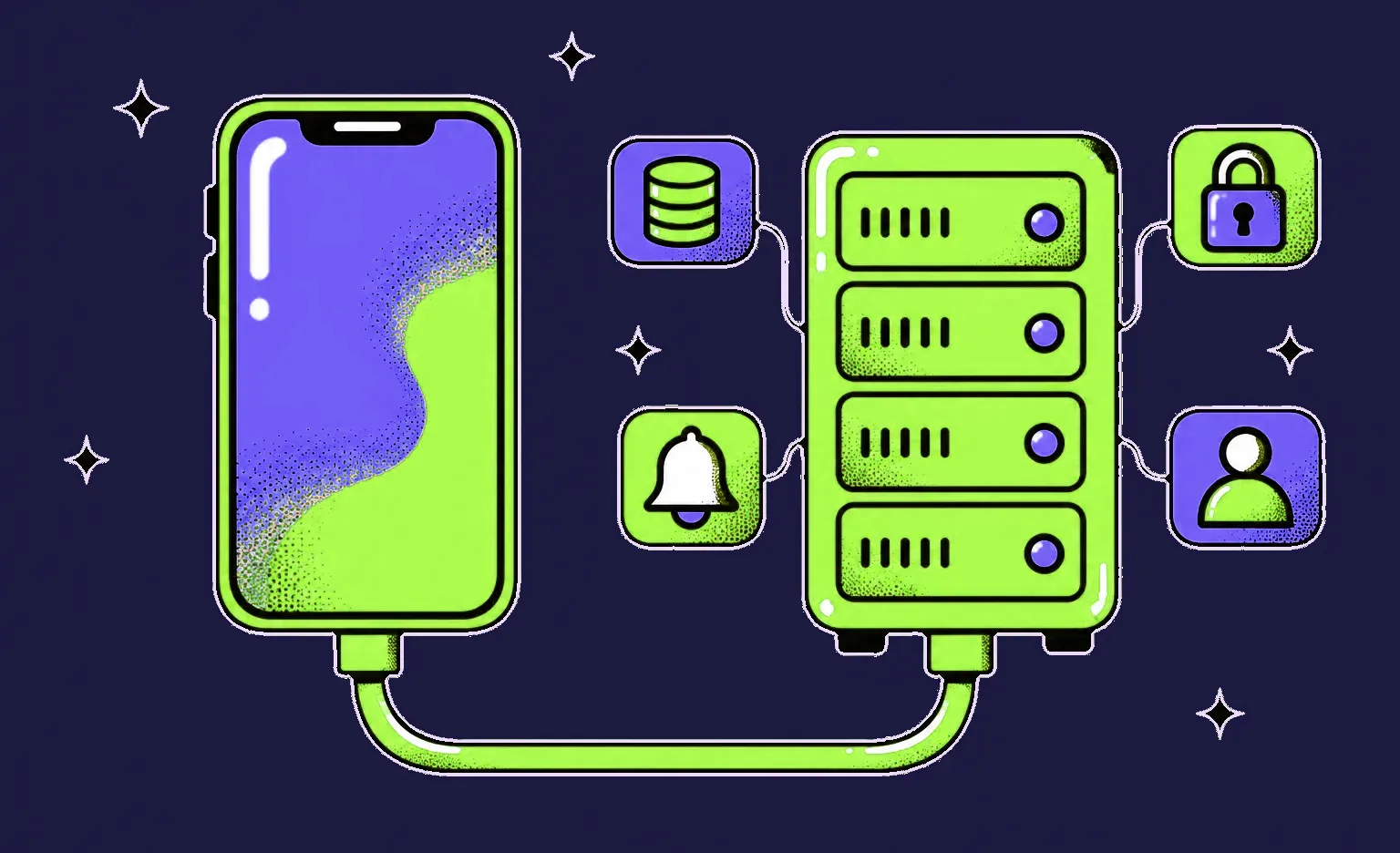
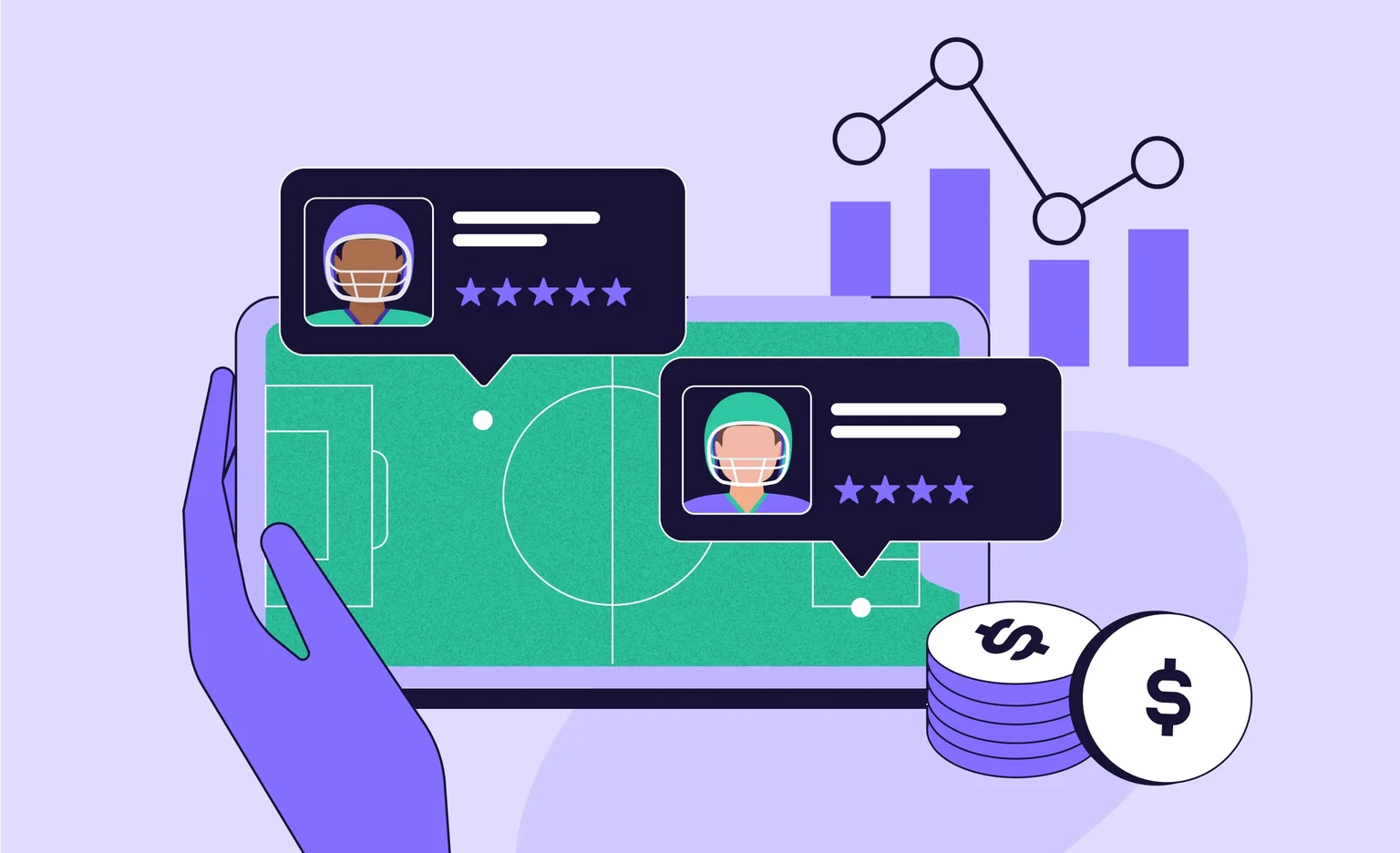
A fantasy sports app turns real games into a contest: users pick real athletes, a sports data feed brings in their stats, and the app converts those stats into points and rankings. At Ronas IT, a free-to-play first version with an iOS and Android app, a backend with live scoring and an admin panel, and one data feed starts at $20,000. Two early decisions shape the rest of the build: the contest format and whether users pay to enter.
What is a fantasy sports app?
A fantasy sports app lets users build virtual teams from real athletes and compete with other users. The team scores points when its athletes do well in real games: a touchdown, a goal, or an assist turns into fantasy points under the app's scoring rules. Users manage their teams, follow live scores, and climb a leaderboard or win weekly matchups against other users.
Types of fantasy sports apps and what each format changes in the build
Fantasy sports apps differ by contest format, which decides how long a contest lasts, how users pick athletes, and how much live data the app has to process. Pick one format for the first version. Each extra format adds its own contest rules, screens, and scoring logic.
| Format | How it works | What it adds to the build |
|---|---|---|
| Season-long league | Friends or strangers draft teams before the season and manage them week by week, with trades and free-agent pickups. | A live draft room, trades and waivers, weekly matchups, and settings for the league owner |
| Daily fantasy contest | Users build a new lineup for one day or one week, usually under a salary cap: each athlete has a price, and the team must fit a budget. | A contest lobby, player prices for each set of games, many contests at once, and live scoring for every entry |
| Best ball | Users draft once and never set a lineup: the app counts the best scorers on each team every week. | A draft room and scoring that picks the best lineup by itself |
Free-to-play or paid contests: the decision that shapes the app
Decide between free and paid contests before design starts. A free league where nobody pays to enter and nobody wins prizes is an ordinary app for the stores. A free contest with prizes falls under Apple's rules for contests, and your lawyer should tell you which local rules also apply. A contest where users pay an entry fee and win money is treated much more strictly: it can need a license in each state where you offer it, checks of where the user is and how old they are, and its own payment flow.
In the US, the Unlawful Internet Gambling Enforcement Act of 2006 (UIGEA) does not count a fantasy contest as a bet when no fantasy team is based on the current roster of a real amateur or professional team and the contest meets three conditions. Prizes are set and announced before the contest, and their value does not depend on how many people enter or how much they pay. Winning reflects the participants' relative knowledge and skill and depends mostly on the accumulated stats of individual athletes across several real games. No win depends on the score, point spread, or performance of one real team or a combination of teams, or only on one athlete's performance in a single game.
The same law does not change any federal or state gambling law, so each state still decides how it treats paid contests. The app stores add their own rules on top:
- Google Play: its real-money gambling, games, and contests policy allows daily fantasy sports apps only after Google accepts the developer's DFS application. The app must be free to download, use no Google Play billing, be rated Adults Only or the IARC equivalent, keep under-age users from paying, show responsible gambling information, and block use in states where the developer has no required license or where such apps are not legal.
- App Store: Apple's review guidelines (section 5.3) say that sweepstakes and contests must be sponsored by the app's developer and show official rules in the app. In-app purchase may not be used to buy credit for real money gaming, and real money gaming apps need licenses where they are used, must block other locations, and must be free on the App Store.
For the build, a paid contest adds a location check, an age and identity check, a payment provider for entry fees and prize payouts, and records of entries and payouts. We build these parts. Which states, formats, and licenses apply to you is a question for your lawyer, and in our analysis phase we turn the lawyer's answers into user stories and a scope for these checks.
“You can start with free contests and add paid ones later, as long as we know about that plan before we design the backend. Then adding them does not mean rebuilding what you already launched.”
Roman Surikov, CEO at Ronas IT
What player data a paid contest collects, and how to protect it
An app with paid contests holds more sensitive data than a free league: where the user is when they enter, their date of birth, an identity document or the result of an identity check, and the cards or bank accounts used for deposits and payouts. Three build decisions keep that data smaller and easier to protect:
- Card details: collect them in the payment provider's own form or mobile SDK, so card numbers go to the provider without passing through your servers. Stripe's integration security guide warns that a business handling card data directly may have to meet more than 300 security controls of PCI DSS, the card industry's security standard, and that such integrations reduce those obligations.
- Identity documents: let the identity check provider keep the document images, and store in your own database only the outcome of the check and its date.
- Location: check where the user is at the moments that matter, such as entering a contest or making a deposit, and keep the results your records need rather than a running history of where each user goes.
Free leagues need one decision about age. The FTC's COPPA rule covers apps directed to children under 13 and general-audience apps that know they collect personal information from a child under 13, and it counts location precise enough to identify a street and a city or town as personal information. If children may play your free game, tell your lawyer before design starts, because parental consent changes the sign-up flow.
Sports prediction markets are a separate product
Some fantasy operators now also offer sports event contracts, which users buy and sell and which pay out on the result of a real game. DraftKings, for example, launched DraftKings Predictions in December 2025 as a standalone app under the oversight of the Commodity Futures Trading Commission (CFTC), connected to CME Group's exchange. The legal basis differs from a fantasy contest. The UIGEA definition of a bet leaves out transactions conducted on or subject to the rules of an entity registered under the Commodity Exchange Act, so these contracts trade on exchanges the CFTC oversees, and in March 2026 CFTC staff sent those exchanges a prediction markets advisory with points that apply to sports contracts in particular.
For the build, this means a different product, not one more contest format. An app either registers its own exchange with the CFTC or offers the contracts of a registered exchange under an agreement with it, and the exchange then sets many of the rules the app follows. Decide which one you are building with your lawyer before the backend is designed.
How a fantasy sports app works
A fantasy app is a pipeline from real games to the user's screen. Every feature users see depends on this pipeline working during the busiest hours, when the games are on.
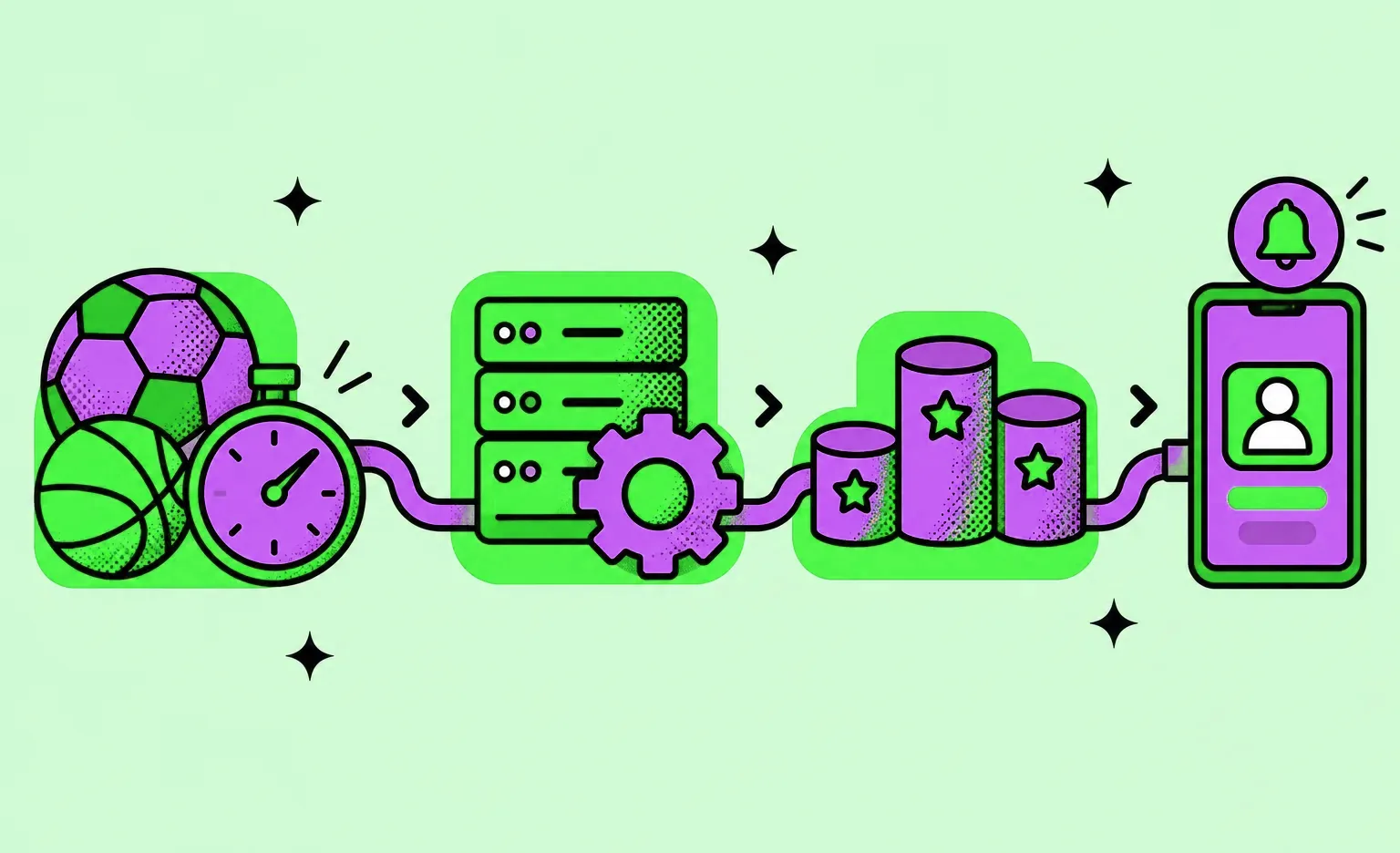
- Data import: the backend receives schedules, rosters, injury news, and live stats from the provider and stores them.
- Scoring: the scoring engine applies your rules to each stat line and updates the points of every team that has the athlete.
- Rankings: leaderboards, matchups, and contest standings change with each update.
- Delivery: the app gets the new scores while it is open, and push notifications reach users who closed it.
- Settlement: after the last game, the backend closes the contest, fixes the final standings, and hands out prizes or league points.
Working with a sports data provider
The data provider is the one part you cannot build yourself, and its fees are a running cost. Compare providers by the sports and leagues they cover, how fast live stats arrive, what their license lets you show in the app, and the price. Ask for a test feed for your sport before you sign: field names, update speed, and gaps in the data differ from provider to provider.
Plan for the feed to fail. A provider can go down, send a stat late, or change a data structure. The backend should keep the last good data, show users that scores are delayed, and recalculate points when a stat changes.
“Users forgive a score that arrives a little late. They do not forgive a score that changes with no reason. When the provider corrects a stat after the game, show the user what changed and why.”
Evgeny Leonov, CTO at Ronas IT
Features a fantasy sports app needs
A fantasy app has features for three groups: the players, the people who run private leagues, and your own team that runs contests. A first version does not need every feature listed below.
For players
- Sign-up and profile: email or social sign-in, favorite teams, and a history of past contests.
- Team building: a draft room or a lineup builder, with player stats, injury news, and prices in salary cap contests.
- Live scoring: points that update during games, with a breakdown of where each point came from.
- Leagues and contests: public contests to join, private leagues with friends, and leaderboards.
- Notifications: lineup deadlines, injury news for the user's athletes, and results.
- League chat: a feed where league members talk.
- Wallet: in paid contests only, deposits, entry fees, winnings, and limits the user can set on their own spending.
For league owners
- League settings: size, scoring rules, roster positions, and the draft date and order.
- Invites: a link or code to bring friends into a private league.
- League tools: approving trades and fixing a lineup when a member forgets to set one.
For your team in the admin panel
- Contests: creating contests, setting prizes and entry rules, and closing them.
- Players and stats: the athlete list, manual fixes when the feed is wrong, and a log of every score change.
- Users and support: accounts, blocked users, and replies to complaints about scores.
- Payouts: in paid contests, a review of large or unusual payouts before they go out.
- Reports: active users, entries per contest, and revenue.
What can wait until after launch
Extra sports, several formats, player projections, and social sharing can wait for the second release. Live scoring, a working draft or lineup builder, and correct results cannot: users rely on them from the first week of the season.
In a first version, AI features usually belong on the same later list. Players of the big apps already see them: ESPN Fantasy Football has Waiver Grades and Trade Grades, built with large language models in IBM watsonx, which grade a pickup or a trade against the user's own roster. A feature like this reads the same stats and injury news as the rest of the app, so it can follow once the data feed works. It brings two risks. The model has to answer from the latest feed data rather than from what it learned in training, or it can recommend a player who was ruled out an hour ago. And the model provider charges per request, so that bill peaks on game days, together with your hosting. Check as well whether your data provider's license allows sending its data to an AI model provider.
A sports community app we built
In 2018, OddsCrowd came to us with an idea for a community of sports bettors. Users made forecasts on games, the platform tracked how accurate they were and ranked them on a leaderboard, and OddsCrowd ran free competitions with prizes for the best forecasters. OddsCrowd did not take bets: users placed them with legal US sportsbooks. It was not a fantasy app, since nobody drafted teams, but it faced three problems that a fantasy app also has.
- A deadline set by the sports calendar: the client gave us four months to launch the web app, and we delivered its first version in 14 weeks. To launch on time, we agreed with the client to drop two features from the first version: images with stats to share on social media and more detail in user ratings. Two years later, OddsCrowd asked us to build a React Native mobile app: its first release came 10 weeks after design started, in time for the Super Bowl, and we timed later updates to game dates.
- Third-party sports data: game and odds data came from outside providers, and we changed providers each time OddsCrowd found more reliable ones. One data aggregator was still in development: it did not always work, and its data structures kept changing. We added error handling so the app kept working when the service stopped or returned incomplete data.
- Store review: Apple rejected the mobile app because it let users sign in with a social account but did not offer Sign in with Apple, a requirement at the time. We added it, and the app was approved. Google Play rejected the app twice for policy reasons tied to its wording, so we reworked the word choice and the links in the app and resubmitted it.
Tech stack for fantasy sports app development
Our recommendation for a fantasy sports app is a React Native mobile app with a Laravel backend. The table below lists the tools we pick for each layer. If you already work with a different stack, you still need the same layers, and the guide to mobile app backends explains what each one does.
| Layer | What we use | What it does in a fantasy app |
|---|---|---|
| Mobile app | React Native with Expo | One codebase for the iOS and Android apps, with push notifications |
| Backend | Laravel | Contests, scoring rules, users, and the import of the data feed |
| Database | PostgreSQL | Athletes, stats, rosters, entries, and results |
| Cache and queues | Redis | Leaderboards that change during games, and background jobs such as stat imports |
| Live updates | Laravel Reverb | Pushes score changes to open apps over WebSockets |
| Admin panel | Laravel Backpack by default, or Laravel Nova | Contest setup, stat fixes, support, and reports for your team |
| Infrastructure | Kubernetes on AWS or Google Cloud, set up with Terraform | Extra capacity for game days |
Production runs in your own cloud account, so it stays yours if you later move the app to another team.
Custom fantasy sports app or a white-label platform?
A white-label platform is a ready-made fantasy product that a vendor licenses to you under your brand. It fits when you want a standard format, such as daily contests for major leagues, and you accept the vendor's formats, roadmap, and fees. A custom app fits when the format is your own idea, when the app has to connect to your products and data, or when you want to own the code and the user data.
Reasons for a custom build include a niche sport or league the platforms do not cover, a new scoring system, and a fantasy game for the fans of a media brand or a sports club that has to work inside its existing app.
How to build a fantasy sports app step by step
The first three steps are decisions you make before anyone designs a screen. The last steps follow the sports calendar: the app has to pass store review and launch before the season starts.
- Pick the sport, the format, and the money model. One sport and one format for the first version, and a clear answer on free or paid contests.
- Check the rules for paid contests. If users will pay to enter, a lawyer confirms the states, the formats, and the licenses you need.
- Choose a data provider. Get the license terms and a test feed that covers your sport and stats.
- Write the scoring rules and the scope. If you do not have a written scope yet, an optional analysis phase prepares it, with the user flows, a budget, and a timeline.
- Design the app and the admin panel. The draft room, the lineup builder, and the live score screens need the most care.
- Build in sprints. A sprint usually takes one to three weeks. At its end you get a test build or screens to review.
- Test on recorded game data. Replay past games through the scoring engine and check the points by hand, then test the load of a full game day before launch.
- Submit to the stores early. Apple tells developers of gaming, gambling, and lottery apps to be prepared for extra time in review, and an app can be rejected for policy reasons that have nothing to do with the code, as the OddsCrowd app was on Google Play.
- Launch before the season and support the app. Plan a team for the first weeks of the season, when real games test every part of the app, and technical support for the apps, the backend, and the infrastructure after that. Our guide to mobile app maintenance explains what that work covers on the app side.
How fantasy sports apps make money
Free apps earn from ads, brand partners, and premium features. Paid contests keep part of each entry fee as the operator's share. The money model also decides how payments work in the app, because the stores treat digital features and real-money contests differently.
- Ads and brand partners: ads in a free app, or a company that pays for a league, a contest, or its prizes.
- Premium subscription: extra stats, more leagues, or no ads. On iOS, a subscription sold inside the app goes through in-app purchase, and apps on the US App Store may also link to your website to sell it. Google Play has its own payments policy for digital features.
- Entry fees: only where paid contests are legal and licensed. Entry fees and prizes go through your own payment provider, because both stores rule out their billing for real-money contests.
How much does fantasy sports app development cost?
At Ronas IT, the first version of a fantasy sports app starts at $20,000: one free-to-play format in one sport, with one data feed, an iOS and Android app, and a backend that updates scores during games, with an admin panel. Design, project management, and testing are part of that price. It does not include data provider fees, legal advice, cloud hosting, or support after launch.
| What you build | Starting price | Timeline |
|---|---|---|
| Optional analysis phase | $1,000-$2,000 | 1 week |
| First version: a cross-platform app for iOS and Android, a backend with live scoring that handles game-day traffic, an admin panel, and the data feed integration | From $20,000 | At least 8 weeks |
| A web version of the game for players on desktop, on the same backend | From $10,000 | Set by the scope |
| Support after launch: monitoring, fixes, and updates | From $1,000 per month for the app, from $2,000 with a web version | Ongoing |
The $20,000 starting price is not a sum of parts: the backend, live scoring, the admin panel, and the data feed integration come with the mobile app, and the admin panel does not count as a separate platform. A web version reuses that backend and the design system, so it adds from half the price of the app, and the app with a web version starts at $30,000. If you start with the optional analysis phase, it adds $1,000-$2,000 before the build.
What raises the price
- Format: a live draft room, trades, and many daily contests at once each add work to the app and the backend.
- Number of sports: each sport has its own positions, stats, and scoring rules.
- Paid contests: payments, location checks, and identity and age checks each add a provider to the integration work, and the wallet and the records of entries and payouts add backend work.
What to do next
Start with the first three steps above: choose the sport and the format, decide on free or paid contests and get a lawyer's answer on states and licenses if they are paid, and ask data providers for their license terms and a test feed for your sport. Then request a rough estimate for your first version, and set aside money for data fees, cloud hosting, and support once the app is live.