Fintech in MENA: How to build and launch a financial product in the Gulf


We build fintech products for clients across MENA, and the pattern repeats: a team arrives with a strong idea and a Western-market playbook, then discovers that the MENA region runs on its own rules for licensing, onboarding, and payments. This guide covers what we have learned shipping in the region: how the regulatory sandboxes work, the two decisions that most often derail a launch, and where a development partner earns its place.
We will start with regulatory sandboxes, because they are the fastest legitimate route into MENA financial markets, then move to the market-specific compliance and design choices that separate a product that ships from one that stalls.
What a regulatory sandbox is, and why MENA leans on it
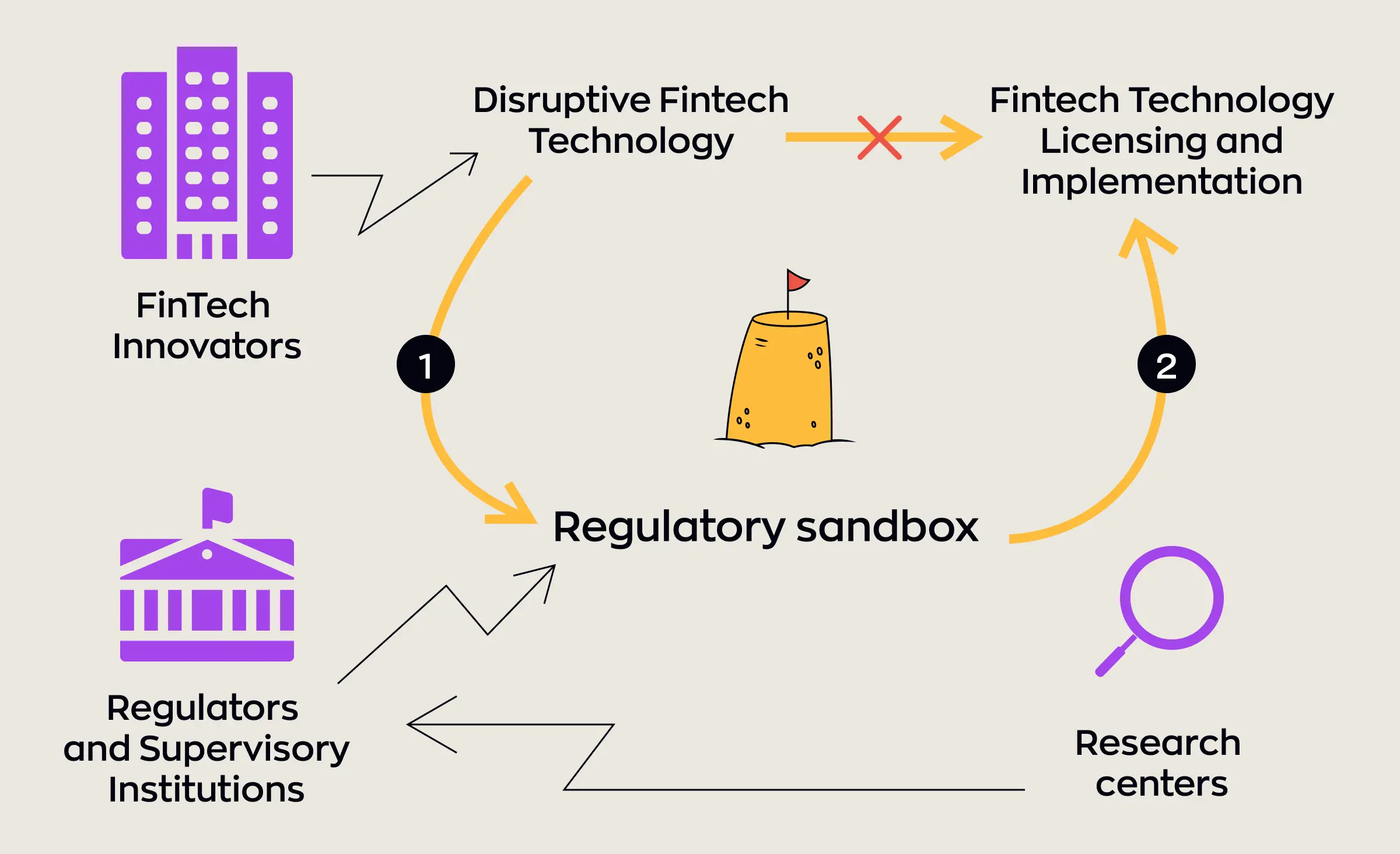
A regulatory sandbox is a supervised program where a fintech can test a live product with real customers before holding a full license. The regulator caps the number of users and the transaction volume, watches the results, and clarifies the rules as the product runs. For a fintech startup, that means reaching real users in months instead of waiting years for full authorization.
The core objectives of a sandbox are consistent across the region:
- Let new business models reach real users under supervision, not behind a full license.
- Protect consumers through monitoring and clear limits during the test.
- Give the regulator live data to shape rules that did not exist for the model yet.
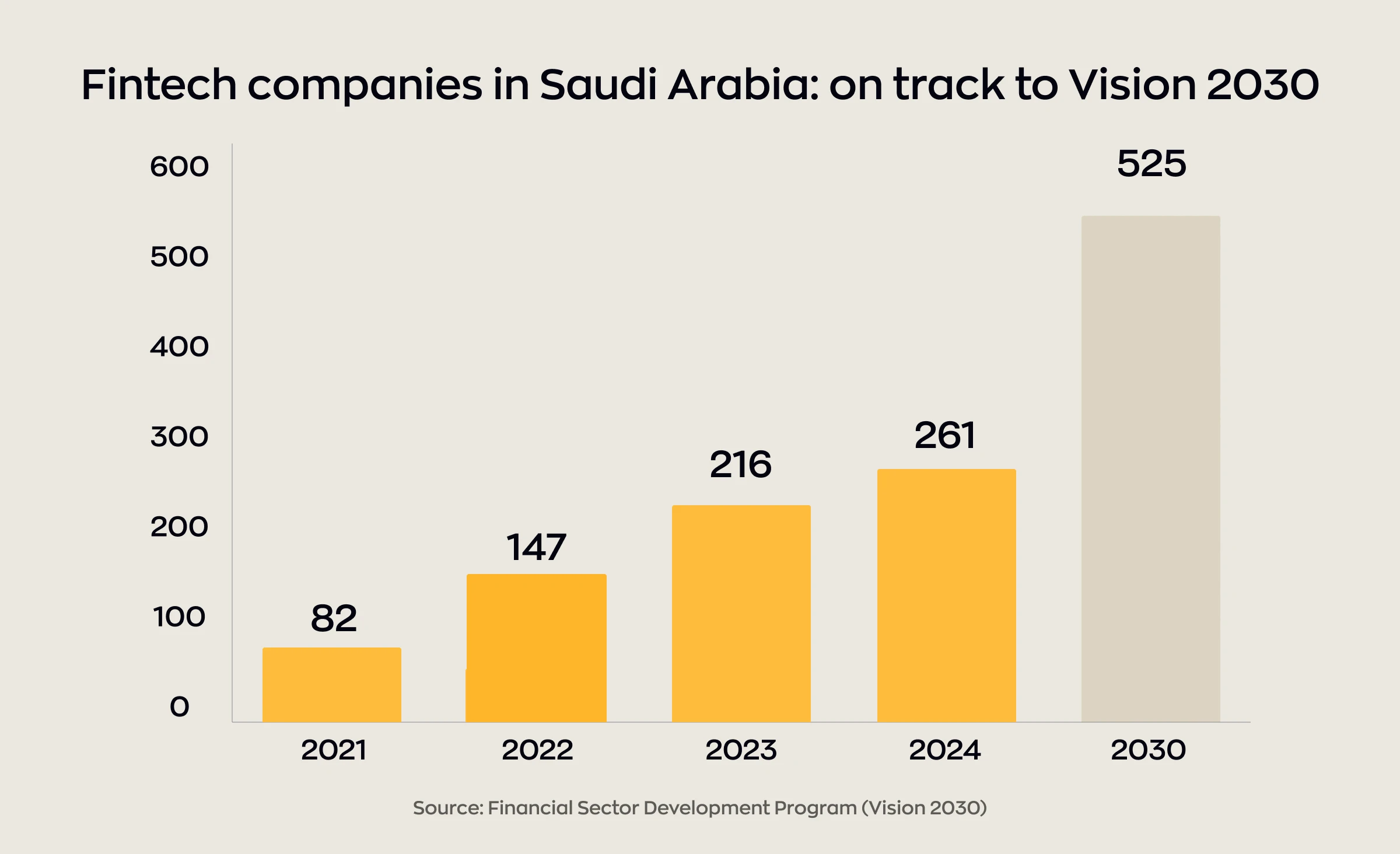
MENA governments have leaned on this tool harder than most, and the reason is strategic. Saudi Arabia's Vision 2030 treats fintech as a lever to diversify the economy away from oil. As a result, the Financial Sector Development Program reported 261 operating fintech firms by the end of 2024, ahead of the 2025 target of 230, and on track toward the national goal of 525 by 2030. The UAE runs a parallel push: the Central Bank's Financial Infrastructure Transformation Programme, launched in 2023, is rebuilding the country's payment and data rails.
This support has produced dedicated hubs. Dubai, Abu Dhabi, Riyadh, and Manama each compete to be the region's fintech center. Bahrain FinTech Bay, launched by the Bahrain Economic Development Board and the FinTech Consortium, sits in Manama's Arcapita building and is one of the largest dedicated fintech hubs in the Middle East and Africa.

Hubs and sandboxes work together: they attract foreign investment, grow local talent, and reduce the uncertainty that keeps founders away. A team can test a solution in a supported environment before facing the full regulatory burden. The results are visible in the companies that grew out of the region: Dubai-founded Tabby became the Middle East's first independent fintech unicorn in 2023, and Saudi-founded Tamara now serves millions of BNPL customers across the Gulf. For context outside MENA, the UK's Financial Conduct Authority ran the first fintech sandbox in 2016, and the European Commission has since promoted pan-European versions.
The main regulatory sandboxes in MENA
Four jurisdictions run the sandboxes a fintech is most likely to consider. Each reflects its government's priorities.
Dubai Financial Services Authority (DFSA)
The DFSA launched its Innovation Testing Licence sandbox in 2017 and has built specific frameworks for tokenisation and digital assets. In March 2025 it opened a Tokenisation Regulatory Sandbox that drew 96 expressions of interest from firms across the UAE, UK, EU, Canada, Singapore, and Hong Kong. It operates inside the Dubai International Financial Centre. If your product is a pure virtual-asset play, note that Dubai regulates those through VARA, a separate authority from the DFSA.
ADGM Financial Services Regulatory Authority (FSRA)
The ADGM's RegLab was the first fintech sandbox in the Middle East. It gives startups regulatory supervision, waivers or exemptions where needed, and a live testing environment, and it runs themed cohorts around areas such as crypto-assets, robo-advisory, and API-driven services.
Saudi Arabian Monetary Authority (SAMA)
SAMA operates a fintech sandbox tied directly to Vision 2030, aimed at both local and international teams. Participants usually test for six to twelve months, during which ambiguous rules get clarified. SAMA weights security, compliance, and consumer protection heavily, and it now licenses open banking providers under its national framework.
Central Bank of Bahrain (CBB)
The CBB established its sandbox in 2017. The test period runs up to 12 months, with extensions possible on request, and applicants must show genuine innovation, clear customer benefit, and real intent to launch in Bahrain afterward. Tarabut, a prominent open banking company, was an early participant and later expanded across the region.
Each sandbox balances oversight against room to experiment, and each mirrors its host government's priorities, whether that is advancing innovation, tightening security, or attracting investment. Together they are a large part of why the region has moved so fast.
Which one should you choose?
The right sandbox depends on your target market and stage, not on prestige:
- ADGM RegLab tends to suit early-stage teams that want a lower-cost, structured entry into the UAE.
- DFSA carries the strongest international brand and fits teams that want a DIFC address and cross-border credibility, including tokenised-asset work.
- SAMA is the route if Saudi Arabia is your primary market, given how tightly it ties to the local licensing path and Vision 2030.
- CBB works well for teams targeting Bahrain and the northern Gulf, with a shorter, clearly bounded test window.
Whichever you pick, plan for what comes after the test. Graduating to a full license carries its own fees and can add several more months, so it belongs in your timeline and budget from the start.
The two market-specific decisions that make or break a MENA launch
A sandbox gets you tested and licensed. It does not tell you how to build a product that a customer in the region will actually use. In our work, two decisions cause the most rework when a team treats MENA like a Western market: one on compliance, one on design.
Compliance: onboarding and Open Finance are not the same as Europe or the US
The UAE illustrates the point. Digital onboarding here is built around the Emirates ID and UAE Pass, so a compliant KYC flow verifies identity against the national database rather than relying only on document uploads. On top of that, the Central Bank's Open Finance framework (Circular 3 of 2025, in force from 10 July 2025) requires licensed entities to connect through a central API hub for data sharing and payment initiation. A team that designed its onboarding and integrations for a European market usually has to rebuild both. It is far cheaper to account for this at architecture stage than to retrofit it after a regulator flags the gap.
UX: the interface and the payment flow both change
Arabic reads right to left, which mirrors the entire interface: navigation, progress bars, forms, back buttons, and checkout all flip. A layout built for English will break in ways that only surface once real users try it, especially on mobile, which dominates access in the region. Payment preferences vary by country too: Saudi Arabia leans on mada and STC Pay, the UAE on cards and Apple Pay, and Egypt on networks such as Fawry and InstaPay. A single Western-style card flow will underperform, and in some segments cash-on-delivery habits still shape expectations. We go deeper on this in our guide to mobile payments and remittances in MENA. These are product decisions, not translation tasks, and they belong in the design phase.
“The teams that struggle in the region rarely have a weak idea. They treat local licensing, onboarding, and payments as a localization step at the end, when those rules are really the shape of the whole product. We push founders to settle how identity, banking, and data-sharing work in the target country before the build, because fixing that later is where the budget and the timeline go.”
Roman Surikov, CEO at Ronas IT
How to move through a sandbox, step by step
Most teams progress through the same four phases:
- Application preparation.
Assemble an application that shows what is genuinely new, defines the business model, and sets out a concrete testing plan. Be ready to explain the market need the product addresses and how you handle transparency, customer benefit, and risk.
- MVP or prototype development.
Regulators expect a working product before admission, so you develop a minimum viable product that is technically stable and covers the features the regulator needs to observe during testing.
- Testing and monitoring.
The product goes live to a limited audience under supervision. You collect operational and user data, report progress to the regulator, and catch problems early while compliance stays in focus.
- Graduation and scaling.
After a successful test, you apply for full licensing and expand. Teams use what they learned in the sandbox to refine the product and build the case for regulators and investors.
Where Ronas IT fits
We are a development partner, not a law firm — legal compliance stays with your counsel and the regulator. What we own is the technical layer that turns a MENA-ready plan into a working, compliant product.
Building the product and its architecture
We work with clients from the earliest stage, translating market needs and regulatory constraints into secure, scalable architecture. Our developers build fintech solutions that hold up to the compliance and data-protection bar regulators set, and scale after graduation rather than needing a rebuild. For mobile products we most often build in React Native, which lets one codebase serve iOS and Android during a fast-moving sandbox test.
Analysis before code
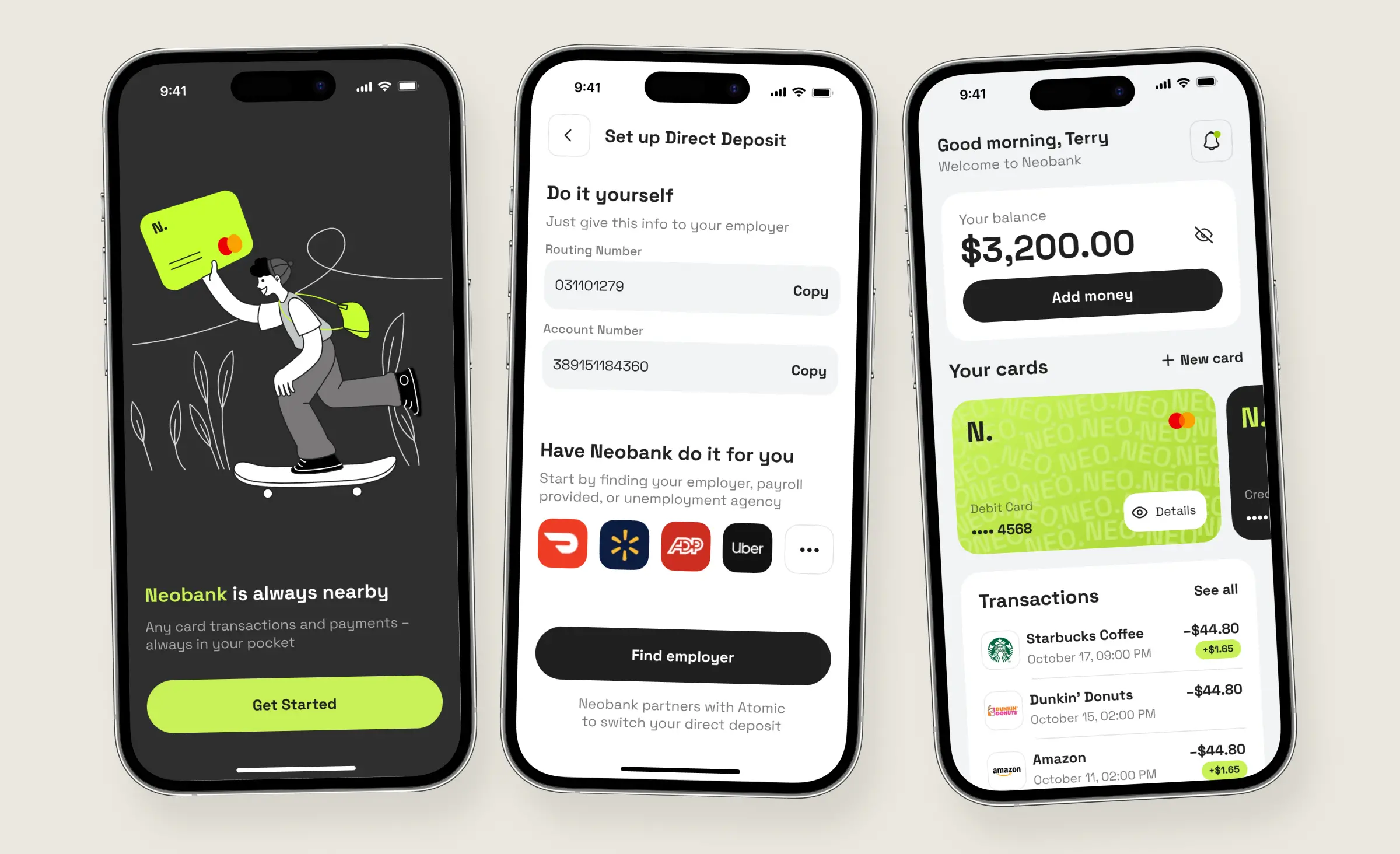
The most expensive mistakes in a MENA build happen before development starts, so our analysis phase produces the decisions that shape everything after: a scoped feature list for the sandbox, a banking-as-a-service shortlist checked for technical fit and regional compliance, and an onboarding and payment design mapped to the target country. On a UAE fintech neobank engagement, our UI/UX design phase meant evaluating BaaS providers and mapping the onboarding and identity-verification flow to the local market.
Iterative delivery for sandbox timelines
Sandbox testing rewards speed and adaptability. We work in short, iterative cycles, shipping frequent updates so the product evolves alongside regulator feedback and early-user behavior without losing compliance ground.
What a MENA fintech build costs
Cost depends on how much the regulator needs to see and how much compliance the product carries. These are our current starting points from the Ronas IT pricing page:
| Build stage | Starting price | Timeline |
|---|---|---|
| Proof of concept | $8,000 | Validation before the build |
| Basic MVP | from $15,000 | from 4 weeks |
| Full-featured MVP | from $25,000 | from 6 weeks |
| Urgent MVP | from $45,000 | from 6 weeks |
| Compliant fintech platform | from $75,000 | from 3 months |
| CTO as a service | from $1,500 / month | Ongoing technical guidance |
The MVP tiers get a lean product in front of a regulator. A full, compliance-ready fintech platform, such as a neobank or a licensed payments app, is our dedicated fintech tier from $75,000 and from 3 months. A MENA build usually sits at the higher end for the reasons covered above: KYC tied to Emirates ID or a local equivalent, Open Finance connectivity, and a banking-as-a-service partnership that takes months to negotiate. Budget for that scope from the start rather than treating it as a later add-on.



What to do next
If you are planning a MENA fintech launch, a practical order of operations looks like this:
- Pick the jurisdiction and sandbox that fit your model, product, and target customers.
- Settle the region-specific constraints early: Emirates ID or equivalent onboarding, the banking-as-a-service provider, and Open Finance connectivity.
- Scope an MVP around the features the regulator needs to see, not your full roadmap.
- Design for right-to-left layouts and local payment rails from the first screen, not as a later fix.
- Test, report, and use sandbox data to build your licensing and investment case.
Get the first two right and most of the later pain disappears. The technical side of that journey, from onboarding to Open Finance connectivity, is the part we handle.
Frequently asked questions
What is a regulatory sandbox in fintech?
Which countries in MENA have fintech regulatory sandboxes?
How many fintech companies operate in Saudi Arabia?
What compliance requirements apply to a fintech launching in the UAE?
How long does it take to build a fintech MVP for a sandbox?
Do I need to redesign my app for the MENA market?
Who helps with fintech regulatory compliance in the UAE?
What does it cost to enter a fintech regulatory sandbox?
Related posts





Related Services
React Native App Development Services
Save time and costs with Ronas IT's React Native app development, allowing cross-platform capabilities for iOS and Android. Our team has built 20+ React Native apps since 2020, ensuring rapid development, flexible maintenance, and cost-effective solutions.
MVP Development Services
Need to launch your startup quickly? Ronas IT offers urgent MVP development services, allowing you to get a fully-functional app in 4 to 12 weeks, depending on scope. Ideal for testing business ideas, presenting to investors, or entering the market swiftly. Benefit from our extensive experience and accelerated development process.
Fintech Software Development Services
We build secure, scalable fintech solutions like neobanks, trading, and investment platforms — tailored to your market and regulatory needs. Our team ensures robust KYC, compliance, and data privacy, delivering modern, user-friendly interfaces and flexible microservice architectures. From code audits to full-cycle development and ongoing support, we help you launch and manage high-performing fintech apps with confidence.