Loyalty app development: how to build a rewards app that personalizes offers

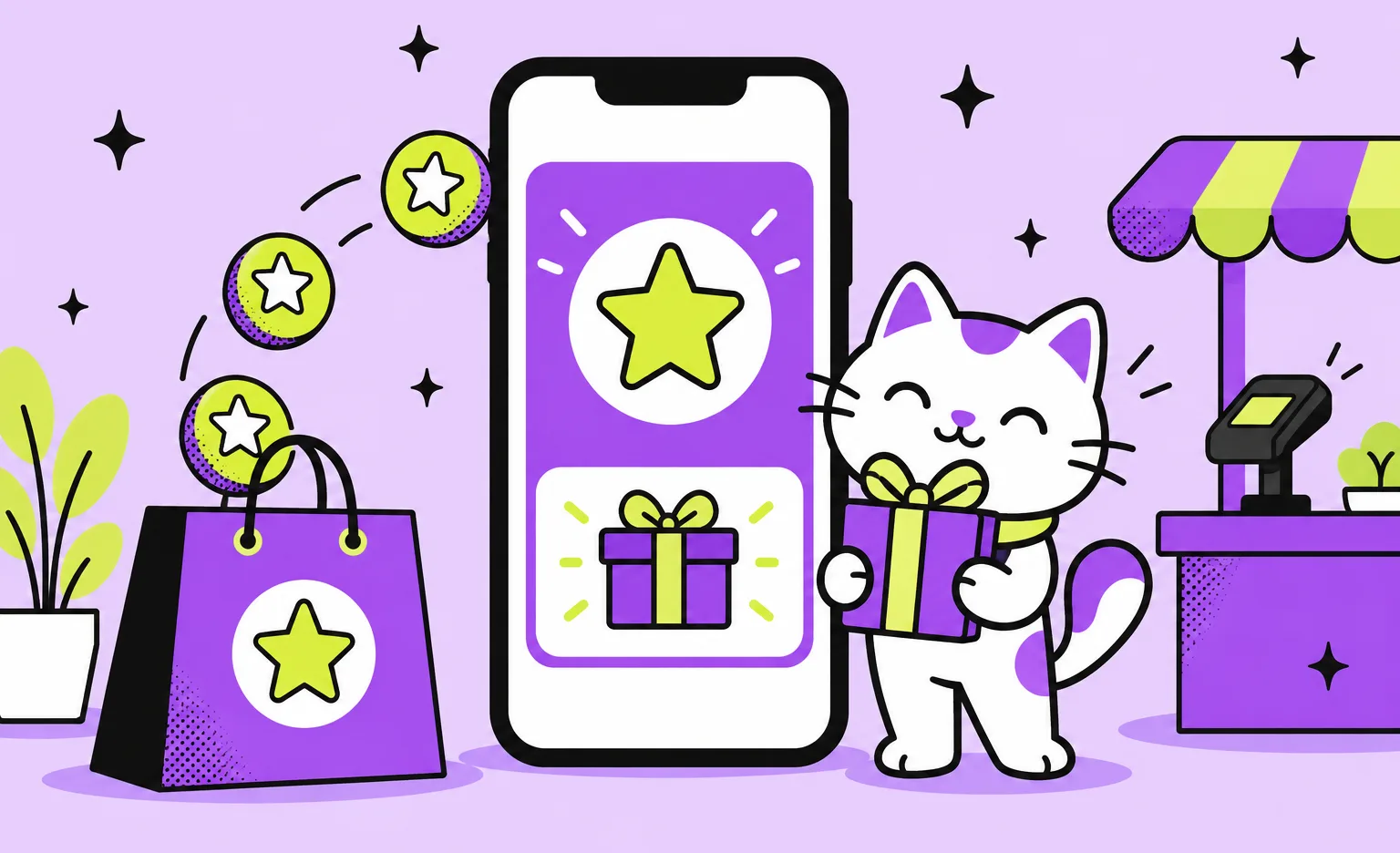
Loyalty app development means building the app where customers collect and spend rewards, and building or connecting the system that counts points and picks offers. A branded app on your loyalty platform, with its own small backend, starts from $5,000. A custom system with its own points records, an admin panel, and a connection to your point-of-sale (POS) system or online store starts from $10,000. Both prices include design and project management.
This guide is for retailers, restaurant chains, and product owners who plan a loyalty app and want to know what the work involves before they request quotes. For the app itself, see our cross-platform app development service.
What a loyalty app does
A loyalty app gives a customer a reason to buy from you again and gives you a record of what they buy. Each group that uses it needs its own part of the system.
| User | What they do | What the software must handle |
|---|---|---|
| Customer | Joins, shows a member code, checks points, uses rewards and offers | Sign-up, balance and history, rewards catalog, offers, push notifications |
| Cashier and online store | Scan the member code or match the account at checkout | Connections to the POS and the online store, points for each confirmed purchase |
| Marketing team | Sets earning rules, rewards, tiers, and campaigns | Admin panel, customer segments, reports, rule changes without a release |
Loyalty program models
The model decides what the backend must count and when a customer sees value. Choose one main model for the launch. A second model can come later, such as tiers on top of points.
| Model | Fits when | What the software must handle |
|---|---|---|
| Points | Customers buy often and in small amounts | Earning rules, a points balance with history, expiry, a rewards catalog |
| Tiers | A small group of customers brings much of the revenue | Spend counted over a period, moving up and down between tiers, benefits per tier |
| Cashback | Customers compare prices and value money back | A cash balance, rules for when it can be spent, returns that take it back |
| Paid membership | Members get enough value to pay a fee, such as free delivery | Renewals, benefits that end with the plan, recurring payments outside App Store and Google Play billing for physical benefits such as delivery |
| Coupons and promo codes | You want quick campaigns before a full program | Code creation, limits per customer, start and end dates, reports |
| Referrals | Happy customers bring friends | Referral links, rewards after the friend's first purchase, abuse checks |
Before any design, decide what a point is worth in money and how much of each purchase you give back. This is a finance decision, and every screen, rule, and report depends on it.
Buy a loyalty platform or build your own app
Buy when a standard program fits and you sell mostly through one store platform. Build when the program is part of what makes your business different, or when it must work the same way in your stores, your online store, and your app. Between the two sits a middle path: a branded app on top of a platform's API.
Some loyalty platforms are cheap to start with, and their plans grow with order volume. For example, Smile.io, a loyalty app for Shopify stores, has a free plan for 200 monthly orders, and API access comes with its Plus plan at $999 per month on annual billing. Open Loyalty sells an API-first loyalty engine to enterprise brands, which fits the middle path.
| Option | Fits when | Limits |
|---|---|---|
| Loyalty platform with its own widgets | One online store, a standard points or tier program | Rules, screens, and data stay within what the platform offers |
| Branded app that uses a platform's API | You want your own app and the platform's rules are enough | You pay the platform every month, and new rules wait for the platform |
| Custom loyalty system | Several sales channels must share one balance, or the platform's rules are not enough | Higher first cost, and you own the maintenance |
“Before you choose a platform, ask what you can take with you if you leave. If the answer is only the member list and the balances, the purchase history that personal offers depend on stays with the platform. For a simple program, that can be fine. For a program you plan to personalize, where that history stays decides who can build the next offer.”
Roman Surikov, CEO at Ronas IT
Loyalty app features
The customer app should answer two questions as soon as it opens: how many points do I have, and what do I get next.
Customer app
- Sign-up in under a minute: phone number or email, sign-in with Apple or Google, and an option to join from the receipt or a QR code in the store.
- Member code: a barcode or QR code that the cashier scans, which also works without a network connection.
- Balance and history: points, tier, what each purchase earned, and when points expire.
- Rewards and offers: a catalog of rewards and personal offers that the customer can activate before shopping.
- Notifications: push messages about a new offer, a reward that is ready, or points that are about to expire.
- Preferences: favorite categories, sizes, or stores, and a switch to turn off personal offers.
Admin panel for the marketing team
- Rules: earning rates, bonus days, tiers, and rewards, changed without a new app release.
- Segments and campaigns: groups such as customers who have not bought in 60 days, with an offer and a schedule for each group.
- Customer support: a customer's history, with manual corrections that are recorded and need a reason.
- Reports: members, points given and used, and sales from offers.
Rewards features we have built
The projects below are not retail loyalty apps. We built rewards features inside other products, and each project shows one part of the work.
- Discount and promo codes: in Noah, a marketplace we built for a Swedish client to connect local farmers with buyers, farmers could set their own prices and discount codes in their app, and managers ran promo codes and gift cards from the web admin panel.
- Cashback from partners: in a US neobank app we built for a client, customers earned cashback on purchases from online and offline partners listed in the app, through an integration with Kard, a rewards platform.
- Points, levels, and a leaderboard: in Waku Waku, an anime community app we built for a client, users earned points for reviews, ratings, and discussions, leveled up their accounts, and competed on a leaderboard. Subscribers earned points faster.
What carries over to a retail program with a POS in the stores is the backend work: reward rules, discount and promo codes, and an admin panel for the people who run the program.
How personalization works in a loyalty app
Personalization in a loyalty app means each customer sees offers and rewards that fit what they buy. It runs on three kinds of data: purchases from the POS and the online store, activity in the app, and what customers tell you about themselves. Start with simple rules, and add recommendations with AI when you have enough purchase history.
Start with rules
Rules are easy to explain and easy to check. A customer who has not bought in 60 days gets a return offer. A customer close to the next tier sees how much is left. Points that expire next month trigger a reminder. The marketing team sets these rules in the admin panel, and the backend applies them to each customer every day.
Add recommendations when the data is there
With enough purchases, a recommendation model can pick the product or the offer each customer is most likely to use. Our guide to e-commerce recommendation engines explains how such models work. In Waku Waku, recommendations used a different signal than purchases: the reviews users left and the discussions they joined.
Let customers correct it
Personal offers go wrong when the system keeps offering what someone bought once as a gift. Give customers a preferences screen, a way to hide an offer, and a switch for personal offers.
Measure the real effect
Keep a small random group of members who get no personal offers, and compare their purchases with everyone else's. Without that group, it is hard to tell whether an offer brought a sale or rewarded a purchase that would have happened anyway.
Privacy rules for loyalty data
A loyalty program collects personal data in exchange for rewards, and privacy laws cover exactly that. The rules below affect the app itself: what it shows before sign-up, and the choices it gives customers.
- California: the state's privacy regulations define a financial incentive as “a program, benefit, or other offering, including payments to consumers, for the collection, retention, sale, or sharing of personal information.” Under section 1798.125 of the California Civil Code, a business the law covers can enroll a customer in such a program only with the customer's prior opt-in consent. The Notice of Financial Incentive must be available where customers see it before they opt in. It explains the terms, how to join, and how to withdraw. For a price or service difference, it also explains how the difference is reasonably related to the value of the customer's data, with a good-faith estimate of that value and the method used to calculate it.
- European Union: under Article 21 of the GDPR, a person can object at any time to the use of their data for direct marketing, including profiling related to it. After an objection, the data can no longer be used for that marketing.
In the app, this means a clear notice before sign-up, a way to object to marketing, and a backend that stops using a customer's data for marketing after an objection. Which laws apply depends on where your customers live and on details of your business, so ask a privacy lawyer before launch.
The points ledger and fraud
Points are a kind of money, so the backend must count them like money. It records every change of points as a separate entry: earned for a purchase, spent on a reward, taken back after a return, or expired. The balance is the sum of those entries, and support can always explain where each point came from.
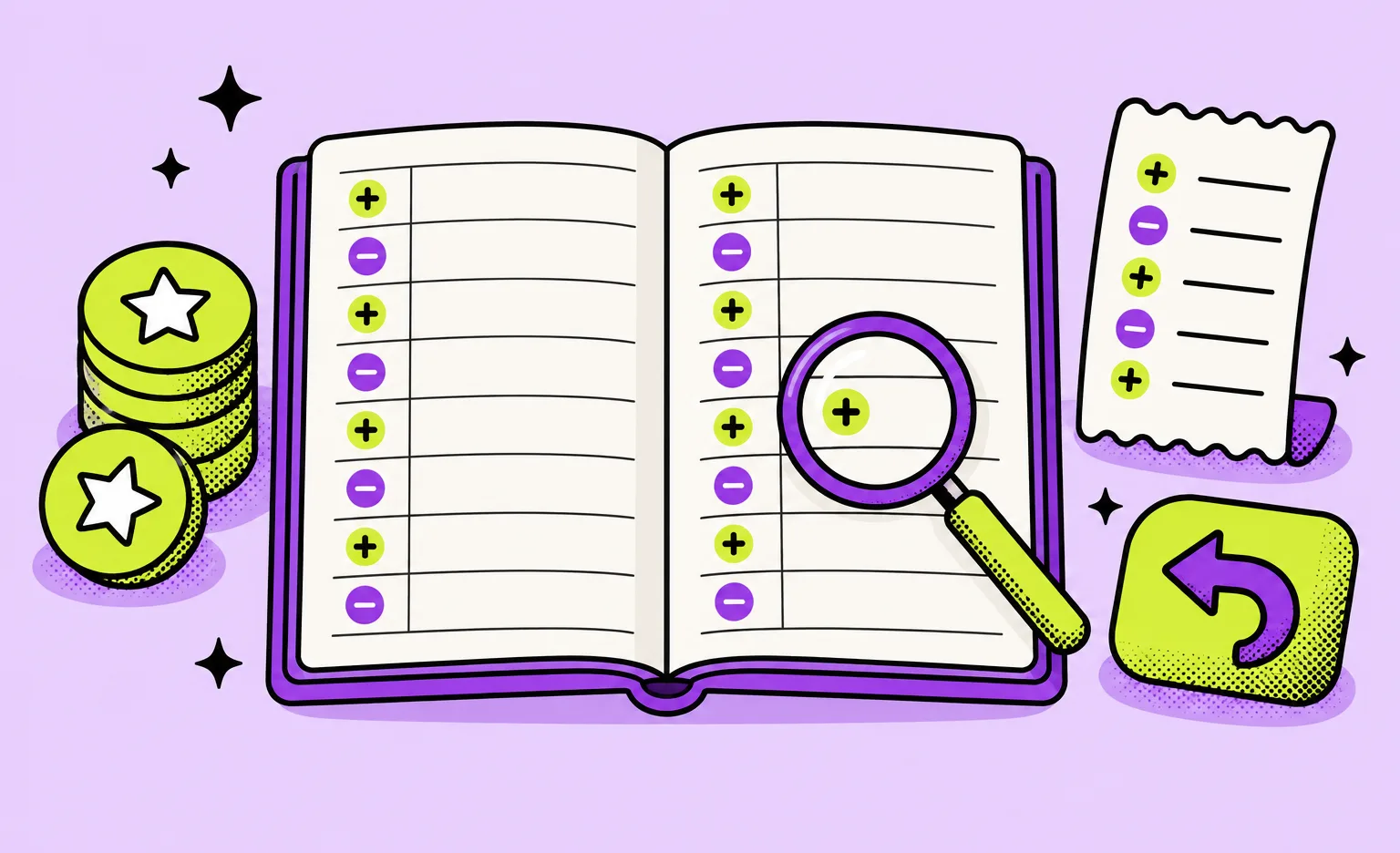
- One purchase, one entry: the POS or the store can send the same purchase twice, for example after a network error. Each purchase carries its own ID, and the backend gives points for it only once.
- Returns: a returned item takes back the points it earned. If the customer has already spent them, the rule for a negative balance must exist before launch.
- Expiry: points that expire leave the balance as their own entry, and the app warns the customer in advance.
- Manual corrections: support can add or remove points only with a reason, and the admin panel records who did it.
“The first time a customer says their points disappeared, you learn whether you built a ledger or just a number in a table. With a single number, nobody can prove anything, and the business pays the points back to end the argument.”
Alexander Storozhevsky, Lead developer at Ronas IT
Rewards attract fraud, such as fake accounts that collect sign-up bonuses, referral rewards between accounts of one person, and stolen accounts whose points are spent on gift cards. Give referral rewards only after the friend's first confirmed purchase, limit bonuses per device and payment card, and check suspicious sign-ups and logins. On several projects, we have added IP checking services to the backend to investigate suspicious traffic and logins.
Integrations: POS, online store, and wallet cards
A loyalty app depends on its connections, because points come from purchases made in other systems. List every system that sees a purchase or a customer, and before the design work starts, get API documentation and a test account from each vendor.
- POS in the stores: the connection sends each purchase with the member's ID and receives the discount of a reward at checkout. Connecting an older POS without an API costs more.
- Online store: the store and the app share one customer account, so points earned online and in the store end up in one balance.
- CRM and email: segments and offers go to the tools the marketing team already uses.
- Wallet cards: Apple Wallet supports store cards, and the Google Wallet API lets customers add loyalty cards to Google Wallet. When the balance changes, Apple's flow has your server send a push notification, and the device then downloads the updated card.
Our backend standard applies to these connections too: tests never call real vendor APIs and use stand-ins for the POS and the store instead. A vendor can change its interface or go down, and that should not block a release of your app.
Tech stack for a loyalty app
For a custom loyalty system, we would use this stack.
- Customer app: React Native with Expo, one codebase for iOS and Android.
- Admin panel: Laravel Backpack by default, with Laravel Nova as the alternative.
- Backend: Laravel with PostgreSQL for the ledger, and Redis for queues and caching.
- Push notifications: Expo Notifications, with FCM for Android and APNs for iOS.
- Live updates: Laravel Reverb, so the balance on the screen changes while the customer stands at the checkout. This real-time feature raises the starting price of a custom system from $10,000 to $20,000.
- Error tracking: Sentry, so a failed points update reaches the team before a customer does.
How much does loyalty app development cost?
A custom loyalty system starts from $10,000 for one cross-platform app with the backend, the admin panel, and the integrations with your POS or online store. A branded app on a loyalty platform starts from $5,000, and that price covers the small backend it needs of its own. The platform's API keys must not live in the app, so the backend holds them, calls the platform, and sends push notifications.
| Scope | Starting price | Timeline |
|---|---|---|
| Optional analysis phase before development: user flows, ledger rules, a written scope, and an estimate | $1,000-$2,000 | 1 week |
| Branded app on top of a loyalty platform you already use, with a small backend that connects to the platform's API | From $5,000 | At least 2 weeks |
| Custom system: app, admin panel, backend with the points ledger, and the connections to your POS or store | From $10,000 | At least 5 weeks |
| Personalized recommendations with AI, once you have purchase history | From $3,000 per AI feature | At least 1 week |
| Support after launch for the app with its backend and admin panel: monitoring, fixes when something breaks, updates for new iOS and Android versions, and releases that meet store rules | From $1,000 per month | Ongoing |
| Support after launch for a larger system, such as the app plus a web app for members, with the same monitoring, fixes, and updates | From $2,000 per month | Ongoing |
When the program needs real-time features such as live balance updates, or has to handle high load, the custom system starts from $20,000 instead of $10,000 and takes at least 8 weeks instead of 5. The total also grows with every model you add, with an older POS that has no API, and with each sales channel that must share the balance.
Every development price includes design, project management, and testing. A web app for members next to the mobile app is a second platform and adds from half the price of the first.
How to build a loyalty app
Work in this order: settle the program and its money before any design, connect to real purchase data early, and test in one store before the full launch.
- Set the program and its economics. The business owner and finance choose the model, what a point is worth, how much of each purchase goes back to the customer, and when points expire.
- Choose buy, build, or the middle path. The product owner compares a loyalty platform, a branded app on its API, and a custom system against the rules the program needs.
- Get access to the systems. Your team asks the POS vendor, the store platform, and the CRM for API documentation and test accounts.
- Map the flows and the ledger rules. The product team writes the flows for the customer, the cashier, and the marketing team, and the rules for returns and expiry. Only if the scope is not written yet, our optional analysis phase turns them into a written scope and an estimate.
- Design the balance and the rewards. The designers build the home screen, the member code, the rewards catalog, and the admin panel around the program's rules.
- Build in sprints you can check. The development team splits the work into sprints, usually one to three weeks long. Each sprint gives you something to open and try: screens ready for testing, an update on the dev server, or new mockups.
- Pilot in one store. Cashiers and a group of real customers use the program in one store before the wider launch, because scanning at a busy checkout finds problems that tests miss.
- Launch, then add personalization. The apps go to the App Store and Google Play. Once the data starts to show buying patterns, the marketing team adds rules, and later recommendations.
What to do next
Before you request quotes, you can start steps 1 to 3 on your own. Then make two decisions that shape the estimate.
- Choose the sales channels for the launch. Decide whether the app, your stores, and your online store must share one balance from the first day. Several channels on one balance point to a custom system, and each POS or online store on that balance needs its own connection.
- Check if you need live balance updates. With them, a customer sees the new balance while still at the checkout. This real-time feature moves the backend and its admin panel to the higher starting price and the longer timeline.
Your budget then has two parts. The first is a one-time build cost from the cost table rows for your path and your connections, with project management already inside. The second is a monthly cost after launch: support for the app with its backend and admin panel from $1,000 per month, or from $2,000 per month once a web app for members joins it. With the path, the channels, and the live updates decided, the estimate is built around your program and your systems, and the first version can launch in one store with one model before it grows.


Frequently Asked Questions (FAQs)
How much does it cost to build a loyalty app?
A branded cross-platform app built on a loyalty platform you already pay for starts from $5,000, together with the small backend it needs and the connection to the platform. The backend is needed because the platform's API keys must not live in the app. A custom loyalty system with its own points records, an admin panel, and one connection to your POS or online store starts from $10,000. Personalized recommendations with AI are one AI feature from $3,000. Design, project management, and testing are included in these prices.
How long does loyalty app development take?
An app on top of an existing loyalty platform, with its small backend, takes at least 2 weeks. A custom system with its own points ledger, an admin panel, and a POS or store connection takes at least 5 weeks. Getting API access from a POS vendor can take longer than writing the connection.
How do I create a loyalty program app?
Start with the program: what a customer earns, the value of a point, and when points expire. Then list the systems the app must talk to, such as your POS and your online store, and decide whether a loyalty platform keeps the points or your own backend does. Design and development come after these answers.
Should I build a custom loyalty app or use a loyalty platform?
Use a platform when a standard points program fits and you sell mainly through one store platform, such as Shopify. Build your own when the rules are your advantage, when a customer must earn and spend the same points at the checkout, on your website, and in your app, or when you need data and features the platform does not give you. A middle path is your own branded app that uses the platform's API.
Can a loyalty app work with Apple Wallet and Google Wallet?
Yes. Apple Wallet supports store cards, and the Google Wallet API supports loyalty cards. A wallet card can show the member's barcode and points without opening the app. For the card to show a new balance, your backend has to send an update after each purchase. A wallet card is a good addition to an app, and some programs use it on its own.
Which features of a loyalty app matter most?
Fast sign-up, a clear balance with the next reward, a member code that the cashier can scan, and offers that match what the customer buys. Behind them, the backend needs correct points records, returns that take points back, and an admin panel where the marketing team can change rules without a developer.
How do I stop fraud in a loyalty program?
Record every change of points as a separate entry, so every balance has a history you can check. Give points only for purchases that the POS or the store confirms, and take them back when the purchase is returned. Limit referral rewards to new customers who make a real purchase, and check sign-ups and logins from suspicious networks.
Do loyalty programs need customer consent for personal data?
Often, yes. California's privacy rules treat rewards for personal data as a financial incentive: a business the law covers needs the customer's opt-in consent and must make a Notice of Financial Incentive available before the customer joins. In the EU, the GDPR gives customers the right to object to direct marketing, including profiling for it. Ask a privacy lawyer which rules apply to your program before launch.
Related posts



Related Services
React Native App Development Services
Save time and costs with Ronas IT's React Native app development, allowing cross-platform capabilities for iOS and Android. Our team has built 20+ React Native apps since 2020, ensuring rapid development, flexible maintenance, and cost-effective solutions.
Cross-platform App Development
Ship to iOS and Android from one React Native codebase instead of funding two native teams. Ronas IT handles UI/UX design, development, and the releases to Google Play and the App Store, delivering high-performance, secure apps within 2 to 4 months.
Custom Web App Development Services
Build secure, scalable web applications with Ronas IT’s custom web app development services. Our team covers the full cycle — from concept and UI/UX design to development, testing, and ongoing support — using leading tech like React and Laravel. With 200+ custom apps delivered across various industries, we ensure intuitive interfaces, smooth integration, and solutions tailored to your business goals.
Backend Development Services
Ronas IT builds the server side behind your product, from MVPs to enterprise-scale platforms: APIs, data models, integrations with third-party services, and the infrastructure they run on. Our backend team handles challenges of varying complexity and picks the technologies that fit the product rather than the fashion.