

According to research, around 70% of startups fail within their first five years, and among the most significant challenges your startup might face is the lack of product-market fit. This isn't surprising — teams that don't thoroughly research the market often struggle to identify the features that genuinely address their target audience's needs and fail to recognize what differentiates their product from competitors. This makes achieving product market fit an uphill battle, highlighting the critical importance of early validation.
In this article, we'll explain the process of finding product-market fit, how to approach custom software development with this concept in mind, and how to measure when the desired fit has been achieved.
To make the idea of closely targeting the needs of the customers, let's take a look at the platforms that have already achieved success and high loyalty.
Slack
Before Slack, internal team communication was often fragmented across email, various chat apps, and project management tools. Slack directly addressed the underserved needs of teams struggling with information overload and inefficient collaboration. It offered a centralized, searchable, and user-friendly platform that integrated with other tools. This clear value proposition led to high customer retention, viral adoption within companies where employees would often advocate for Slack, and a high Net Promoter Score because it genuinely made work lives easier. It found a great market with a compelling product.
Stripe
Before Stripe, integrating payment processing into a website or application was notoriously complex, requiring significant developer resources and expertise. Stripe built a product with a clean, developer-friendly API that simplified this process immensely. They served a specific target customer, such as developers and startups, who had a critical, underserved need. This made it significantly easier for businesses to accept online payments, allowing them to focus on their core product development. Its product-market fit was evident in its rapid adoption by the tech community, showing a strong market demand for its simplicity and reliability.
Lainappi
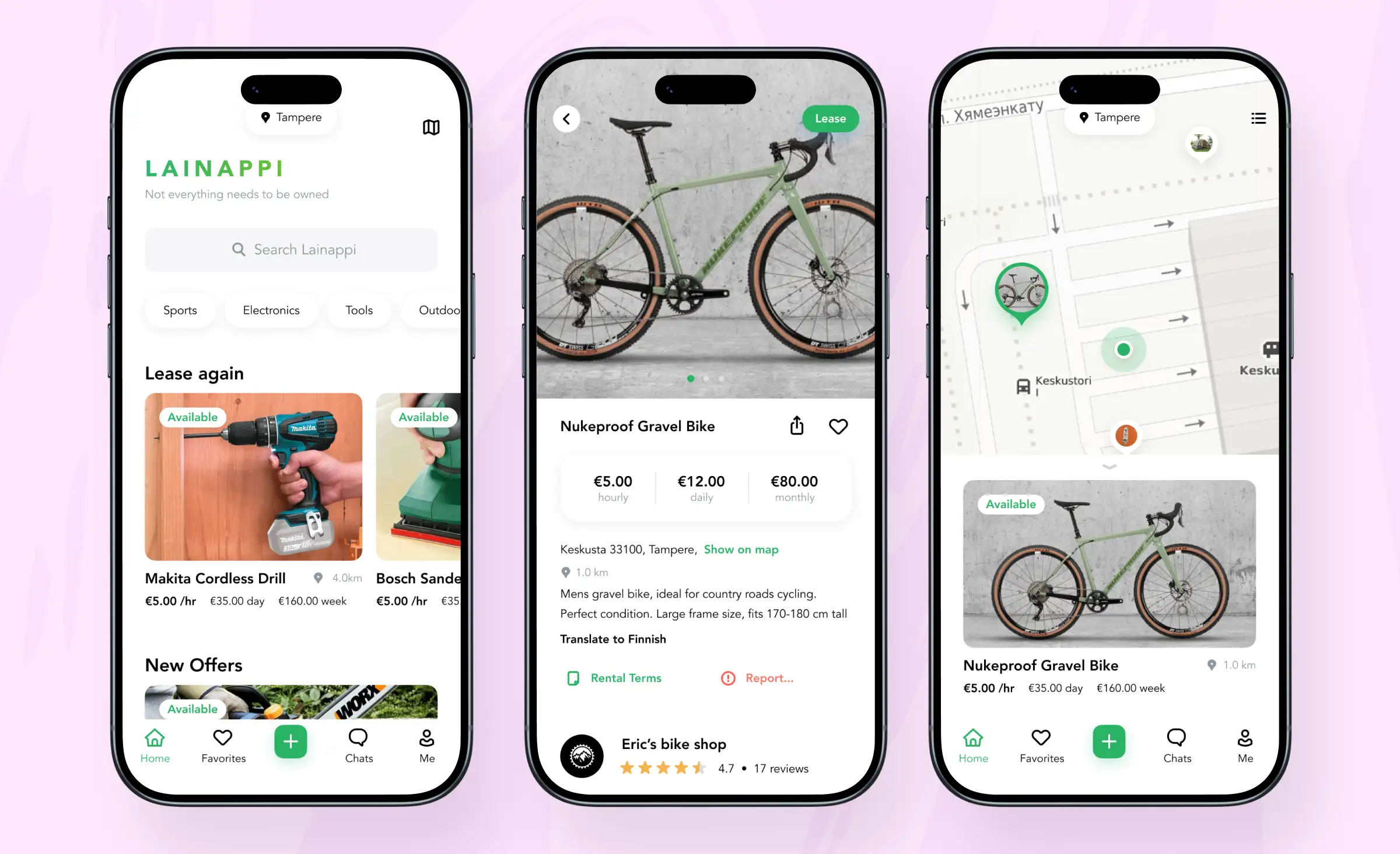
Our Ronas IT development team recently launched a rental product, Lainappi, for a Finnish startup. This product taps into the growing trend and customer needs for reuse and sustainability. The product offers a convenient mobile platform, powered by an intuitive UI/UX design, where individuals and businesses can easily rent out or borrow items, addressing an underserved need for access to goods without adding permanent clutter to living spaces. Its core value proposition lies in streamlining the entire rental process — from item discovery and secure payments to direct owner-renter communication via in-app chat.
The project focused on a fast market launch to validate the concept cost-effectively, exemplifying a lean product process for achieving product-market fit. Early engagement metrics in the case of Lainappi are promising, with 2,397 app launches and 3,096 registered accounts, reflecting strong initial interest and potential for sustainable growth by fulfilling a clear market demand for this product.
As you can see from the examples above, a product with strong market demand is inherently more likely to succeed. The teams that managed to assess and achieve product-market fit get the following key benefits:
- Accelerated and organic growth: When customers love your product, they become your best marketers, driving viral growth and reducing acquisition costs. The market pulls your product instead of you pushing it, signaling strong demand and potential to obtain significant market share.
- Higher customer retention and lifetime value: A well-fitting product builds loyalty. Users stay longer, engage more, and often upgrade, boosting retention, reducing churn, and increasing lifetime value—reflecting high satisfaction and strong value.
- Greater investment opportunities and valuation: Demonstrated product-market fit reduces investor risk by proving market appeal and a clear path to revenue. Metrics like strong engagement, low churn, and positive feedback make your startup more attractive to funding.
What are the steps to defining product-market fit?
1. Define your market and product
Understanding what product-market fit means is one thing; achieving product-market fit is another. To turn your idea into a profitable business, before you commit significant resources to full-scale product development, you must actively validate your idea. This validation forms the core of your product strategy and product management efforts.
Identify your target customer
As the first step in understanding the product-market fit, you must deeply understand who you're building for and what problem you're solving for them. We stress the importance of deep market research and hands-on customer development. You need to talk directly to potential customers to uncover their specific problems and underserved needs. Define your precise target customer. To do this, there are a few things you can do:
- Segment your market: Precisely defining your target market is crucial to finding product-market fit. Avoid building for "everyone." Start with broad segments — like small businesses or healthcare professionals — and narrow down to a niche, such as "product managers in agile SaaS teams" or "independent game developers." Use tools like LinkedIn, industry reports, and user forums to identify relevant communities facing common challenges.
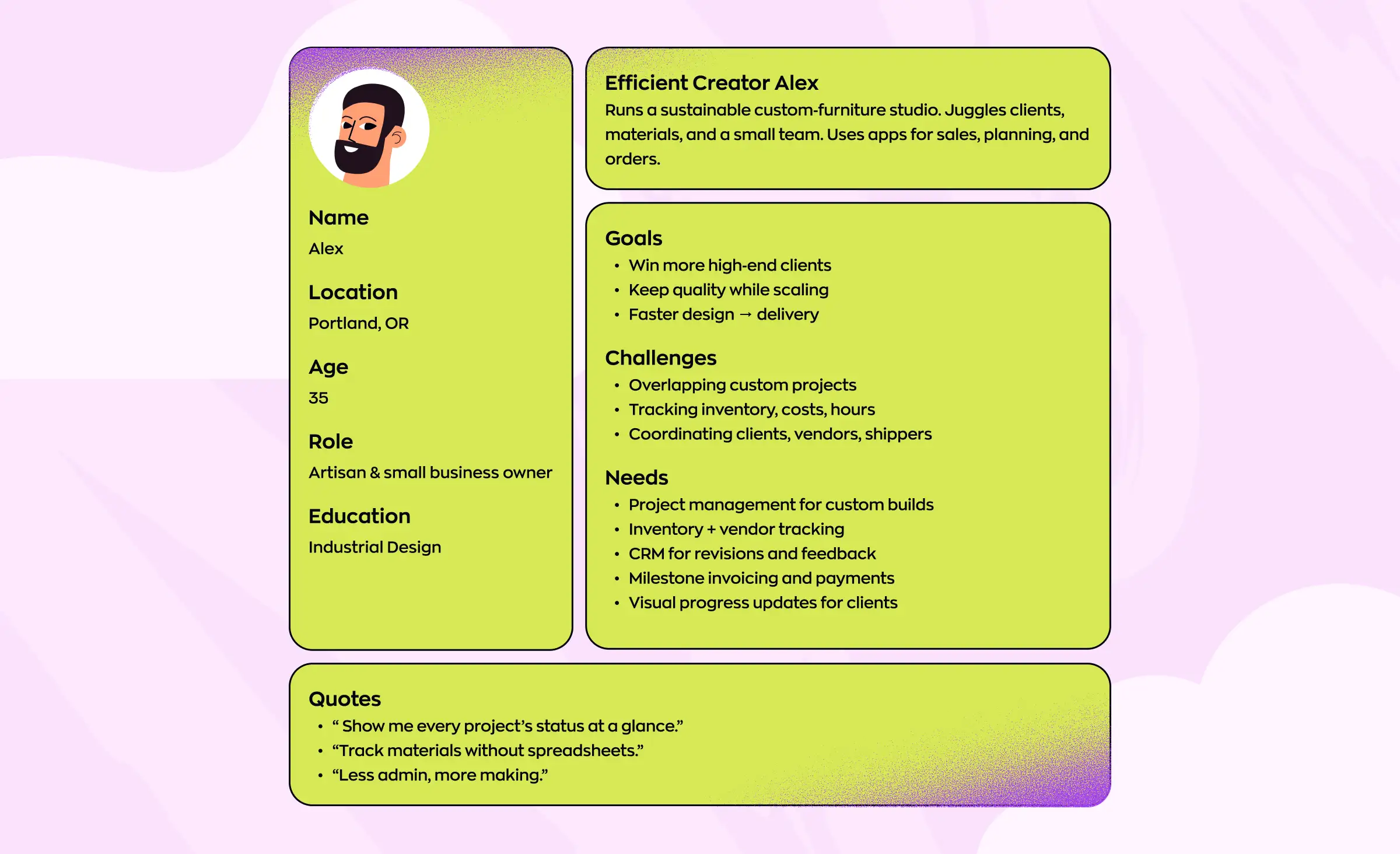
- Create detailed user personas: Develop 2-3 profiles of your ideal customer with names, job titles, technical skills, software preferences, pain points, and goals. Document industry, company size, tech stack, workflows, frustrations, and desired customer experience. This helps shape a successful product strategy.
- Leverage existing data and analytics: Use market research, competitor app reviews, user forums, and social media to understand your market's customer base and digital trends. Analyze competitor feedback and industry adoption statistics to assess market demand.
Identify the underserved needs of your target customers
Once you know who your target customer is, you must discover their problems or pain points that existing software or digital solutions aren't solving effectively. Here's how this can be accomplished:
- Conduct customer development interviews: Engage with 10–20 target users to understand their current workflows, software usage, manual tasks, and pain points. Ask open-ended questions like, “Can you walk me through how you complete [specific task] using your current software?” “What are the biggest challenges or time-consuming steps in your workflow?” and “Are there any features you wish your tools had?” This helps uncover both explicit and hidden user needs.
- Observe digital behavior: Watch users perform relevant tasks through screen sharing to see how they navigate interfaces, what workarounds they apply, where they struggle, and which manual steps slow them down. This reveals pain points users might not articulate directly.
- Analyze competitor gaps and user feedback: Test competitor products, review customer feedback, and join user communities to identify shortcomings like missing features or usability issues, revealing opportunities for your product to meet market needs better.
- Synthesize software-specific pain points: Collect and rank the most frequent and impactful challenges users face with existing tools. Focus on 3–5 key problems your solution can uniquely address through automation, improved insights, or enhanced user experience, guiding your product roadmap.
Define your value proposition
With a clear understanding of your customer needs and the gaps in the market, you must clearly state how your product will solve these specific needs and what makes it unique. This is the promise your software product makes to its market. This step is crucial for establishing your product market position. Here's how to accomplish this:
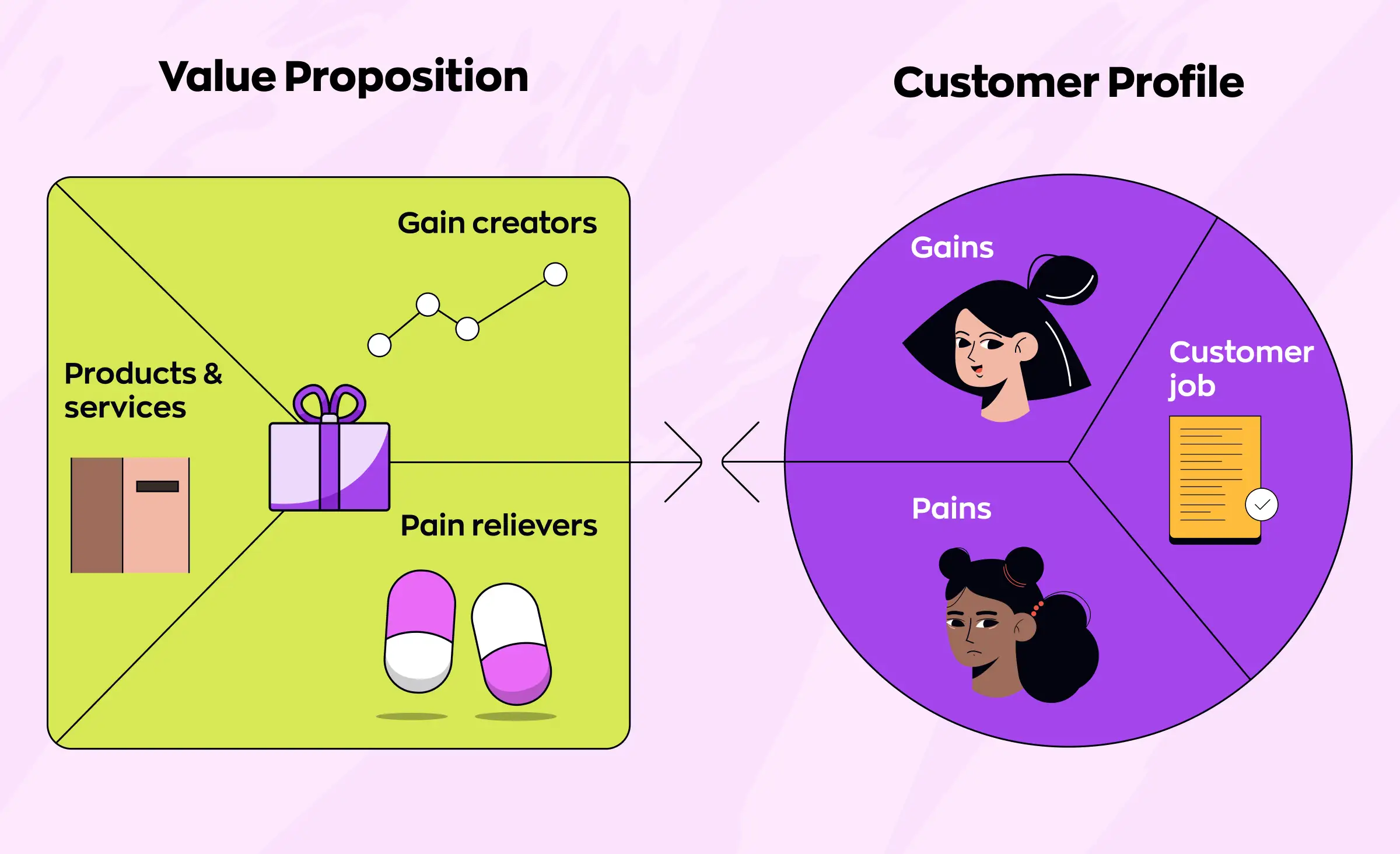
- Use a value proposition canvas to map target customers' pain points like slow performance, complex UI, or poor integrations, along with desired gains such as saved time or automated tasks. Align your product features as “pain relievers” and “gain creators” to clarify your strategy.
- Draft concise, benefit-driven value propositions that state who your target customer is (e.g., SaaS product managers), what software problem you solve (e.g., manual data entry), what your product is (e.g., an AI-powered project management tool), and the key benefit (e.g., saves 5 hours per week by automating sprint planning).
For example: Our FlowSync helps e-commerce store owners eliminate manual data entry between their CRM and inventory system by providing real-time, two-way data sync, delivering accurate stock levels, and saving administrative hours.
- Emphasize digital outcomes — customers want solutions that increase efficiency, automate work, improve decision-making, or enhance user experience, not just a list of features.
- Test your value proposition with potential customers to make sure it resonates and clearly communicates how your software solves their problems. Ask questions like: “Does this address an issue you have with your current tools?” or “What part appeals to you most?”
- Refine your value proposition iteratively based on feedback, using lean product development approaches to move toward solid product market fit, as well as to refine your overall marketing strategy.
2. Build your product's MVP
The next crucial step in achieving product-market fit is tangible creation. This involves building a minimum viable product (MVP) and rigorously testing it with real users. This stage is a core part of the lean product process, moving you from concept to tangible feedback. Here are what steps that can be done:
Specify the MVP feature set
- Focus on the single core problem: Revisit your target customer's primary underserved need and define the minimum features required to solve it. For example, a financial dashboard's core feature might be real-time transaction tracking rather than complex forecasting. Avoid adding "nice-to-have" features early on. Use prioritization tools such as impact mapping with your team to select only must-have features for your MVP, which will help you to make sure you can build your MVP with minimum resources.
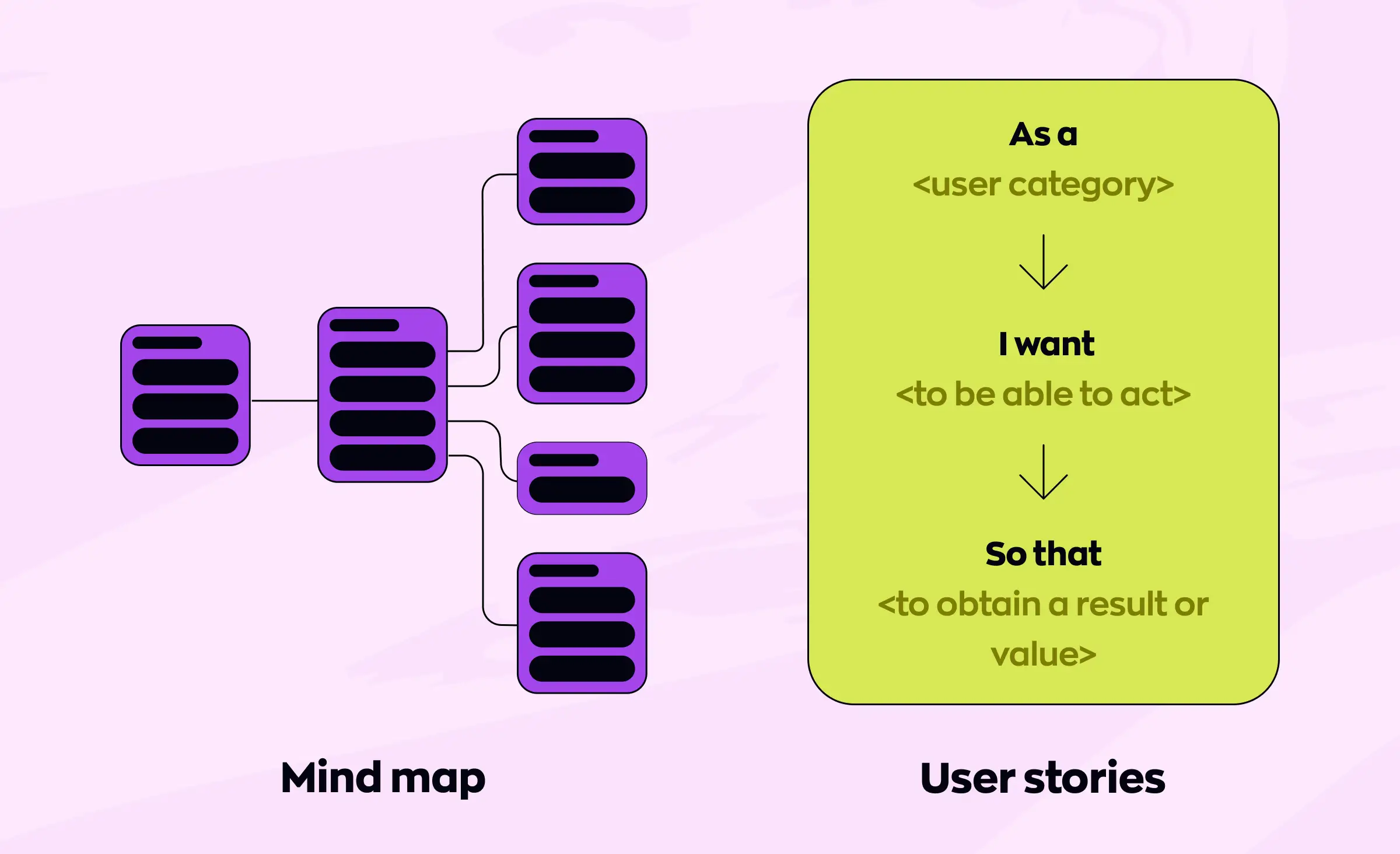
- Map features using user stories: Translate your MVP features into clear user stories that describe the functionality from the user's perspective and the benefit it delivers. Writing user stories like this helps align your development team and stakeholders on what needs to be built and why. For instance:
- As a project manager, I want to create and assign tasks so that I can track my team's progress efficiently.
- As an e-commerce store owner, I want to automatically sync my inventory between my website and marketplace to avoid overselling.
- As a healthcare provider, I want to securely access patient records to streamline consultations while maintaining compliance.
- Visualize with mind maps or user flows: Create visual diagrams that illustrate how users will interact with your product's core features to achieve their goals. For example, if you're developing a booking platform, map the flow from searching for a listing, selecting dates, making a reservation, to receiving a confirmation. Or, if it's a social app, map how users discover content, engage with posts, and receive notifications. Sketching key interactions makes sure the user journey is complete and focused on delivering your product's value proposition.
When outlining your app's development roadmap or trying to pick the best tech stack, you might face challenges. Our experienced CTO provides expert consultations to guide you.
Develop your MVP
- Assemble a capable technical team: Building successful software for startups starts with a capable technical team. You need skilled developers experienced in modern technologies and lean product development. Whether in-house or external, the right team is crucial for delivering an efficient and scalable MVP. Their expertise ensures your product strategy is executed with technical excellence.
- Build for functionality, not perfection: Focus on creating a working product that effectively addresses core user problems. Perfecting design details and eliminating every bug can come later during iterations. Leveraging rapid development tools and libraries speeds up the process, helping you meet market validation goals on time.
- Keep the scope tight: Avoid premature scaling, which is expanding features beyond the MVP without validating core concepts first. Stick to a prioritized feature list and regularly review progress to prevent scope creep. This approach helps you launch faster and adapt based on real user feedback.
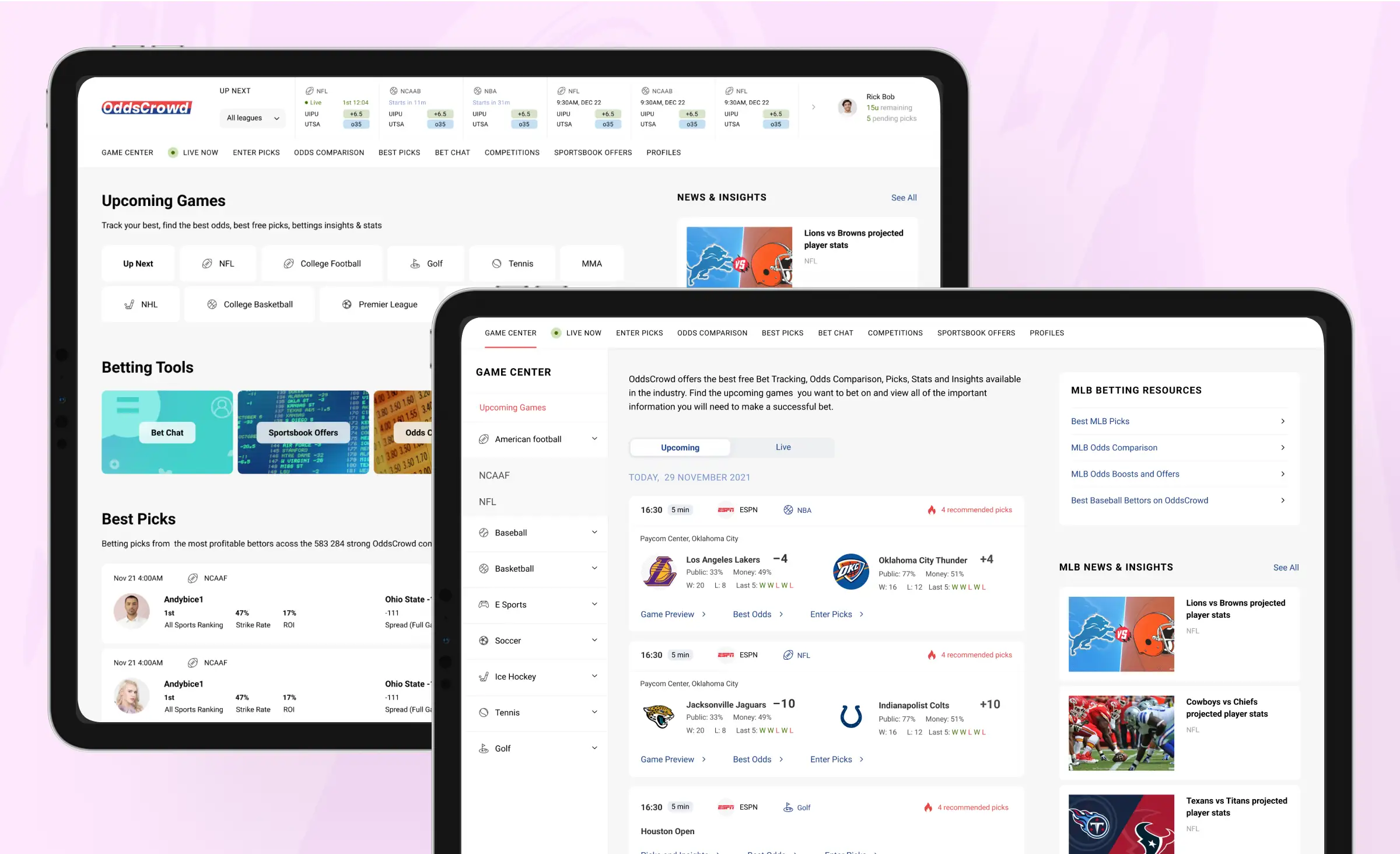
By the way, our Ronas IT team excels at translating initial concepts into functional MVPs, a vital step for achieving product-market fit. For example, with the OddsCrowd web app, our team collaborated closely to define the precise core functionality needed for their sports community. We focused on essential features like user forecasts, leaderboards, game centers, and odds comparison for the initial product version, directly addressing the target customer's needs.
We built a high-performance, adaptive web app within a strict 4-month deadline, ensuring launch before major sports events like the Super Bowl, which was crucial for early market entry. The web app has since been operating for over five years, demonstrating the long-term success and business growth with MVP, and the client even engaged us again for a mobile app extension, proving the strength of the initial market fit.
Iterate and analyze
Building and testing your minimum viable product is not the finish line; it's the beginning of a crucial feedback loop. During this phase, you continuously learn from your target customers, refine your product, and move closer to achieving product-market fit. This cyclical process is at the heart of the lean product process.
Collect customer feedback
After your MVP is in users' hands, you must actively listen. Use surveys, customer interviews, and usage data to understand how customers are using the product and what they truly think. This ongoing customer development provides invaluable insights into whether your product genuinely meets customer needs. Possible ways to gather customer feedback:
- In-app surveys: Short, contextual questions within the product to gauge immediate reactions to features or the overall customer experience.
- Direct customer interviews: Schedule one-on-one calls or video chats with a segment of your target customers. Ask open-ended questions about their experience, pain points, and suggestions for the product.
- Support tickets and forums: Monitor user-generated content, bug reports, and feature requests. These often highlight critical, underserved needs or usability issues.
- Usability testing: Observe specific customers as they complete tasks within your product to identify friction points and areas for improvement.
- Social media listening: Track mentions of your product or keywords related to your market to understand public sentiment and identify emerging market needs.
Analyze key metrics
Qualitative customer feedback is vital, but so is quantitative data. Track key metrics that indicate how your product performs in the market and whether you're making progress toward product-market fit. Key metrics include:
- User retention rate: How many customers continue to use your product over time? High customer retention is a strong indicator of value and a signal that your product is addressing a continuous customer need.
- Churn rate: The opposite of retention, this measures how many customers stop using your product. A high churn rate indicates a lack of market fit or unmet customer needs.
- Engagement metrics: Track daily active users, monthly active users, feature adoption rates, and time spent in the product. These show how much your product is integrated into your target customer's routine.
- Conversion rates: If your product has a free trial or freemium model, track how many users convert to paying customers.
- Net promoter score (NPS): Ask your customers, "How likely are you to recommend our product to a friend or colleague?" This single question is a powerful indicator of customer loyalty and overall customer satisfaction, which are direct results of strong product-market fit.
- Customer lifetime value: As your product matures, track the total revenue a customer brings over their relationship with your company. A rising CLTV indicates that your product's value proposition is strong and fosters sustainable growth.
Iterate
Use the combined insights from customer feedback and data metrics to make targeted improvements to your product, and then repeat the testing process. This continuous cycle of build-measure-learn is how you truly discover and optimize for product-market fit. How to iterate effectively:
- Prioritize improvements: Don't try to fix everything at once. Use your metrics and customer feedback to identify the most impactful changes that address critical customer needs or friction points. Your product team should focus on high-impact, low-effort changes first.
- Refine your value proposition: Sometimes, feedback reveals that your product is good, but your message isn't clear, or it resonates with a slightly different target market. Be ready to adjust your value proposition and product marketing based on what you learn.
- Test again: Implement the changes and then push a new version of your product to your target customers. Repeat the feedback collection and analysis process. This iterative approach, characteristic of the lean product process, helps you validate each change.
How to understand that the product market fit is met?
A common way to measure product-market fit is to ask users how they'd feel if they could no longer use your product. If 40% or more say they'd be “very disappointed”, it indicates strong market demand, according to Sean Ellis, the advocate of the product market fit concept. Besides user sentiment, there are other dimensions that define product-market fit:
- Organic, viral growth: Your customer acquisition costs drop significantly because users are recommending your product to others. People talk about it, share it, and invite their colleagues or friends without being prompted. This word-of-mouth is the strongest indicator of a compelling value proposition and strong market demand.
- Quantitative metrics are high: They provide measurable evidence of your product's market success. High customer retention and consistently low churn rates indicate that your product delivers ongoing value and meets long-term customer needs. According to Bain & Company , increasing retention by just 5% can boost profits by 25% to 95%, highlighting the strong connection between customer loyalty and profitability.
- Reduced sales friction: Salespeople find it easier to close deals because potential customers already understand and appreciate the value proposition of your product. The market is actively seeking what you offer.
- Increased investor interest: Venture capitalists actively seek out companies with proven product-market fit. It significantly de-risks their investment, making your company much more attractive for funding and increasing its valuation. They see a clear path to sustainable growth and a good market opportunity.
- A confident product team: The entire product team sees their efforts translating into real user adoption and positive impact. This boosts morale, clarifies the product roadmap, and reinforces the belief in the product's mission.
Wrapping up
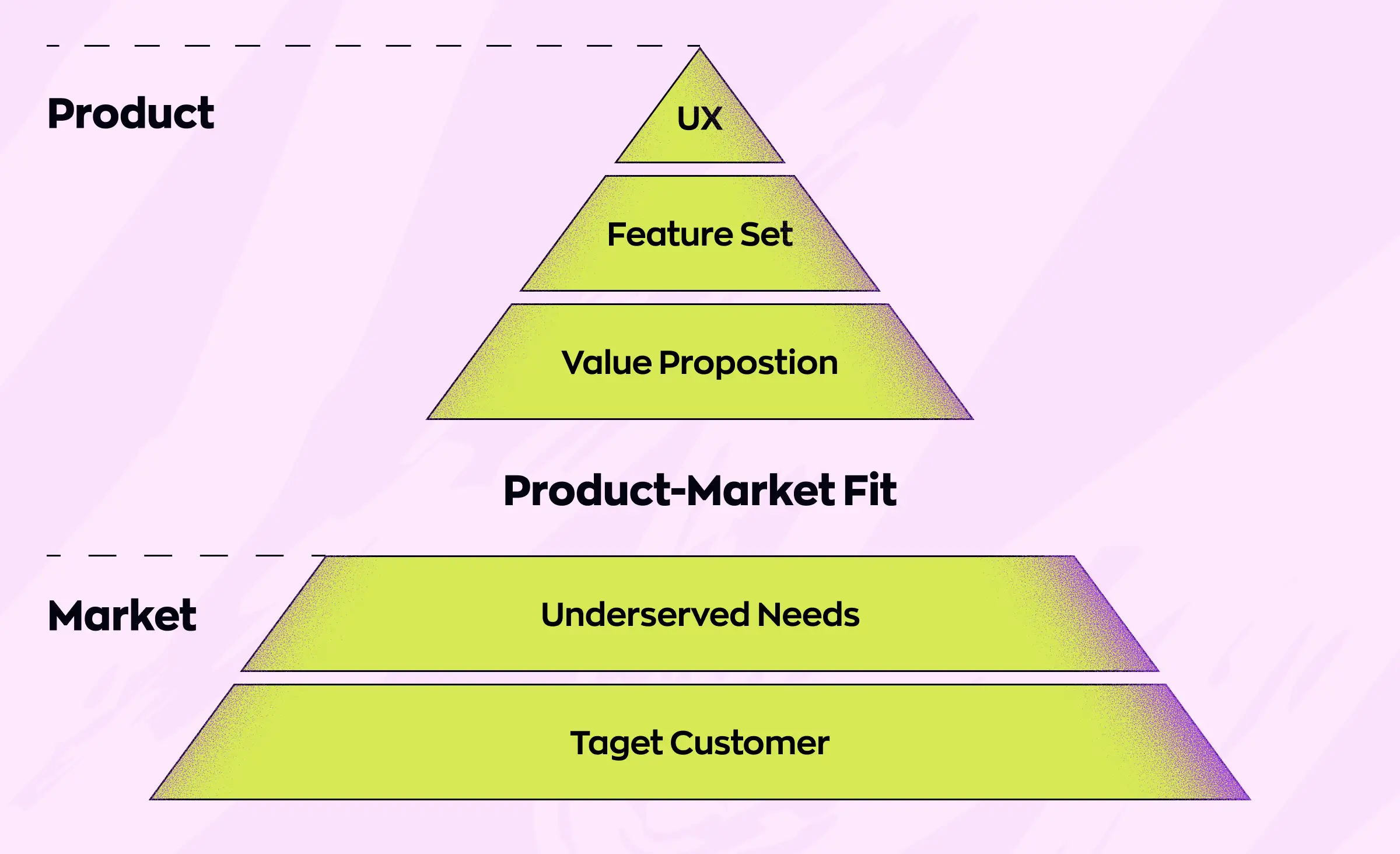
Finding product-market fit is crucial for any startup's success. However, diving straight into development without thoroughly analyzing the market can lead to costly missteps. At the peak of the product-market fit pyramid lies user experience — delivering a seamless and intuitive UX is essential to truly satisfy and retain your customers. Achieving this requires the expertise of an experienced tech provider who can help define your MVP features, develop your product from scratch, and successfully launch it to the market.
Our team specializes in supporting startups through MVP launches. If you need assistance in bringing your product to life and reaching product-market fit, feel free to contact us — we're here to help.
Related posts











Related Services


Development
React Native App Development Services


Development
MVP Development Services


Development