Offshore vs nearshore — Which one is the best strategy for building a software development team?


Choosing the right strategy for software development is essential for businesses aiming to build top-performing teams. Options like nearshore software development and offshore models offer access to talent, efficient solutions, and experienced developers for all kinds of projects. Companies from the US and other regions look for custom software development partners who bring real expertise and adaptability to every client's needs.
As development becomes more global, businesses want seamless collaboration and flexible approaches to meet today's challenges. In this article, we'll compare offshore and nearshore development, highlight the best regions and companies, and explain how a skills-first philosophy brings reliable results for businesses that value innovation and high-quality software development.
Nearshore and offshore pros and cons
When businesses look for the best way to grow their software development capabilities, they often compare nearshore software development and offshore outsourcing. Both strategies help companies build strong teams and deliver solid projects, but they come with unique pros and cons.
Nearshore outsourcing: Pros and cons
Nearshore outsourcing means working with development teams in a nearby country, often within a similar time zone. This setup brings many benefits, especially when it comes to fast communication and real time collaboration. Teams can schedule meetings during business hours with ease, which is important when deadlines are tight. Quick responses and timely updates help keep your software development projects moving in the right direction.
Culture also plays a role. Countries that are geographically close often share similar business customs. This leads to smoother collaboration between companies, fewer misunderstandings, and better quality results. For startups, this can make a real difference, especially in the early stages of development when every detail counts.
Finding skilled talent is easier when you look in similar regions. Nearshore software development gives businesses access to a growing pool of developers who understand your needs. A nearshore development approach also allows for flexible scaling of services as projects grow.
However, nearshore outsourcing sometimes costs more than hiring teams in more distant countries. The savings on communication and project speed, though, can often balance out the extra investment.
Offshore outsourcing: Pros and cons
Offshore outsourcing connects businesses to teams in distant countries, often many hours ahead or behind your local time. One big advantage is access to a huge market for talent and potentially lower costs for software development services. For some companies, this can make large, complex projects more affordable.
But there are certain challenges to consider. The bigger the distance, the harder it may be to manage clear communication. Teams could struggle with delays in feedback, making quick changes, or fostering close collaboration. Cultural differences can also impact the way teams work together, which can lead to slower progress and lower quality outcomes if not managed well.
According to statistics, offshore developers typically charge $20–$50 per hour, making it the most cost-effective option, especially in Asia and Eastern Europe. Teams in Latin America or Eastern Europe, have 70–90% time zone overlap with the U.S. or Europe, enabling real-time communication and agile workflows. Here's a detailed comparison of both options:
| Factor | Nearshore development | Offshore development |
|---|---|---|
| Cost (Hourly Rates 2025) | $35 – $70/hr | $20 – $50/hr |
| Time Zone Overlap | 70 – 90% overlap with Europe/US | 10 – 40% overlap depending on region |
| Collaboration | Easier real-time meetings | More async, requires strong documentation |
| Language & Culture | Often better English proficiency & cultural affinity | Varies widely, can cause friction |
| Best For | Agile projects, real-time collaboration, high-quality codebases | Budget-conscious projects, 24/7 development cycles |
| Risks | Slightly higher costs, smaller talent pool | Communication delays, quality gaps, turnover |
Startups should weigh these pros and cons carefully. Nearshore software development and offshore outsourcing both open doors to new solutions and skilled professionals. The right choice depends on your priorities, whether you need tight collaboration, expert developers, cost savings, or the strongest possible talent for your next software project.
Best regions for outsourcing development
When businesses look to expand their teams or outsource a project, picking a region becomes a challenge. Each area has its own strengths in talent, culture, and services. Let's look closer at some of the leading regions for software development.
Latin America
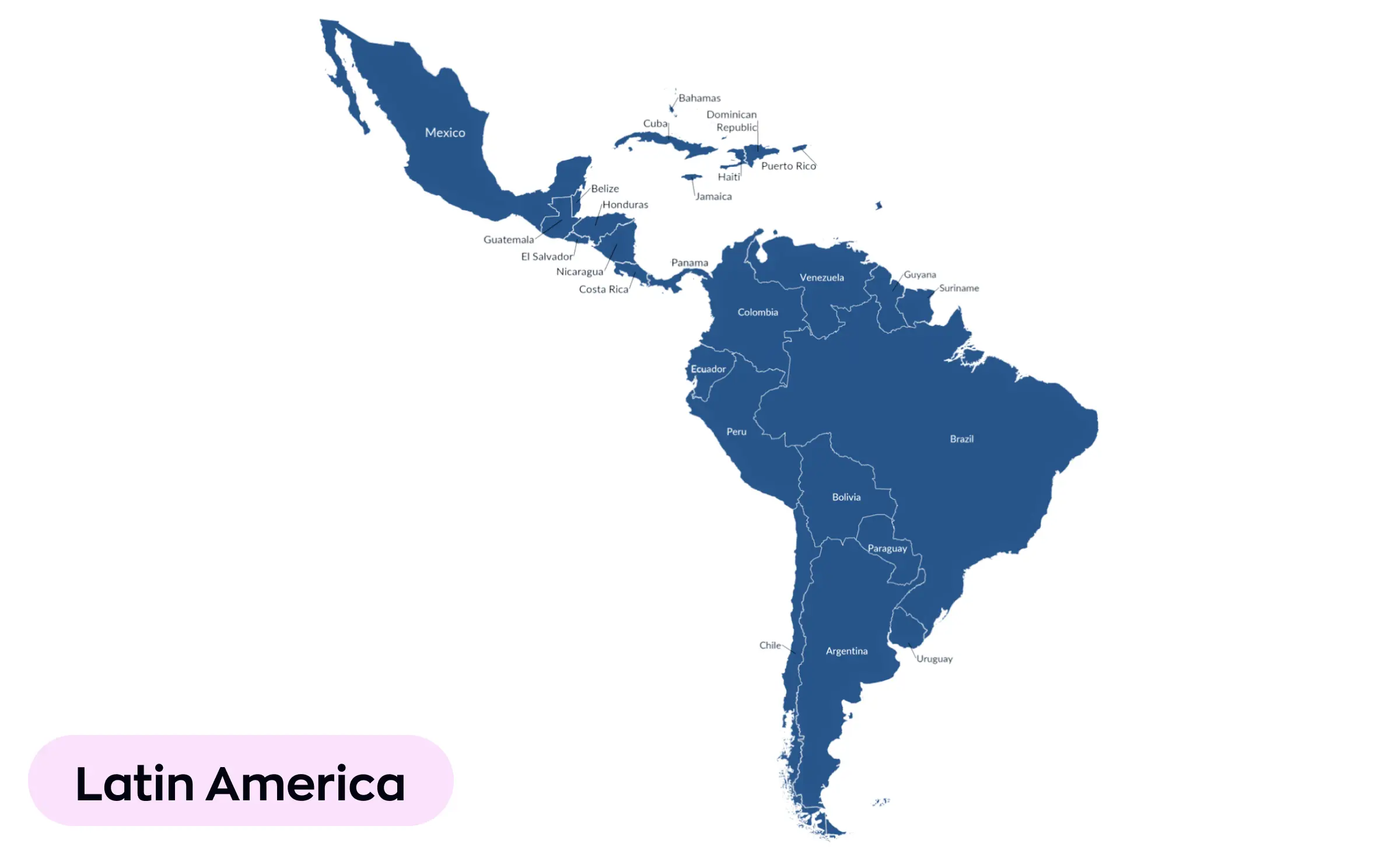
Latin America is leading the way for nearshore software development. Startups value the region for its similar time zones, cultural alignment, and steady flow of highly skilled developers. Costa Rica, for example, stands out as a country with specialized tech talent and English proficiency. Many companies choose nearshore development in Latin America to improve communication and enjoy faster project delivery.
Mexico is popular with U.S. companies because it's close, shares a similar culture, and has skilled workers in fintech and e-commerce for $25–$50 an hour. Brazil has many tech experts and matching time zones with the U.S., with rates of $30–$50. Argentina stands out with good English, strong fintech and AI skills, and rates of $30–$55. While Costa Rica and Peru are new nearshore options with stable governments, better English skills, and good prices.
Eastern Europe
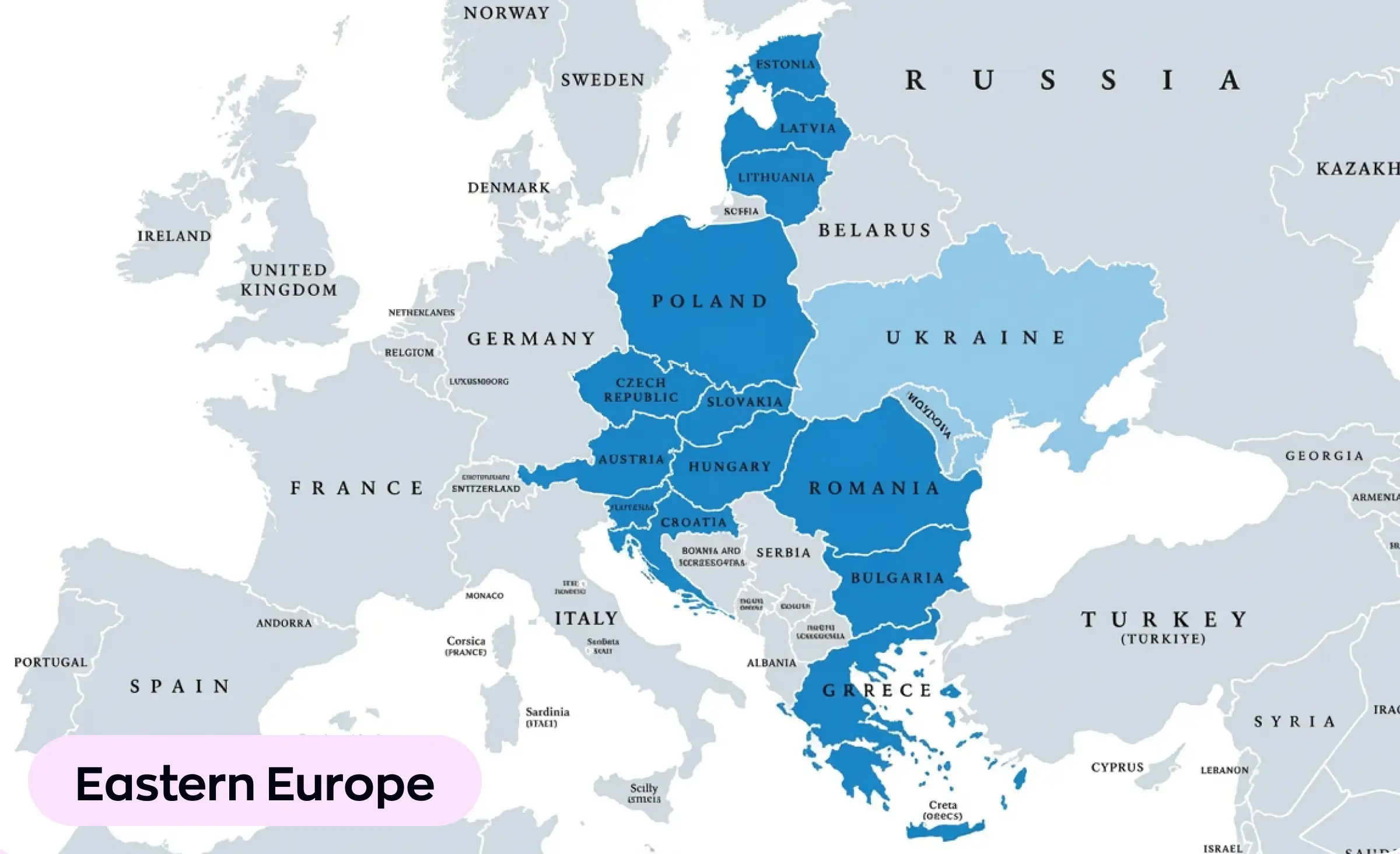
Eastern Europe has built a solid reputation for top-notch software development expertise. This region is rich in tech talent, especially in fields like cybersecurity and artificial intelligence. Eastern European developers bring creative solutions and a strong dedication to quality, making them a trusted choice for companies from all over the world.
Romania, Ukraine, and Bulgaria lead Eastern European IT outsourcing with many skilled developers, good English, and rates of $20–$50 per hour. Estonia, though smaller, offers top digital expertise, strong English, and rates of $40–$70 per hour.
Central Europe
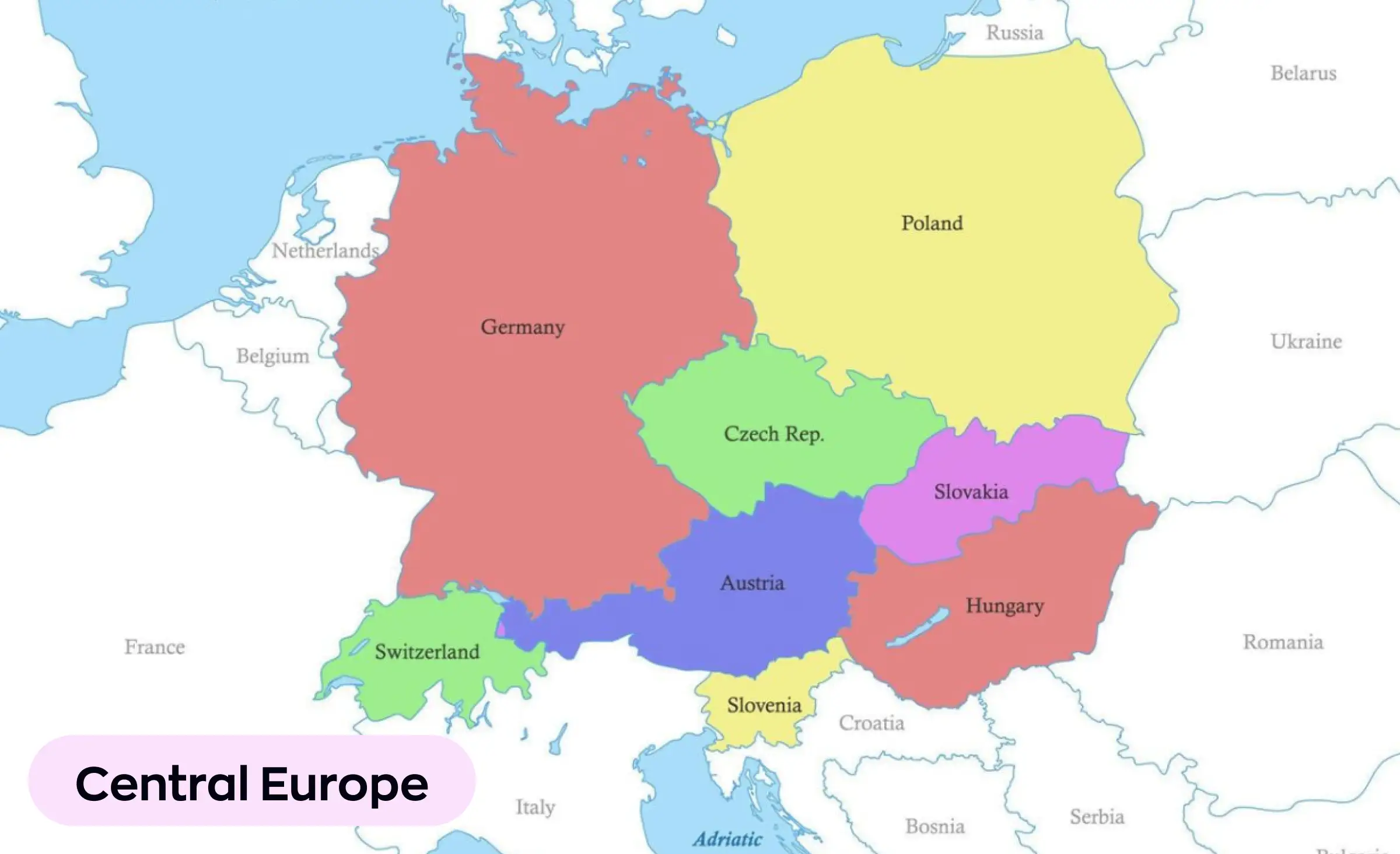
Central Europe is another favorite destination for outsourcing. Here, businesses have access to developers with high technical standards and excellent project management skills. Companies working with Central European teams benefit from professional services that fit well with Western expectations. The region focuses on building trust through reliability and clear communication.
Poland, Hungary, and the Czech Republic are top IT outsourcing choices in Central Europe, offering convenient time zones, many skilled tech workers, and good prices. Poland has a large talent pool, Hungary offers strong skills, and the Czech Republic is growing quickly.
Asia
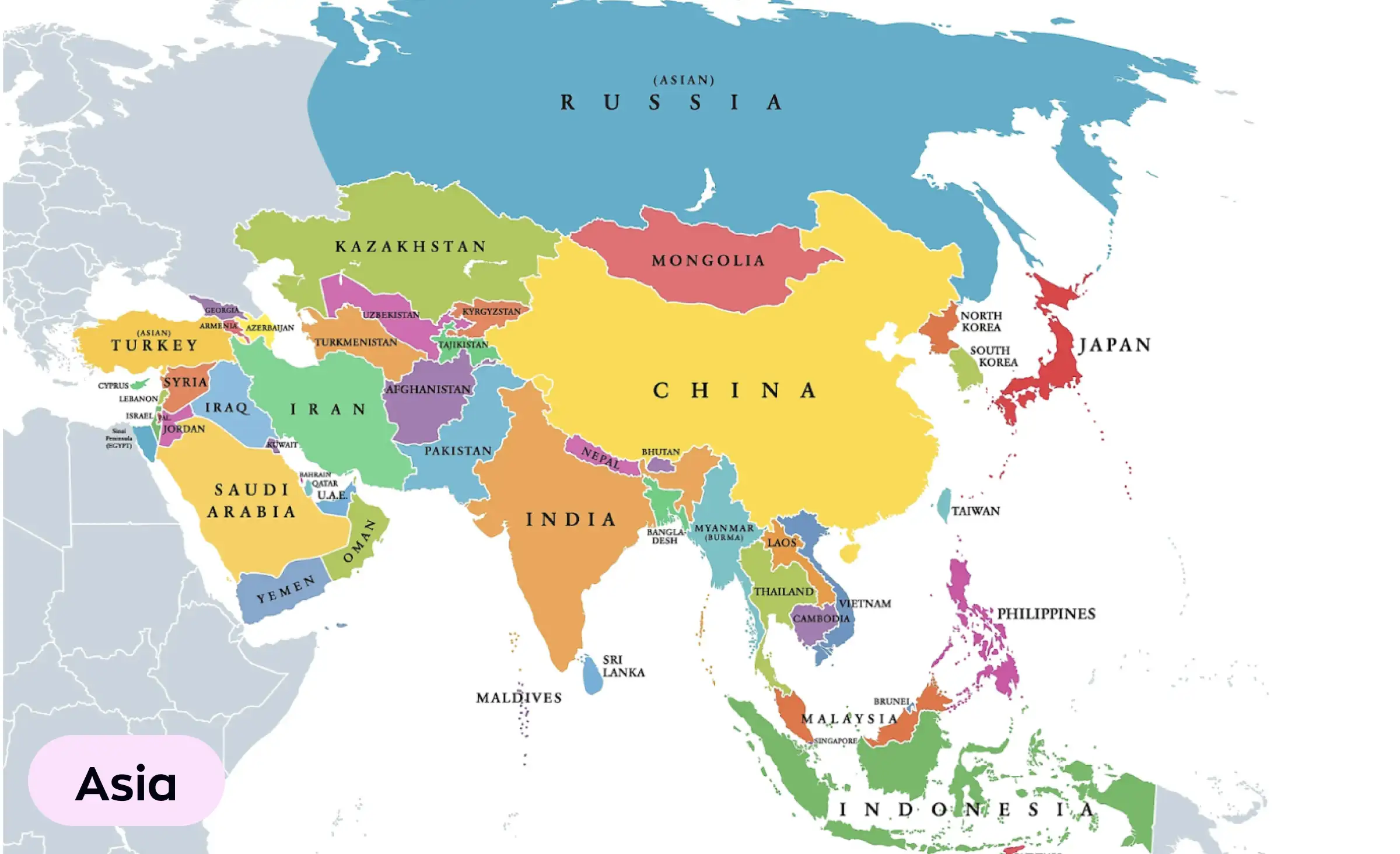
Asia remains a popular region for outsourcing, with easy access to an enormous tech talent market. Startups often turn to Asia for software development when they need to grow quickly and save costs at the same time. Reliable outsourcing companies here offer a wide range of services and experience in different industries, from web to enterprise solutions.
India is a top choice for its large talent pool, tech skills, and low costs, especially in web, AI, and mobile app development. The Philippines stands out for good English, easy communication, and affordable rates.
Neighboring countries
For some businesses, outsourcing to neighboring countries brings a unique set of advantages. Geographic closeness helps teams work together better, and cultural similarities support smooth collaboration. Being able to access talent just across the border can help companies complete projects on time while keeping communication easy and efficient.
Choosing the best region or country for outsourcing depends on your goals, needs for talent, and the way you want to work with your team. Latin America, Eastern Europe, Central Europe, and Asia each offer different strengths, making it easier for startups to find the best fit for their software development needs.
Our skills-first hiring approach
At our company, we believe the success of any software development project starts with building a great development team. Our skills-first philosophy means we don't just focus on where someone lives or their resume buzzwords — we look for genuine expertise, proven problem-solving ability, and excellent communication from skilled developers across the globe. This approach helps us deliver innovative solutions to clients, from fast-growing startups to established companies.
What ‘skills-first’ means
‘Skills-first’ is about putting technical skills, initiative, and adaptability front and center. Our rigorous recruitment process allows us to find top talent who bring true technical expertise in areas that matter most — whether it's frontend, backend, mobile, or even machine learning. We look far beyond just diplomas or zip codes. Instead, we dig deep into candidates' experience, technical skills, creativity, and drive for innovation.
Communication
Managing distributed teams is easy if you have the right frameworks. We set ourselves apart with proactive time zone management, ensuring plenty of overlap between team members during critical hours. Our teams use modern asynchronous communication best practices, supported by tools like ClickUp, Zoom, and best-in-class project management platforms. This keeps everyone in the loop and guarantees smooth project delivery, no matter the distance.
Project management
For every client, we assemble a dedicated development team led by project managers with experience guiding remote and nearshore software development groups. Our project managers follow agile methodologies, allowing fast pivots and true transparency. Regular sprint reviews, clear reporting, and hands-on leadership let us deliver solutions that meet each client's specific needs.
Quality assurance
Our QA process begins on day one, and doesn't let up until after release. Developers continually test their own work, and team leads or managers double-check everything during the acceptance stage. Code reviews, checklists before releases, and well-defined performance metrics all help drive the quality we're known for.
Teamwork
Our skilled talent comes from around the world. We promote a welcoming and inclusive team culture, ensuring collaboration that rises above borders. When new experts join, our integration standards mean the process is smooth, and ramp-up times are short, even when the team needs to scale quickly.
Custom-fit teams for every project
Every project is unique, and we build teams to match. Need digital transformation or a solution rooted in machine learning? We handpick developers with exactly the right expertise, assembling a group who can deliver results for your market. With our full-cycle approach, there's always someone on the team who can offer the best path forward.
Our proven standards and tested solutions give us confidence that every software development challenge will end in success. By focusing on skills, experience, and innovation, we help startups and companies accelerate their growth and create extraordinary outcomes.
Benefits of skills-first hiring for your business
For growing businesses and ambitious startups, choosing the right way to build teams is a strategic decision. The traditional options like nearshore software development and offshore outsourcing often highlight the advantages of working with developers across borders. However, these models usually focus on geography, cost, or time zones, rather than the core needs of your business: access to the best talent, seamless collaboration, and deliverable quality.
Access to top specialists
With classic nearshore development or offshore models, companies are sometimes limited by the talent available in a specific region, even through high-quality nearshore software development services. This can restrict access to specialists or result in teams that aren't quite the right fit. By using a skills-first approach, you get direct access to top developers whose technical and soft skills match your project's unique requirements, regardless of where they're based.
Better collaboration
Good communication is crucial for complex development projects. Nearshore software development models improve collaboration compared to traditional offshore teams, thanks to time zone overlap. But with a skills-first approach, you aren't limited to a fixed region. Instead, you use best-in-class communication and project management practices that support smooth collaboration wherever your developers live.
- Real-time chat, asynchronous updates, and dedicated channels give your client greater project visibility and control.
- Cross-functional teams assembled for your specific needs mean issues get solved faster, raising the quality bar.
Scalability
A major benefit of the skills-first approach is scalability. Businesses can easily scale teams up or down as project demands shift because the focus is on skills, not passport stamps. You can quickly add top talent for a surge in workload or rapidly bring in rare specialists for innovation, machine learning, or other advanced solutions.
Quality results
Skills-first doesn't just mean hiring — it's about assembling the best possible teams to ensure quality and accountability at every stage. When you select talent for their capabilities and suit them to your needs, you get better results, fewer errors, and solutions that actually solve business problems.
Key benefits summarized:
- Access to top global talent instead of being limited by region.
- Higher quality and more flexible services for your projects.
- Improved collaboration and communication, even across borders.
- Seamless scalability for fast-changing business environments.
- Greater innovation thanks to a custom blend of skills.
- The ability to build a nearshore software development team or an international team, depending on what your solution requires.
A skills-first approach will help your business unlock real, lasting value from every project. Whether you choose nearshore software development or integrate global services, focusing on the right talent ensures your client receives the best possible solutions, no matter where your team is based.
Wrapping up
Choosing the right approach to software development is vital for businesses that want lasting success. Nearshore software development connects companies with top talent and strong communication, making it easier to deliver high-quality projects. Partnering with a trusted nearshore software development company gives access to skilled nearshore developers, flexible services, and reliable solutions for all your development needs.
Outsourcing also provides valuable experience and helps companies scale their development without sacrificing quality. With the right nearshore company, businesses get dedicated support, efficient processes, and a great client experience each time.
With a skills-first approach, companies can access the best nearshore developers and build teams that match every project, no matter the location. This leads to stronger collaboration, smoother communication, higher quality, and more reliable results on all your projects. That's why, instead of relying only on nearshore software development outsourcing, leading businesses now turn to skills-first strategies to ensure the success of their services, teams, and future growth.
Related posts











Related Services


Development
React Native App Development Services


Development
MVP Development Services


Development