Estimate Project

React Native development services for founder-led teams

20+
RN apps shipped since 2020
4.9★
on Clutch · 35 reviews
4-6 weeks
for MVP development

Ronas IT is an Estonia-based engineering team. Since 2020, we've shipped 20+ React Native apps for fintech, marketplaces, logistics, and other sectors. We offer direct billing at $50/hour, with no resellers involved. Send us 4 lines about your ideas and get a response within 24h with a rough estimate, or book a free call that takes 30 min.

100% of our React Native projects have launched to both stores

Sometimes after a round of store-review iteration.

Most of our 20+ React Native apps are under NDA, so you won't see every store badge here. Two public ones to open right now:

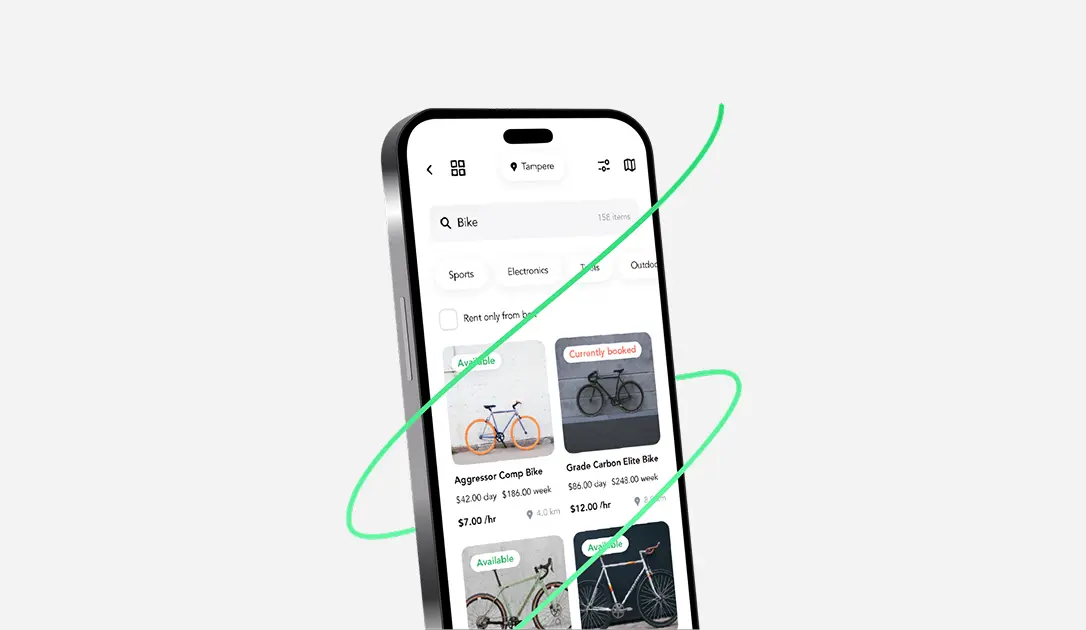
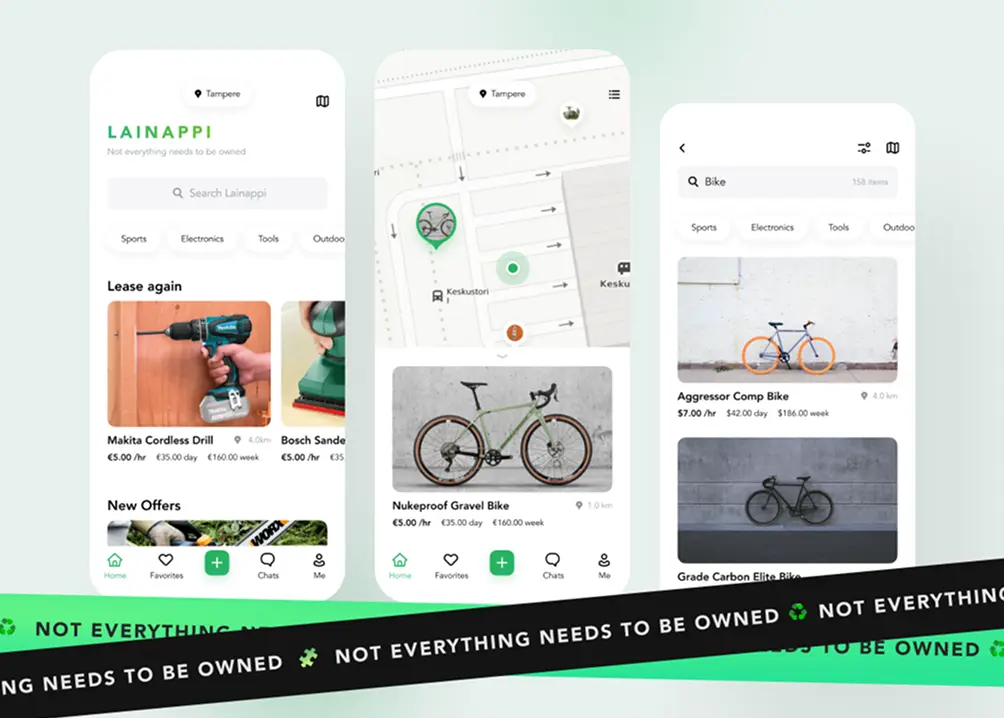
Lainappi rental marketplace app built with React Native — listing, search, and map screens

Lainappi

Lainappi provides boxes to help people give and take any items for rent, requiring a mobile app to connect the sharers.

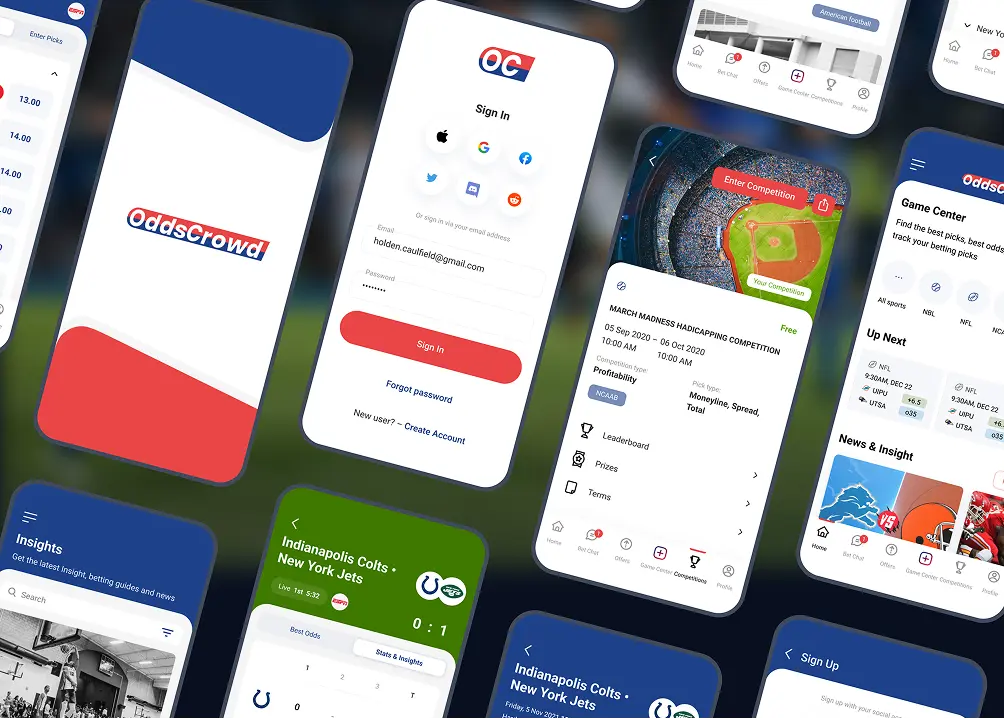
OddsCrowd sports betting insights app built with React Native — odds comparison screens

OddsCrowd

OddsCrowd is a web platform that collects information on sport games, providing sport bettors with the latest updates.

React Native covers almost everything your app needs — our in-house React Native team has used it for products with deep linking, push notifications, analytics, chats, live data updates, and store releases.

If it's not the right call, we say so on the discovery call. We've passed on heavy-graphics gaming, deep AR/VR, and ultra-low-latency networking work. On OddsCrowd, we swapped two of three odds providers mid-project without rewriting to native.

— Evgeny Leonov, CTO, Ronas IT

Why choose React Native development services from Ronas IT

We use React Native when it's the right tool, not because it's the default. Here's when it fits, when we add native code on top, and when we recommend pure native instead.

When React Native fits

React Native is a strong fit when most of the code can stay shared across iOS and Android. Although a few features still need direct access to platform APIs, most "React Native can't handle this" concerns are outdated. When a feature needs native code, our React Native team writes it and connects it to the shared codebase. That's usually 5-15% of the scope; the main product stays cross-platform.

We can add native modules to cover almost any core platform feature:

  • Bluetooth
  • Geolocation and maps
  • Sensors
  • Analytics
  • Camera
  • Basic AR
  • Payments

Three exceptions when we recommend pure native instead:

  • Heavy 3D graphics or game-level rendering, where Unity, Unreal, Metal, or Vulkan is a better fit.

  • Companion apps for Apple Watch or Wear OS. React Native doesn't run on the watches. We build these parts separately in Swift or Kotlin and connect them to the main product when needed.

  • Products where microsecond-level latency is critical, such as high-frequency trading or multiplayer apps with a custom networking stack.

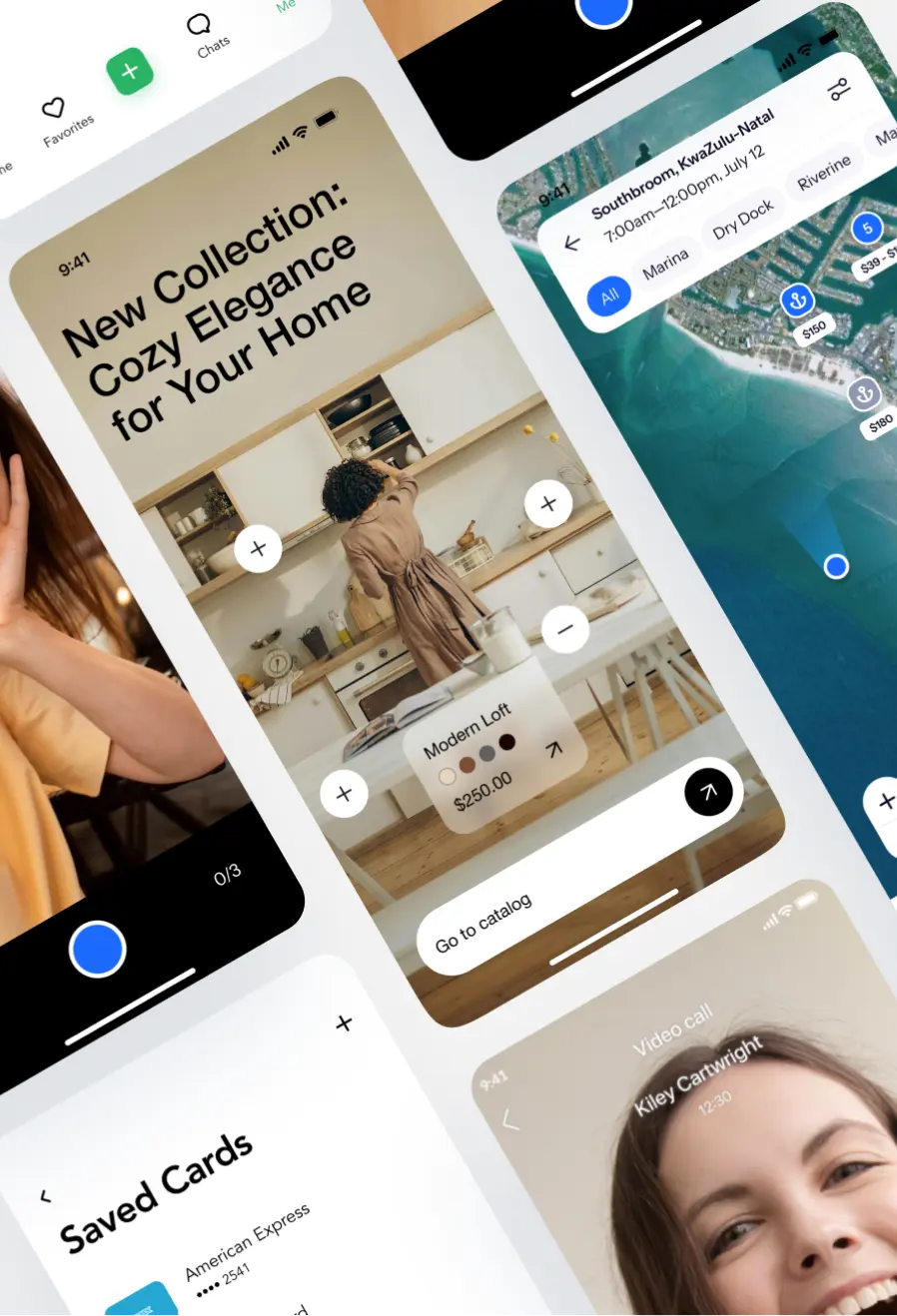
React Native app screens by Ronas IT — shopping catalog, map-based booking, saved payment cards, and a video call

What to expect when working with us as your React Native mobile app development company

Work transparency

No hidden costs

You see the rates upfront: $50/hour for development, design, and DevOps; $400/week for project management.

No unclear timelines

A minimal MVP takes 4-6 weeks. A full launch usually takes 12-20 weeks, depending on scope.

No support gap after launch

You can continue hourly, switch to a $1k/month maintenance, or request a full handover at any time.

Control and communication

Communication stays organized

One PM manages delivery, while you keep direct access to designers, developers, and DevOps in ClickUp. Every decision is documented as a verifiable project artifact, so agreements don’t stay verbal and can be checked against the final release.

No vendor lock-in

You own 100% of project assets from day one: the code, infrastructure, Figma files, documentation, and repositories. They live in your accounts, or in ours with full access and transfer whenever you ask.

Timezone overlap is planned

We keep at least four working hours of overlap with your team and adjust our schedule when needed.

Delivery and quality

Same team from day one to release

No mid-project engineer rotation, no juniors-to-seniors handoff. One stable team of senior mobile engineers, in-house DevOps, and multi-layer QA support the project throughout.

Store release is included

We handle app assets, submission, review responses, and rejection fixes for App Store and Google Play.

Store setup does not block development

We use our Apple and Google Play accounts first; you register yours before production release.

Built to scale after launch

PostgreSQL or MongoDB, Redis, and a Kubernetes-ready backend let you grow from 1k to 100k+ MAU without rewriting your backend when your React Native app scales.

Faster fixes after release

Expo Updates lets us ship eligible fixes over the air within hours instead of waiting days for store review.

We might not be the fit for you if:

  • You need pure outstaffing, where engineers slot directly into your team's daily management. We sell managed delivery with our PM, QA, and tech lead in the loop.

  • Procurement requires a 6-month pre-contract cycle with multiple vetting layers. We work best with founder-led teams that can decide within 2-3 calls.

  • You expect us to start building without any discovery or alignment step. We need at least a short discovery to check fit and shape scope. We don't ship blind.

  • Hourly rate is your single deciding factor. Our $50/hour reflects a managed team with senior React Native engineers and PM overhead; teams without that layer can legitimately quote lower.

If your project falls in the wrong-call list, we'll say so on the discovery call.

React Native case studies by industry

React Native Fintech · Digital banking

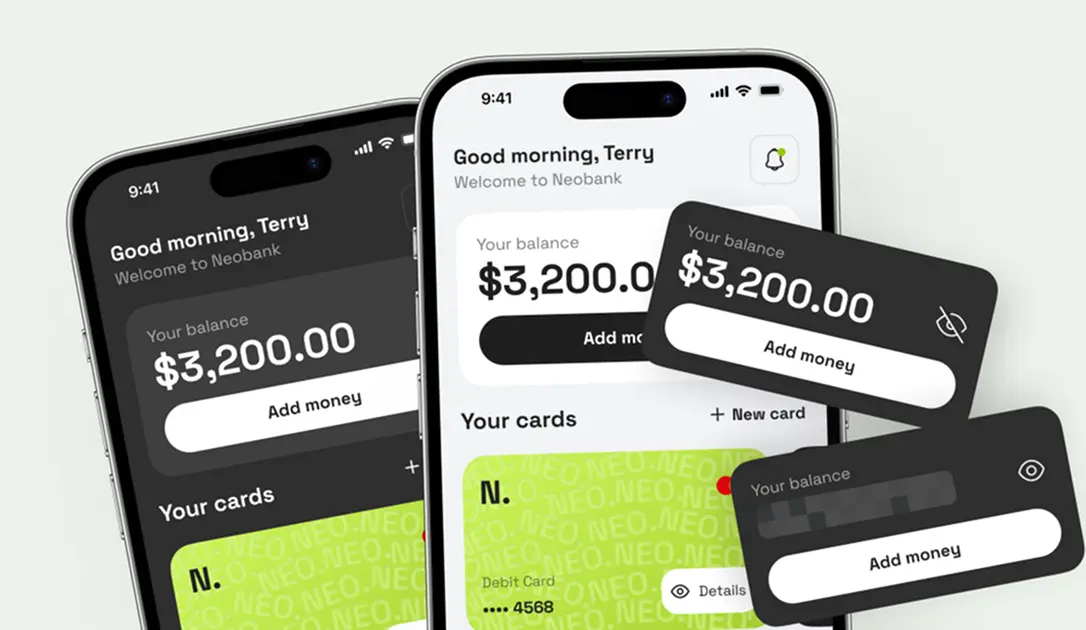
US Neobank mobile banking app built with React Native — card management and transfers

US Neobank

1,285 accounts opened by verified users · historical App Store approval

Neobank app for the US market, built with 7 microservices, 8 third-party SDKs, KYC, card issuing, direct deposits, cashback, and secure financial data flows. During onboarding, Sardine tracked field interactions, while Persona handled document checks. If a user left the flow, the app resumed at the relevant KYC review or retry step.

View Case
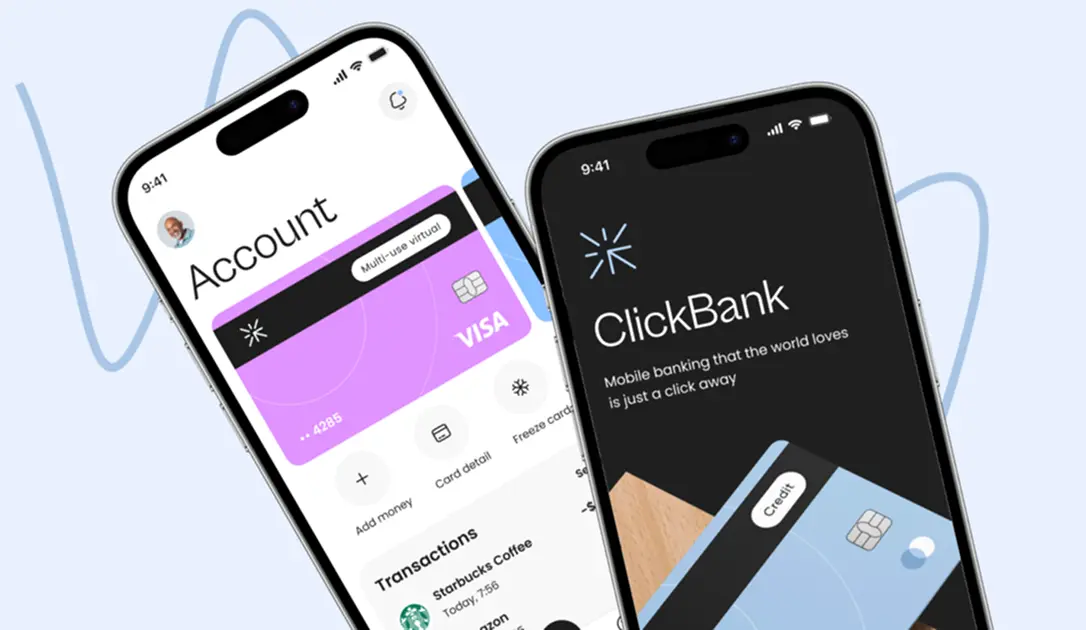
EU Neobank React Native app — account balance, transactions, and card screens

EU Neobank

Built to PSD2 requirements · one codebase for iOS and Android

Mobile banking app built with React Native and Laravel. We integrated Solaris for banking services and Trulioo for KYC. The product was designed around PSD2, GDPR, AMLD, CRD/CRR, and consumer-protection requirements.

View Case

React Native Marketplace · P2P service

Lainappi P2P rental marketplace app — React Native iOS and Android

Lainappi

10K+ Google Play downloads · 3,096 first-cohort Android downloads

Finnish item-rental marketplace built with React Native, react-native-maps, and expo-location. The first release validated demand and grew into a 5+ year engineering partnership.

View Case
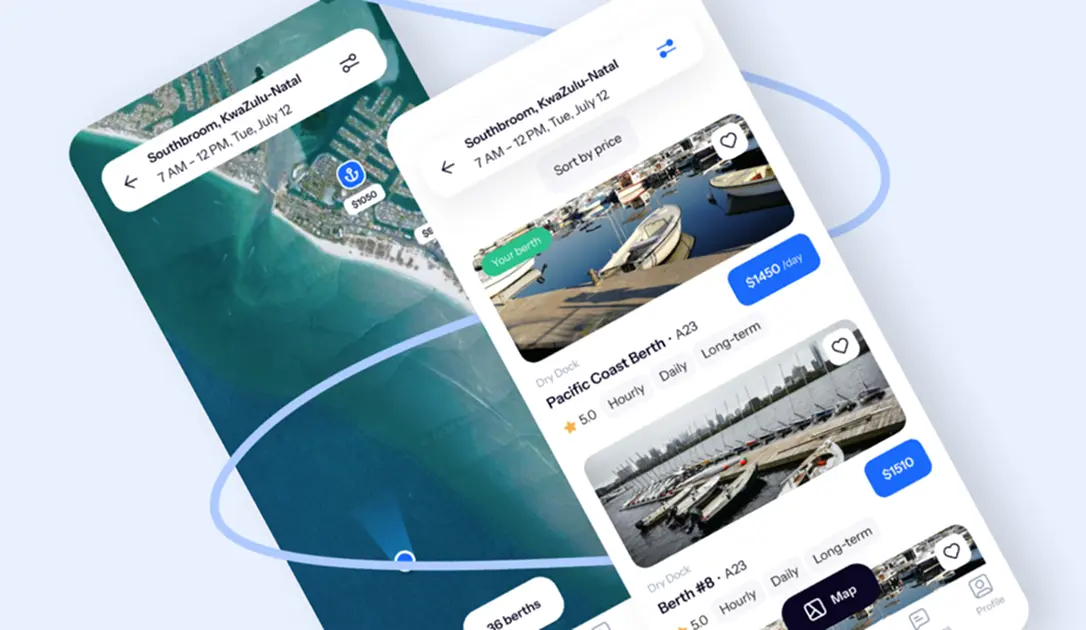
Docky yacht booking marketplace app built with React Native

Docky

Scope expanded 3× mid-project, delivered within the original timeline

React Native and Next.js yacht berth rental app built with an Nx monorepo and Expo Router. Shared TypeScript components help keep web and mobile development aligned.

View Case

React Native Logistics · Delivery

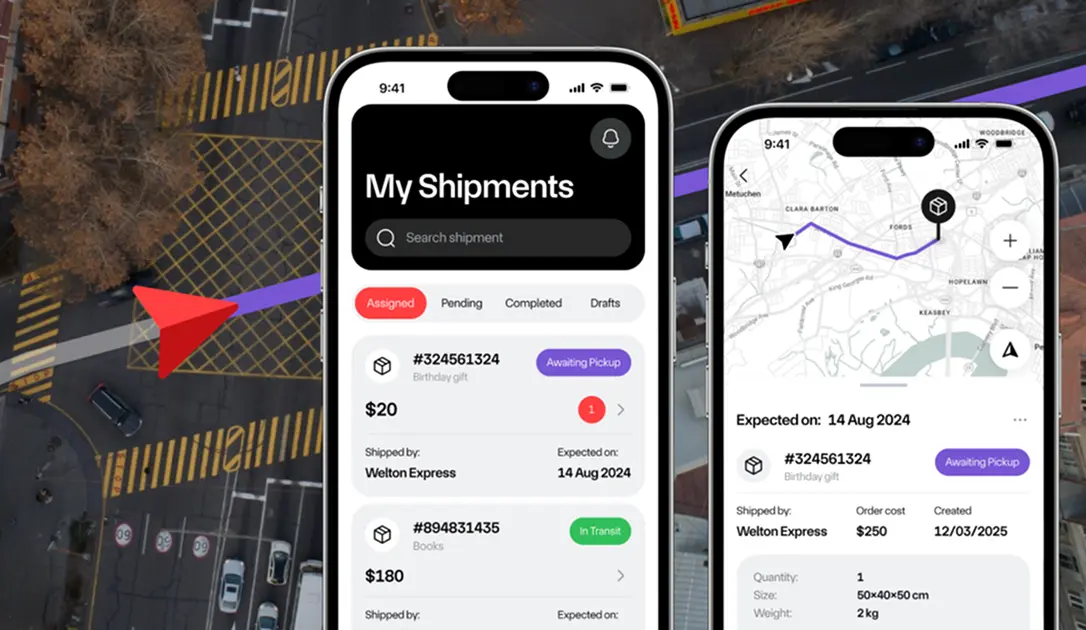
Package delivery system with customer and driver apps built with React Native

Package Delivery System

Three apps from one Nx codebase connected in real time

Cross-platform mobile product for two user roles: customers and drivers. A shared React Native codebase helped us iterate faster across both workflows.

View Case

React Native Real estate

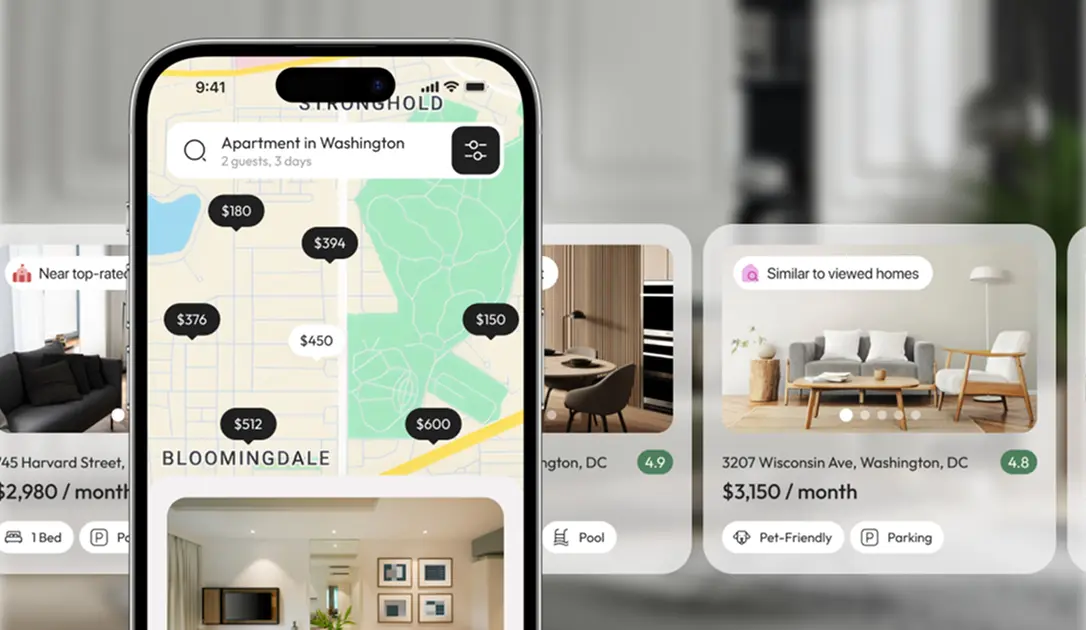
US property search app with SaaS-like agent subscriptions built with React Native

US Property Search

MVP shipped in 5 months for the US market

React Native and Laravel MVP with Stripe subscriptions for real estate agents, premium listings, analytics, and AI-powered recommendations.

View Case

React Native Wellness and AI

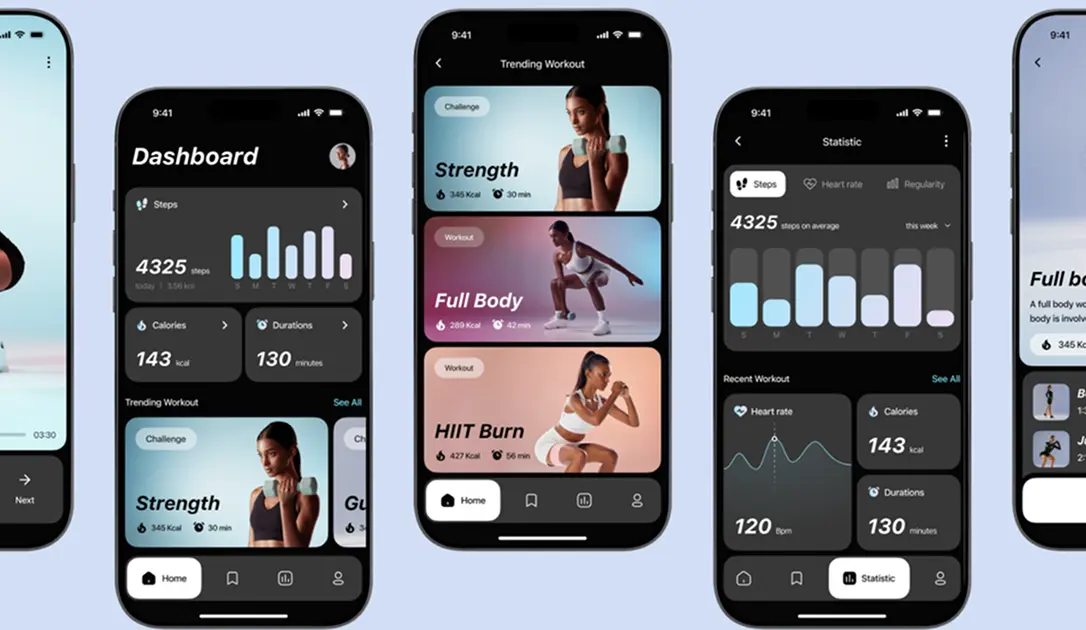
AI-powered fitness app with workout recommendations built with React Native

AI-Powered Fitness App

Embedded OpenAI for personalized workout recommendations

React Native fitness app with AI-driven recommendations and Laravel Nova on the backend. A clear example of embedded AI in a consumer wellness product.

View Case

Don’t see your industry?

Cross-platform consumer apps and B2B tools on React Native fit many markets.

Tell us about your project on a discovery call.

Our React Native engineering process

We check the idea holds up before writing any code, and each stage produces a concrete result you can use. Testing and release preparation run alongside development, so the stage durations below are not meant to be added up.

  • 1

    Discovery call

    30 minutes · free

    We discuss your product idea, goals, and stage. Then we check React Native fit, outline a rough budget and timeline, and confirm team availability for the next 3 months.

  • 2

    Analysis phase

    1–2 weeks · paid, $2–3k

    The product idea becomes a delivery plan: user stories, main flows, technical and product risks, and a sharper estimate. You also get portable materials to use with our team or share with another vendor.

  • 3

    UI/UX design and architecture

    1-2 weeks

    Before development starts, we create a design concept, map the connections between screens, and prepare full-color UI design flow by flow. If needed, we can also prepare a clickable prototype. In parallel, we define the technical architecture: how the product will be structured, what integrations it may require, and which technical constraints can affect the interface. After this stage, we refine the development estimate.

  • 4

    MVP build

    2-3 weeks for a basic MVP · 8-14 weeks for a standard or full MVP

    We build the MVP in milestones, so you can see progress early and adjust the scope if needed. After each milestone, you get a working build, a demo, a weekly report with completed tasks, planned work, and risks, plus an updated estimate for the next stage.

  • 5

    Testing and launch

    about 1 week

    We test the app on real iOS and Android devices, prepare store assets, and get the production build ready. This includes testing reports, screenshots, descriptions, app preview videos, and App Store and Google Play submission.

  • 6

    Post-launch engagement and handover

    flexible cadence after release

    The same PM and engineers continue. Cadence and engagement format adapt to your stage (see Pricing for options); a structured 2-4 week handover is available if you move in-house.

Our analysis-first approach

Analysis is where we reduce project risk before it turns into expensive rework. A small clarification may take 20-30 minutes during analysis, several hours during design, and days or weeks during development. We use this phase to catch "that's not what I meant" moments before they turn into engineering rework.

React Native-specific decisions we lock in early

Before development starts, we make the technical decisions that affect cost, timeline, release speed, and long-term maintainability: native fallback boundaries (BLE, payment SDKs, OS-level integrations), Expo workflow, OTA update strategy, and iOS/Android parity (ATT, background limits).

We also identify React Native-specific risks: App Store and Google Play policy constraints (ATT, IDFA, In-App Purchase, Data Safety, Play Integrity), Expo and React Native upgrade windows, third-party library compatibility, native module limits, and compliance requirements such as GDPR, CCPA, PCI DSS, PSD2/PSD3, DORA, or health-data regulations.

The team you get from week one

Once we understand the product, industry, risks, and technical requirements, we assign people with relevant experience in your domain — fintech, real-time, native modules, whatever your project requires.

For projects starting at $40k, our CEO Roman Surikov can join the analysis phase to discuss product decisions and fit; for smaller MVPs, a call with him can be arranged on request.

What you get from analysis

A portable project foundation: user stories, main user flow maps, a risk register, React Native fit assessment, rough architecture direction, and a sharper budget and timeline estimate.

The artifact stands on its own as independent documentation any team could build from. If you're coming from a non-technical field and a wireframe communicates better than a written flow, we bring design into this phase too.

Avg cost to make changes

AnalysisDesignDevelopment
MinutesHoursDaysWeeks

React Native dedicated department at Ronas IT

React Native is not just one of the technologies we offer. It is a dedicated engineering practice inside Ronas IT, with its own toolchain, open-source projects, and senior technical leads.

This means your production app is built by in-house engineers with deep React Native experience, not subcontractors.

Our React Native ecosystem includes:

  • open-webui-react-native

    a production-grade React Native app for self-hosted AI assistants. A real open-source example of our production RN code.

  • react-native-common-modules

    shared modules we use across our React Native projects.

  • clerk-react-native-hooks

    hooks and helpers for Clerk authentication in React Native and Expo apps.

  • nx-generators

    Nx generators for monorepos with Next.js and React Native apps, built for teams that share TypeScript code between web and mobile.

  • rtkq-entity-api

    wrapper utilities for CRUD operations with REST APIs through RTK Query, used in our React Native frontends.

Methodology and cadence

  • Scrumban for most projects. Waterfall only when scope is fixed up front.

  • MoSCoW prioritization in presale to fit scope to budget.

  • Monthly milestone demos plus weekly informal check-ins.

  • Weekly reports. What shipped, what's planned next, what risks we see.

  • Estimate revised after every phase. No surprises in the last week.

  • Trunk-based development with feature flags. Fixes can ship the same day, no long-lived branches.

Project tools and launch support

We can provide GitLab, ClickUp, Sentry, and Figma at no extra cost. Or we can integrate into your existing project tools. During development, we can use our Apple Developer and Google Play accounts for builds and testing.

For the final production release, the app is published under your own store accounts. Store assets are prepared by our team: screenshots, descriptions, and app preview videos.

Tech stack and quality practices

Mobile stack

React Native, TypeScript, and Expo as our standard foundation for mobile apps.

Fast over-the-air releases

Expo Updates for shipping a JavaScript or content fix without waiting for App Store or Google Play review. Native changes still need a new build.

Notifications and real-time

Expo Notifications with FCM and APNs, plus Pusher or Socket.io for real-time features.

Optimized for large lists

Legend List and FlashList for large feeds, catalogs, and data-heavy screens.

Shared code across platforms

Nx monorepo setup and shared TypeScript logic for web and mobile products.

Reusable generators and setup

Our open-source Nx generators for faster, more consistent project scaffolding.

Frontend libraries

  • Redux Toolkit + RTK Query for state and data fetching

  • React Hook Form + Yup for forms and validation

  • Unistyles for styling and theming

  • Reanimated for smooth animations

  • MMKV for fast on-device storage

  • i18n-js + Expo Localization for translation-ready localization

Backend

  • Laravel as our core backend framework

  • Node.js and Python for real-time and data/AI-heavy services

  • PostgreSQL or MongoDB for database architecture

  • Redis for caching

  • Auto-generated API docs with our open-source package laravel-swagger

Infrastructure & DevOps

  • Docker-ready setup by default

  • Separate dev, staging, and production environments

  • Kubernetes-ready backend for scaling on GCP, AWS, or Azure

  • Renovate for regular dependency updates

Security & compliance

  • Secret management and least-privilege access

  • Minimum TLS 1.3 in transit, encryption at rest

  • GDPR-ready architecture where required

Monitoring & analytics

  • Sentry for errors and performance on mobile and backend

  • Firebase Analytics for product analytics

  • Grafana/Prometheus for infrastructure monitoring

  • Laravel Telescope for backend debugging

Testing and quality

  • Integration tests from day one with around 90% coverage for key business logic

  • Automated E2E testing with Maestro for larger RN projects

  • PHPUnit for automated backend tests

  • Testing on real iOS and Android devices, not only emulators

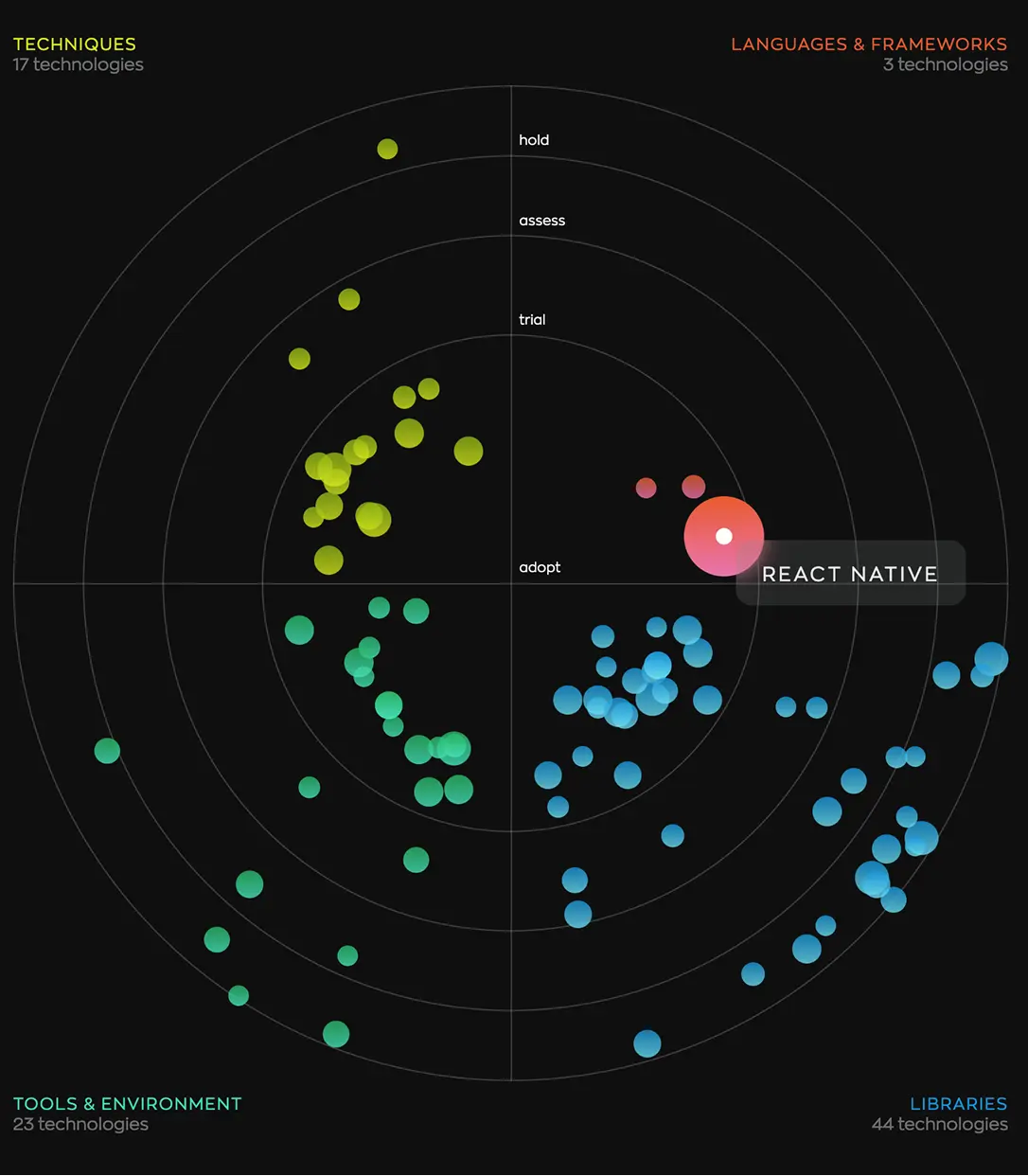
React Native is approved for production use

We evaluate 400+ technologies in our internal Tech Radar, and React Native is marked as Adopt — our highest confidence level for production-ready tools. The verdict is based on maturity, maintainability, team expertise, and project risk.

View Tech Radar
Ronas IT internal Tech Radar with React Native in the Adopt ring

Quality control without a handoff gap

We don't leave testing to a single final QA pass. Automated tests (unit, integration, E2E with Maestro, PHPUnit) run inside layers 1-2 and gate every commit. On top, each feature goes through several human review checks before release.

Testing layers

Feature
  1. Full pre-production check
    human
  2. Client staging review
    human
  3. Manager review against scope
    human
  4. Team lead review
    human
  5. Code review
    autohuman
  6. Developer self-check
    autohuman

Pricing and engagement model

Our React Native development services are flexible depending on your stage, scope, and budget. You can start with the analysis phase, build a fixed-scope MVP, or extend the team for ongoing product development.

MVP packages

Our MVP offers are structured around the stage of your product, from first validation to a full launch-ready build. Design, tech stack, testing, and launch are the same on every project — the tiers below show how the product scope changes.

Validation MVP

For pre-PMF founders proving or killing the hypothesis before the next raise. You ship a live iOS + Android app with the two flows your hypothesis depends on.

Cost

$20-40k

  • One main user role
  • Two complete user flows (e.g., signup + primary action)
  • Backend ready for your launch-week traffic
  • Store submission and analytics setup
Timeline

4-6 weeks

Best for:
  • first paid acquisition test

  • 6-week board demo

  • single-feature consumer apps testing one behavior change.

Market-Ready MVP

For founders past validation, with first revenue or an ops team forming. Your customer app and back-office go live together, so your ops team starts running it from day one.

Cost

$40-80k

  • One customer app supporting multiple user types (e.g., renters + owners)
  • Admin back-office your ops team can run without engineers
  • Five-to-seven flows across the core user journey
  • Three-to-five external services integrated as part of the product
Timeline

8-12 weeks

Best for:
  • pre-seed marketplaces that need admin moderation

  • vertical SaaS with a field-ops team

  • Series A traction-story prep.

Multi-Role Platform

For funded teams launching all the apps for a multi-role product in one release. You launch a multi-app product in one release. Live coordination, AI, or location features are built in where the product depends on them.

Cost

$80-200k

  • Two-to-four mobile apps, one per user role (e.g., customer + driver)
  • Operator dashboard for your ops team's day-to-day work
  • Five-plus external services integrated as core parts of the product
  • All apps launched together, not phased across multiple releases
Timeline

12-20 weeks

Best for:
  • on-demand or logistics products with customer + driver flows

  • AI-native products where the model is the product

  • hard launch deadline tied to a partner or pilot

Entry points for smaller or unclear scopes

Analysis phase

For founders who want a paid validation of scope, risks, and direction before committing to a full build.

Cost

$2-3k

Timeline

1-2 weeks

You receive:
  • User stories
  • Flow maps
  • Risk notes
  • Sharper project estimate

If visual clarity is important, we can also add low-fidelity wireframes or key-screen mockups. The output is portable, so you can use it with our team or another vendor.

Book a Call

Post-launch support

For those who want to keep improving the product after launch without losing the team, context, or delivery rhythm.

Cost

From $1k /month

or T&M

$50/hr

Includes:
  • Ongoing React Native support, bug fixes, OS and SDK updates
  • New feature work on Time and Materials, or as a scoped sprint plan
  • Backend scaling help
  • Optional DevOps Proactive Care for infrastructure monitoring and security updates
Book a Call

Part-time senior engineer

For teams that need one experienced React Native engineer to support a small scope, review architecture, or move selected features forward.

Hourly rate

$50

Timeline

10-20 hr /week

Alternative engagement formats

Alongside end-to-end React Native development, we can help with existing products that need technical review, recovery, or a stronger delivery team.

Code audit

The analysis phase for an existing product: we assess React Native code and give a refactor vs rewrite verdict. Typically 2-4 weeks, scoped after a first look at the repository.

Mid-project takeover

Joining an existing React Native project after another team.

Hourly rates

Development, design, DevOps

$50/hr

Management

$400/week

Where the $50/hr comes from

You work with the engineers building your product, not a layered account-management chain. No reseller markups, no enterprise sales overhead, no multi-tier PM stack — that's the difference between $50/hr and the $150-200/hr typical of US development agencies.

Transparent pricing principle

Rates and milestones are agreed before work starts. Estimates are revised after each phase based on what we learn.

Book a Call

Talk to our engineering leadership

Evgeny Leonov, CTO at Ronas IT

Evgeny Leonov

CTO, Ronas IT

Evgeny leads engineering at Ronas IT — 7+ years as CTO, 13+ years in software engineering, and 120+ apps shipped under his guidance. If you do not have a CTO in-house yet, he is the person who reviews your plan before development starts.

Master’s in Computer Science · Author on the Ronas IT blog · Ronas IT GitHub maintainer

Here’s what clients say about working with us as their React Native app development company

Related articles

How much does React Native app development cost?
Tech
What affects React Native app development cost at each stage?
2026-08-04 15 min read
Examples of React Native apps grouped by product type to guide a mobile development decision
Tech
React Native app examples by product type: where the framework fits
2026-08-04 11 min read
Illustration of two people using phones in front of a large screen with the React logo
Tech
Best apps built with React Native in 2026
2026-08-04 11 min read
Building a React Native chat app
Tech
Building a chat app with React Native
2026-08-04 14 min read
E-commerce app development with React Native: how and why
Tech
E-commerce app development: how to build a mobile store that sells
2026-08-04 10 min read
Guide for business owners on how to outsource React Native app development services
How to
Outsourcing React Native app development: how to vet a team
2026-08-04 14 min read

FAQ

What happens after the MVP is launched?

We can continue supporting the product after release without restarting the collaboration from scratch. During active iteration, we usually work in weekly sprints. Once the product stabilizes, we can switch to lighter maintenance. Post-launch support can include new features, bug fixes, store policy updates, React Native and Expo SDK upgrades, infrastructure monitoring, and security updates.

New features run on Time and Materials at $50/hr or as a scoped sprint plan. Maintenance — monitoring, bug fixes, OS and SDK updates, and store-compliance releases — runs on a subscription from $1,000/month with predictable scope. If you later build an in-house team, we can run a 2–4 week structured handoff with documentation, deployment runbooks, and knowledge transfer.
Is React Native still relevant?

Yes. React Native is still relevant for cross-platform mobile apps, especially MVPs, marketplaces, fintech products, social apps, and B2B tools that need iOS and Android from one codebase. The framework is actively maintained, uses native platform UI building blocks, and has moved to a modern New Architecture, which improves long-term performance and maintainability.

Can React Native handle Bluetooth, sensors, and camera?

Yes. Most "React Native can't do this" assumptions are outdated. Bluetooth via react-native-ble-plx, sensors via expo-sensors, camera via react-native-vision-camera — all production-grade and work through native modules in one React Native codebase. We drop to pure native (Swift/Kotlin) only for true wearable companion apps, heavy 3D games, and frame-level real-time scenarios like high-frequency trading.

Is Flutter better than React Native?

It depends on your team and project. We're a React Native team, so if Flutter fits your case better, we'd recommend a Flutter-specialized agency rather than forcing the wrong stack.

Practical decision factors:

  • Language. JavaScript/TypeScript (React Native) vs Dart (Flutter)
  • Rendering. React Native uses native platform UI components; Flutter renders through its own engine (Skia/Impeller)
  • Ecosystem. React Native is older and covers a broader library set
  • Hiring. React developers are significantly more common on the market than Dart engineers
  • Custom animation. Flutter has the edge in highly custom graphics and complex animations

If your team already uses React or wants to share TypeScript across web and mobile, React Native is usually the stronger choice for cross-platform app development.

Which big companies use React Native?

React Native is used by major companies including Meta, Microsoft, Shopify, Discord, Bloomberg, and other well-known product teams. Its public showcase includes apps from Fortune 500 companies and startups. At Ronas IT, we’ve built 20+ React Native apps, including products in fintech, marketplaces, logistics, real estate, wellness, and social media.

How much does it cost to develop a React Native app?

A React Native app development cost usually starts from $20–40k for a minimal release and $40–80k for a standard MVP with a production-grade backend. A full product launch can cost $80–200k, depending on user roles, integrations, backend complexity, real-time features, analytics, and launch requirements. At Ronas IT, development is billed at $50/hour.

How long does React Native app development take?

A minimal React Native MVP can take 4–6 weeks. A standard MVP usually takes 8–12 weeks, while a full product launch may take 12–20 weeks. Timeline depends on scope clarity, design readiness, backend complexity, integrations, store-review requirements, and how many user flows must be ready for the first release.

Can a React Native app feel native?

Yes. React Native apps can feel native when they are designed and tested properly for iOS and Android. React Native maps core components to native platform UI building blocks, so the app can follow platform-specific behavior, gestures, navigation patterns, and performance expectations. The result depends on engineering quality, not the framework alone.

How do you handle iOS and Android-specific features in React Native?

We define platform-specific behavior during analysis, not after development starts. React Native supports platform-specific code through the Platform API, separate iOS/Android files, and native modules when needed. This lets us keep one shared codebase where possible while still respecting differences such as permissions, background behavior, store rules, and native UI patterns.

Who owns the code after the project ends?

You own the code after the project ends. At Ronas IT, the client owns the repositories, infrastructure, Figma files, documentation, and production store accounts. We can work in your tools from the start or transfer everything during handover. If you build an in-house team later, we run a structured 2–4 week handoff.

Should I use React Native for an MVP?

React Native is a strong choice for an MVP if you need both iOS and Android, want to control budget, and need to validate the product quickly. It works especially well for marketplaces, fintech apps, social products, logistics tools, and B2B platforms. It is less suitable when the MVP depends mainly on graphics-heavy or native-only functionality.

Book a 30-minute discovery call

Free, no obligation. We'll cover your project and current status, RN fit and trade-offs, our team availability, a rough budget and timeline range, and your questions — in that order.

No sales pitch

If React Native isn't the right call for your project, we'll tell you on the call, not on month two.

You leave with

a clear React Native fit verdict, a rough budget and timeline range, and a clear next step — build, audit, or pass.

Not ready for a call yet?

Send us four lines: project idea, target platforms, budget range, timeline. We'll come back with a rough estimate within 24 hours.

Get a Rough Estimate

Or browse our work first

100% of our React Native projects have launched to both stores. Sometimes after a round of store-review iteration.

See all React Native Case Studies