Achieving product-market fit with a strong tech foundation: A startup guide


For many startups, product-market fit stands as the most critical milestone for long-term success. Achieving product-market fit proves that your solution matches what your target audience needs and values in the market.
Building a startup is always a challenge, but a clear tech strategy sets you up for faster learning, better customer understanding, and effective product development. This article explains why technology is essential in this process, helping early-stage companies accelerate their path to product-market fit and increase their chance of success.
In the sections ahead, we share the product-market fit tech strategy startups might adopt to deliver real value to their customers.
Defining PMF: Where market needs meet your solution
Product-Market Fit (PMF) is the milestone where your product connects with the actual needs of the market. At its core, product-market fit signals that people in your target market recognize your value and prefer your solution over alternatives. For a startup founder, discovering and sustaining market fit is essential, as it means your offering is positioned to grow in usage, loyalty, and impact.
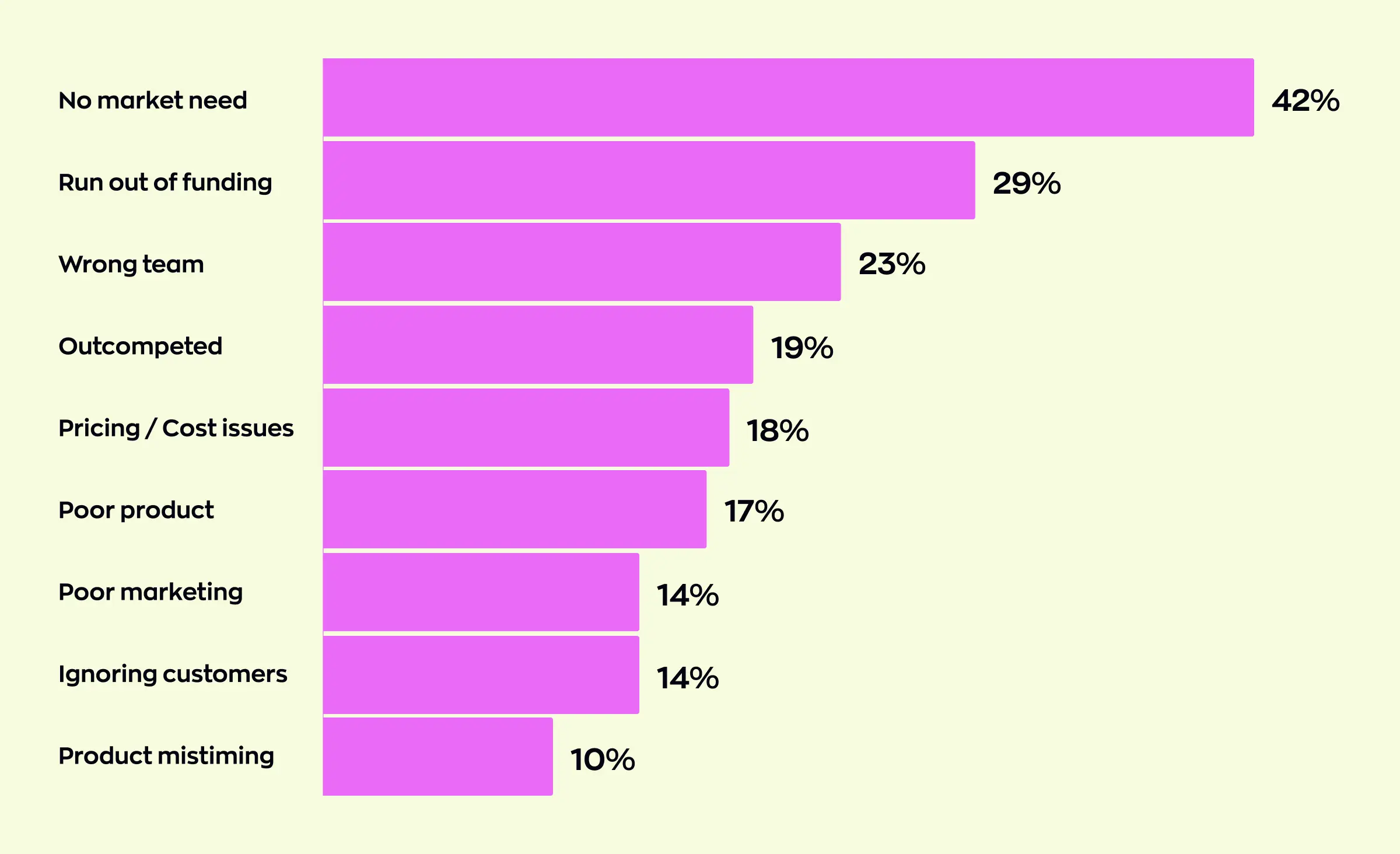
What makes product-market fit important?
For any startup, finding product market-fit is crucial. Without it, a product often struggles to attract and keep customers. Many founders invest effort, time, and resources in building out features, but unless those features directly address a market need, lasting engagement rarely follows.
Product market-fit is important because it validates your assumptions and shows a real, urgent demand for your solution. Achieving this stage lets you transition from searching for traction to scaling efforts and building a business around clear, proven demand.
Elements of market fit
- A good market: Entering a good market increases your odds; look for environments where potential customers are already searching for solutions, and market demand is high.
- Customer needs: Successful products solve specific problems that align with top priorities for users.
- Market dynamics: Products that adapt to new trends or respond to user feedback quickly have an edge as preferences shift.
How tech factors in
A strong tech approach can boost your progress toward market fit. When technology empowers your team to pivot, iterate, and release improvements based on real-world signals, you can close in on true product-market fit. Thoughtful product decisions — led by the product manager and informed by analytics — allow rapid testing and validation. This process can sharpen your competitive advantage and help your startup move up the product-market fit pyramid more efficiently.
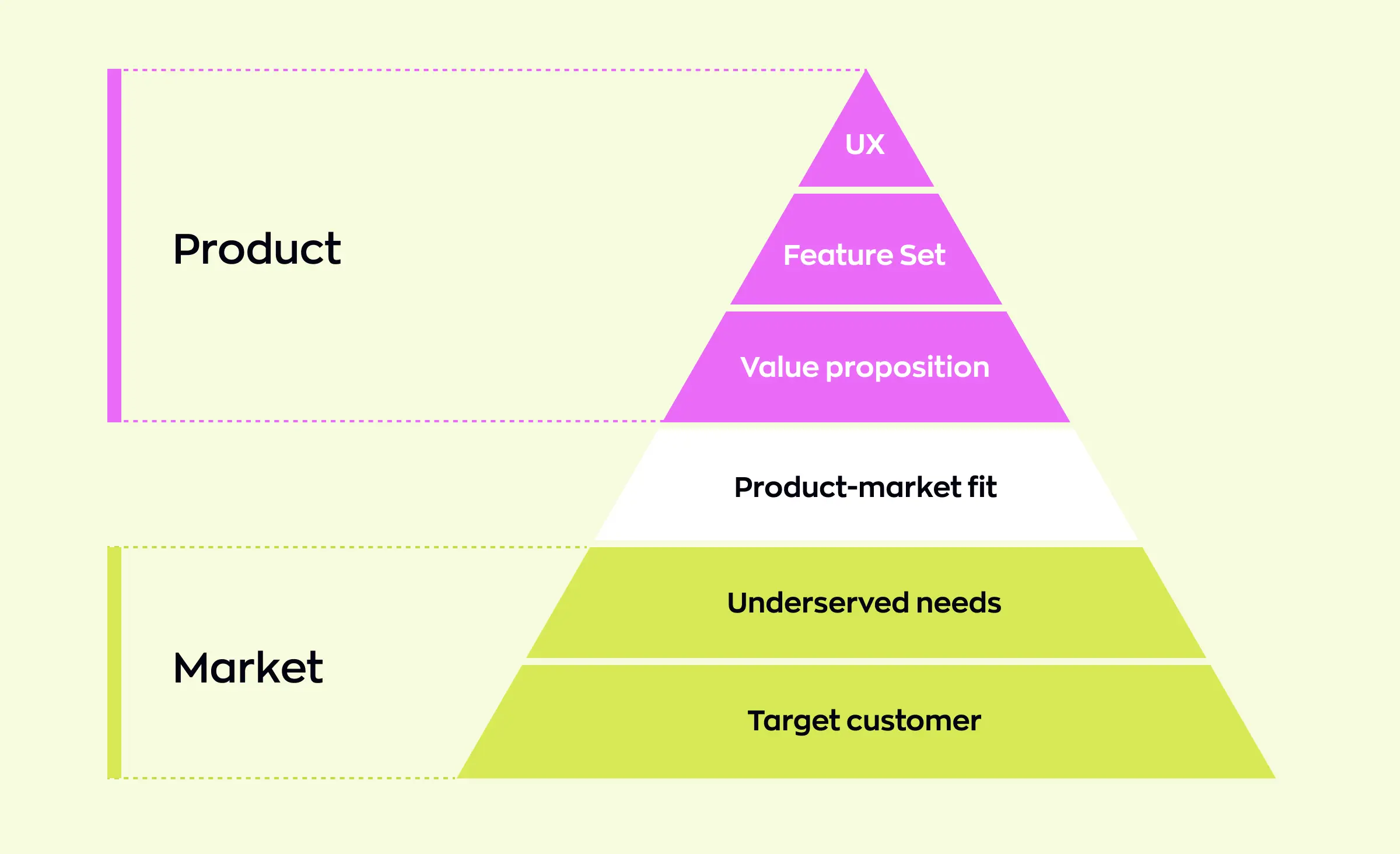
Achieving PMF as a foundation for startup success
As you move through the phases of product development, continue to compare your progress against clear signals from real users in the market. Reaching product-market fit lays the groundwork for growth, sets the stage for startup success, and gives you an engine for scaling in a shifting landscape.
Strategic tech development: From MVP to validated product
Strategic technology decisions made early in a startup's journey can lay the groundwork for future growth and reliable product-market fit. Success rarely comes from building a feature-heavy product right away. Instead, leading teams focus on targeted product development, gathering data from a minimum viable product, and refining their approach as they learn more about their target market and customers' real needs. Below are the key elements of building a tech foundation that supports both fast feedback and long-term market fit.
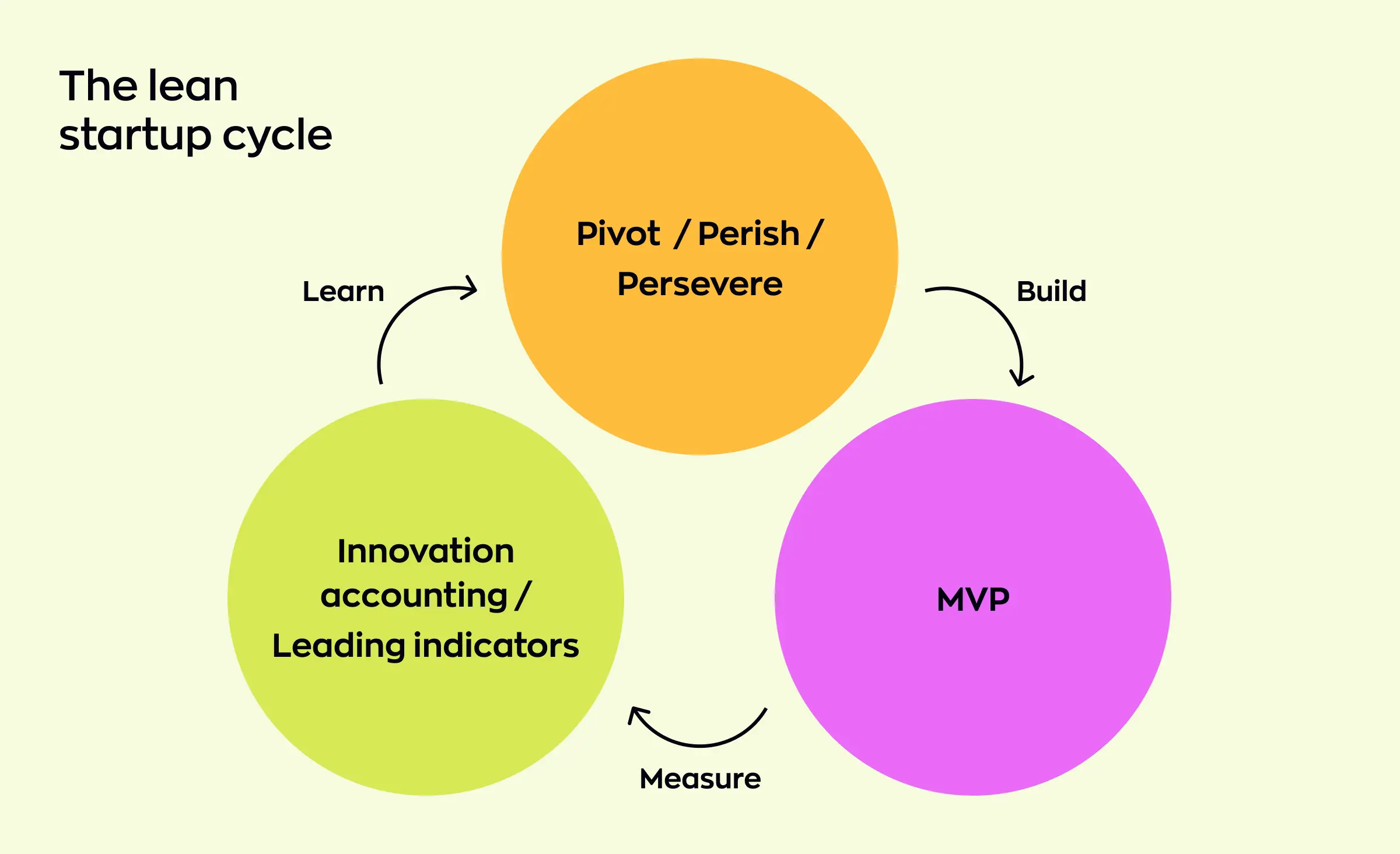
1. Start with a Minimum Viable Product (MVP)
The lean startup approach recommends building a minimum viable product to meet the essential needs of your target customer.
- This method reduces risk and helps prove real market demand.
- MVP development lets you deploy fast, generate customer feedback, and adapt quickly.
2. Drive product development toward market fit
Each round of product development is a chance to measure progress and test assumptions. Instead of adding extras, concentrate on features that move the product closer to market fit.
- Focus on the core features that support product-market fit.
- Use customer input and usage data to uncover what needs to change.
- Let feedback inform the next stage of your tech roadmap and future experiments.
3. Build a scalable tech strategy
Every decision about tech infrastructure influences the product's ability to scale and adapt.
- Choose frameworks and tools that allow you to extend capabilities as the startup grows.
- A scalable foundation supports both experimentation during the early push for market fit and later phases, when you need to serve increasing demand.
4. Strengthen user experience and iterate
Continuous updates based on user signals drive startup momentum.
- Balance speed, feedback, and reliability.
- Good user experience improves adoption and retention.
- The product manager plays a crucial role in analyzing metrics and guiding improvements.
Effective product development is a journey. By focusing on the needs of the target market, building an adaptable tech foundation, and learning from feedback, startups increase their odds of reaching sustainable product-market fit and broader success.
Improving your PMF journey: Key tech strategies
When a startup pursues product-market fit, the right technology approach can make all the difference. Teams that build their product development processes around data, experimentation, and scalability accelerate their journey to true market fit. By weaving customer insights directly into every step, startups strengthen their chances of lasting success. The following guiding strategies help any team move from assumptions to real-world validation.
Data-driven experimentation
Data sits at the core of modern product development. Effective teams collect data on how customers actually use the product, from usage flows to pain points and satisfaction levels. Setting up analytics, heatmaps, and feedback tools from the start allows teams to clearly measure where they stand in the process of finding product-market fit. Tracking signals such as customer engagement, customer retention, and even the net promoter score offers real, actionable insight for improvement.
Continuous feedback and customer focus
Listening to your customer is essential when building anything new. Structured tactics like interviews, surveys, and in-app messaging bring to light which features generate value for users. Teams use surveyed customers feedback to prioritize changes and avoid investing in features that don't contribute to customer satisfaction. A culture of ongoing listening improves both product direction and the experience for potential customers alike.
Rapid iteration and deployment
Acting on customer and market learning means nothing without the ability to ship updates fast. Modern deployment tools and workflows — like continuous integration — let product teams test hypotheses and release improvements frequently. With these tools, a startup can quickly refine features that are working, address weaknesses, and adapt the product based on what actually drives market fit. Each successful change brings the team one step closer to strong product-market fit.
Scalability from day one
Planning for growth is not just for later stages. Investing in a scalable infrastructure early makes it possible to serve a growing user base and meet new demands without major rebuilds. Making smart tech choices supports fast learning and enables the product to flex with spikes in adoption or changes in market research findings. A scalable system is crucial to capturing the full value of customer lifetime value and setting the stage for long-term startup health.
Measuring product-market fit
Teams need to know if they're making progress toward product-market fit. That means tracking the right metrics: retention rates, activation, user growth, and direct customer feedback. As engagement grows — echoed in improvements to customer satisfaction and customer lifetime value — the signs of real market fit get stronger. These measurements help teams validate progress at each step, making their product development smarter and more effective.
By concentrating on these strategies, startups create faster learning cycles, more valuable products, and a direct path to measurable success as they move toward product-market fit.
Common tech pitfalls that hinder PMF
There's a direct line between tech decisions and the ability for a startup to reach product-market fit. Yet many teams fall into traps that slow their path to market fit or block progress altogether.Avoiding these pitfalls is essential not just for attracting your target audience, but also for growing a loyal customer base and building a strong foundation for ongoing product development.
Over-engineering the MVP
One of the most common mistakes is over-complicating the initial product. Startups sometimes pack their MVP with features that aren't critical for buyers, draining resources and delaying feedback from the market itself. Successful teams focus on the essentials first, creating space for genuine, focused validation and faster movement toward market fit.
Neglecting technical debt
Skipping refactoring might seem harmless at first, but unresolved technical debt piles up quickly. Over time, it can slow future product development, add bugs, and reduce the team's ability to respond to customer needs. An agile mindset and regular tech cleanups help keep your progress toward a strong product-market fit on track.
Choosing the wrong tech stack
A misaligned tech stack can block product scaling or adaptation. For example, picking frameworks on “trend” rather than fit can limit your ability to adjust to new requirements. Sticking to well-supported stacks like React, Laravel, Next.js, or Typescript improves compatibility, performance, and community support. These choices ease developer onboarding and allow for flexible architecture as the customer base expands.
Lacking analytics and customer insight
A lack of analytics is like steering blind. Without tracking user activity and feedback, teams miss early signs about what drives engagement — or where users fall away. Prioritizing measurement gives you the clarity needed to tune your product for your target audience and move closer to product-market fit.
Ignoring security concerns
Failing to address security—from data protection to identity management — undermines product trust and can result in costly issues later. Adopting proven solutions like Auth0 for authentication or leveraging managed infrastructure — AWS, Google Cloud, CloudFlare — helps teams maintain data security best practices from the outset.
Each of these pitfalls delays startups from realizing market fit and stifles their potential to build strong product-market fit. Awareness and proactive action allow teams to stay nimble, safeguard growth, and maintain focus on what truly matters for their audience and business.



Your tech partner on the product-market fit journey
Founders and startups navigating the path to product-market fit might need a reliable, experienced partner who understands how to build solutions for real users in a specific target market. At Ronas IT, we bring together deep technical knowledge, robust product development processes, and a strong focus on UI/UX design to help teams iterate faster and adapt to market needs.
Take, for example, our work on the Noah project: a founder approached Ronas IT to create a digital platform connecting local farmers with consumers. Facing tight deadlines, our team delivered user-friendly iOS and Android apps, along with a web admin panel, within four months. We relied on native stacks for mobile and proven frameworks like Angular and Laravel on the web — choices that supported flexible scaling and performance right from launch. Consistent UI/UX design, developed in a single design system, provided a coherent experience for all user groups.

Analytics with Firebase allowed ongoing measurement of user flow and engagement. Integrations like Stripe SDK and Google Maps SDK added secure payments and interactive features, fitting the product to real market fit requirements. Security was strengthened through data protection measures built into the Laravel backend.
Throughout the process, our approach emphasized clear feedback loops, quick iteration, and the value of launching a focused MVP for early learning — all principles vital for any startup aiming for genuine product-market fit.
Ronas IT is experienced in collaborating with founders and teams at different stages. By using industry best practices — including scalable tech stacks, UI/UX design, and analytics — we aim to support each new product's alignment with its product market and audience needs. While every product journey is unique, technologies and workflows tailored to your market can put you in a better position to adapt, learn, and move forward.
Conclusion
Reaching product-market fit is a complex challenge for any founder, whether launching a new startup or entering a competitive landscape like Silicon Valley. A focused tech strategy, ongoing user feedback, and a clear understanding of your target market enable teams to learn, iterate, and move closer to alignment between their product and real market needs.
Responding quickly to customer input, tracking reliable analytics, and adapting your roadmap based on data are important steps toward recognizing signs of market fit. For startups and teams seeking good product-market fit, these habits create early momentum — building engagement, customer loyalty, and the potential for sustainable growth.
While technology is not a full guarantee of startup success, it remains a powerful ally — helping founders listen to their audience, adjust to changes, and refine their products over time. Coupling a flexible tech roadmap with a focused marketing strategy allows teams to better reach their target audience, gather actionable feedback, and amplify each stage of product growth, whether you're pitching to a venture capitalist or scaling for a larger audience.
If you're preparing for your own product-market fit journey or want to strengthen your tech foundation, we invite you to fill out our short contact form below this page. Our team will follow up to discuss your needs and help you build a solution ready for your market.
Related posts












Related Services


Development
React Native App Development Services


Development
MVP Development Services


Development