Beyond ERP: Integrating core business systems for a unified digital ecosystem

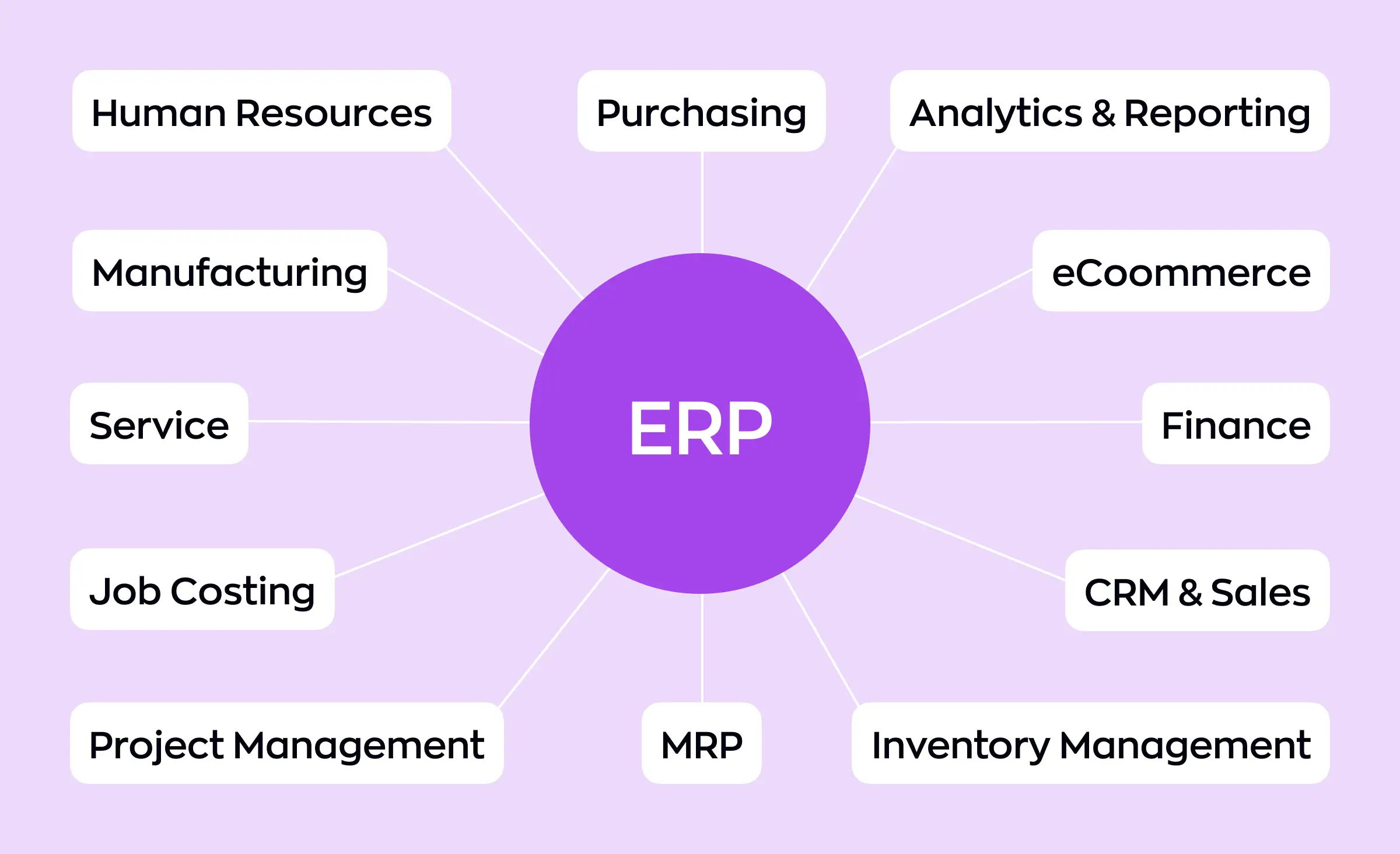
An ERP system, or enterprise resource planning system, is designed to connect all core business functions — such as finance, manufacturing, inventory, and human resources — into one integrated platform. The main promise of ERP software: make your company more efficient by streamlining every workflow and giving leaders a complete picture of business operations. Today, however, the reality for many is less impressive. A new wave of digital transformation demands more than traditional ERP software can deliver.
Gartner research paints a challenging picture. By 2027, over 70% of recently implemented ERP initiatives will fail to meet their original business case goals. Even more striking, a quarter of these projects are at risk of failing catastrophically — meaning costly disruptions and wasted investment. Much of this risk comes from a lack of strong alignment between ERP strategies and overall business strategy. In fact, 75% of organizations say their ERP strategy does not clearly support company goals, leading to confusion and lackluster results.
These challenges signal a clear need to go beyond ERP as we've known it. Businesses relying on legacy ERP systems face inflexible workflows, fragmented data, and outdated processes. Modern markets move faster, placing pressure on companies to find a solution that fits their specific needs today — and can adapt for tomorrow.
This article explores why traditional ERP approaches often disappoint, and how a unified digital ecosystem — built with flexibility and cognitive diversity — can play a critical role in transforming your operation. Drawing on the latest research and real-world insights, it offers a practical guide for business leaders aiming to achieve true operational efficiency, actionable insights, and sustainable growth.
Why modern ERP is not enough
Modern ERP systems represent a big step forward from legacy ERP systems, but even the best ERP software can miss the mark in today's fast-paced business environment. Leaders invest in a wide range of ERP modules, expecting smarter workflow and more informed decisions, yet common roadblocks remain.
Many ERP implementation projects focus too much on technology and not enough on how employees actually work. As a result, businesses often face:
- Misaligned processes: Standard ERP functionality forces teams to change how they work, instead of supporting their specific needs. This mismatch can create extra steps, slow down operations, and affect job satisfaction.
- Limited integration: Even with a modern ERP platform, many companies still rely on separate tools for manufacturing, inventory, or accounting. This leads to fragmented data, inconsistent analytics, and weaker insight.
- Siloed systems: When different departments use their own solutions, information can't flow smoothly. Actionable insights are lost, and the value of the ERP system drops.
In today's market, organizations need agility and deeper insight. A modern ERP solution must go beyond the basics:
- Support for emerging technologies: AI, advanced analytics, and new cloud solutions should fit easily into your ERP environment.
- Seamless integration: Connecting every part of the business — across all platforms and modules — matters more than ever.
- Focus on employee experience: Solutions must fit the way people work, not the other way around, providing higher operational efficiency.
Simply upgrading to a modern ERP isn't enough. To unlock real business value, leaders must rethink how their ERP investment supports flexibility, innovation, and a connected digital future.
Moving to cloud ERP for seamless integration
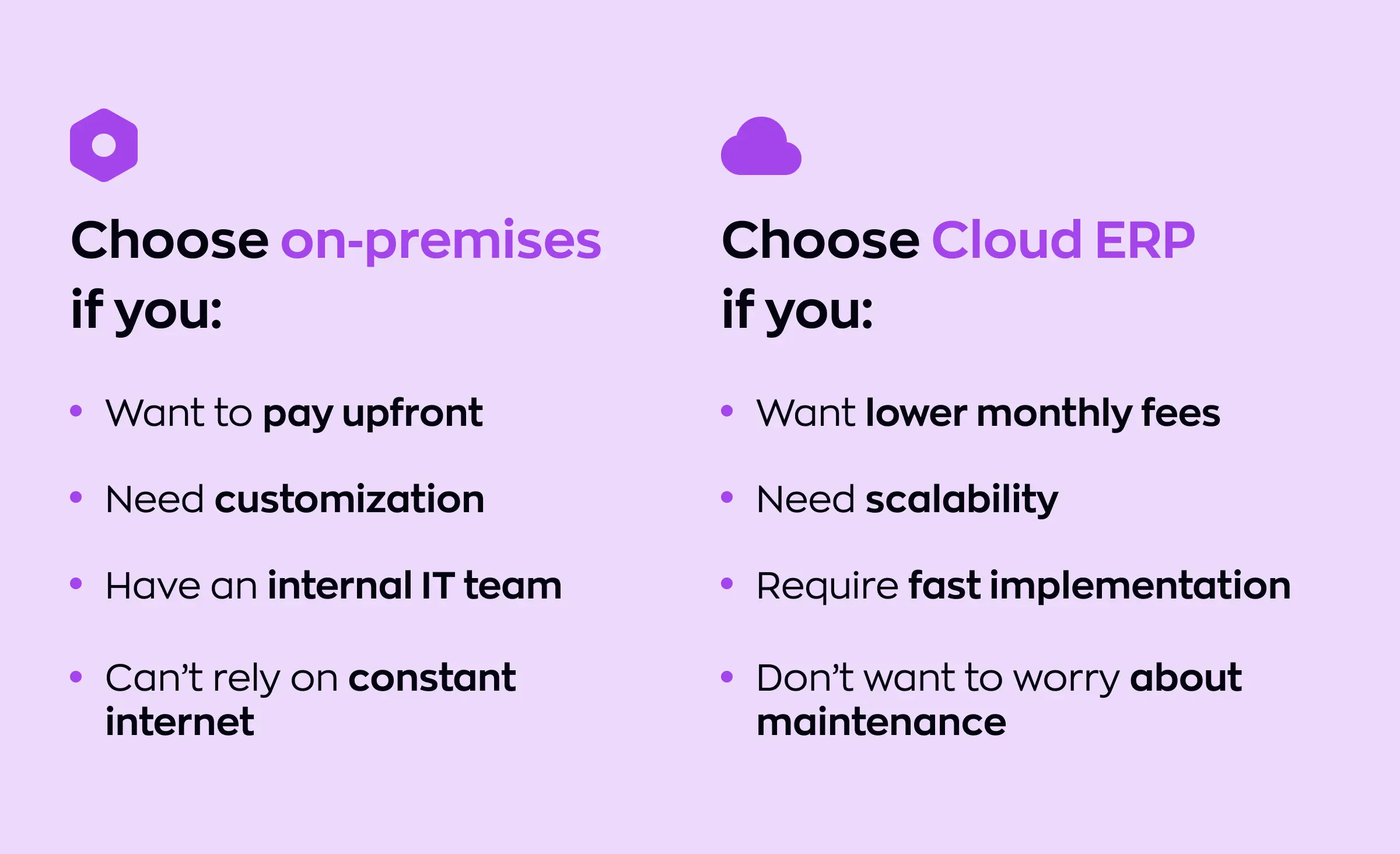
Cloud ERP has become the natural next step for companies that want to overcome the limitations of legacy systems. Unlike traditional on-premise software, a cloud ERP platform brings greater flexibility, quick updates, and easy connections between your most important business tools.
Many leading ERP vendors now offer robust cloud-based solutions that scale along with your needs. Cloud ERP solutions are designed to be adaptable, supporting a wide range of workflows, teams, and day-to-day requirements without the headaches of outdated infrastructure.
Key advantages of cloud ERP include:
- Faster implementation: Launch new modules and features with minimal downtime, which helps teams adapt quickly and increases ERP adoption.
- Built for scale: Add users, activate more ERP modules, or extend functionality as your operations grow — without huge investments or disruptions.
- Ready for emerging technologies: Modern cloud ERP platforms support advanced analytics, artificial intelligence, and evolving digital tools, helping turn raw data into actionable insights.
By transitioning to cloud ERP, companies can eliminate data silos and reduce manual processes. Teams across different locations access reliable, real-time information, which encourages better collaboration and supports more informed decisions. A flexible, integrated ERP platform addresses both routine business needs and unique operational challenges, setting the stage for ongoing digital transformation. With the right cloud ERP solution, every part of your business can work smarter — today and tomorrow.
Understanding the importance of ERP implementation
Choosing an ERP solution is only the first step. Real business impact comes from how well you implement ERP across your organization. A successful ERP implementation requires clear planning, alignment with company priorities, and a focus on everyday workflows.
Matching ERP capabilities to your operation
Before launching a new system, review how your existing workflows operate. Look closely at current ERP modules and identify which ERP capabilities matter most for your team. Consider accounting, inventory, and manufacturing processes. A good ERP platform should address both routine and specific needs, not introduce more complexity.
Investing with the future in mind
ERP investment is not a small decision. Leaders must balance budget, timelines, and the expectation of long-term returns. Select ERP functionality that scales with your business and allows for future modules or upgrades. This flexibility protects your investment as your requirements evolve.
Leveraging modern technology
Modern solutions offer much more than core process management. Artificial intelligence, built-in analytics, and advanced automation can provide deeper insight and deliver actionable insights to decision-makers. Prioritize an ERP solution that keeps up with emerging technologies, ready to support both current and next-generation needs.
Providing buy-in and smooth adoption
Even the top-ranked ERP system will struggle if people don't use it well. Training and ongoing support are essential during the implementation phase. Encouraging early ERP adoption — through clear communication, listening to feedback, and demonstrating new capabilities — will help teams make informed decisions in daily operations.
Operational efficiency and growth
The right ERP implementation leads to genuine operational efficiency. Businesses gain a more reliable workflow, less manual work, and a system that grows with them. This approach doesn't just meet today's challenges; it sets the stage for future success, making your ERP platform a foundation for long-term growth.
Taking the time to plan ERP implementation thoughtfully pays off — both today and as your company grows. The right mix of technology, process alignment, and team engagement helps your ERP investment deliver lasting value instead of unexpected challenges. With a focus on flexibility and continuous improvement, your ERP platform becomes a true engine for business growth and operational excellence.
Integrated ERP — beyond legacy systems
As many companies expand, they often accumulate a patchwork of legacy ERP systems and standalone tools that no longer work well together. This creates real challenges: disconnected data, repeated manual work, and a lack of transparency across key business areas like accounting, manufacturing, and inventory. Teams waste time reconciling numbers instead of focusing on growth or serving customers.
Integrated ERP changes this picture. With a modern ERP solution organizations can connect all core processes, making data move freely across departments. This unified approach replaces scattered systems with one reliable platform where everyone accesses the same up-to-date information, providing faster and more informed decisions.
How is this technical integration achieved?
Modern ERP platforms typically use APIs to connect with other software and third-party services. Pre-built connectors and cloud-based integration platforms (iPaaS) help these systems “talk” to one another in real time, even if they were built by different vendors. Data migration tools move information from legacy databases into the new system, while middleware helps everything remain in sync. IT teams can also use webhooks, batch exports, and secure file transfers to keep data consistent, automate processes, and eliminate manual entry.
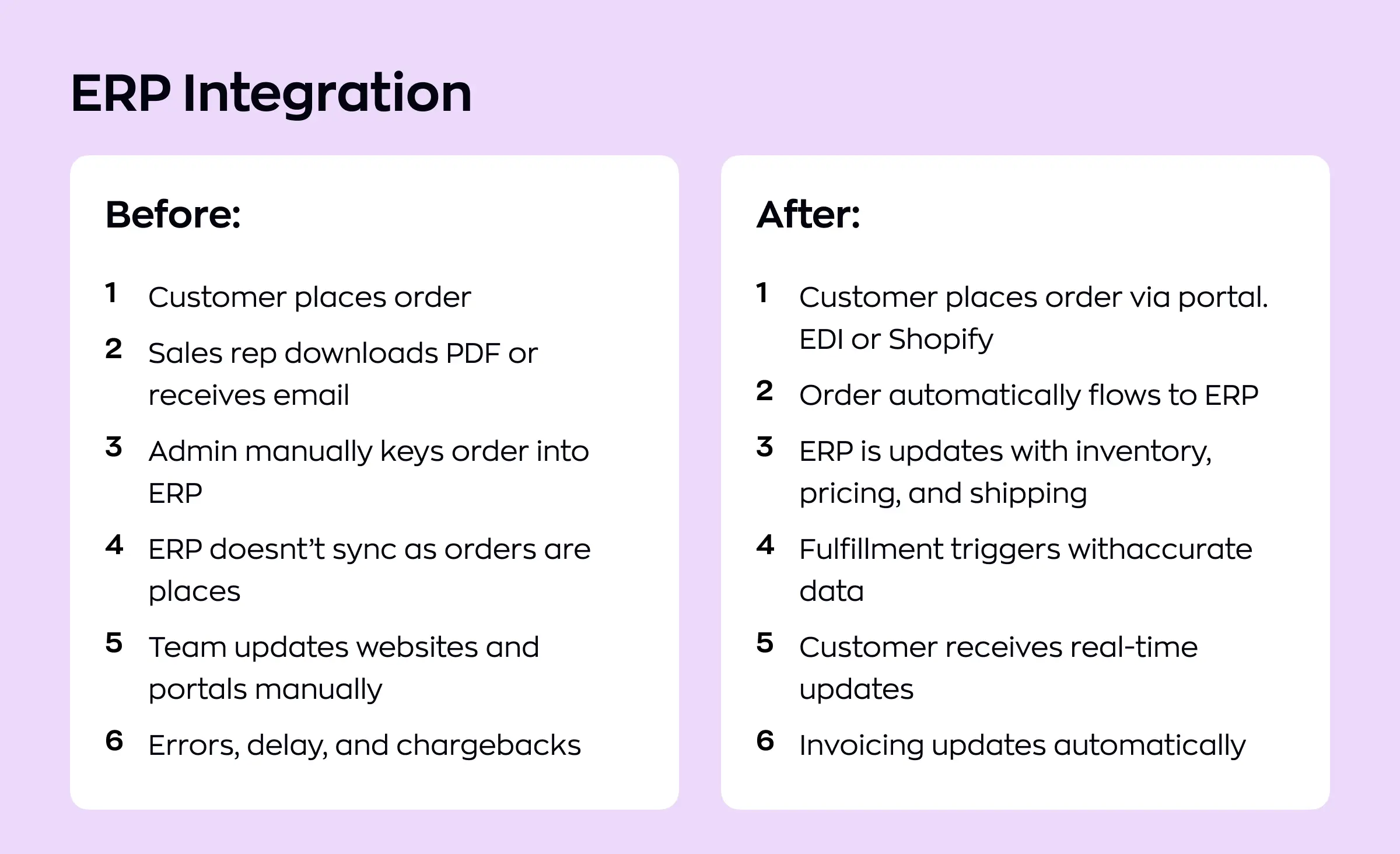
This order management flow is a good illustration of how integrated ERP streamlines operations: Before integration, order processing involves multiple manual steps, data entry, and frequent errors. After integration, the entire process is automated — orders move directly from online platforms into the ERP, inventory updates instantly, fulfillment is triggered accurately, and customers receive real-time updates, showing the practical impact of seamless data flow.
The integration benefits are clear:
- Critical business data lives in a single, secure platform, reducing errors and making analytics more powerful.
- Teams collaborate more effectively, because everyone relies on the same numbers and insight — no more confusion over which report is correct.
- Operational efficiency grows as automated workflows replace time-consuming manual tasks.
- Built-in analytics and artificial intelligence uncover trends and drive actionable insights without endless spreadsheets.
- As new requirements emerge, businesses can expand functionality with flexible ERP modules, adapting quickly without starting from scratch.
By moving past legacy systems and embracing integrated ERP, companies position themselves to adapt quickly to change, gain reliable business insights, and operate more efficiently. Modern businesses cannot function effectively with fragmented, isolated systems. Integrating key applications — like CRM, ERP, SCM, BI, and HRM — into a unified digital ecosystem is fundamental for higher productivity, comprehensive visibility, and lasting stability.
How to build a unified digital ecosystem
Gartner emphasizes that the true strength of an ERP initiative lies not in technology alone, but in the way organizations connect processes, people, and business goals. Their research points out that successful digital transformation requires involving a cognitively diverse group of stakeholders, building a clear vision of the future, and aligning systems strategically. Too often, ERP projects stall when leadership overlooks the human side — missing the chance to unite teams, modernize workflows, and realize the full capabilities of a modern ERP solution. The path forward is clear: building a unified digital ecosystem that reaches beyond the boundaries of ERP and connects every part of your organization.
Start with a clear assessment
Begin by auditing your current systems. Identify legacy systems, cloud solutions, and any manual workarounds your team relies on. Map out where data silos exist and which workflows most often suffer from gaps or inefficiency.
Define business objectives upfront
Be specific about what your business needs from an integrated system. Do you want better analytics and deeper insight for leadership decisions? Are you aiming for operational efficiency in manufacturing or faster accounting processes? Set clear requirements so your ERP platform investment truly fits your goals.
Engage the right stakeholders
Bring together a diverse set of voices — department leaders, superusers, end users, and IT. When every group has a seat at the table, it's easier to spot pain points and make sure the new solution will match daily workflows.
Plan for seamless integration
Work closely with your ERP vendor on integration plans. A modern ERP solution should make it easy to link CRM, inventory, HRM, supply chain, and analytics modules. Ask about scalability so you can add new capabilities as your operation grows.
Prioritize communication and training
Keep teams informed throughout the implementation. Training, open feedback sessions, and clear communication help drive ERP adoption and reduce resistance to change.
Focus on continuous improvement
Digital transformation isn't set-and-forget. Regularly review your system's performance, explore new ERP modules or emerging technologies like artificial intelligence, and adjust workflows for even greater efficiency. Stay flexible and adapt as business requirements shift.
Build for long-term success
A unified digital ecosystem is never just about software. It's about letting your people make informed decisions, removing obstacles to growth, and setting a foundation that supports both current needs and future innovation.
Organizations that treat ERP as a living, evolving foundation — anchored by stakeholder engagement and a commitment to continuous improvement — stand out as leaders in operational efficiency and digital resilience. By thoughtfully connecting people, data, and process, you transform your business into an agile ecosystem ready for whatever comes next.
Check out more of our recent posts about enterprise solutions on our blog.
Final thought: Beyond ERP is just the beginning
Moving beyond ERP means more than simply swapping out old systems. It's about building a connected, flexible digital ecosystem that breaks down barriers, helps teams collaborate, and puts reliable information in your hands when you need it most. Modern solutions bring together all core business processes — from accounting and inventory to manufacturing and analytics — so you can make informed decisions and stay resilient in a fast-changing landscape.
Building this kind of unified platform is not a one-time project, but an ongoing journey of investment, adaptation, and improvement. Companies that embrace this mindset will not only solve today's challenges, but also future-proof their business for whatever comes next.
How Ronas IT can help
At Ronas IT, we specialize in turning ambitious digital transformation plans into practical, business-ready solutions. Whether you're facing scattered workflows, the limits of legacy ERP systems, or a need for seamless integration, our team brings deep experience in building unified platforms and tailored modules to fit your unique requirements.
We offer:
- Expertise in integrating cloud ERP, advanced analytics, and artificial intelligence tools
- Flexible development for B2B, B2C, or custom enterprise workflows
- A collaborative approach focused on reliable delivery and clear communication at every step
If you're looking to simplify your tech stack, unlock actionable insights, or help your teams to work smarter, Ronas IT is ready to help. Fill out the short form below, and our team will get in touch to explore how we can move your business beyond ERP — and help you build a digital ecosystem designed for growth.
Related posts










Related Services
Development
React Native App Development Services
Development
MVP Development Services
Development