Beyond nearshore and offshore: what actually determines software development success


The strategic decision of how to approach custom software development is one of the most critical challenges businesses face today. In an industry where innovation drives success and speed to market matters, many companies must answer the key question: Should we choose nearshore or offshore development? This decision is often the first step when searching for the right tech talent or developers.
In this article, we'll explain the differences between software development approaches based on geography and highlight what you should consider when choosing the best tech partner for your project.
Nearshore vs. offshore software development: how do they differ?
Software development is a long-term journey, not a sprint. Choosing the right nearshore or offshore partner is essential for success. One of the first challenges company founders and executives face is deciding on the geographical location of their technology partner. Should the development team be based in the same country, a nearby region, or an entirely different continent? This choice is a significant strategic decision, with each option — onshore, nearshore, or offshore software development — offering distinct benefits and potential risks.
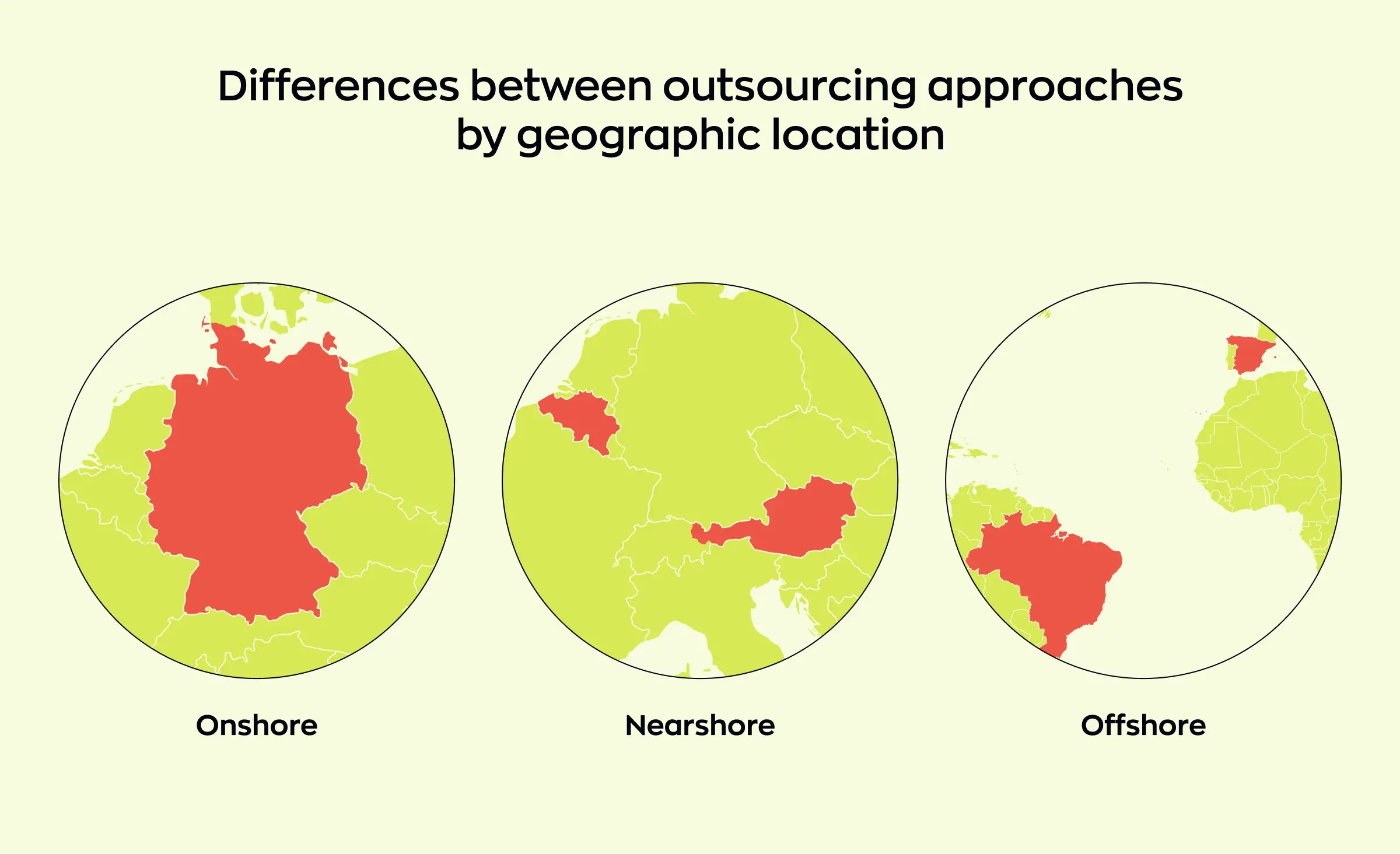
Offshore software development refers to the practice of delegating software development tasks to a development team located in a distant country, often in a different time zone. This model is typically chosen by companies seeking to leverage significant geographical advantages, primarily relating to resource availability and operational development cost.
Here are a few key advantages offered by offshore development:
- Cost-effectiveness: Offshore software development significantly reduces overall development cost and hourly development rates. Countries known for offshore development often offer lower labor costs, allowing teams in the USA or UK to outsource to Asian or Eastern European partners and save money without sacrificing software quality. This approach is especially appealing to businesses that want to optimize finances while maintaining a high-quality of their startup software solution.
- Access to global talent: Offshore software development connects businesses with a vast pool of global talent. Companies are not limited by the local tech market and can find highly skilled developers or software engineer specialists with the technical expertise needed for complex projects—from web development and mobile app development to fields like artificial intelligence. This wide access helps companies assemble the best offshore teams for their needs.
- Scalability and flexibility: Offshore teams provide unparalleled scalability. Companies can quickly expand or contract their development team size based on project demands without the administrative overhead associated with in-house hiring and firing. This flexibility is crucial for dynamic projects or companies undergoing rapid growth or market shifts.
- 24/7 development cycle: With significant time zone differences, an offshore team can often work on a project while the client's in-house team sleeps, effectively creating a near 24/7 development process. This “follow-the-sun” model can accelerate project timelines and boost efficiency, leading to faster development of software solutions.
Despite its benefits, offshore software development also carries certain risks. Common challenges include potential communication barriers due to time zone differences and language nuances, as well as cultural gaps that can lead to misunderstandings in project management or expectations. There's also a historical stereotype of lower software quality, which, while mostly outdated, can still make some businesses hesitant about offshore outsourcing.
Intellectual property protection is another concern; however, reputable offshore software development companies address this by implementing strong safeguards. For example, our team signs contracts assigning all intellectual rights to our clients and builds the app directly on the client's server from the start. It's important to always check what measures your offshore partners take to protect intellectual property.
Nearshore software development
Nearshore software development emerged as an appealing alternative, aiming to bridge some of the gaps often associated with offshore software development. It involves outsourcing software development to a country that shares a similar time zone or is geographically close to the client's location. This makes it distinct from offshore development by reducing the physical and temporal distance.
Key advantages of nearshore development typically include:
- Reduced time zone differences: One of the key benefits of nearshore software development is the minimal time zone gap. This allows for real-time collaboration and synchronous communication, making daily stand-ups, urgent discussions, and immediate feedback much easier to manage.
- Cultural affinity: Nearshore contractors often have more cultural similarities with a client's location than offshore developers do. This cultural alignment leads to smoother communication, fewer misunderstandings, and helps foster stronger team cohesion and a clearer understanding of project requirements.
- Easier travel and on-site visits: The geographic proximity of nearshore development makes travel for in-person meetings, workshops, or team-building sessions easier and more cost-effective. This is especially valuable for kick-off meetings or important strategic discussions, offering a distinct advantage over offshore software development services.
- Enhanced communication: With smaller time differences and greater cultural alignment, communication protocols become more natural and seamless, often providing an experience similar to working with an onshore development team.
While nearshore development mitigates some offshore software development challenges, it comes with its own drawbacks. Costs are typically higher than those associated with offshore software development, often reflecting a higher standard of living and labor costs in closer regions. Additionally, the global talent pool, though often excellent, might be smaller compared to the vast global talent available through offshore outsourcing, potentially limiting access to niche technical expertise.
Onshore and hybrid models
It's also worth briefly mentioning onshore software development, where the development team is located in the same country as the client. This offers maximum communication ease and cultural alignment but typically comes with the highest development cost, especially if the company is located in a country with high development rates.
A hybrid model, combining aspects of onshore, nearshore, or offshore teams, is another increasingly popular approach, where some tasks are executed locally while others are outsourcing, offering flexibility and development cost optimization.
Why location isn't the key to your success
This brings us to the crucial “blind spot” in the nearshore vs. offshore debate. By solely focusing on geographical labels and perceived development cost differences, companies might inadvertently overlook the elements that genuinely drive successful software development. The location of a software developer or offshore development center in itself guarantees nothing about the outcome.
What truly dictates success is the actual expertise of the developers, the robustness of the project management framework, the quality of project manager leadership, and the efficiency of the development process. A remote team with superior technical expertise, a disciplined approach to quality assurance, and exceptional communication protocols will consistently outperform a closer, but less skilled, less organized team.
Focusing solely on the geographical label can distract from assessing the true capabilities and cultural fit of an offshore partner or offshore company. This limited perspective may cause businesses to overlook outstanding global talent based only on location, ultimately hindering their ability to achieve meaningful digital transformation.
Why a skills-driven approach is the key to choosing the best partner
Instead of focusing solely on whether a team provides offshore, nearshore, or onshore development, we encourage clients to prioritize the “who”— the expertise and experience of the developers — and the “how” — the methodologies and processes that drive successful development. Choosing a skilled developer means looking beyond their location.
When selecting a nearshore or offshore software development services provider, we recommend reviewing their track record on platforms like Clutch, exploring detailed case studies on their website, and evaluating the quality of their design work through portfolios on Dribbble, Behance, or similar sites. These steps provide a much more accurate measure of an offshore software development company's true capabilities than geographical proximity alone. If you'd like to learn more about hiring the right dedicated development team, check out our article on the topic.
Our Ronas IT team offers both offshore and nearshore development services and can support hybrid models to deliver comprehensive outsourcing software development solutions tailored to your needs. As an offshore company, our top priority is to assemble the most skilled and experienced development team tailored to each client's specific project requirements, ensuring the delivery of high-quality custom software.
Our Ronas IT team offers both offshore and nearshore development services and can support hybrid models to deliver comprehensive outsourcing software development solutions tailored to your needs. As an offshore company, our top priority is to assemble the most skilled and experienced development team tailored to each client's specific project requirements, ensuring the delivery of high-quality custom software.
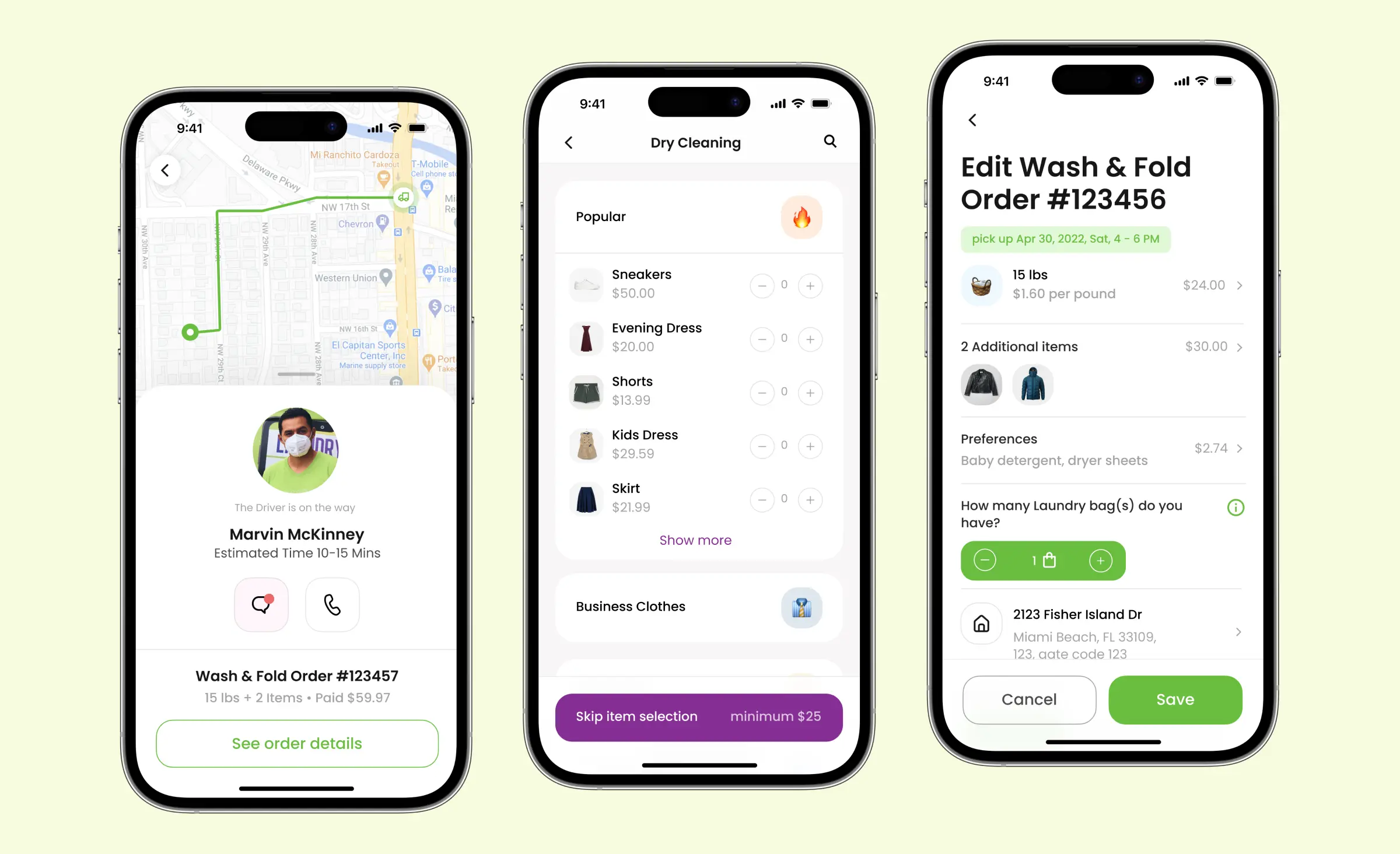
One of our notable offshore custom software projects is Hamperapp, where we served as an offshore software development partner. Hamperapp is a Florida-based service providing laundry and dry cleaning for consumers, hotels, restaurants, and large enterprises. The goal was to run both mobile app development and web development initiatives to expand their client base.
Our development team built features for four user types, created intuitive interfaces, and established a distinctive branding style. The tech stack included Laravel for the backend, Angular for the web version and admin panel, and native development with Swift for iOS and Kotlin for Android. We integrated Stripe for online payments, Ably for real-time driver updates, and Mapbox for route optimization — an essential feature of this custom software that helps drivers navigate unfamiliar routes.
Hamperapp's growth now includes partnerships with nearly 80 laundries in its local area, serving consumers and enterprises alike. This project demonstrates how an experienced offshore development team, supported by effective project management, can achieve exceptional results no matter where they're located, showcasing effective software outsourcing.
How to make offshore software development feel like nearshore
We have extensive experience working as an offshore team on numerous projects. Over time, we have built robust processes and communication standards that make our offshore software development services feel just as integrated and responsive as an onshore development team. Here are a few tips for making offshore development feel like nearshore:
- Plan strategically around time zones: Schedule work to maximize overlapping hours between your team and the offshore software development team. Use tools like ClickUp, GitHub, Microsoft Teams, Slack, and project management platforms for effective asynchronous communication, keeping everyone informed and minimizing delays caused by time differences.
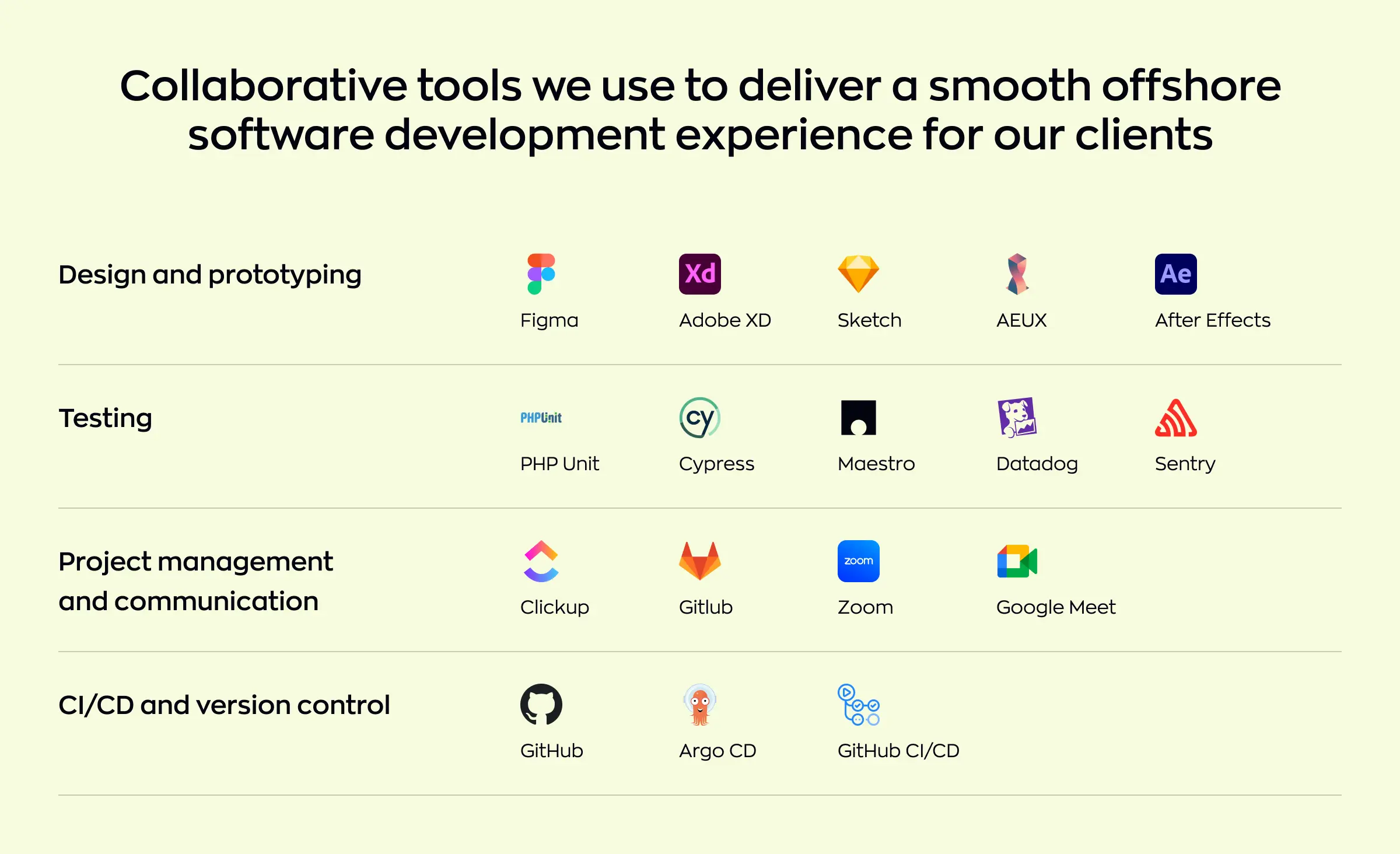
Here's a list of collaborative tools our team uses to provide offshore software development services smoothly - Maintain transparent communication protocols: Commit to clear, frequent, and proactive updates. Assign dedicated communication leads, use proven communication tools and methodologies, and aim to answer all client questions within 24 hours. Assign a project manager to each project for weekly progress updates and to act as a consistent point of contact.
- Promote cultural fluency: Foster an environment that values cultural awareness and empathy. Train offshore software development teams to understand and adapt to different business cultures, bridging gaps and strengthening collaborative relationships.
- Implement strong project management: Use Agile methodologies backed by dedicated project managers who serve as single points of contact. Use transparent reporting systems to give clients full visibility and control, enabling effective management and accountability regardless of location. Strong project management considerably improves the software outsourcing experience.
- Commit to uncompromising quality: Reject the notion that offshore distance means lower standards. Set up rigorous quality assurance processes, including code reviews and thorough testing, led by experienced technical leaders to deliver robust and reliable software solutions.
If you'd like to learn more about successfully managing pilot projects with an outsourced team, take a look at our detailed guide.
Why choosing expertise is more important than geography for success
In today's interconnected world, choosing between nearshore software development and offshore software development should be a strategic decision based on tech talent and value—not just location. By focusing on expertise and a robust development process, you can unlock major advantages of software outsourcing.
- Find the best fit, not just the closest: Don't limit your search to local tech talent. Choosing an offshore partner focused on skill gives you access to a global talent pool. This allows you to find specialists perfectly suited to your project's tech stack and domain needs, ensuring your development team has the exact skills required for your software solution.
- Optimize value without compromise: The conversation about offshore software development cost and development rates often misses the bigger picture. When you select an offshore software development company with proven expertise, you strike the right balance between cost-effectiveness and high quality. This isn't about choosing the lowest price — it's about maximizing your ROI with top-tier skills and efficient processes at a competitive development cost.
- Reduce operational headaches: A professional offshore development company or offshore development center uses refined processes to avoid common offshore software development pitfalls. Through strong project management, clear communication, and dedicated project managers, you get a smooth software development outsourcing experience — enjoying the benefits of offshore software outsourcing without the usual worries about distance or control.
- Future-proof your development: Partnering with an offshore company focused on technical excellence and efficiency means you build software solutions that are both resilient now and easy to maintain in the future. A reliable offshore or nearshore partner is a long-term investment — able to support and maintain your software as your business grows.
Conclusion
In a world where global talent and digital workspaces allow for instant communication, the geographical location of your development team matters less than their expertise, commitment to an efficient development process, and ability to maintain transparent, effective communication. The real drivers of success in software development services are the people on your team and the way they work together — not just their physical location.
By focusing on these critical factors rather than geography, businesses can unlock truly transformative results from software development outsourcing. Don't settle for compromise based on location — choose proven expertise and a strong partnership. Request a quote from us today and discover how our full-cycle software development company can support you with mobile app development, web development, UI/UX design, artificial intelligence integration, and DevOps.



Related posts











Related Services


Development
React Native App Development Services


Development
MVP Development Services


Development