

If you're building a digital product for the European market, data protection is no longer optional — it's now a central part of every software development process. Every company that handles user data needs to understand the foundations of GDPR compliance and how they affect daily business operations.
Embedding compliance into products is both a technical challenge and a strategic advantage. It means choosing best practices, designing privacy-first features, and guaranteeing transparency in how information is handled. In this article, we'll take a closer look at GDPR compliance in software development, discuss the key steps to meeting requirements, and share insights into how expert teams can help companies create secure, trustworthy digital solutions.
What is GDPR
The General Data Protection Regulation, or GDPR, is a data protection law that came into effect across Europe in 2018. Its goal is to set strict standards for how organizations process user information, making sure that individuals always have control over their personal data. Under GDPR regulations, companies that handle user data must meet several important requirements. One example is purpose limitation, which ensures businesses only collect information for specific, clear goals.
The regulation also lists out key data subject rights, such as the right to access, correct, or erase their data, which companies must support in practice. Businesses must use transparent consent processes before collecting or processing any information. Fulfilling these obligations requires understanding both the written rules and their everyday impact, from everyday operations to how software development teams design products. By following the General Data Protection Regulation, companies protect user trust and avoid costly penalties, while building a reputation for strong data protection.
Why GDPR compliance is important
The importance of GDPR compliance goes beyond checking off items on a checklist. When companies fail to meet GDPR requirements, they face not only high regulatory fines but also lasting reputation damage. Some of the world's biggest tech firms, including Meta and Google, have already faced major penalties due to non-compliance.
- In 2025, Meta faced a €479 million GDPR fine from a Spanish court for unlawfully processing user data under “contract necessity” instead of consent, giving it an unfair ad market advantage over publishers.
- Google faced a €200 million GDPR fine in 2025 for data processing violations.
These penalties can reach millions, making it essential for every organization to approach data protection with full attention. A single data breach can lead to extensive legal consequences and may even trigger investigations by the data protection authority. It can also damage user trust, which can be much harder to regain than to lose. In the event of a breach, businesses can find themselves dealing with lawsuits, audits, and forced changes to their internal processes. Security measures, such as regular data protection impact assessment, must become part of everyday routines if organizations want to stay ahead of risks.
At its core, GDPR compliance is about respecting the rights of individuals — also known as data subject rights — while keeping user data secure. Regulatory compliance is not only a legal requirement but a mark of responsibility and care for your customers.



The role of entrepreneurs as data controllers
When it comes to GDPR compliance, business owners are recognized as the data controllers and are responsible for following the rules. This means you decide the reasons and methods for processing user data within your company. As the main decision maker, you set the tone for how data protection is handled across all data processing activities and make sure every step aligns with GDPR principles.
Establishing a legal basis and managing consent
Your first step as a data controller is to define the legal basis for collecting and processing information. This could be based on consent, contracts, legal obligations, public interest, vital interests, or legitimate interests. If you rely on user consent, you must ensure it's freely given, specific, informed, and clear. Users should also have an easy way to withdraw it at any time, which is key for meeting GDPR requirements.
Creating a clear privacy policy
Business owners must provide a detailed but easy-to-read privacy policy. This policy should describe what user data is collected, why it is needed, how long it's kept, who has access, and how users can use their rights. Access control is essential — only those who need the data to perform their work should be able to see it.
User rights and data governance
To be fully GDPR compliant, you should be ready to address data subject rights requests at any time. This means users may ask to access, correct, delete, or transfer their data, or even object to certain data processing activities. Strong data governance processes help you track and fulfill these requests efficiently.
Carrying out risk assessments
If your company handles high-risk operations, such as introducing new technology or handling sensitive information, a data protection impact assessment (DPIA) becomes important. This review helps you spot risks to privacy before starting new projects and can be included as a task in your GDPR checklist.
Selecting trustworthy partners
A data controller must also choose business partners and vendors who value GDPR compliance. For example, when hiring software developers or other processors, always sign a data processing agreement. This ensures everyone involved meets the high bar for data protection.
Incident response and appointing a DPO
If a breach occurs, the data controller must notify the data protection authority and sometimes the affected users within 72 hours. Depending on your company's size or the type of data you process, you may also need to appoint a data protection officer. With these steps, entrepreneurs fulfill both their legal obligations and their promise to protect user data.
The role of software developers as data processors
Developers often act as data processors — they handle user data strictly following instructions from the data controller. They need to ensure both GDPR requirements and data protection are at the core of every project.
Privacy by design
Privacy by design means developers integrate data protection principles into the architecture of apps from the very start. Security settings by default should be strict, keeping user privacy a priority unless a user decides to change them. A good GDPR article describes how to store personal data within secure EU servers, collect clear parental consent from minors, and always get explicit agreement before starting any recording or processing. Developers should minimize data by collecting only the user data needed for the app's function.
Security by design
All information — whether stored on servers or sent between systems — should be encrypted. There should be role-based access control systems that let only approved staff access sensitive data. Secure coding practices, regular audits, and logs of all data processing activities guarantee oversight.
Supporting data subject rights
Developers build features so the client as the controller can handle requests under data subject rights. For instance, users might want to export their account details or completely delete their profile. Including these features in the software makes regulatory compliance easier for everyone involved.
Processing only by written instructions
Data processing should happen strictly as the client instructs. If the client wants changes, the development team should adapt to keep the project compliant.
While developers play an important role in protecting user data and building secure products, the final responsibility for GDPR compliance rests with the business owner. Developers follow the instructions they receive from the client and put GDPR requirements into practice. However, it's up to the client to set clear rules, provide the right information, and ensure that every part of the process meets compliance standards.
Why collaboration is key for GDPR compliance
Achieving GDPR compliance in software development demands more than technical skill, it requires ongoing collaboration between the client and the developers. The client, acting as data controller, must give precise instructions about the goals for processing personal information, while the data processor brings those goals to life through secure and thoughtful design.
Shared responsibilities and clear communication
For any software development project, close communication ensures both sides understand their unique duties. The data controller is responsible for communicating the legal grounds for collecting user consent, and the data processor must use tools that offer robust consent management options. This shared responsibility extends to managing data subject rights, with both parties working together to make sure that user requests are addressed without delay.
Following best practices from start to finish
Successful GDPR compliance software is the result of careful teamwork. Developers follow best practices such as regular code reviews and updates to ensure security, while the data protection officer may oversee audits for full transparency. As the software evolves, continuous monitoring of all processing activities is needed to keep security strong. By applying data governance principles and focusing on data protection at each step, companies ensure their solutions remain safe, legal, and trustworthy.
Building long-term value
Collaboration also helps establish a sustainable approach to privacy. When every stakeholder, from developer to data protection officer, plays their part, organizations produce GDPR-compliant solutions that earn trust and minimize risks. The right partnership enables clients to stay ahead of changes, implement industry best practices, and build lasting value for all users.
How Ronas IT can help with GDPR compliance
At Ronas IT, we understand that GDPR compliance in software development is a continuous commitment. With experience across fintech, healthcare, and other regulated industries, we know how to build secure solutions for your business and protect users' data.
Deep analysis and consulting from the start
Our team begins every project with a thorough analysis of project requirements, helping clients understand how we ensure GDPR implementation. We ask our clients to provide us with compliance instructions and follow them at every stage of their project.
Privacy-led custom software development
We design every solution with “Privacy by Design” principles at the core. Whether it's a mobile app or a large enterprise platform, we minimize user data collection and integrate robust tools for consent management and data portability.
Enterprise-ready secure practices
We use secure coding practices and trusted enterprise-ready solutions, such as AWS, Google Cloud, Auth0, and GitLab. Our approach covers automated testing for all key modules, fine-grained access control, and encrypted storage for sensitive information. We put a strong focus on protecting user data by limiting access within the team and using project VPNs.
Supporting your data protection obligations
Our team helps you set up workflows for handling data subject requests, making it simple to export or delete information, track data processing activities, and stay up to date with compliance.
Seamless integration and ongoing support
We design software GDPR compliant from the start, but our support doesn't end at launch. We can deliver ongoing monitoring and adapt your software to new regulations, in case you decide to use our post-release support services.
Tailored to your business
Every business is unique, so our custom software development teams analyze your existing systems and design solutions that integrate smoothly with your processes. By using microservices and best practices, we keep updates painless and focus on long-term maintainability.
Our GDPR-related cases
Neobank app for Europe

We designed and developed a European neobank app for freelancers, building the core features for income smoothing, tax planning, and invoicing with React Native and Laravel. Our team followed a Privacy by Design approach, integrating secure KYC verification and robust data protection at every step of software development. To ensure GDPR compliance, we used trusted providers like Solaris and Trulioo, set strict access controls for user data, encrypted sensitive information, and never stored private user details on our servers. Regular audits, secure coding practices, and thorough documentation helped us launch a fully compliant and secure fintech solution for the European market.
Virtual classroom for EU EdTech
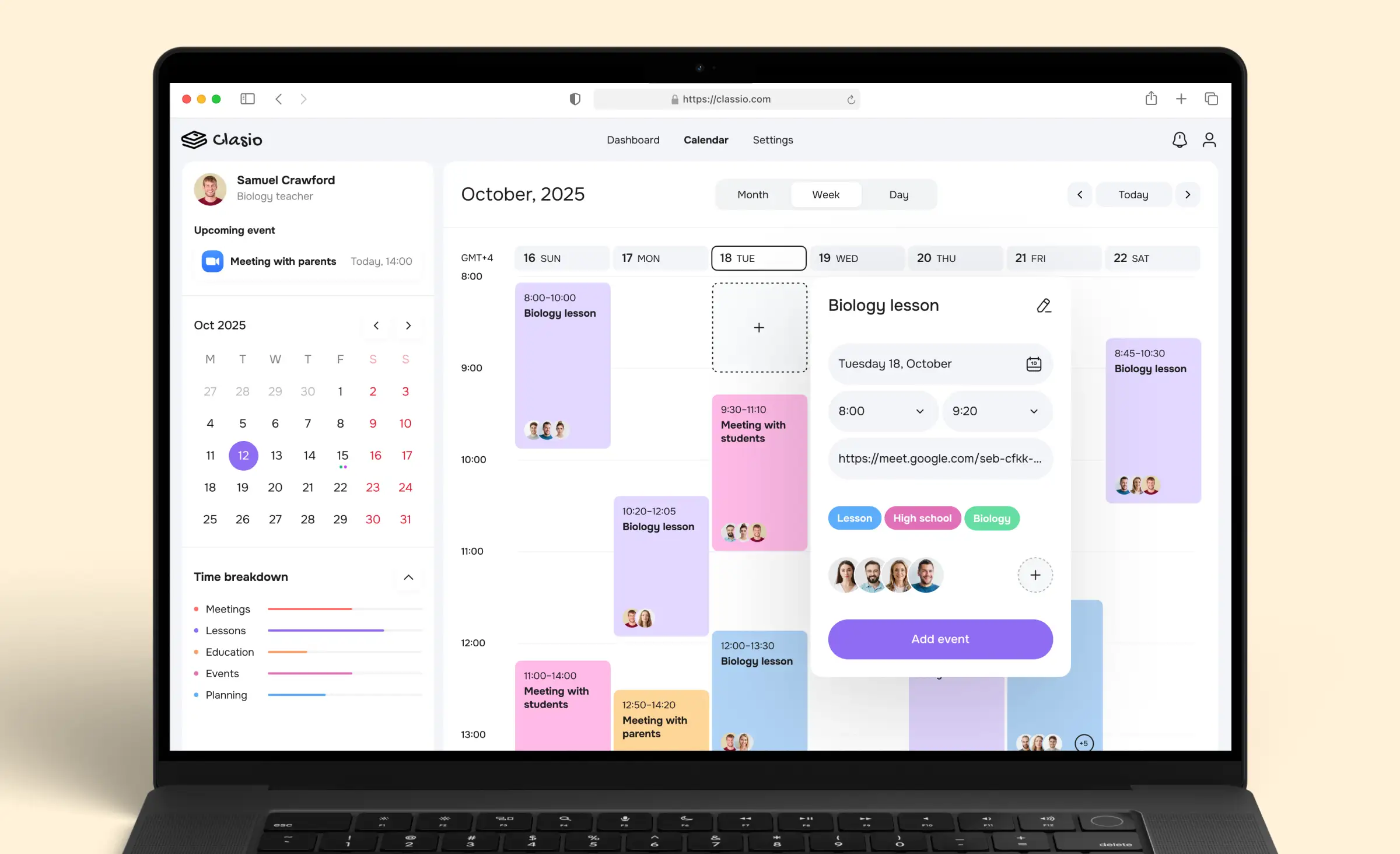
We designed and built a web and mobile virtual classroom platform tailored for European schools and universities, focusing on privacy, accessibility, and real-time learning. Our team integrated secure EU-based data storage, strict parental consent flows for minors, and role-based permissions to protect user data throughout all data processing activities. All video sessions, chat histories, and class recordings are encrypted and stored exclusively in Europe, with clear consent prompts for every recording. We followed. GDPR best practices from design through deployment, including using compliant infrastructure, audit logging, and routine security testing. It allowed us to deliver a platform that meets both educational and legal standards for the EU market.
To conclude
Meeting GDPR compliance is not just a legal box to check — it's a standard for trust, responsibility, and sustainable growth in the digital world. For any software company working in Europe or handling EU user data, strong compliance practices rooted in general data protection regulation are essential. Today, data protection must be integrated into every stage of software engineering and software development, from requirements gathering to deployment and support.
Developers and business leaders alike must embrace GDPR principles, focusing not only on the technical side of processing but on the entire data lifecycle. The risk of a breach is ever-present, and only a proactive stance like building in data security, conducting regular data protection impact assessment, and following best practices can minimize threats. At Ronas IT, we help clients address GDPR compliance as an ongoing process, meeting evolving GDPR requirements and going above and beyond with robust solutions.
By prioritizing data protection, fostering transparency, and supporting clear rights for users, companies can achieve long-term success while respecting the spirit of the law. The future belongs to those who take compliance seriously, integrate it into their processes, and create software that stands out for its reliability and integrity.
Related posts












Related Services


Development
React Native App Development Services


Development
MVP Development Services


Development