Managing technical debt: Strategies for sustainable software development and long-term success


In software development, technical debt is an unavoidable reality that affects every development team, regardless of industry or size. The term, first coined by Ward Cunningham, cleverly compares the shortcuts and compromises made during the development process to financial debt. Just like with loans, “borrowing” against code quality in order to release features quickly can speed up delivery in the short term, but it accumulates interest that must be paid over time.
Today, technical debt is not just a buzzword among developers — it poses concrete risks to the stability, performance, and competitiveness of organizations. According to Gartner, about 40% of infrastructure systems across asset classes have tech debt concerns. This looming problem arises when teams take shortcuts, make temporary work-arounds, or rush through design phases without sufficient planning, sacrificing long-term stability for short-term gains in software delivery.
As codebases grow and age, debt not only slows innovation but also drags down code quality, making future changes and maintenance more challenging and expensive. Developers often find themselves frustrated by the mounting complexity, while stakeholders struggle to reach consensus on prioritizing debt reduction versus chasing new features. The challenges multiply when short-term savings conflict with the long-term vision, or when “shiny object syndrome” shifts focus away from essential tech debt clean-up.
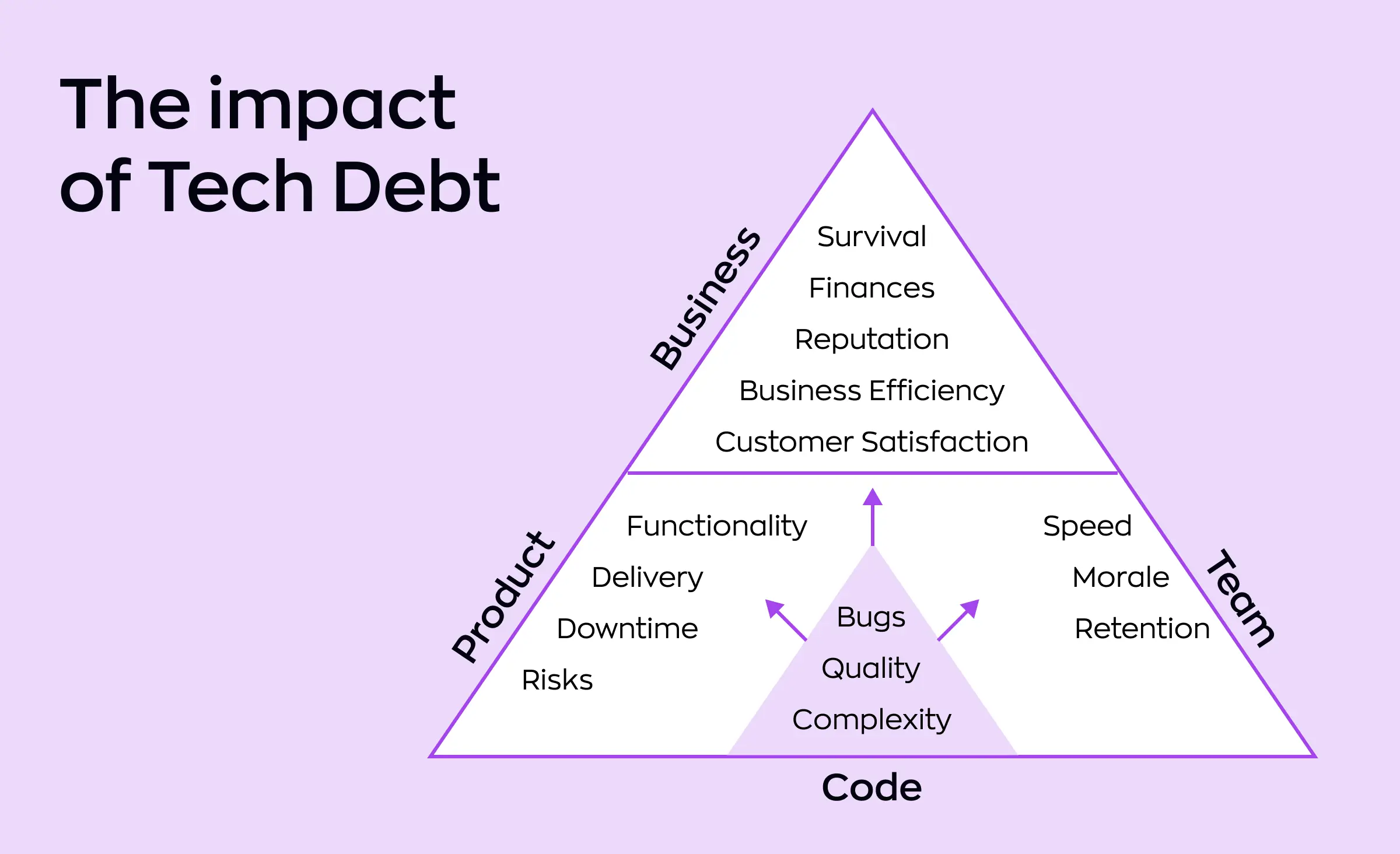
Managing technical debt strategies requires the entire development team, technical leaders, and every stakeholder to work in sync. A strategic, structured approach is the key to real, lasting change. Gartner predicts that by 2028, organizations using deliberate methods for managing technical debt will have 50% fewer obsolete systems than their counterparts. As the landscape grows more complex, effective technical debt management becomes essential for sustainable growth, resilience, and success in software development.
In this article, we will explore why technical debt accumulates, how it affects your business, and, crucially, managing technical debt strategies that will allow you to turn a hidden liability into a tool for continuous improvement and innovation.
What is technical debt and why does it accumulate?
Technical debt is a metaphor used to describe what happens when a software development team takes shortcuts in the development process, leading to code that will require future rework. Much like financial obligations, tech debt piles up “interest,” making it increasingly difficult to change or improve software over time.
There are several categories and causes of debt, each with unique impact across the software development lifecycle:
Types of technical debt
- Intentional technical debt: Sometimes, teams knowingly incur intentional debt to quickly release a new feature or meet a tight deadline. For example, a startup may accept less-than-perfect code quality to test a business idea faster.
- Unintentional technical debt: On the other hand, unintentional technical debt appears when developers accidentally introduce issues, often due to incomplete knowledge, lack of best practices, or unanticipated complexities in the code.
- Design debt: Poor architectural decisions or failing to anticipate scale may lead to design debt, which makes later modifications more difficult.
- Code debt: Messy, duplicated, or overly complex code that reduces maintainability.
- Documentation debt: Lacking or outdated technical documentation, making it harder for teams to onboard new developers or transfer knowledge.
- Process debt: Gaps or inefficiencies in the development process that slow down future work.
- Infrastructure debt: Outdated infrastructure or technology stacks, often caused by not updating systems to keep up with industry trends.
How does debt accumulate?
Debt accumulation is often a gradual process. Small compromises — like skipping tests, bypassing code review, or postponing documentation — can add up over several releases. As technical debt grows, the effort and cost required for debt reduction become larger.
Stakeholders sometimes underestimate the risks of existing debt. Their focus on new features can overshadow the longer-term impact of growing code debt on the software development team. Over time, infrastructure debt and process debt might surface as chronic blockers that slow down every developer.
Why teams take on technical debt
- Tight deadlines: Pressure to deliver quickly forces teams to take shortcuts.
- Lack of best practices: When developers aren't guided by coding standards or best practices, tech debt builds up more easily.
- Changing requirements: In dynamic business environments, the need for speed may override planning and lead to unintentional debt.
- Communication gaps: Insufficient alignment between stakeholders and developers increases the likelihood of tech debt.
Technical debt, whether intentional or unintentional, is an inherent part of software development. Recognizing it early — and understanding its sources — helps teams to plan more effective strategies for managing and reducing overall debt.
The business impact of technical debt
Technical debt is not just a technical issue — it's a core business concern that can quietly undermine long-term growth and resilience. While teams may initially treat tech debt as a necessary shortcut, the repercussions can ripple through your organization, especially as codebases and business ambitions grow.
Slower delivery and mounting maintenance costs
As tech debt accumulates, the development team faces a growing list of obstacles. Developers must spend more time understanding and working around legacy code, resulting in slower feature delivery and increased maintenance costs. Over time, working with outdated or messy code makes solving even simple tasks harder, driving up the cost and complexity of every release.
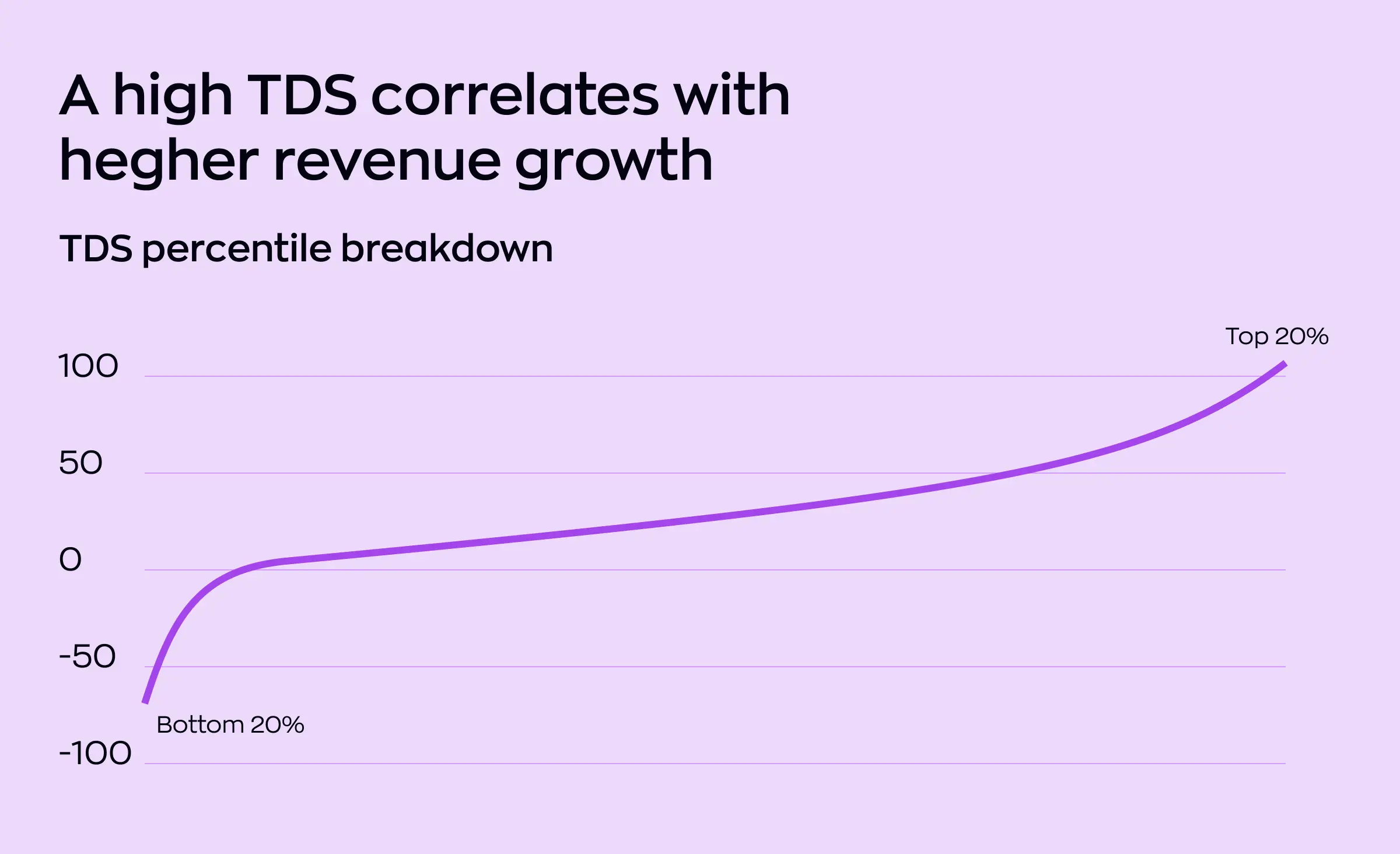
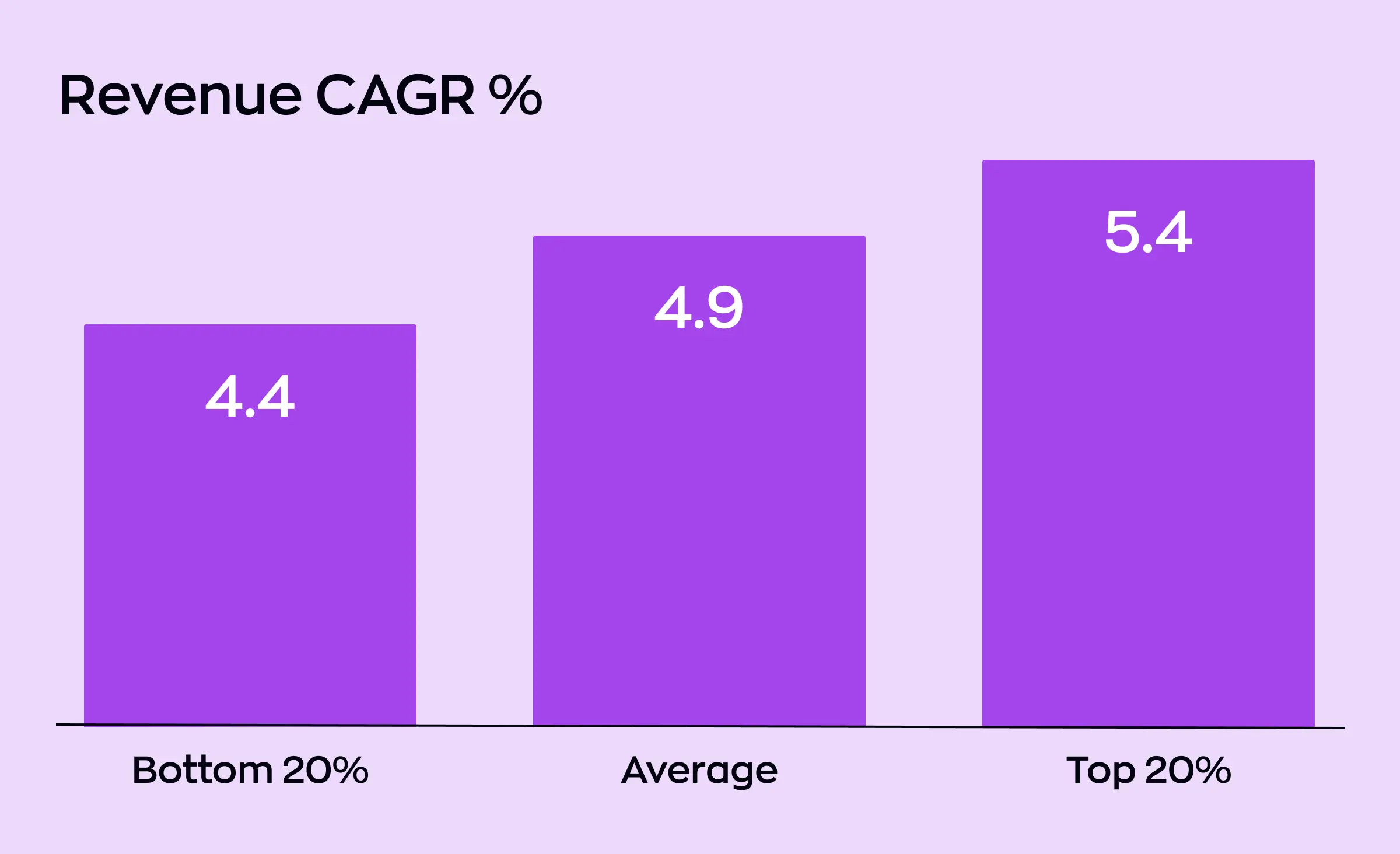
Code quality and innovation
Poor code quality, a direct byproduct of unmanaged technical debt, makes it difficult for developers to innovate. Teams may shy away from needed changes or hesitate to introduce improvements for fear of breaking something in a tangled web of code. As a result, the software development efforts become reactive rather than proactive, limiting the company's ability to adapt effectively to new market opportunities.
Hidden risks and financial consequences
Unchecked technical debt can carry risks similar to unresolved financial debt: both threaten the sustainability of the business. The presence of unaddressed issues in code can undermine comprehensive security measures, lead to unexpected downtime or system failures, each presenting significant potential issues for customers and the business. These risks often remain hidden until they escalate — by then, emergency fixes are both disruptive and costly.
Impact on team morale and retention
Persistent tech debt also wears down the development team. Talented developers may become frustrated by the never-ending cycle of patching legacy code instead of building new features. High staff turnover can follow, leading to further losses in institutional knowledge and productivity.
Technical debt management as a strategic priority
The business impact of technical debt makes effective technical debt management essential. By viewing debt as an ongoing concern, rather than a one-time bug to fix, organizations can make smarter decisions about investing in refactoring versus building new features. Proactive management of technical debt equips companies to minimize maintenance costs, preserve code quality, and ultimately drive sustainable growth in software development.
Addressing these issues is not just a matter for developers — it requires awareness and commitment across the business. When organizations treat tech debt as a strategic priority, they reduce financial risk, empower their development team, and set the stage for long-term innovation. In the next section, we'll explore how to identify, assess, and quantify technical debt so you can take the first step toward effective management and sustainable software development.
Strategies for identifying and quantifying technical debt
To address tech debt effectively, it's critical to first identify where and how much technical debt exists in your software development environment. Without a clear understanding of debt hotspots, managing technical debt becomes guesswork, and crucial areas can go unnoticed. Below are essential strategies for making debt visible and actionable.
Code review and static analysis
Regular code review is a cornerstone of catching code quality issues before they grow into bigger problems. Static analysis tools further help teams spot tech debt by automatically scanning codebases for complexity, duplication, code smells, and even early signs of process debt. These automation tools are invaluable for maintaining high standards throughout the development cycle.
Tracking issues through bug reports and test debt
Bug tracking systems are another rich source for identifying technical debt. When the same bugs or issues persist in particular areas of the codebase, it's often a sign of underlying tech debt or inadequate test coverage — commonly known as test debt. Consistently reviewing bug reports can shine a light on modules that require refactoring efforts or additional testing.
Measuring debt with documentation and metrics
Thorough documentation supports debt management by ensuring developers understand the rationale behind decisions and can maintain best practices. Good documentation also makes it easier to spot when shortcuts have been taken or best practices ignored. Combine this with code quality metrics and you have a more complete view of test debt, code complexity, and maintainability.
A mature debt management practice gives teams the structure they need to tackle technical debt continuously. Over time, this proactive mindset becomes part of your development culture, helping both developers and stakeholders work together for sustainable product health.
By combining code review practices, automation tools, metrics, and a culture of best practices, organizations gain clarity on where their technical debt resides — and what to do about it next.
Effective strategies for managing and reducing technical debt
Managing technical debt strategies is essential for organizations aiming for long-term stability and agility. Below are proven approaches for technical debt reduction, designed to support both immediate results and sustainable software health.
Prioritization and debt management
Effective technical debt management begins with prioritization. Not all debt carries equal risk; therefore, the development team, together with each stakeholder, must prioritize technical debt based on its business impact and potential technical harm. Using structured debt management practices, such as regularly scheduled backlog grooming and the inclusion of debt items in sprints, supports informed decision-making. This helps not to ignore the key areas of tech debt in favor of new features.
Refactoring and continuous improvement
Ongoing refactoring efforts are central to debt reduction. Regularly reviewing the codebase for opportunities to improve code quality, modularity, and readability should be embedded in the development cycle. Code review processes help identify process debt and architectural debt, keeping the team focused on continuous improvement rather than just firefighting.
Establishing coding standards and best practices
Unified coding standards are vital for preventing the creation of new debt and simplifying later changes. By enforcing best practices such as consistent naming, clear documentation, and test coverage, developers create a culture where quality is part of daily work. Automation tools can further support adherence to standards and prompt attention to new issues before they accumulate.
Technical debt reduction through smart tooling
Automation tools streamline the process of managing technical debt by detecting code smells, infrastructure debt, and other issues early in the workflow. Paired with robust code review and best practices, these tools empower the development team to catch and fix potential problems before they impact production.
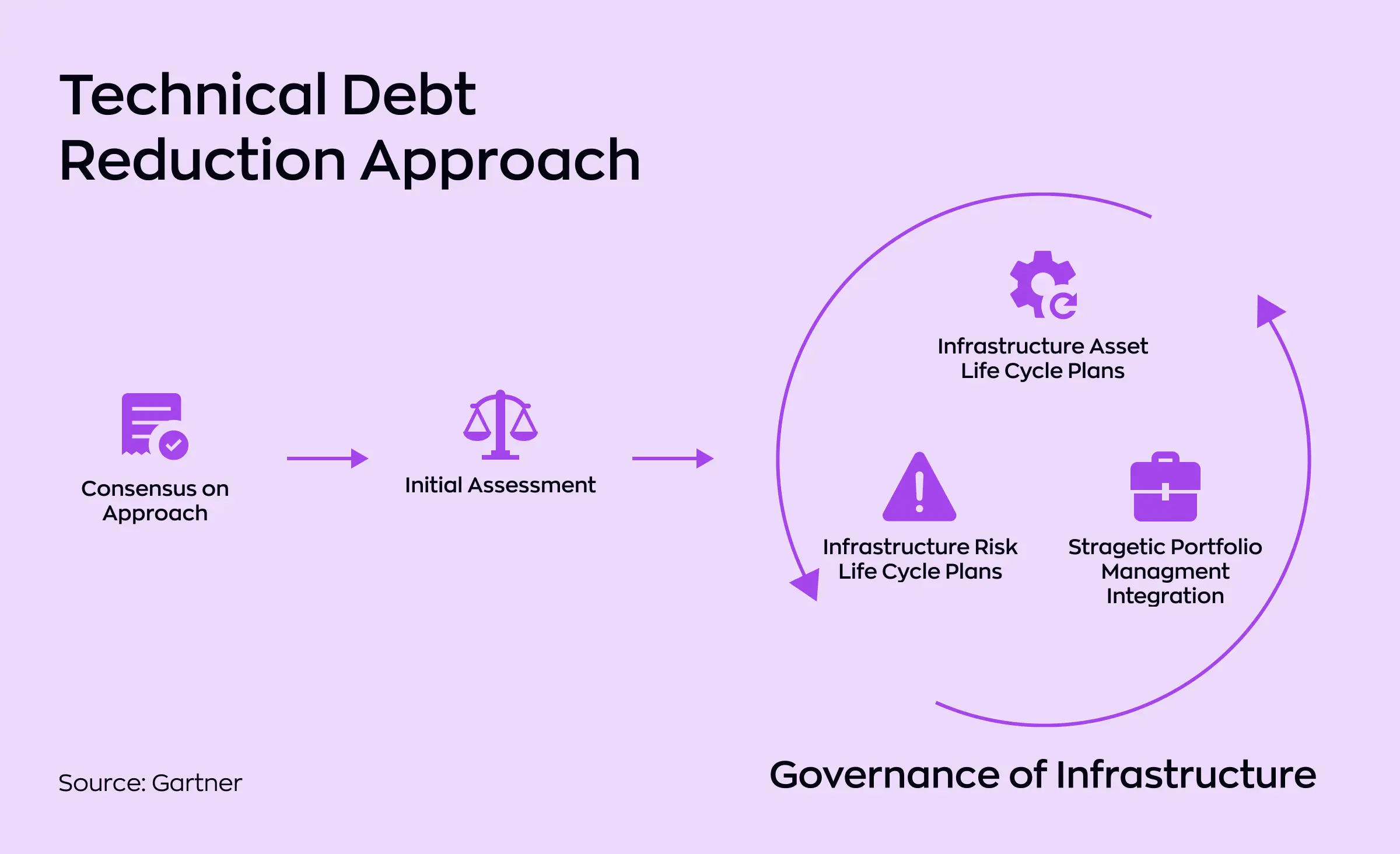
Technical debt reduction as suggested by Gartner Building a culture of knowledge sharing and collaboration
A strong development organization encourages knowledge sharing between team members. Regular meetings to discuss code, process, and debt-related issues foster transparency, drive effective decision-making, and prevent known pitfalls from recurring.
Proactive stakeholder engagement
Stakeholder involvement is key to effective technical debt management. By clearly communicating the business impacts of debt, teams can secure the buy-in necessary to allocate time and resources to technical debt reduction.
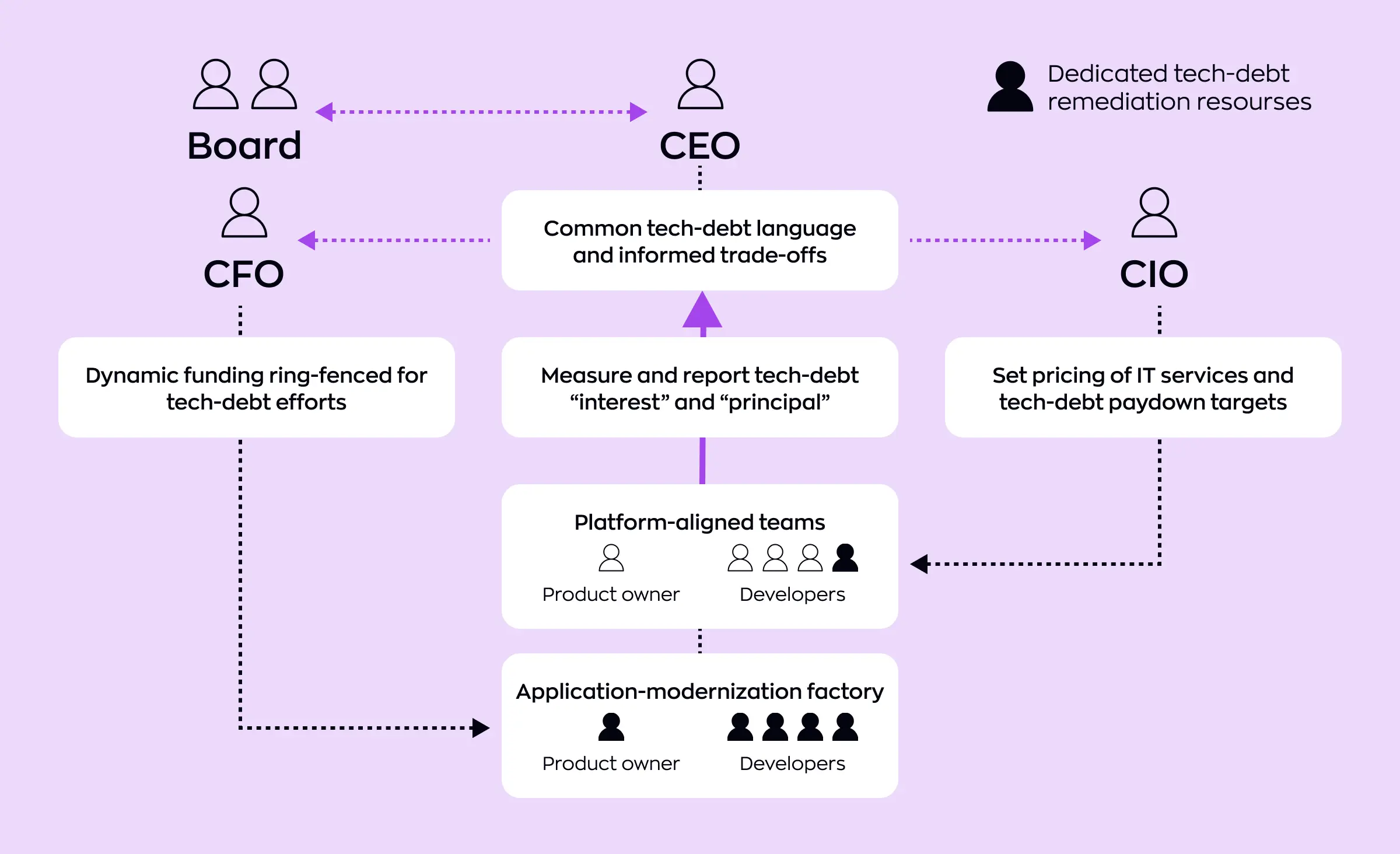
Successful management of tech debt is not a one-time project — it is part of a continuous journey toward higher code quality and better business outcomes. By combining refactoring, coding standards, prioritization, and collaboration, organizations are equipped to make strategic, long-term improvements and achieve effective technical debt management.
Ronas IT: Your partner in sustainable software development
Ronas IT offers a range of services aimed at supporting effective software development and managing technical debt. The company helps organizations assess and address technical debt by providing technical debt management solutions tailored to different business needs.
Ronas IT's process includes regular code quality checks and transparent documentation to support sustainable development. The development process often includes automation tools to help teams identify potential issues early, providing maintainability over time. The company's dedicated team services allow clients to scale their projects with qualified developers, giving flexibility for both short and long-term tasks.
Clients can access consulting services for architectural planning, process evaluation, and implementing best practices that help reduce and manage technical debt.
By focusing on clear documentation, automation tools, and collaboration, Ronas IT can help businesses improve their code quality and maintain healthy development practices throughout the project lifecycle.



Conclusion: Investing in quality for enduring success
Long-term success in software development relies on more than just launching new features — it depends on the strength of your codebase and the practices of your development team. Managing technical debt is a continuous effort that demands careful debt management, ongoing code quality checks, and a commitment to best practices from both developers and stakeholders.
Effective technical debt management starts with informed decision-making about where to focus debt reduction efforts and which managing technical debt strategies align best with your goals. By building a culture of continuous improvement, your team lays the groundwork for software that is not just functional today, but resilient, adaptable, and competitive for years to come.
Tech debt will always be present to some extent, but with the right approaches, it can be kept under control — supporting rather than hindering innovation. Investing in the skills of your development team and the sustainability of your processes means you're not just solving present challenges, but also paving the way for efficient future growth.
In summary, prioritizing technical debt and embracing systematic, effective technical debt management allows organizations to maintain code quality, make informed decisions, and set themselves up for ongoing success. By treating tech debt as a strategic focus rather than a hidden cost, your business can achieve both immediate gains and lasting, long-term value.
Related posts













Related Services


Development
React Native App Development Services


Development
MVP Development Services


Development