
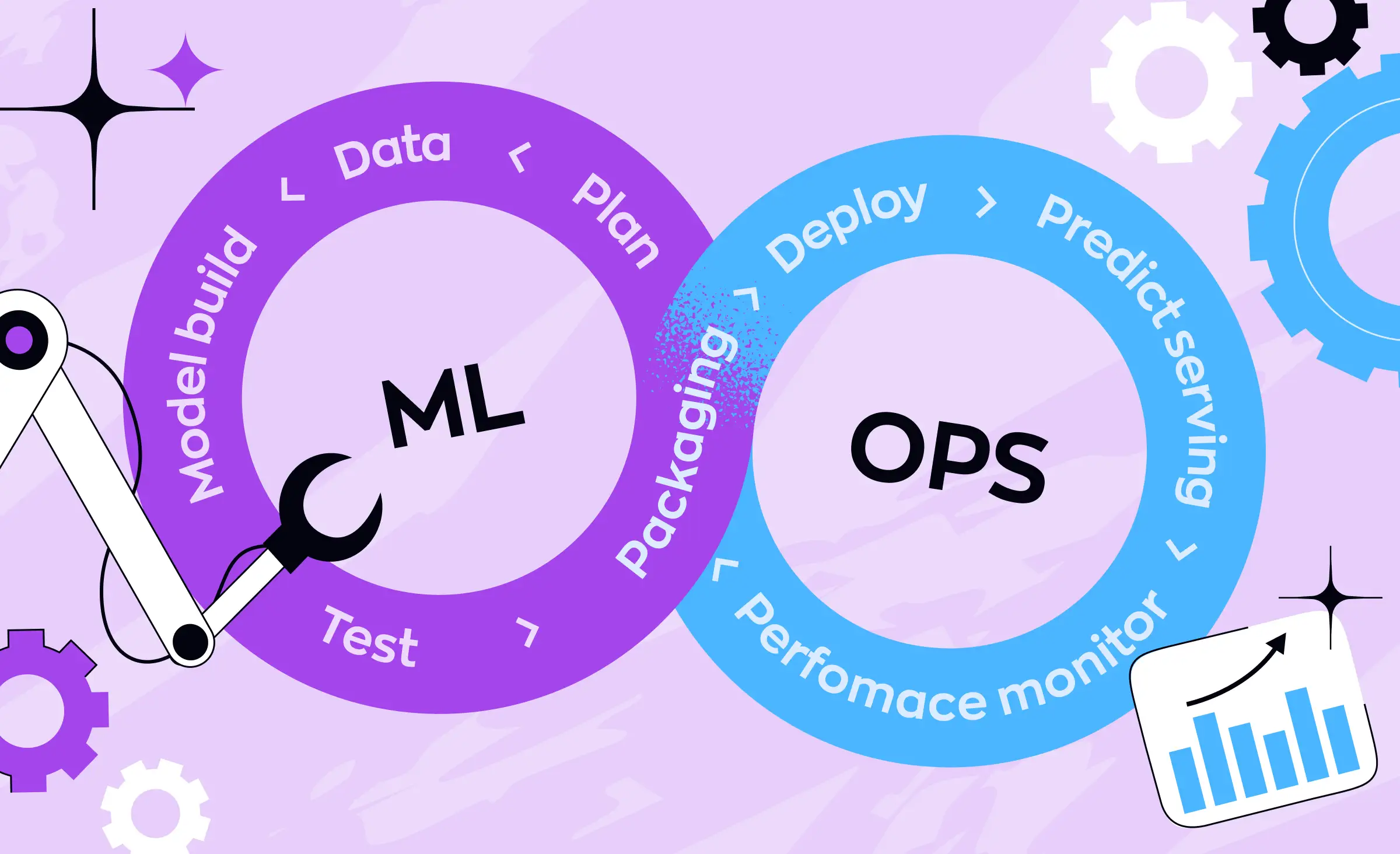
Every year, countless machine learning models with promising business potential remain stuck in the lab, never making it into users' hands. This gap between innovative ML prototypes and real-world AI products is a significant challenge for enterprises. According to Markets and Markets, the MLOps market size is projected to grow from $1.1 billion in 2022 to $5.9 billion by 2027, with a remarkable CAGR of 41%. This explosive growth is fueled by the urgent need to standardize and streamline ML processes.
Why do so many ML models never reach production?
Traditional software development and DevOps practices can't be directly applied to machine learning operations (MLOps) because ML presents unique challenges. Just as generative AI technologies, machine learning models not only rely on code, but also on constantly changing data and ongoing model training. Unlike typical software, ML systems require continuous monitoring of model performance — including model drift and data quality — to maintain reliability in production. That's why companies are seeking robust MLOps consulting and MLOps services that facilitate cooperation between data scientists, ML engineers, and IT teams, providing repeatable pipelines and faster release velocity.
In this article, we'll define what MLOps really is and examine why it's essential for launching successful AI products, whether you're building predictive models or leveraging cutting-edge generative AI. We'll discuss the pitfalls of trying to manage ML systems with traditional DevOps, and lay out a step-by-step roadmap to building a reliable, scalable MLOps pipeline — from initial idea through to model deployment and ongoing monitoring. By the end, you'll understand why MLOps helps to bridge the gap between experimental ML models and real-world, enterprise-ready AI solutions.
MLOps: The key discipline for successful AI products
MLOps, short for Machine Learning Operations, is now considered fundamental for organizations aiming to scale AI initiatives and turn innovative prototypes into successful products. At its core, MLOps is a comprehensive set of practices, tools, and frameworks that bring together machine learning, DevOps, and data engineering disciplines. This holistic approach not only helps build and train any ML model effectively but also deploy, govern, and monitor it reliably over time. Engaging with experienced MLOps consultants can help your organization advance to the next MLOps level and implement best-in-class strategies.
How MLOps differs from DevOps
While traditional DevOps focuses on code integration, testing, and deployment for software applications, MLOps introduces additional complexities. Unlike standard applications, ML models are deeply dependent on the quality and variability of data. Moreover, these models require ongoing model monitoring and frequent model retraining to remain effective as real-world data evolves.
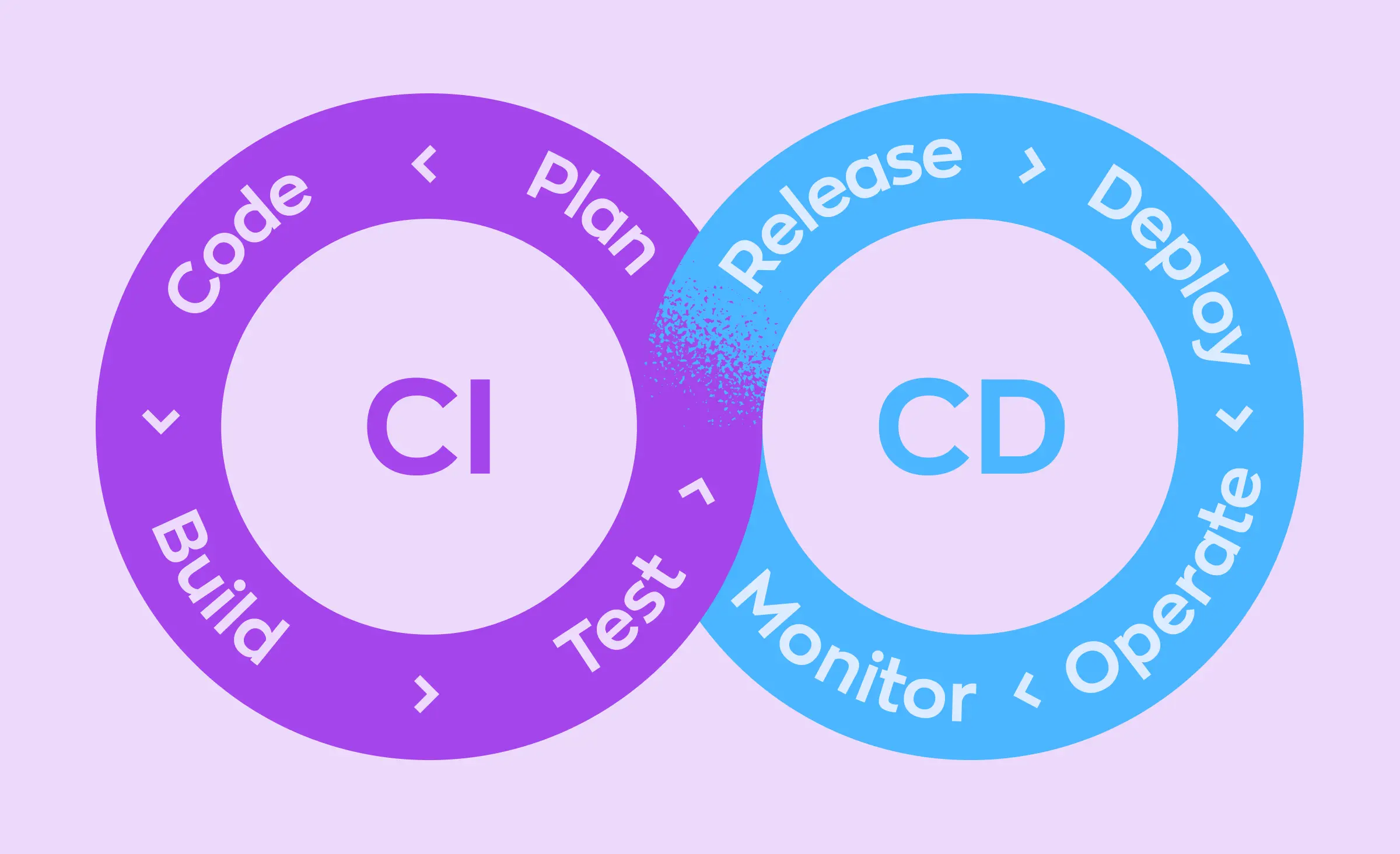
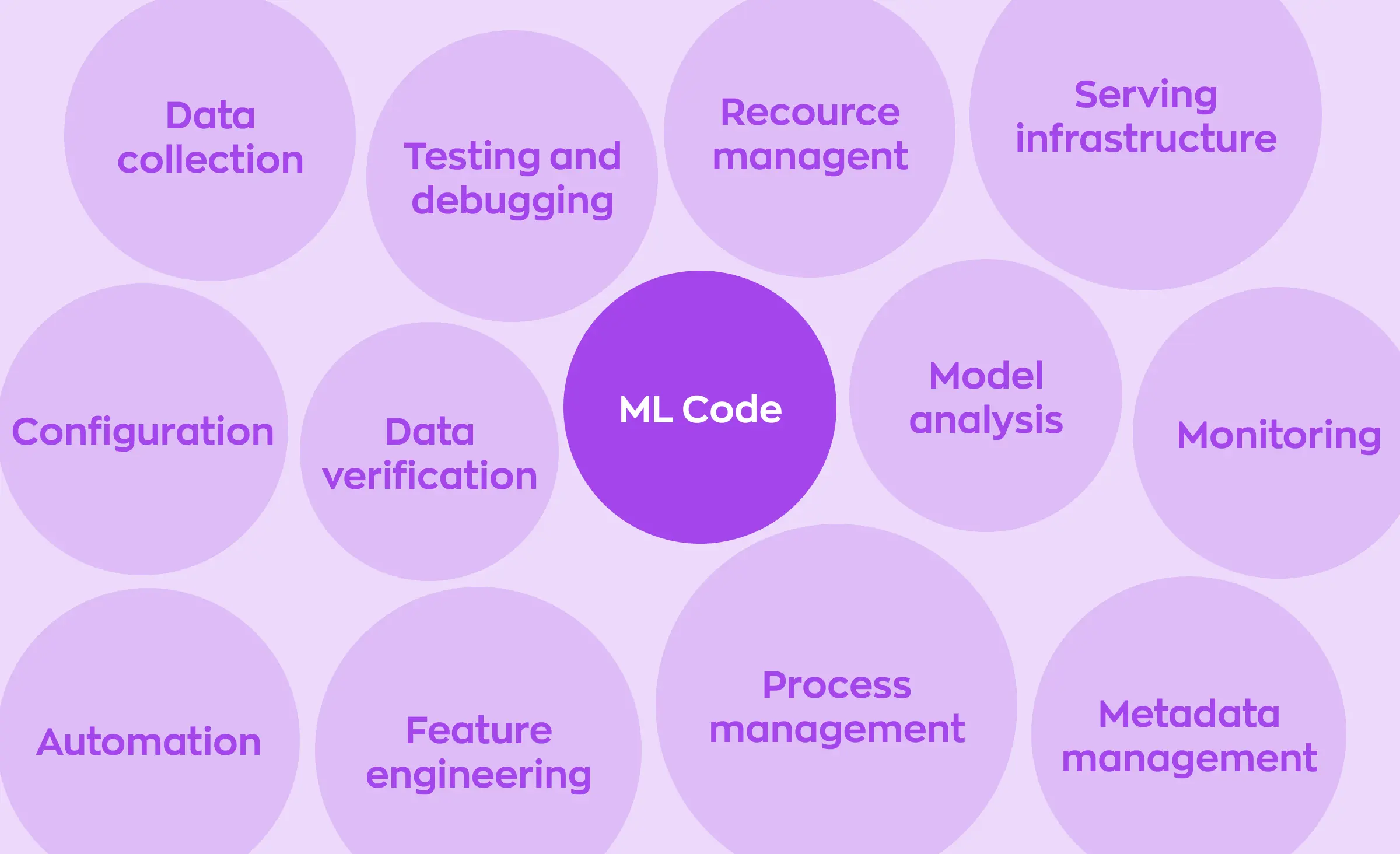
The ML workflow must manage not only code, but also datasets, features, model versions, and experimental results. This demands specialized MLops solutions and practices that extend far beyond the scope of conventional DevOps.
Key benefits of MLOps for AI solutions
Adopting MLOps brings several advantages to organizations building AI products:
- Speedier development and deployment: Automated pipelines and standardized workflows significantly reduce the time needed to develop, validate, and release new models.
- Production reliability and stability: Continuous model performance monitoring helps AI systems to operate reliably in production, promptly identifying and addressing data drift or degraded accuracy.
- Scalability: MLOps helps organizations to manage, deploy, and scale hundreds of ML models and data pipelines efficiently across different environments.
- Version control and reproducibility: Systematic tracking of code, data, and model versions speeds up model management and guarantees consistent results across team members and projects.
- Effective monitoring: Integrated monitoring tools provide real-time insights, enabling teams to detect issues like model or data drift early and initiate retraining or updates.
- Regulatory compliance and model governance: Transparent tracking and documentation of model training, deployment, and operational decisions provide adherence to regulatory standards and industry best practices.
By implementing an MLOps framework, companies gain the control, agility, and visibility required to build solutions that deliver real value — safely and at scale.
From experiment to deployment: The AI product journey with MLOps
As we've seen, effective MLOps practices are vital for delivering solutions that are not just innovative, but reliable and production-ready. But how do these principles translate into real-world processes? The journey from a simple idea to a fully deployed AI product involves a series of structured steps — each supported by a strong MLOps process.
The MLOps pipeline guides teams through these stages, ensuring that everything from data collection to model deployment is repeatable, transparent, and scalable. Let's break down the essential phases of an end-to-end MLOps workflow.
Data management and feature engineering
The foundation of every AI solution is high-quality, well-managed data. Effective data management involves not only gathering and storing information, but also maintaining data integrity, cleanliness, and version control. Building modern ML workflows means constructing pipelines for data collection, cleaning, transformation, and preparation — all of which are crucial for reliable model training. Utilizing feature stores helps centralize and reuse features, ensuring consistency across projects.
Model development and experimentation
During this phase, data scientists and ML engineers experiment with various ML models, adjusting architectures, parameters, and algorithms. Tools for experiment tracking are essential, helping teams monitor which versions of code, data, and model configurations produced the best results. Setting up reproducible development environments, such as Jupyter notebooks or cloud-based IDEs, is a part of a robust MLOps practice. Automated code and logic testing keeps workflows stable and reliable.
Model training and validation
Automated model training pipelines are at the heart of MLOps implementation. Scaling up or down compute resources as needed — especially on cloud platforms like AWS MLOps or Azure ML — supports efficient training, hyperparameter tuning, and model validation. Keeping track of model versions and their performance in a model registry improves model management and helps in selecting the best candidate for deployment.
CI/CD for ML models
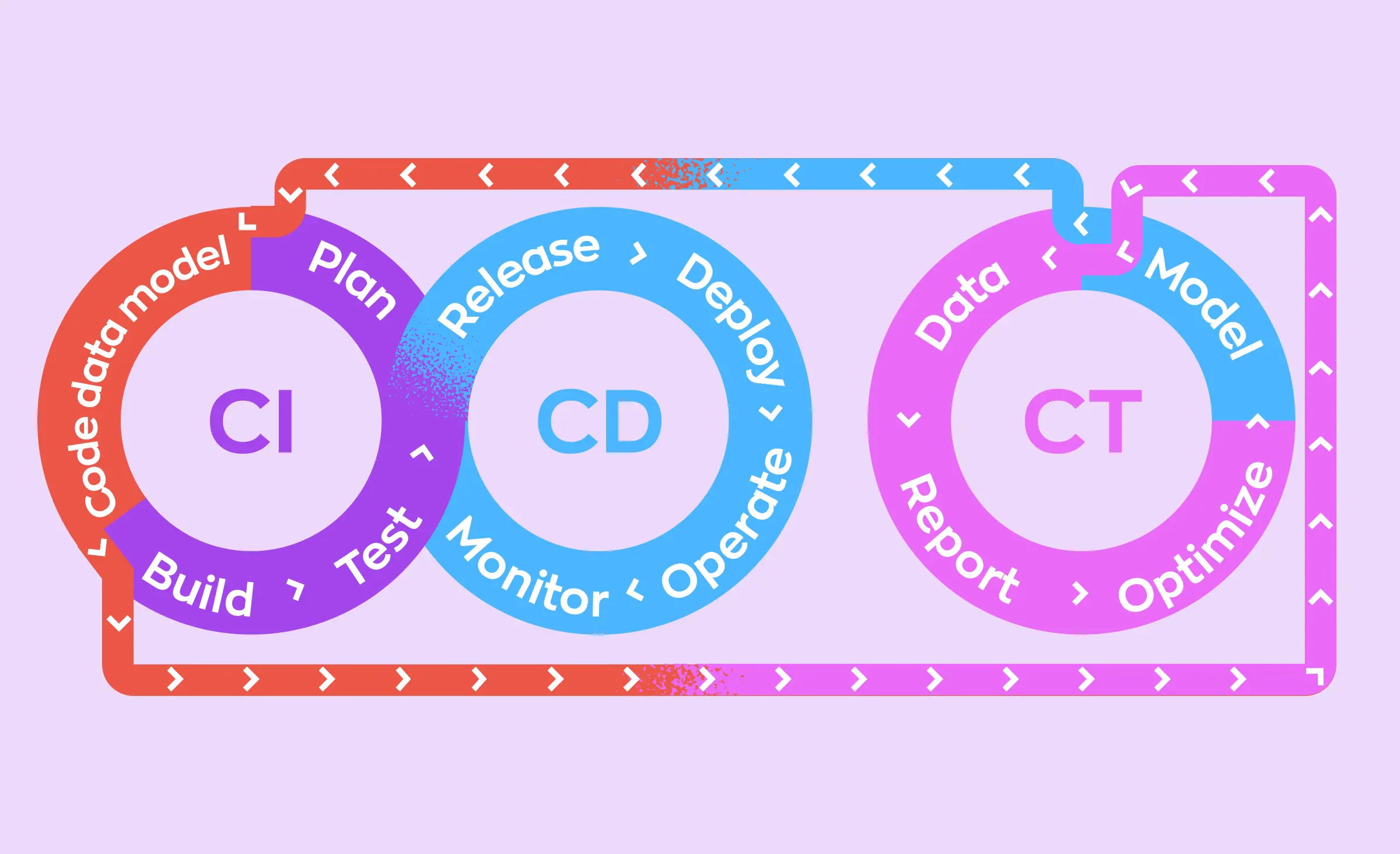
Just like in modern software development, continuous integration and continuous delivery (CI/CD) help to make sure that all changes to code, data, and ML models are automatically tested and safely released to production. Automated testing includes not just code, but also the functionality and model performance of the ML model deployment. Deployment strategies like Blue/Green or Canary allow for safe, incremental rollout of new models without major disruptions.
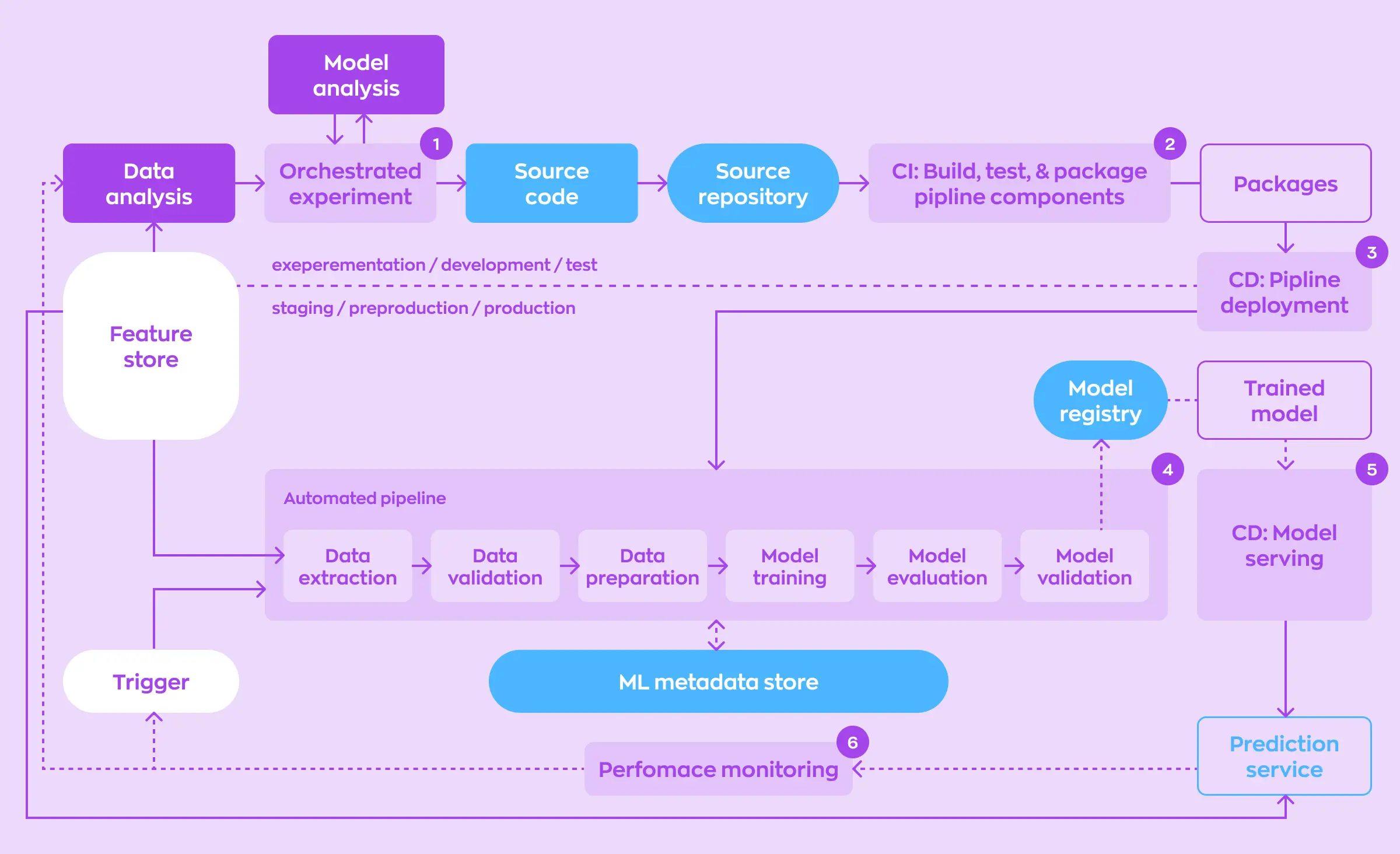
CI/CD automation scheme as explained by Google Deployment and serving
The deployment phase involves making the model available to real users — whether via APIs, batch processes, or edge devices. Modern infrastructure using Docker containers and orchestration systems like Kubernetes support scalable, maintainable model serving. Managing multiple versions of deployed models, optimizing for operational efficiency, and integrating model governance are crucial for success in production environments.
Monitoring and feedback loops
Continuous monitoring is vital for sustainable AI products and is a major pillar of modern ML operations. This includes not only tracking model performance (accuracy, latency), but also monitoring data for drift or bias, and observing business metrics impacted by the model. MLOps tools empower organizations to automate alerts and retraining processes, creating closed feedback loops for ongoing model improvement. Effective ML monitoring helps to detect issues early, and allows retraining with new data to keep models up to date.
With a solid understanding of each MLOps pipeline stage, the next step is selecting the right tools and technologies to streamline and automate every part of the workflow. In the following section, we'll explore the key components of the MLOps ecosystem and how they support each phase of the journey.
MLOps ecosystem: Overview of key tools
Selecting the right tools and platforms is fundamental for implementing a robust MLOps process. As the MLOps landscape grows, a wide variety of solutions have emerged to help businesses speed up every stage of the machine learning lifecycle.
Categories of MLOps tools
- Experiment platforms: Tools such as MLflow and Weights & Biases allow teams to track experiments, log model parameters, monitor metrics, and compare model performance efficiently. This supports reproducibility and speeds up the development of scalable ML models.
- Data management tools: Solutions like DVC empower teams to version datasets, track changes, and collaborate effectively, ensuring consistent data for model training and validation. Strong data governance is essential for every MLOps pipeline.
- CI/CD tools: Modern CI/CD platforms — including Jenkins, GitLab CI, and GitHub Actions — automate both the integration and deployment phases for code and models. These tools provide the repeatable and secure release of both AI and traditional software solutions.
- Orchestration platforms: With tools like Kubeflow and Airflow, teams can orchestrate complex ML workflows and manage dependencies across training, validation, and deployment steps, improving operational efficiency.
- Cloud services: Leading cloud providers such as AWS MLOps (SageMaker), Google AI Platform, and Azure ML deliver end-to-end MLOps platforms that support scalable model management, automated deployment, and integrated monitoring.
- Monitoring tools: Solutions like Prometheus, Grafana, and specialized MLOps tools help track model health, detect data drift, and trigger alerts, contributing to responsible and sustainable AI operations.
By using these tools, organizations can speed up their AI development initiatives, provide responsible AI practices, and reduce integration friction between teams and technologies. While a strong MLOps toolkit is essential, true success requires more than just technology — it takes strategic planning, standardized processes, and the right mindset. In the next section, we'll review industry best practices for MLOps implementation and the most common challenges teams may face along the way.
MLOps implementation: Best practices and overcoming challenges
Building a successful MLOps practice goes beyond selecting the right tools — it also requires clear strategies, practical workflows, and strong cross-team collaboration. With a thoughtful approach to MLOps, organizations can provide seamless model deployment, efficient model management, and robust AI operations that stand the test of time. Yet, as teams grow in their adoption of MLOps, they often face unique challenges that can impact operational efficiency and scalability.
Best practices for implementing MLOps
To maximize business value and achieve operational excellence, it's important to.
- Start small and scale up: Successful implementation often begins with manageable pilot projects. Laying this groundwork allows teams to establish reliable workflows, before scaling up to an organization-wide MLOps solution.
- Automate wherever possible: Automation is at the core of a high-functioning MLOps pipeline. By automating data acquisition, model training, deployment, and continuous monitoring, teams reduce manual bottlenecks and provide repeatability in their AI development and deployment cycles.
- Build cross-functional teams: Bringing together skills from data scientists, ML engineers, software engineers, and DevOps helps to reach powerful synergies. These multidisciplinary teams foster better communication and align all aspects of the ML workflow.
- Focus on data quality: No AI system can outperform the quality of its data. Emphasizing strong data management, validation, and governance practices help ML models to operate on consistent, reliable data, ultimately boosting model performance.
- Standardize and document processes: Clear documentation and standardized processes empower teams to reproduce results, meet regulatory requirements, and speed up onboarding of new members. This also supports efficient model governance and long-term sustainability.
By embracing these practices, organizations lay the groundwork for responsible and scalable AI solutions that can continuously adapt to changing business needs.



Common challenges when adopting MLOps
However, implementing MLOps is not without its difficulties. Teams may encounter several common hurdles during their journey.
- Tool integration complexity: Combining various MLOps tools, platforms, and technologies can create integration headaches and fragmented workflows if not managed thoughtfully.
- Lack of specialized skills: MLOps spans multiple domains, requiring know-how in both machine learning and software engineering. A shortage of talent experienced in MLOps services and responsible AI can slow progress.
- Cultural barriers: Breaking down barriers between data and IT teams is critical, as a successful MLOps workflow hinges on open communication and shared responsibility.
- Rapid technological changes: The pace of innovation in MLOps means teams must remain agile, always adapting to new tools, platforms, and industry best practices.
Identifying and proactively addressing these challenges helps organizations stay ahead of the curve and maximize the value extracted from their AI investments. Overcoming these obstacles requires not only the right technology but also leadership, strategy, and expertise.
With these practices and challenges in mind, many businesses turn to trusted partners for guidance in implementing MLOps effectively. Ronas IT can support your organization with tailored MLOps consulting services and solutions that deliver real-world results.
The future of AI in production: The role of MLOps
As machine learning continues to evolve and generative AI unlocks new possibilities, organizations must go beyond experimentation to achieve true business value in production. MLOps stands at the core of this transformation, acting as the foundation for reliable, scalable, and sustainable solutions.
Implementing an end-to-end MLOps framework empowers businesses to manage their data, streamline ML workflows, provide effective model deployment, and maintain robust model performance in the real world. From automated model training to responsible model governance, MLOps services help modern enterprises to improve release cycles, minimize risks, and maximize the impact of each ML model.
Most importantly, companies with a mature MLOps process enjoy a significant competitive edge — achieving operational efficiency, regulatory compliance, and high standards for responsible AI.
If you are ready to bring your AI prototypes into the hands of real users, future-proof your AI products, and unlock the full power of your data, now is the time to embrace MLOps.
Reach out to Ronas IT to discuss your unique challenges and aspirations. Fill out a short form below.
Related posts












Related Services


Development
React Native App Development Services


Development
MVP Development Services


Development