Mobile payments and remittances in MENA: Designing user-centric solutions for a cash-heavy region

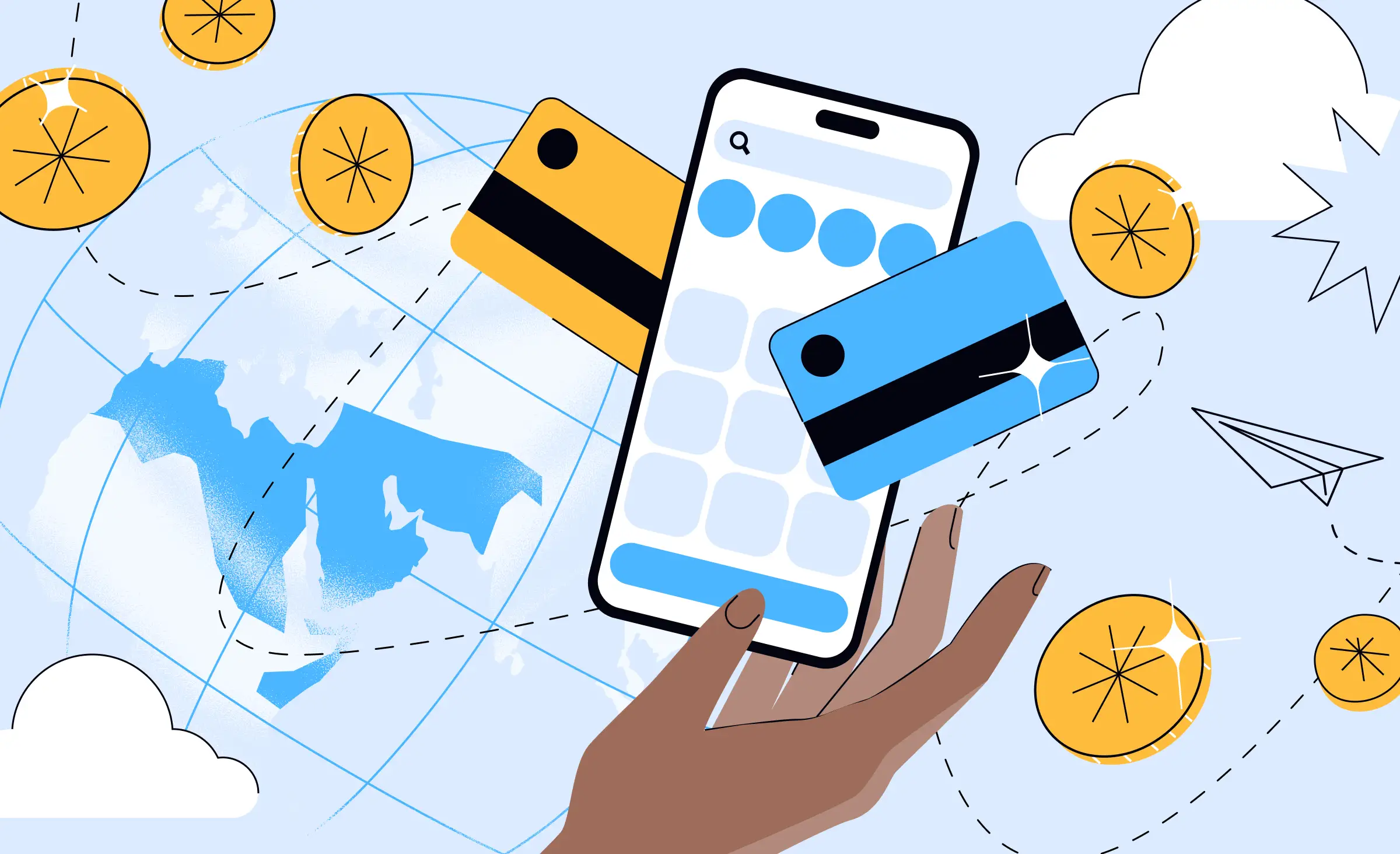
Just a few years ago, many considered the MENA region heavily reliant on physical currency and cash as the dominant payment method. Today, online shopping is a booming trend, and the demand for convenient digital payment solutions as an alternative to cash is growing exponentially. This transformation opens huge opportunities for new FinTech startups and ignites the growth of mobile payments in MENA.
In this article, we discuss the user preferences and unique characteristics that shape the market for mobile payments in MENA. We also enumerate the essential features startups should consider during custom software development when creating their own digital payment products for the MENA market.
The MENA landscape: potential and obstacles
Several factors shape the mobile payments in MENA and remittance landscape, presenting both valuable opportunities and unique challenges that startups must consider when developing their products.
A unique context
Mobile payments in MENA offer a dynamic environment for digital innovation, driven by several key factors. We see widespread smartphone penetration across the region; countries like the UAE boast over 90% in mobile internet penetration, and Saudi Arabia isn't far behind. This means a vast majority of consumers already carry the primary device and the required internet connection needed for mobile payment solutions, which provides a strong foundation for digital payment growth.
Adding to this, the region has a remarkably young population. In some Middle Eastern countries, 60% of people are under 30. These young MENA consumers are digital natives. They expect advanced technology and quickly adopt new tools, driving demand for convenient digital payment methods. This fuels the expansion of mobile payments in MENA. This trend is clearly demonstrated by the digital payment adoption statistics in Saudi Arabia.

A significant migrant workforce also calls MENA home. Millions of expatriate workers live and work here, regularly sending crucial remittances back to their families. This underscores the importance of adopting mobile payments in MENA. These cross-border payments require fast, affordable, and easy payment options, making mobile remittance services a critical need.
To accelerate this transition, governments across the region actively promote digital transformation within financial services. Such initiatives directly foster the growth of mobile payments in MENA. For example, Saudi Vision 2030, a strategic framework launched by the Kingdom of Saudi Arabia in 2016, aims to reduce the country's dependence on oil, diversify its economy, and develop public service sectors.
A core part of Saudi Vision 2030 places a huge emphasis on digital transformation across all sectors, including finance, with a goal to develop a robust digital infrastructure. A key objective of this vision is to reduce cash transactions and move towards a cashless society by promoting the adoption of digital payment methods, mobile payments, and digital wallets. These strategies provide a fertile ground for the growing number of mobile payments in MENA. Similarly, the UAE's national strategies also push for a digital economy, fostering an environment where FinTech can thrive.
Key challenges
Developing user-centric mobile payment solutions for mobile payments in MENA isn't without its hurdles; therefore, developers who create fintech applications need to take the following things into account:
- Building trust in digital finance: Many consumers still prefer cash due to a lack of familiarity with digital payments or concerns about security. Payment providers must work hard to establish confidence in new payment systems and technologies.
- Cultural nuances and language diversity: MENA is incredibly diverse. Different countries have distinct cultural practices and various Arabic dialects. A successful mobile app must offer localized experiences, from language and user interface to specific payment trends and local customs.
- Fragmented regulation: Each country has its own regulatory framework for financial services and digital payments. This makes it complex for FinTech clients to scale their cross-border payments or digital payment solutions across the entire region. This highlights a hurdle for ventures in the field of mobile payments in MENA.
- Varying financial literacy: Some segments of the population, particularly in rural areas or older demographics, may have lower financial literacy. They might not fully understand how a digital wallet or online payment works, requiring an intuitive design and clear educational support.
- Security and data protection concerns: Consumers are increasingly aware of data privacy and fraud risks. Any digital payment solution needs robust security features to protect user information and transaction integrity.
Why is there much space for fintech startups in MENA?
The region presents a compelling landscape for digital innovation, offering significant opportunities for entrepreneurs. Millions in MENA lack a traditional bank account or have limited access to financial services, creating a vast, untapped market for financial inclusion. Adoption of mobile payments in MENA offers a direct path to bring these underserved populations into the formal financial system.
Governments actively support this shift; their ongoing push for digitalization and a cashless society creates a fertile environment for FinTech companies, often including regulatory sandboxes and incentives for innovative payment providers.
Beyond government backing, the region boasts a thriving FinTech infrastructure. We see rapid growth in specialized payment gateways and platforms like Amazon Payment Services, while local leaders such as STC Pay in Saudi Arabia and Fawry Cash in Egypt provide accessible payment options to millions. The rise of digital wallets and mobile wallets is transforming how MENA consumers manage their money. This signals a new era in the development of mobile payments in MENA.

Finally, there's a clear demand for convenience and speed. Young, tech-savvy consumers actively seek easy, fast, and secure ways to conduct transactions. They look for payment solutions like Google Pay, Samsung Pay, and other digital wallets offering contactless payments and quick online payment processes. Emerging alternative payment methods, such as A2A payments and direct carrier billing, also meet this demand for simplicity.
For teams planning to launch a FinTech product in MENA, this robust ecosystem and consumer demand mean a unique opportunity. You can address a genuine market need for financial inclusion while benefiting from a supportive regulatory environment and a growing digital infrastructure. Focus your payment solutions on offering intuitive, secure, and localized mobile payment solutions that cater to diverse MENA consumers, whether they're looking for simple payment methods, efficient cross-border payments, or a comprehensive digital wallet experience. This makes mobile payments in MENA a fruitful area for new ventures.
Designing user-centric solutions for MENA
To succeed, the products in the field of mobile payments in MENA require a user-centric design that respects local nuances and addresses challenges in the region's shift from cash to digital. Both startups and established players should keep these core principles in mind when serving MENA consumers.
Localization and cultural adaptation
The MENA region is incredibly diverse, with various languages and strong cultural norms. A digital product won't gain trust or widespread adoption if it doesn't feel native to its users. Ignoring cultural preferences or failing to offer proper language support immediately creates a barrier.
Product developers must provide support for Arabic, including a proper right-to-left (RTL) user interface. They should adapt UI/UX elements, from iconography and imagery to color schemes, to align with local cultural preferences and expectations. This goes beyond simple translation; it's about cultural resonance. Successful local digital wallets like STC Pay in Saudi Arabia or Fawry Cash in Egypt deeply embed local language and cultural context, which is key to their strong market position.

Simplicity and intuitiveness
Many consumers in MENA are relatively new to digital payments or have varying levels of digital literacy. Complex applications with steep learning curves will deter them, pushing them back to familiar cash transactions. Simplicity builds confidence and speeds up adoption.
Developers should design for clarity, aiming for minimal steps to complete a transaction or access a service. They must prioritize clean interfaces, clear instructions, and intuitive navigation. Users should feel comfortable and empowered, not overwhelmed. The ease of use found in global payment solutions like Google Pay and Samsung Pay also sets a high standard for streamlined mobile payment experiences.

Security and data protection
Like in other regions, consumers in MENA place great importance on the security of financial products. Organizations failing to comply with security standards risk severe penalties, damage to their reputation, and possible legal consequences. This is particularly critical for digital and mobile payment services. Providing this security is vital for enabling mobile payments in MENA. The regulatory environment across MENA countries varies considerably, with some having established formal FinTech regulatory frameworks while others are still developing their policies.
It is essential for developers to embed security and transparency into their payment solutions right from the start. Compliance with the regulatory requirements for payment systems must be ensured for every market they serve, going beyond just meeting the minimum standards.
Key security aspects for FinTech in any MENA country include:
- Licensing and regulation: FinTech firms operating in MENA must obtain licenses from the appropriate regulatory bodies unique to each country. Examples include the Dubai Financial Services Authority (DFSA) in Dubai, the Saudi Central Bank (SAMA) in Saudi Arabia, and the Central Bank of Bahrain. These authorities make sure that companies comply with legal frameworks covering payment services and mobile transactions.
- Protecting data and privacy: Safeguarding customer information is a key responsibility for FinTech companies. Regional data protection laws mandate that personal data be securely managed and only used for the purposes it was collected for, which is vital for digital wallets and mobile apps handling sensitive information.
- Anti-money laundering (AML) and customer verification (KYC): Compliance with AML and KYC is crucial to prevent illicit financial activities. This includes thorough customer identity verification and ongoing monitoring of transactions to flag suspicious behavior. Strict adherence to these regulations helps build consumer trust and supports broader financial inclusion initiatives within the digital economy.

Inclusivity
A significant portion of the MENA population remains unbanked or underbanked, lacking access to traditional financial services or a bank account. To truly drive financial inclusion, mobile payment solutions must cater to these individuals, providing accessible alternatives. This push for mobile payments in MENA aligns with broader efforts for inclusivity.
Developers should design features that lower the barrier to entry, allowing onboarding without a traditional bank account where possible, or offering alternative payment methods. The goal is to create pathways for everyone to participate in the digital economy.
Fawry Cash in Egypt is a prime example of inclusivity. It allows users to pay bills and conduct various digital payment services through a vast network of retail outlets where they can use cash. This bridges the gap for those without traditional banking access. A successful neobank app could also promote financial inclusion by helping users build their credit scores, allowing them to access services like credit cards even with a limited credit history, and opening up new payment options.

Omnichannel approach
The journey from a cash-heavy society to a cashless one is gradual. Solutions that can seamlessly blend online and offline interactions offer flexibility, reduce friction, and cater to existing user habits during this transition. This holistic view is crucial for the development of mobile payments in MENA.
Developers should design payment systems that allow users to move between digital and physical touchpoints without interruption. This means adding functionalities like loading a mobile wallet with cash at an agent, or making online payments for services that traditionally required physical presence.
A well-designed mobile wallet might allow users to load funds using cash at designated agent locations (an offline interaction) and then use those funds for seamless online payments or contactless payments in stores (digital interactions). Similarly, Fawry Cash effectively acts as an omnichannel solution by letting users pay for digital services with cash at physical locations. This hybrid strategy makes the shift to cashless transactions smoother and more appealing for a diverse range of consumers.
Features to elevate your MENA digital payment solution
For mobile payments in MENA and remittances to truly reshape the financial landscape, payment solutions need a robust set of features that address the specific needs of MENA consumers. Here's the list of features that can make the experience in your app extra convenient:
Mobile payments
Next-gen mobile payment solutions offer diverse and flexible ways for consumers to complete transactions, moving beyond traditional credit cards and reliance on cash. These features are particularly vital in a region where smartphone penetration is high, but traditional banking infrastructure may not be uniformly developed.
-QR codes: These simplify payments in stores and for services, especially benefiting small vendors in MENA who may lack card terminals. This technology broadens access to cashless transactions for a wider range of merchants and customers.
-NFC: Near field communication allows fast, contactless payments through modern POS systems, catering to tech-savvy urban users who prefer quick and convenient transactions over cash.
-P2P transfers: Peer-to-peer payment features let users send money directly to friends and family using just a phone number or email. This is especially valuable in MENA's close-knit communities, offering a faster alternative to traditional bank transfers for everyday expenses.
-Bill and service payments: Digital wallets integrate options to pay utilities, top up mobile credits, and handle other essentials directly within the app, providing significant convenience in regions where traditional bill payment is often slow or involves long queues.
Remittances
The MENA region hosts millions of expatriate workers, making efficient and affordable cross-border payments (remittances) a critical lifeline. Next-gen payment solutions are transforming this sector, offering features tailored to this crucial demographic. This transformation directly impacts the adoption of mobile payments in MENA.
- Low fees and high speed: Traditional remittance channels often come with high fees and slow processing times. New payment solutions focus on minimizing costs and enabling real-time payments, ensuring funds reach families quickly and affordably.
- Various payout options: Flexibility is essential, as recipients may have different access to financial services. Modern payment platforms offer multiple ways to receive funds — including direct bank deposits, cash pickups at agents, or mobile wallets like STC Pay or Fawry Cash — making money accessible regardless of local banking infrastructure.
- Transaction tracking: Sending money internationally can be stressful without clear visibility. Real-time transaction tracking through mobile apps gives senders peace of mind and builds trust by allowing them to monitor where their funds are at all times.
Additional services
Beyond core payment functionalities, advanced FinTech platforms are beginning to offer value-added services that further promote financial inclusion and literacy among MENA consumers, addressing the specific needs of unbanked or underbanked populations.
- Micro-financing: Many individuals and small businesses in MENA lack access to formal credit. Solutions can provide small loans or credit facilities to these underserved segments, directly addressing a gap in traditional financial services.
- Financial planning and budgeting tools: Embedded features within digital wallets can help users manage their money more effectively. For a young population new to managing finances, these tools track spending, set budgets, and offer insights into financial habits, which improves overall financial literacy.
- Educational modules: To build confidence and understanding, some platforms include easy-to-understand educational content. These modules help consumers learn about saving, investing, and responsible money management, empowering them to make more informed financial decisions and better utilize new digital payment methods.

Ronas IT expertise in developing solutions for mobile payments
Ronas IT has extensive expertise in developing complex FinTech systems, and over 40% of our portfolio is dedicated to this sector. We also have experience building mobile payment solutions for the MENA region. This background gives us a deep understanding of designing user interfaces tailored to regional markets, as demonstrated by our work on a mobile neobank app for a UAE-based company.

The client approached us to create a modern, intuitive digital wallet tailored for MENA consumers, aiming to transform everyday payments with a robust and seamless digital payment solution.
We began by thoroughly analyzing the client's vision alongside the unique regulatory landscape, understanding that each country has distinct FinTech and personal data laws — for example, money flow in the UAE differs significantly from that in Europe and the US. Our team then designed and developed a React Native app featuring an intuitive UI, comprehensive financial analytics, and an integrated AI assistant to help users quickly access information such as monthly subscription lists.
To ensure security and privacy, we implemented strict KYC processes with multi-factor authentication, supported by a microservice architecture that isolates sensitive data. We also conducted technical evaluations of payment providers to provide seamless integration with local partners. This approach enables us to deliver scalable, secure digital payment solutions that align with user expectations while fully complying with rigorous regional regulations.
Wrapping up
Mobile payments in MENA are evolving rapidly, driven by factors such as high smartphone penetration, a young and tech-savvy population, and strong government initiatives like Saudi Vision 2030. For these payment solutions to succeed, they must be deeply user-centric, with careful localization and cultural adaptation to ensure simplicity and intuitiveness across diverse levels of digital literacy.
Additionally, any digital payment solution must strictly comply with the complex security regulations across different countries, requiring a thorough understanding of local licensing, data protection, and AML/KYC requirements for every transaction. This is a critical aspect for startups willing to develop in the field of mobile payments in MENA.
To build a truly groundbreaking payment solution in MENA — one that is intuitive, secure, scalable, and culturally relevant, while facilitating seamless online and cross-border payments — you need a leading fintech company by your side. A knowledgeable provider understands the nuances of payment system development, regional regulations, and the unique needs of MENA consumers, ensuring your FinTech product not only launches successfully but thrives in this dynamic market. If you are looking for such a partner, don't hesitate to contact us.
Related posts









Related Services


Development
React Native App Development Services

Development
MVP Development Services


Development