Software outsourcing companies: 10 to compare and how to choose one


A software outsourcing company designs, builds, and maintains software for you under contract. It can run a project with an agreed scope, set up a team that works only on your product, or add developers who work under your own managers. The ten companies below are based in nine countries and sell custom software development: Ronas IT, Azumo, OAK'S LAB, Radity, *instinctools, Brocoders, Accedia, Newwave Solutions, Rocket Code, and IIH Global. Base your choice on answers you can verify: an estimate that lists its assumptions, someone technical on the first call, and past clients you can phone.
We put Ronas IT first because this is our blog. The others are in no ranking order. We left out review scores: they change over time, and the place to read them is each company's profile on Clutch or GoodFirms.
What are software outsourcing companies?
A business hires an outsourcing company for the product work it does not staff in-house: analysis, design, development, testing, release, and support after launch. This work is usually sold in one of three commercial shapes, and the shape decides who manages the work from day to day.

- Project delivery: the company owns the plan, the team, and the result for an agreed scope. You approve deliverables instead of managing people.
- Dedicated team: the company puts together a team that works only on your product, month by month, usually with its own project manager.
- Staff augmentation: also called outstaffing. Individual developers join your team and take tasks from your managers, so delivery stays your job.
Staff augmentation can work if you already have a tech lead and a working process. If nobody on your side wants to run delivery, project delivery is the better match, so ask each company which shape it sells by default. Our guide to the outsourcing contract and the first 90 days explains when each shape fits and who carries the risk in each.
10 software outsourcing companies to compare
The facts in the table come from each company's own website: where it is based, when it was founded, how many people it lists, and how it sells its work.
| Company | Based in | Founded | Team size | How it sells work |
|---|---|---|---|---|
| Ronas IT | Tallinn, Estonia (legal address); a distributed team | 2007 | 60+ specialists | Project delivery; a dedicated team on request, including one that joins your process |
| Azumo | San Francisco, US | 2016 | Not published | Dedicated team, staff augmentation, or a full project build |
| OAK'S LAB | Prague, Czech Republic | 2016 | 85+ team members | A complete product team, or roles embedded in your team |
| Radity | Zurich, Switzerland | 2008 | 75+ engineers, designers, and technologists | Software engineering, staff augmentation, and ready-to-use solutions |
| *instinctools | Stuttgart, Germany, and Potomac, US | 2000 | 400+ in-house experts | Dedicated team by default; staff augmentation, managed capacity, offshore development center |
| Brocoders | Tallinn, Estonia | 2014 | 87 specialists | Senior engineering pods (teams of senior engineers) and fixed-scope software audits |
| Accedia | Sofia, Bulgaria | 2012 | 250+ in-house engineers | Product teams that own delivery, staff augmentation, and consulting |
| Newwave Solutions | Hanoi, Vietnam | 2011 | 300+ experts | Dedicated teams, individual developers, and full project delivery |
| Rocket Code | Mexico City, Mexico | 2016 | 190+ engineers | Custom development projects and staffing |
| IIH Global | Rickmansworth, UK | 2013 | 100+ developers | Dedicated developers and teams |
1. Ronas IT
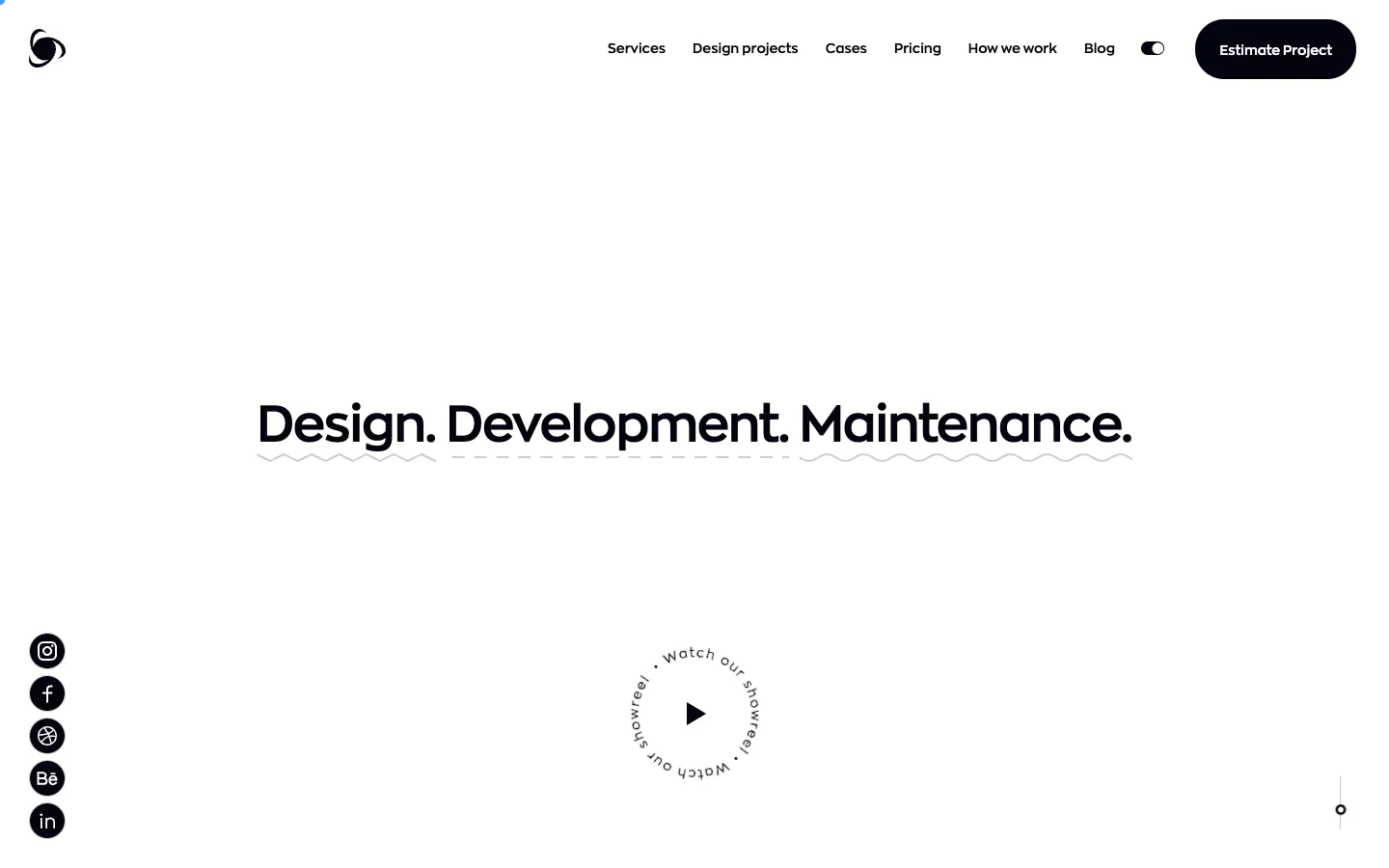
We design and build web and mobile apps, from the first estimate to support after launch, and we also run MVP builds for startups and DevOps work. By default we work as a managed delivery team: a project manager and a tech lead own the plan, the same team stays from the first day to release, and you approve what gets built. Every project starts from a written kickoff plan that covers goals, users, features, stack, milestones, and risks. Our engineers work with AI agents at every stage of our delivery, from analysis and design through coding, testing and release; they set the agents' tasks and accept what the agents produce.
Worth a call if: you want one team to own a web or mobile product and report to you every week.
2. Azumo
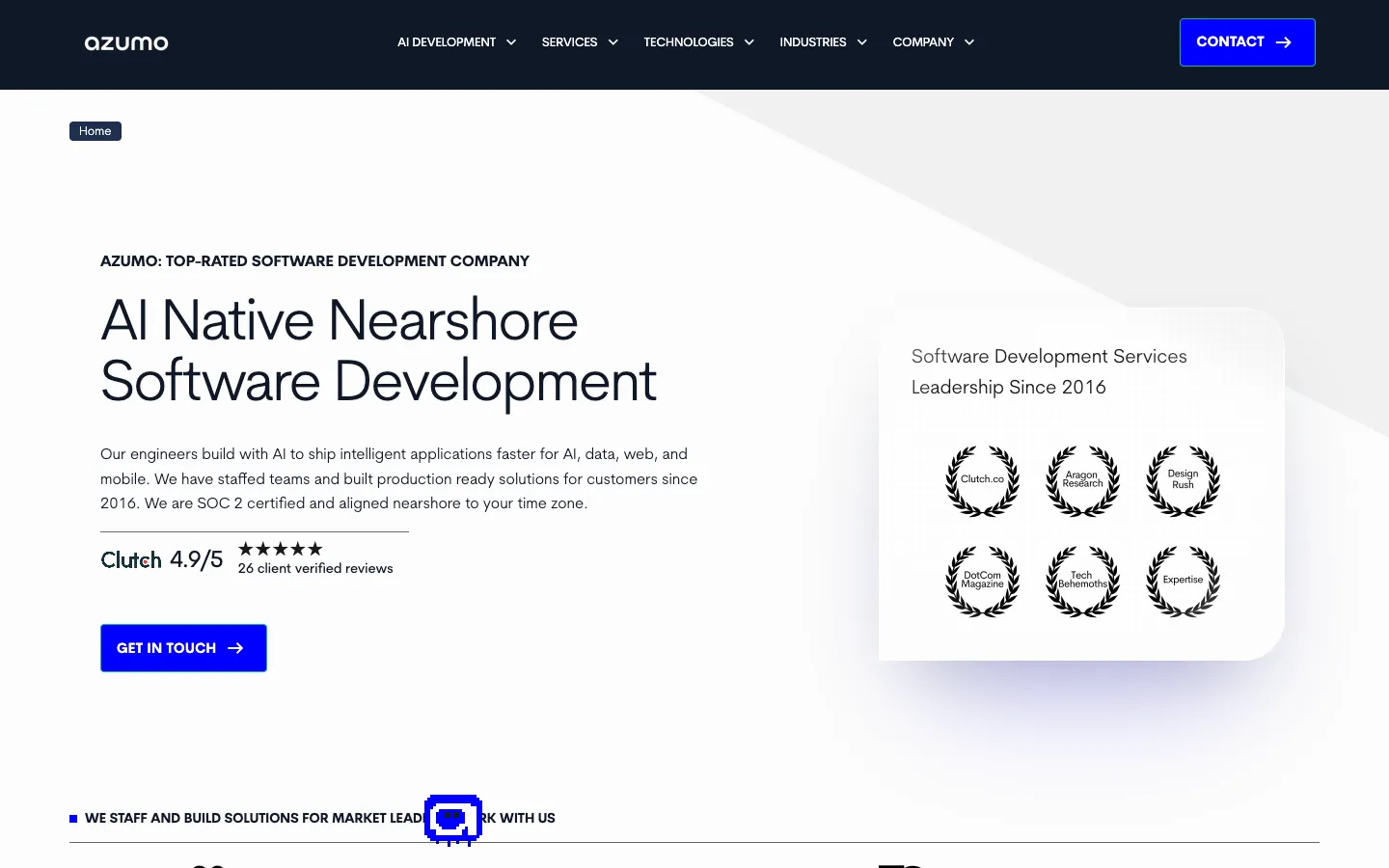
Azumo is headquartered in San Francisco, and its site says many of its developers live in Argentina. It focuses on AI development, custom software, data engineering, and mobile apps, and it lets the client pick between a dedicated team, staff augmentation, and a full project build.
Worth a call if: a US-headquartered company with a nearshore team suits your AI or data work.
3. OAK'S LAB
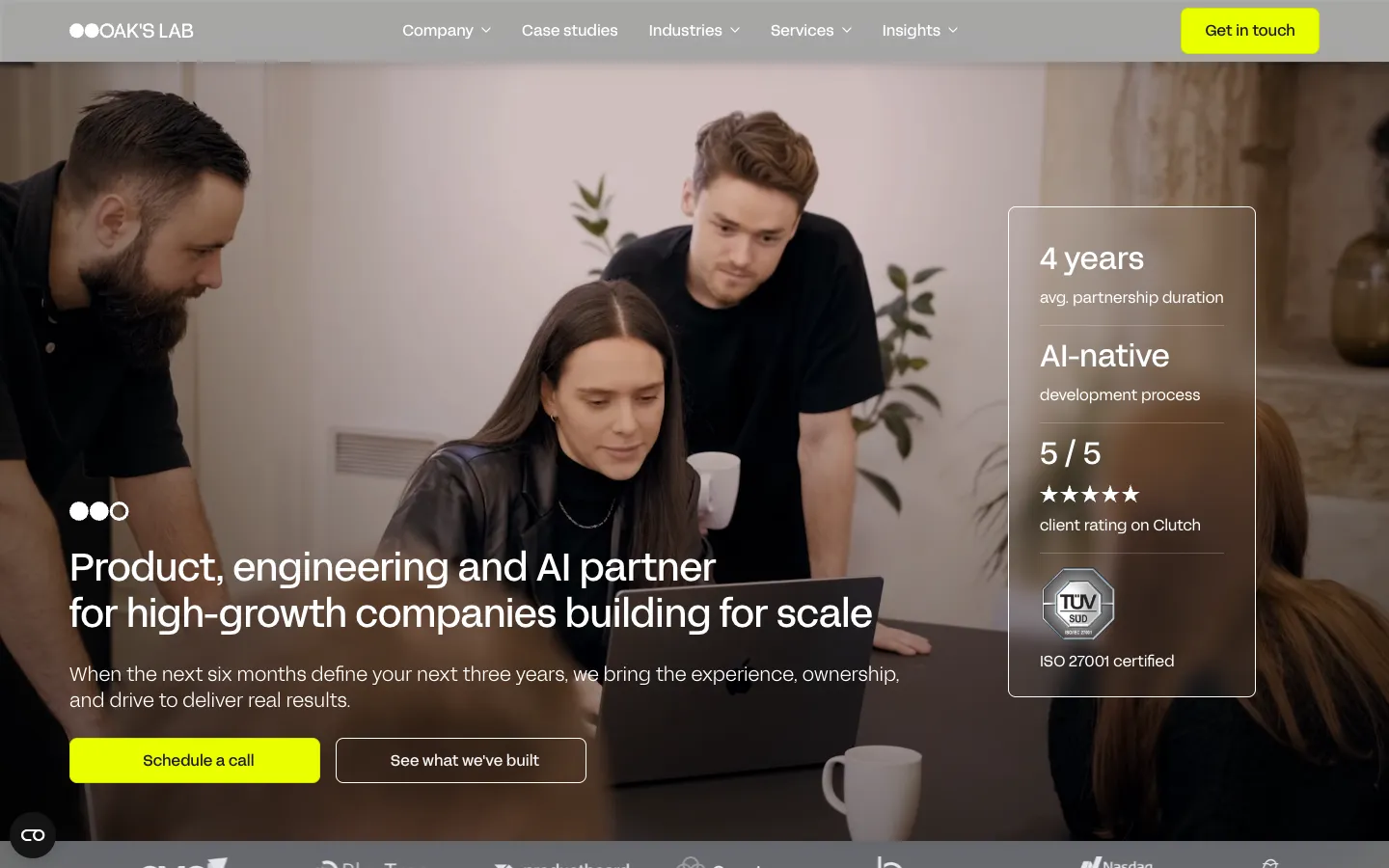
OAK'S LAB was founded in 2016 and calls itself an American company based in Prague. Its work covers three areas: product discovery, custom development with React and Node.js, and AI agent systems. It either deploys a complete team of engineers, QA, designers, and project managers, or places specific roles inside your product team.
Worth a call if: one team should run both discovery and the build on a JavaScript stack.
4. Radity
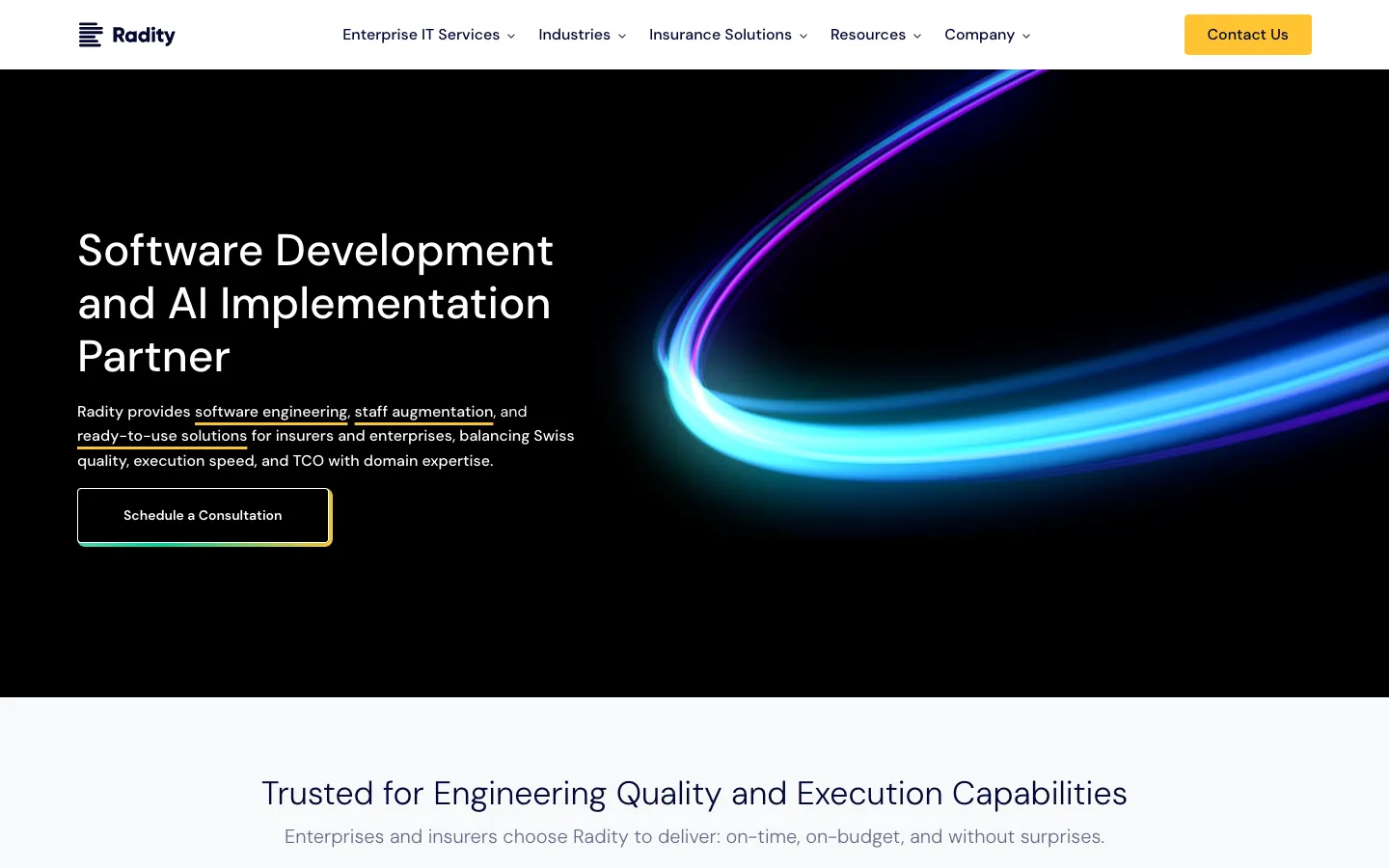
Radity is a Swiss company based in Zurich that works for insurers and enterprises. Its services cover software engineering and quality, cloud infrastructure, legacy system modernization, data migration, and AI automation.
Worth a call if: the insurance or enterprise systems you run need modernizing or migrating.
5. *instinctools
*instinctools has its EU headquarters in Stuttgart and its US headquarters in Potomac, Maryland, with development centers in Poland, India, Kazakhstan, and Latin America. It works across AI, data engineering, product engineering, and legacy modernization, and a dedicated team is its default model.
Worth a call if: your company is large and needs steady capacity across several technical areas at once.
6. Brocoders
Brocoders is an Estonian company from Tallinn that now positions itself around application modernization. Its services include taking over and rescuing existing projects, software audits, and MVP and SaaS development.
Worth a call if: the previous team on your product has left, or the code needs an audit before you invest more.
7. Accedia
Accedia is headquartered in Sofia and works on application development, AI, data analytics, cloud engineering, and quality assurance. It offers a cross-functional product team that owns delivery end to end, as well as staff augmentation and consulting.
Worth a call if: an EU-based team should own delivery across apps, data, and cloud.
8. Newwave Solutions
Newwave Solutions lists offices in Vietnam, Japan, and Korea, with its Vietnam office in Hanoi. It sells offshore software development, from individual developers and dedicated teams to complete project delivery, and its services include web apps, blockchain, and QA.
Worth a call if: your project needs a large offshore team in Southeast Asia that can grow with it.
9. Rocket Code
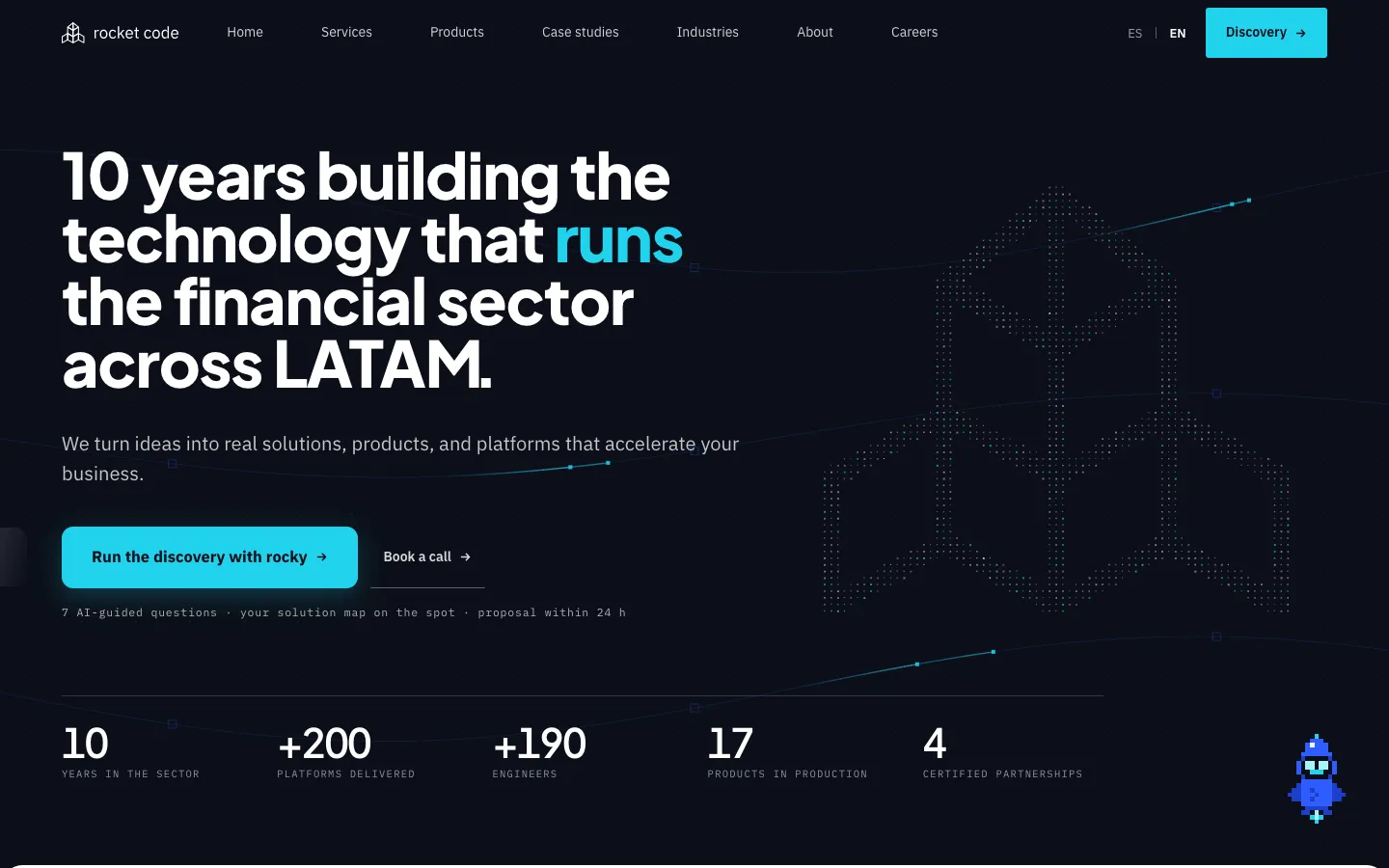
Rocket Code is based in Mexico City. It started in 2016 as Ali-Digital Solutions and took its current name in 2021. Today it presents itself as an AI company for financial services, working with insurers, banks, and investment firms in Latin America, and it also offers custom development and staffing.
Worth a call if: AI work is planned at your financial company in Latin America.
10. IIH Global
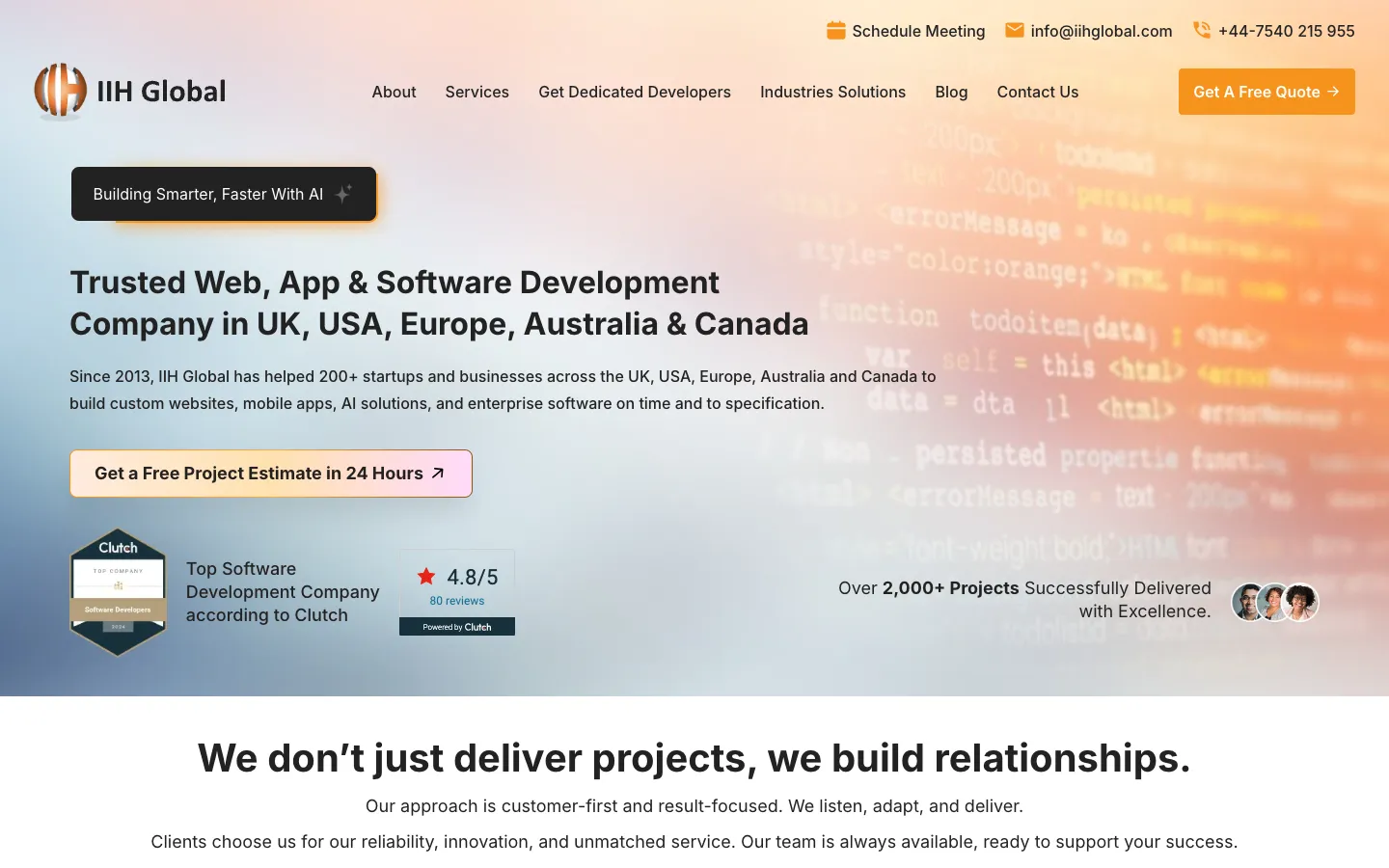
IIH Global is headquartered in Rickmansworth, UK, and lists addresses in the US, Germany, and Ahmedabad, India. It builds web and mobile apps, AI features, and e-commerce and CRM systems, and it sells dedicated developers and teams.
Worth a call if: you want to extend your own team with dedicated developers.
How to choose the best software outsourcing company for your project
Eight questions cover most of what you need to know before you sign, and each one has an answer you can confirm with a document, a demo, or a phone call. Ask every company on your shortlist the same questions, in writing where you can, so you can compare the answers side by side.

1. Will someone technical be on the first call?
Ask who from the delivery side joins the first call and whether they can discuss your technical risks. On technical projects, our CEO, who is an engineer, joins the first call.
“A good first-call question for any vendor is how one change gets from a developer to production: who reviews it, what tests run, who approves the release. A team with a real process answers that from memory, with details. A team without one starts talking about its values and its culture.”
Evgeny Leonov, CTO at Ronas IT
2. What does the estimate assume?
The total in an estimate depends on what it assumes. Ask for the proposed stack, the team composition, and the third-party services in writing, next to the total. Our estimates list those on a separate page, so you can see what changes the total if an assumption changes. A single total with no conditions tells you what the company wants to charge, not what your project costs. Our article on how software estimates are built shows what a complete one contains.
3. Whose cloud account will the product run in?
Find out whose cloud account will run the product in production; it should be yours. At Ronas IT, production runs in the client's own cloud account, and the repositories sit in the client's organization by default. If a company proposes to keep the code on its side, have the full transfer written into the contract.
4. How often will you see work in progress?
Ask what you will be able to open at the end of each sprint. In our usual flow, a sprint lasts one to three weeks, and at its end you can open the result yourself: an updated dev server, a screen ready for testing, or new designs. A company that plans to show results only at the end of a phase is asking you to trust its reports until then.
5. How will they report, and how fast will they reply?
Ask how often the team reports, what the report covers, and the reply time it commits to. Our report is weekly and covers what shipped, what you can now use, the risks, and what comes next, and our project managers reply to client messages within 24 hours on business days.
6. Will they put you in touch with past clients?
Ask for the contacts of two past clients, and call them. We share client contacts for this on request. On review platforms, read the full answers behind a review, such as how the client found the company and what the client would change, instead of stopping at the star score.
7. What happens after launch?
Check who maintains the product once it is live and what that includes. Support terms and response times should be written into a support agreement. After launch, our standard setup has production and development environments, automated releases, and monitoring, with security patches as recurring work.
8. How does the team use AI, and who answers for the result?
Several companies on this list sell AI work themselves, so expect every candidate to say it uses AI and ask how. Find out which engineer accepts the work an agent produces, whether agent-written code passes the same tests and review as the rest, and which AI services read your code and documents under whose accounts. The first-call question quoted above applies here too: ask how a change an agent wrote gets to production. If a company says it builds with AI agents but quotes a timeline and a budget that look like manual work, ask what the agents change in its plan. In our team, the engineer who runs an agent owns its result, and every change goes through automated tests and QA agents before people check it. Our guide to choosing a software development company goes through these AI questions in more detail.
How to compare outsourcing proposals and what we charge
Compare proposals on scope, assumptions, timeline, and what each total includes: two totals can be compared only when both assume the same work.
Our prices for each kind of work:
- Basic MVP: from $5,000 for the core features and user flows you need to test the idea with real users, in two weeks or more. It costs the same for a native app, a cross-platform app for iOS and Android, or a web app, and the backend is included.
- Second platform: from 50% of the first, because it reuses the backend and the design system, so a web MVP with a cross-platform app starts at $7,500.
- Complex product: from $20,000 for marketplaces, SaaS, and other products with complex business logic, in eight weeks or more.
- Dedicated development team: from $8,000 per month for two developers working with AI agents and a project manager on part of the time, assigned only to your product. The same team can join your in-house team and work in your process.
Every development price already covers design, project management, testing, and the integrations the product needs. The total depends on the scope, and we name it once we understand the problem the product has to solve.
On our projects, our engineers write the code and tests with AI agents and accept every change.
After launch, we support one app, with its backend and admin panel, from $1,000 per month, and a whole system with several client apps from $2,000; DevOps and hosting start at $200 per month, and the cloud bill is paid to the provider.
What to do next
- Write a one-page brief: the problem, the users, the features you cannot launch without, and the date that matters. Our guide to writing an IT project description has a template.
- Pick three to five companies from the table whose delivery model matches how you want to work.
- Send all of them the same brief and ask for an estimate with its assumptions in writing.
- Book a call with each and ask for a technical person to join it.
- Call two past clients of each finalist.
- Before you sign, go through the contract terms in our guide to the first 90 days.
First published 2024-07-03 by Dmitry Lauretsky, Former COO at Ronas IT. Rewritten by Roman Surikov.