What makes a great technical lead in software development: knowledge and leadership essentials


Imagine starting a custom software development project where the team, despite their best efforts, lacks experienced guidance. Young or inexperienced developers might make fundamental mistakes, struggle to maintain a clear codebase, or find themselves unable to fix critical bugs due to a lack of senior oversight. This situation can quickly lead to delayed progress, a project spiraling into a technical mess, and ultimately, a need for costly third-party intervention. These are some of the common challenges in software development that a strong lead helps mitigate. To prevent such scenarios, every custom software development project demands strong engineering leadership and the clear software development team leadership provided by an experienced technical lead.
This article explores the multifaceted role of a technical lead in custom software development, detailing their essential technical leadership skills and the journey from senior developer to tech lead to ensure project success.
What exactly is a technical lead? Defining the core role
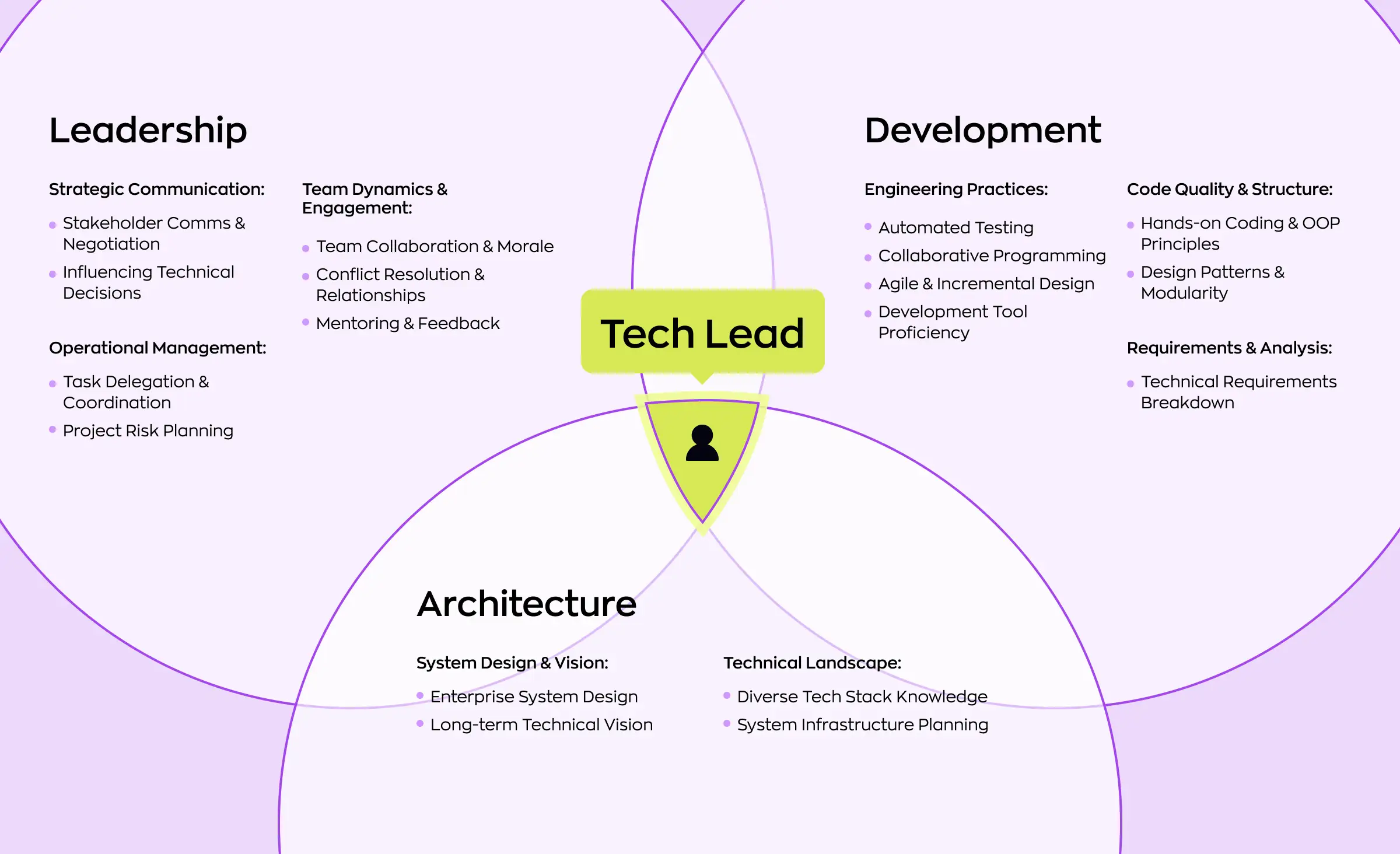
In custom software development, clear roles help projects run smoothly. The role of a technical lead is central to this, connecting the high-level project vision with how we actually build the software. A technical lead is an experienced software engineer who codes, but also guides the technical approach and execution for a development team and a project. This position requires both deep technical knowledge and practical engineering leadership skills.
A technical lead's responsibilities differ from those of other key roles. For example, a project manager focuses on what needs to happen: deadlines, budgets, and project scope. The technical lead focuses on how we build it. They make sure the technical plan is possible, define the specific methods, and guide the team through technical challenges. This makes them a core part of project leadership from a technical standpoint.
A software architect designs the overall system and its high-level components. The technical lead then takes this design and puts it into action. They turn architectural plans into specific tasks, guide the team in detailed implementation, and confirm that the code follows the set architectural standards. Often, they work as the software team lead, ensuring daily technical tasks align with the long-term design. They actively practice software development team leadership by making technical decisions on the spot and solving problems that come up. This unique combination—working as an individual contributor who still codes and a leader responsible for team management in tech — is what makes the technical lead so valuable.
Core technical lead responsibilities
The role of a technical lead means taking on many duties. These technical lead responsibilities include deep technical work and guiding people. A Technical Lead helps the team build solid software, promotes quality, and helps everyone grow. They lead the technical aspects of a project through direct involvement and team guidance. These diverse technical lead responsibilities are key to any development effort.
Technical direction and strategy
Technical Leads set the technical direction for projects. They contribute to the technical strategy, defining standards and practices for the team. A clear technical strategy guides all development efforts. They play a key part in architectural decision-making, choosing technologies, design patterns, and system structures that align with project goals and client needs. This involves crucial architectural decision-making for the project's long-term health.
With their expertise in software architecture, they build a custom software foundation that's robust, scalable, and maintainable. This part of engineering management requires them to think ahead, balancing immediate development needs with long-term system health. Through software development team leadership, they turn strategic visions into concrete technical plans. They make sure the chosen software architecture supports future growth.
Code quality and standards
Code quality management is a core technical lead responsibility. Technical Leads establish coding standards and make sure the team follows them. They implement and promote code review best practices, giving constructive feedback to developers and learning from peer reviews themselves. These code review best practices help maintain high standards.
This process catches bugs, makes code clearer, helps share knowledge, and maintains the quality of the overall software architecture. A Technical Lead creates a culture where developers write clean, efficient, and well-documented2026-01-23 code. This reduces technical debt and helps deliver solutions that perform well, showing their commitment to code quality management.
Team mentorship and development
Beyond technical tasks, a large part of technical lead responsibilities focuses on people. Technical Leads spend time mentoring developers, helping them improve their skills and grow their careers. They provide technical coaching, guiding them on complex problems, design choices, and efficient coding techniques. This direct support helps with developer growth within the team.
They see developer growth as a key part of their role. By sharing knowledge and creating learning opportunities, they strengthen the team's skills. This aspect of software development team leadership builds a skilled workforce ready for future challenges, emphasizing their dedication to mentoring developers.
Project oversight and collaboration
Technical Leads also provide project technical oversight. They make sure development aligns with the project's goals and timelines. They work closely with Project Managers, product owners, and other stakeholders to make sure technical solutions meet business requirements.
Their part in technical project management includes finding potential technical risks, planning how to deal with them, and managing technical dependencies. Effective technical project management helps keep projects on track. They communicate technical progress and challenges to non-technical stakeholders, helping everyone understand each other. This teamwork helps deliver projects efficiently and effectively. Their continuous project technical oversight is vital.
Agile integration
Working within agile frameworks is a common technical lead responsibility. Technical Leads provide agile team leadership, guiding their development teams through sprints, stand-ups, and retrospectives. They help break down complex tasks, estimate effort, and remove technical roadblocks.
Their strong understanding of the codebase and technical processes makes them vital for daily agile operations. They make sure the team follows agile principles and pushes for technical quality. This makes them central to the agile team's ability to deliver value in small steps. This kind of agile team leadership is key to responsive development.
Essential skills for effective technical leadership
When you're looking to hire dedicated development teams or designate a technical lead from your in-house talent, knowing what skills to look for is crucial. Effective leadership in software development requires a specific blend of technical and interpersonal abilities that define strong technical leadership skills. For founders, identifying these qualities helps build a high-performing team. The role of a technical lead is to merge technical depth with team guidance.
What skills should you look for to achieve effective technical leadership? Understanding the ideal characteristics for this key software development role helps you make the right choice. To find or develop an effective technical lead for your team, focus on candidates who demonstrate the following essential technical leadership skills:
Deep technical expertise
Look for a lead with strong software development skills, a deep understanding of software architecture, and the ability for effective coding and leadership. They should make informed decisions, foresee technical problems, and vet the technical choices of others.
To evaluate this ability: Ask candidates to describe past complex system designs they personally contributed to or led. Present them with a challenging architectural problem relevant to your business and ask them to outline their solution, detailing technical trade-offs and potential pitfalls. Also, review their contributions to code quality management in previous projects to see their practical application of technical standards.
Clear communication
Seek out an individual capable of engineering leadership through clear and active communication. They must articulate complex technical ideas to all stakeholders, listen to feedback, and provide constructive guidance, which is key for software development team leadership and preventing misunderstandings.
To evaluate this ability: During interviews, ask them to explain a complex technical concept as if you were a non-technical stakeholder or client. Inquire about specific examples of how they've handled disagreements or communicated challenging news within a team. Pay close attention to their active listening skills when you ask questions or present scenarios.
Decisive problem-solving
Your lead should exhibit strong problem-solving and decision-making abilities, guiding the team through technical hurdles. This involves aspects of technical project management and project leadership, ensuring the project moves forward and addressing their technical lead responsibilities effectively, even under pressure.
To evaluate this ability: Present a detailed hypothetical project roadblock like an unexpected critical bug discovered late in a sprint or a significant technical dependency issue. Ask them to describe their step-by-step process for diagnosing, prioritizing, and resolving it, considering team capacity and project impact. Discuss their experience with difficult architectural decision-making under tight deadlines and how they navigated the consequences.
High emotional intelligence
Effective leading of tech teams requires empathy and skill in conflict resolution in tech. Look for someone who can understand team dynamics, build trust, and foster a positive environment, crucial for successful team management in tech.
To evaluate this ability: Ask behavioral questions about how they've handled past team conflicts or interpersonal issues among developers. Inquire about their methods for motivating a disengaged team member or how they adapted their leadership style to different personalities. Discuss their approach to giving and receiving constructive feedback.
Strategic technical vision
A great technical lead combines immediate development needs with long-term project goals. They define a clear technical strategy and provide project technical oversight, making sure today's technical choices support future scalability and business growth.
To evaluate this ability: Ask how they would approach a greenfield project from a technical perspective, specifically focusing on how they plan for scalability, maintainability, and future features beyond the initial launch. Discuss how they balance short-term sprint goals and immediate tasks with the need to address long-term technical debt and strategic architectural improvements.
Empowering delegation
Choose a leader who excels in leadership in software development by trusting and empowering their team. This skill is vital for building high-performing tech teams, fostering developer growth, and shaping a clear software engineering career path. Look for someone who actively provides technical coaching and helps a senior developer to tech lead their own projects.
To evaluate this ability: Ask about their philosophy and specific past experiences with delegating tasks. Inquire how they identify opportunities for junior or mid-level developers to take on new, more complex responsibilities, and how they provide the necessary support and guidance for this developer career progression. Discuss their experience with mentoring developers and how they apply code review best practices.
The journey: from senior developer to tech lead
For many skilled engineers, moving from a senior individual contributor role to a leadership position is a natural software engineering career path. This transition from senior developer to tech lead marks a significant milestone. It's not just about accumulating more years of experience; it's about shifting focus from purely individual output to guiding and empowering an entire team. This next step in developer career progression signals a readiness to take on broader responsibilities that blend deep technical knowledge with people management.
If you're a senior developer aiming for this role, here are the key steps to take:
Master your craft and show ownership
Before leading others, solidify your own technical foundation. Excel in your current role, demonstrating strong software development skills and a deep understanding of your team's codebase and software architecture. Proactively identify and propose improvements, not just within your assigned tasks but across the project. Show you can contribute to code quality management and implement code review best practices. This consistent, high-level technical contribution is the bedrock for coding and leadership.
Start leading informally
Begin to exhibit emerging technical leadership skills in your daily work. Look for opportunities to mentoring developers less experienced than you, answer their technical questions, and help them debug problems. Offer technical coaching and share your knowledge during team meetings. Show you can simplify complex technical concepts for others. By becoming the go-to person for technical guidance, you naturally position yourself for the role of a technical lead. This also helps drive developer growth across the team.
Embrace the mindset shift from individual contributor
The biggest change on the software engineering career path from senior developer to tech lead is your mindset. You must move from solving problems yourself to enabling others to solve problems. This means trusting your team, delegating effectively, and finding satisfaction in the team's collective accomplishments rather than just your own code output. Practice stepping back and guiding rather than simply doing the work. This shift is fundamental to effective leadership in software development.
Develop your people and communication skills
As a technical lead, your responsibilities extend beyond code. Work on your communication skills to articulate technical decisions clearly to both developers and non-technical stakeholders. Learn how to provide constructive feedback and practice active listening. Understand team dynamics and learn to navigate conflict resolution in tech. These skills are vital for effective team management in tech and fostering a positive and productive environment for team development.
Prepare for and overcome tech lead challenges
Understand that this transition brings its own tech lead challenges. You'll juggle hands-on coding with new duties like planning, mentorship, and project oversight. Time management will become critical, and you'll face new types of problems, including technical disagreements and interpersonal issues. Actively seek advice from existing technical leads or engineering managers, and view these early hurdles as part of your developer career progression and learning journey. Overcoming these tech lead challenges strengthens your technical leadership skills and confirms your readiness for the role.
The impact of a great technical lead on custom software development
At Ronas IT, we've specialized in custom software development for over 19 years. One of the keys to delivering high-quality projects and robust solutions is that we include a technical lead in every project team for expert technical supervision and leadership in software development. This approach ensures that every project benefits from hands-on engineering leadership and a clear technical strategy. A strong role of a technical lead means better project efficiency, reduced technical debt, and ultimately, higher quality deliverables that align perfectly with business objectives and client needs.
The role of a technical lead is crucial for delivering custom software that truly makes an impact. They don't just oversee; they actively guide the software development team leadership, making sure the technical solution evolves to meet specific requirements. This direct involvement shapes not only the project's technical foundation but also the long-term maintainability and scalability of the software. Their contribution helps transform complex ideas into practical, high-performing applications.
Project example: web platform for analyzing lab test results
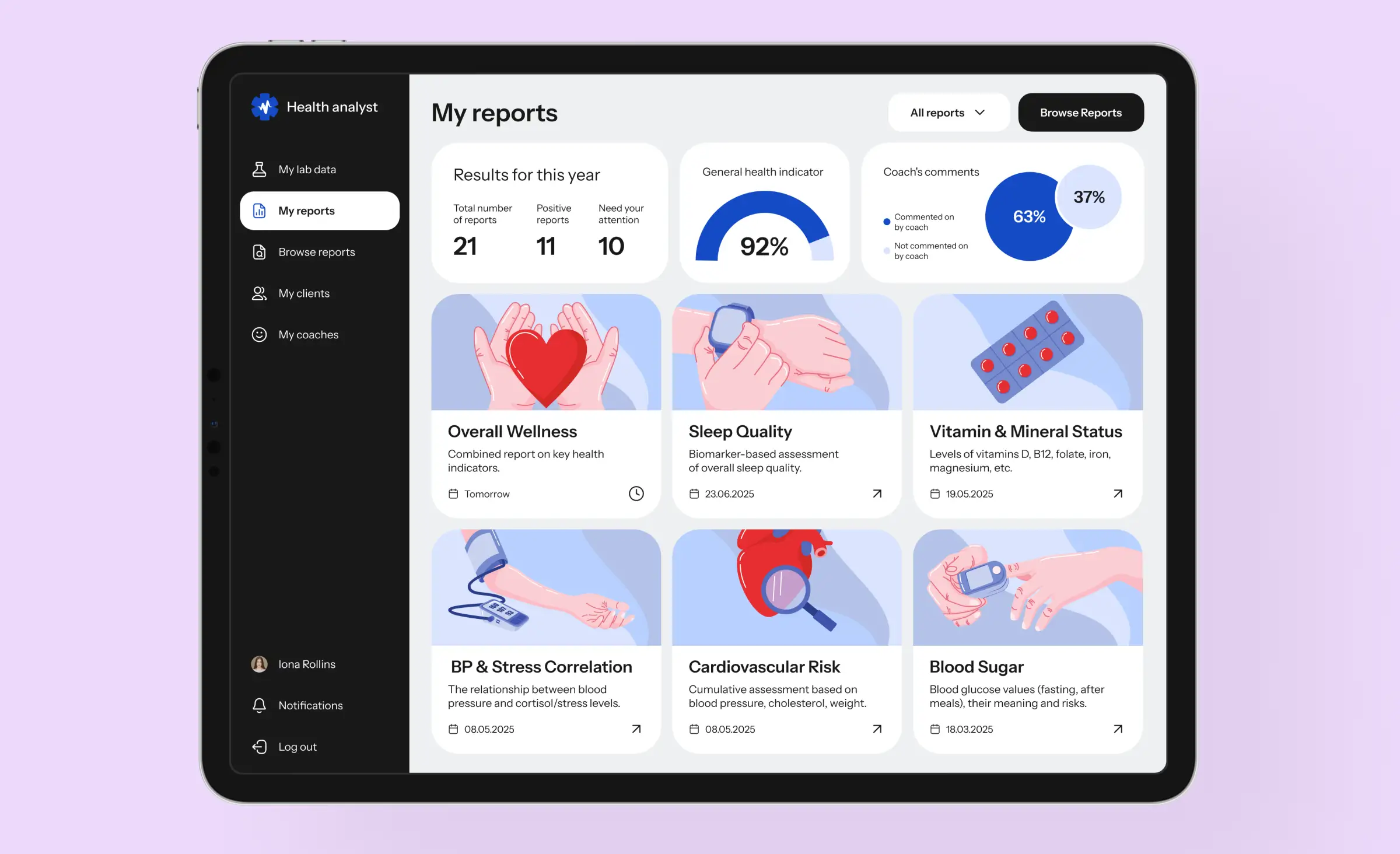
We partnered with a client to create a HIPAA-compliant healthcare web platform. The core idea addressed a common issue: patients often receive lab test results as raw numbers without any clear interpretation or guidance. Our client wanted a service where users could upload their results, get personalized health reports, and receive advice from healthcare professionals. This platform also needed to allow other healthcare businesses to offer this functionality to their own clients.
Standard solutions couldn't meet the need for highly customized features, sensitive medical data handling, and strict security regulations like HIPAA. This led the client to choose our approach to software development services, aiming for a scalable web app and admin panel with an intuitive interface, designed from scratch. The project team, including a dedicated software team lead, was set to deliver a platform that manages several terabytes of data efficiently and securely.
The technical lead's contribution to the project
In this project, our technical lead played a central part in the overall technical direction. Here's how they contributed to solving complex technical challenges and delivering a robust platform:
- Guided architectural decisions: Our technical lead spearheaded crucial architectural decision-making for the entire platform. This included selecting Laravel and Angular as core technologies, ensuring they supported current features and future integrations.
- Provided technical oversight: They gave continuous project technical oversight, making sure all technical tasks aligned with the client's vision, especially for HIPAA compliance.
- Ensured compliance implementation: Our technical lead oversaw the implementation of essential security features. These included two-factor authentication, automatic logout, secure data storage solutions like GenomeStorage and Google Cloud SQL, and reliable data transfer integrations.
- Developed technical strategy for admin panel: They led the technical strategy for handling complex business logic within the admin panel. This involved translating abstract entities like health indicators and formulas into flexible report modules for administrators.
- Facilitated agile adaptability: When the client decided to add functionality for business partners, our technical lead guided the team through the necessary adjustments using an Agile approach, demonstrating effective agile team leadership.
- Resolved critical technical issues: During initial challenges with GenomeStorage errors, our technical lead took charge. They led the diagnosis and resolution of critical code and infrastructure issues, ensuring consistent code quality management and correct data processing.
This constant technical guidance from a dedicated software team lead was essential for navigating the project's complexity and strict regulatory demands.
Project outcomes
Thanks to software development team leadership, this project has become a fully functioning business tool. We worked with the client for 4 years after the initial launch, continuously adding new features and ensuring high quality. The platform now serves several hundred active users every month, offering functionality for both typical consumers and partnering healthcare businesses. Our client remains satisfied with the robust platform and continues our collaboration for maintenance and further enhancements, demonstrating the value of dedicated project leadership and team development in custom software.
Wrapping up
The role of a technical lead is fundamental to any software development project, especially for complex custom software. It's the critical link ensuring technical excellence aligns with project vision and team effectiveness. Without skilled leadership in software development, projects often face challenges in technical direction, code quality, and team cohesion.
By developing strong technical leadership skills, companies prevent technical debt, boost efficiency, and drive developer growth. We've seen how the journey from senior developer to tech lead requires a shift from individual contribution to enabling a team. Essential skills like deep technical expertise, clear communication, strategic technical strategy, and empowering delegation are vital for impactful software development team leadership and engineering leadership, helping to overcome tech lead challenges and deliver superior results.
At Ronas IT, we understand the pivotal impact of a strong technical lead on custom software development. With over 19 years of experience, we ensure a dedicated technical lead is part of every project team, providing essential technical supervision and guidance. We also support clients in developing strong technical leadership within their software development teams. By providing comprehensive tech expertise and strategic guidance, we make sure projects — including HIPAA-compliant platforms — are built on a foundation of robust, scalable solutions.
Related posts













Related Services


Development
React Native App Development Services


Development
MVP Development Services


Development