AI in healthcare: Use cases for patient care, diagnostics, and operational efficiency

AI in healthcare patient care diagnostics is transforming how modern healthcare works. Tools powered by advanced AI systems now help healthcare providers, doctors, and clinics improve patient care far beyond what was possible just a few years ago. From ready-made solutions to custom apps, technology offers better ways to support both healthcare professionals and patients.
Today, medical diagnostics and medical imaging use smart software to deliver faster, more reliable results. AI brings fresh insights to clinical practice, streamlining complex diagnostics tasks and reducing human error. At the same time, healthcare systems rely on these new digital tools to keep up with growing demands.
In this article, we'll look at the current impact of AI in healthcare, show how digital solutions benefit clinical practice, and highlight what future-ready businesses need to know to support patients and professionals successfully.
Why does the healthcare sector need AI?
Rising costs
The healthcare industry faces rising costs and growing demand for medical services. Medical care prices increased 4.3% year-over-year through July 2025, outpacing general inflation at 2.7%. Many healthcare organizations are under pressure to improve patient care and make better use of resources. Hospitals and clinics have to do more with less while still helping patients and improving patient outcomes.
Managing big volumes of data
Healthcare now produces huge amounts of health data every day. Patient care information, medical records, and test results can be overwhelming. Medical professionals and healthcare professionals need better ways to manage this data. AI technology helps sort, organize, and analyze information, so important details never get missed.
Aging populations
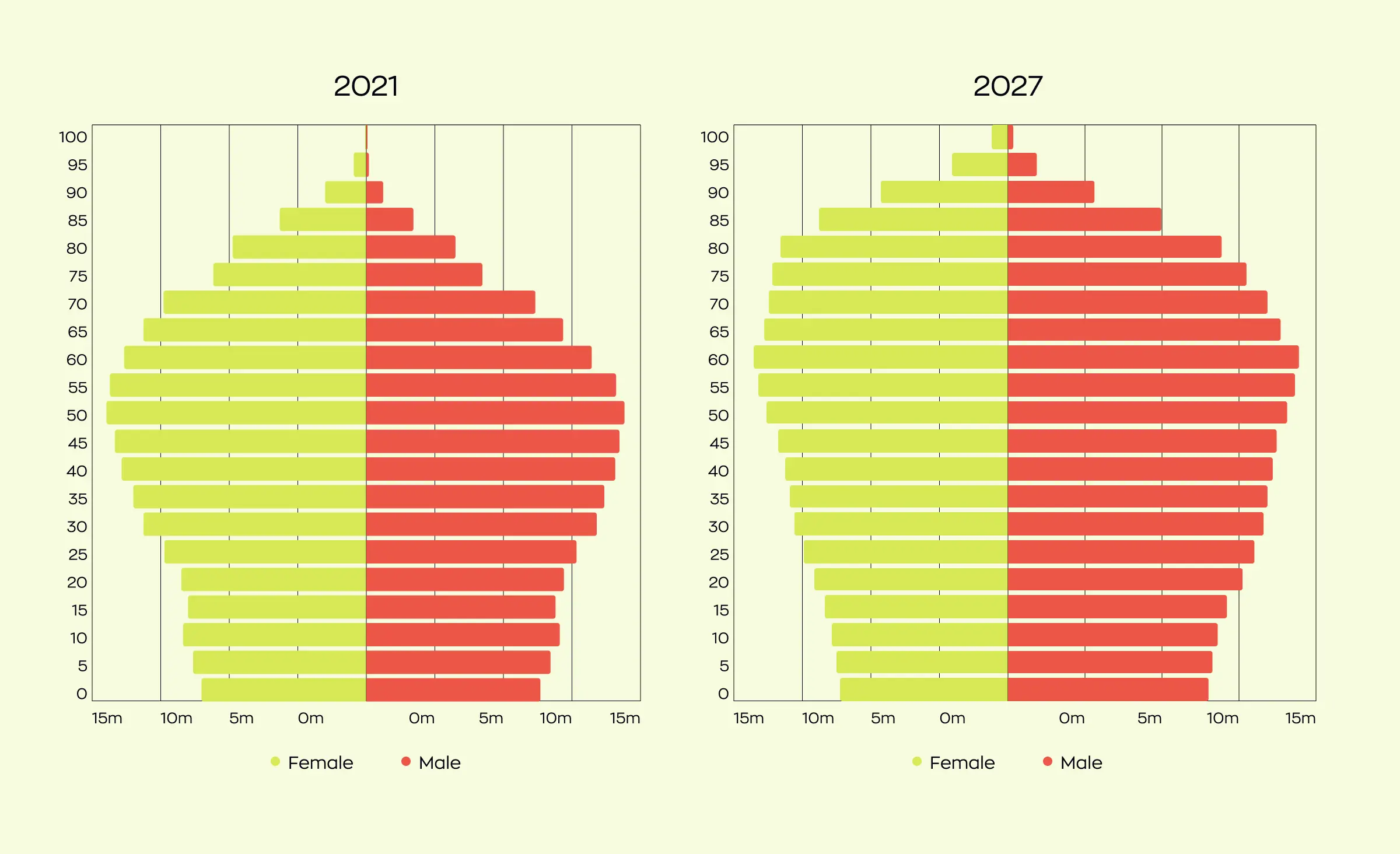
Aging populations and more chronic diseases mean the healthcare market needs new solutions. Patient needs are different, and treatments must fit each person. Generative AI supports personalized medicine by helping create care plans suited to each patient.
Routine work
Healthcare delivery faces workforce shortages. Hospitals and health centers want medical professionals to spend less time on simple tasks. AI can help by taking over some routine jobs, so healthcare professionals can focus on direct patient care.
Improving access to better healthcare
Healthcare disparities are a problem in many areas. Not every patient gets the same quality of care. With better use of health data, healthcare organizations can spot gaps and work to make care fair for all.
Better ways to test and learn
New medicines and treatments need careful testing. Clinical trials create a lot of new information, making it hard for staff to keep up. AI can help manage this data, so hospitals learn faster and provide care based on the latest evidence.
AI is helping the healthcare industry use information more wisely, work more efficiently, and deliver better patient care. By adopting AI technology, healthcare organizations can improve patient outcomes and meet new challenges with confidence.
AI for patient care and diagnostics
AI in healthcare patient care diagnostics is changing the way medical professionals help people every day. Across the healthcare industry, new tools are making it easier to spot diseases, improve diagnostics, and support patients with the best possible treatment.
Enhanced diagnostics
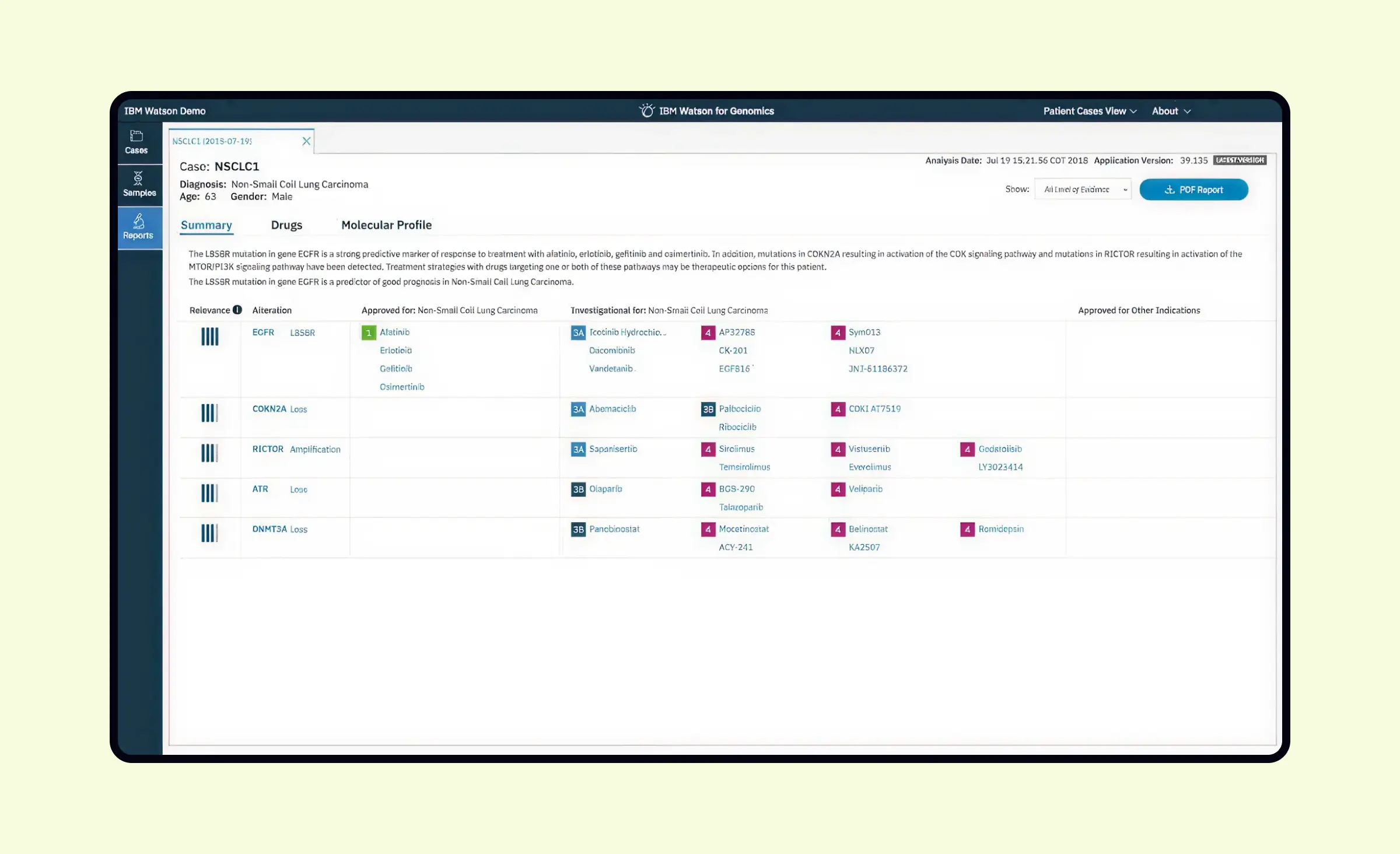
Many healthcare providers now rely on AI technology to examine and analyze medical images such as X-rays, MRIs, and CT scans. By using an AI tool, doctors can catch early signs of illness before symptoms appear. For example, AI-driven diagnostics help with disease detection for cancer, heart problems, and infections. IBM Watson is an example of an AI platform used in hospitals to assist with complex diagnostics and recommend next steps for patient care.
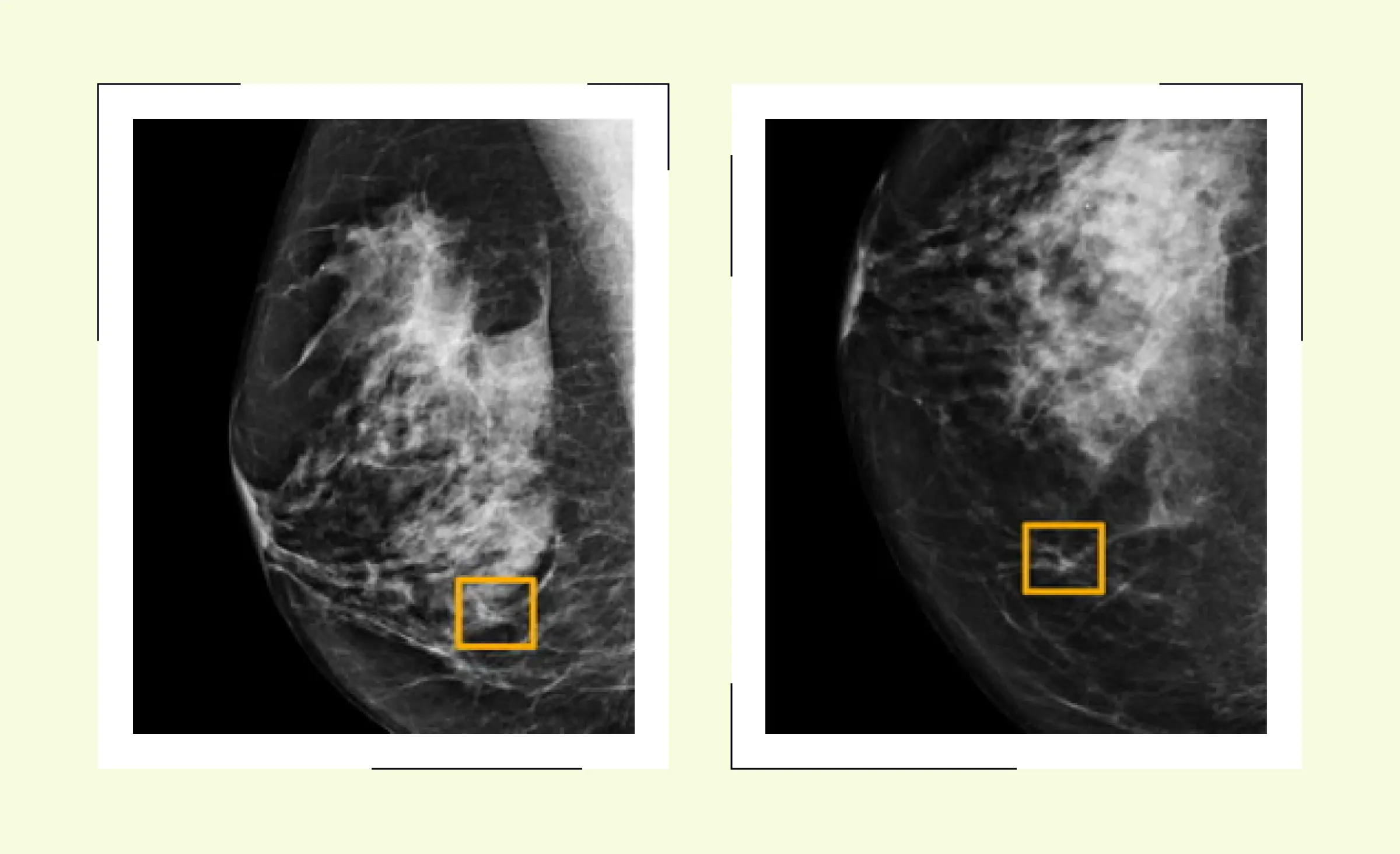
- Diagnostic accuracy: AI diagnostics can read a medical image and help find even small changes that might signal a problem. This improves diagnostic accuracy and diagnostic precision, so doctors give faster, more reliable results.
- Medical data: AI systems connect information from many sources, using patient data and medical data together with images, lab results, and clinical notes to make more accurate decisions. Healthcare diagnostics supported by AI help medical professionals spot patterns they could easily miss.
- Better outcomes: These advances help healthcare professionals and clinicians reach a better medical diagnosis, leading to improved patient outcomes.
Personalized treatment plans
AI is also making personalized medicine easier for everyone. Healthcare professionals can now use AI powered tools to look at details like genetics, lifestyle, and past conditions to create a treatment plan that fits each patient. This approach helps patients respond better to care.
An AI powered tool can suggest medicines or therapies tailored to each person, increasing patient outcomes. For patients with complex conditions, AI driven diagnostics and personalized medicine give doctors a clearer picture. This leads to the right treatments at the right time.
Remote patient monitoring and telemedicine
AI technology is playing a growing role in health care outside hospitals too. Devices and medical devices use sensors to track patient health at home and can send updates to healthcare providers.
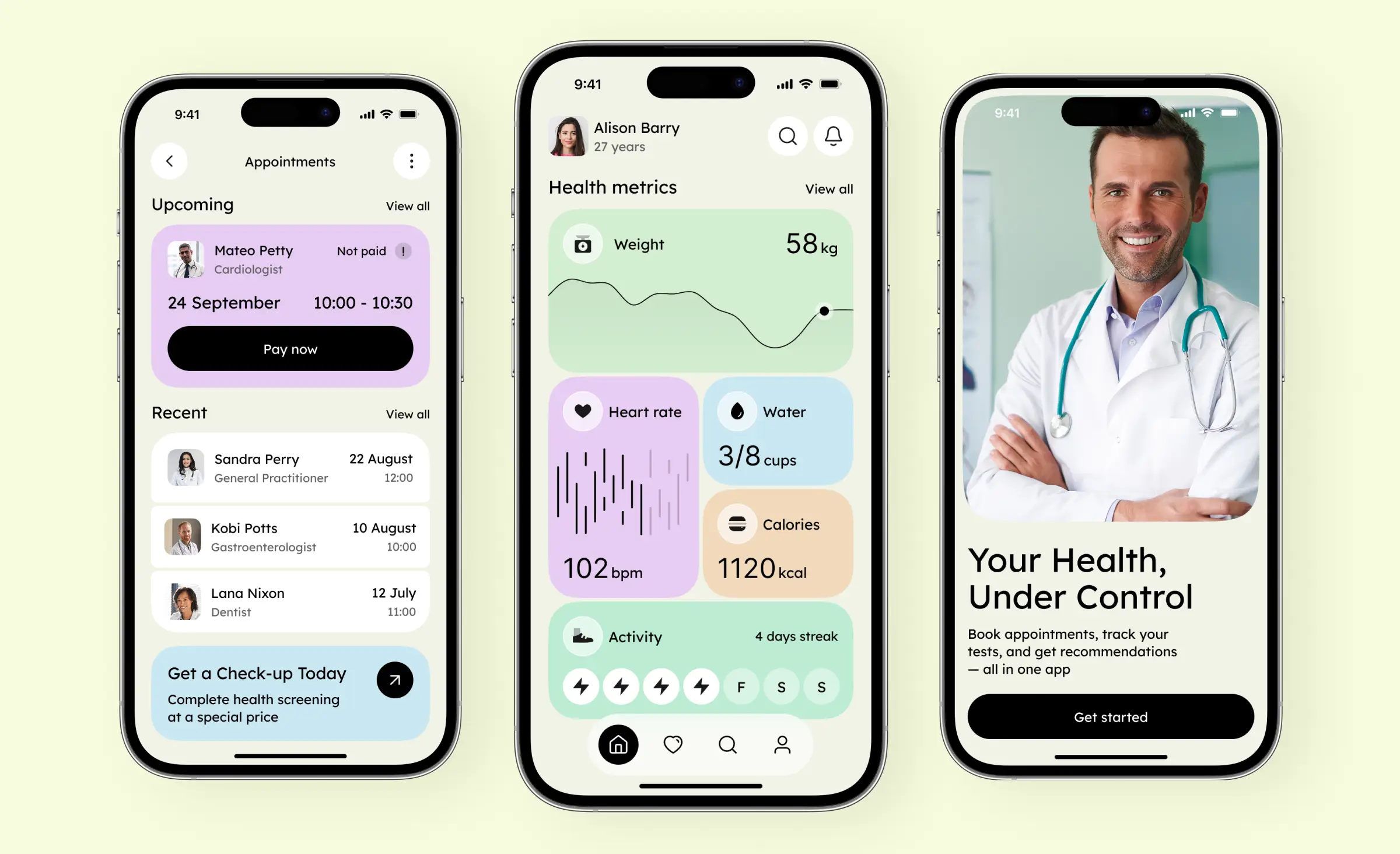
- Smart wearables and sensors can watch heart rate, sleep, and other vital data for early warning signs.
- AI tools can support telemedicine, where doctors check in with patients remotely and help with care.
- AI systems can predict negative health events early, so medical professionals can act quickly. This helps patients avoid emergency visits and improves daily care.
Robotic-assisted surgery
Surgery is another area where healthcare benefits from AI. Robotic systems can use AI to guide surgical tools, providing high precision and supporting medical professionals during complex operations. These advances reduce error, improve safety in the operating room, and help patient outcomes after surgery.
Supporting the clinical workflow
The work of clinicians is getting easier with AI. AI for patient care and diagnostic tasks fits into the clinical workflow, saving time on routine tasks like checking patient records or reviewing test results. Healthcare providers can use AI driven systems to make clinical practice more efficient. By taking care of basic tasks, AI helps healthcare professionals spend more time on direct patient care.
AI in healthcare is now a key part of both diagnostics and patient care. By combining the power of medical imaging, AI diagnostics, and personalized medicine, healthcare professionals and organizations can achieve higher diagnostic accuracy and better patient outcomes across the healthcare system. As AI tools and technology continue to grow, the future of health care will keep becoming safer, faster, and more personal for everyone.
AI for operations and administration
AI is helping healthcare organizations run more smoothly and effectively. By automating routine tasks, supporting better staff management, and keeping patient data safe, healthcare providers can spend more time focusing on patient outcomes and care.
Automating administrative work
AI can automate many everyday tasks in health care. Appointment scheduling, billing, and claims processing now take less effort from staff. AI-powered systems keep track of patient records, making it easier to enter and find information quickly. This saves time and lets healthcare professionals handle more patients each day.
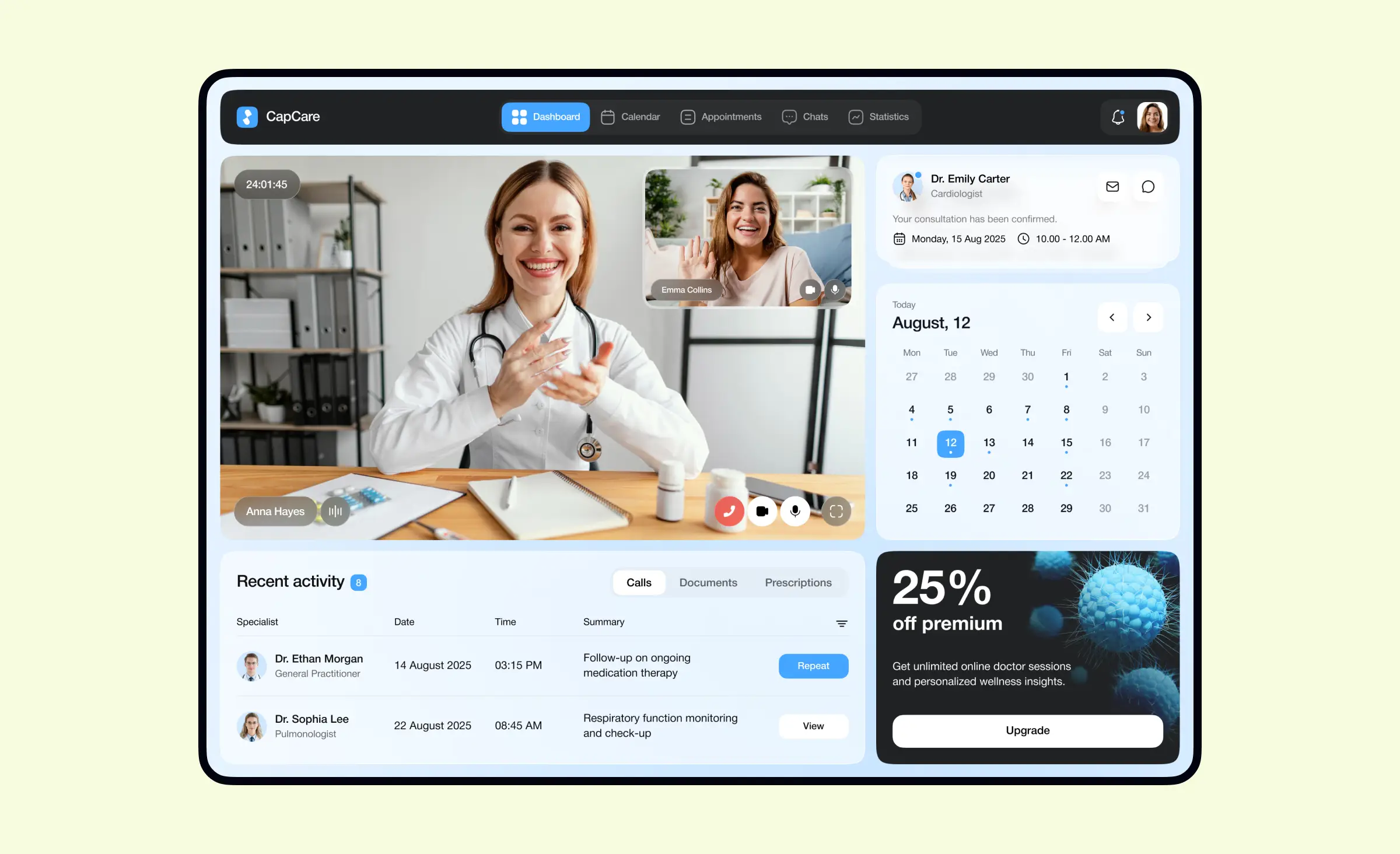
Beyond scheduling, AI also helps organize medical imaging and sorts data linked to each patient. This makes it easy to keep medical image files up to date and supports faster clinical workflow.
Smarter workforce management
Running a busy hospital or clinic takes careful planning. AI helps healthcare systems predict when more staff will be needed and builds better work schedules. By analyzing patterns in patient visits and staff performance, leaders keep departments running smoothly and avoid shortages. As a result, clinicians are able to focus on clinical practice and spend more time with patients, improving care.
Better supply, inventory, and equipment use
Healthcare organizations rely on many supplies, from medicine to devices. AI can track inventory, predict what is needed, and reduce waste. It can even spot when a medical device needs repair or maintenance. For medical imaging machines, this means less downtime and more reliable results.
Stronger security and fraud detection
Patient data protection is crucial. AI helps healthcare systems watch for unusual actions that may signal fraud or security threats. The system alerts healthcare professionals when it notices risks, helping to keep information safe. These safety steps help maintain trust and keep sensitive data protected from misuse.
Data-driven decisions
AI can quickly review large sets of patient data to find ways to boost efficiency. For example, reviewing operation data, patient records, and diagnostics reveals patterns that manual checks might miss. This helps healthcare systems build better treatment plans and spot areas for improvement.
Improving the patient experience
AI streamlines every step of the patient's journey through the healthcare system. Patients might see quicker check-in times, faster billing, and fewer delays waiting for test results. These improvements help ensure patients get the right support as soon as possible. Organizations can also use AI to support personalized medicine, so each patient's care matches their individual needs.
By using AI in day-to-day operations, healthcare systems and healthcare providers save time and money while still putting patients first. With AI tools supporting everything from workflows to clinician scheduling, the healthcare sector continues to improve patient outcomes and quality of care for everyone involved.
Regulatory compliance in healthcare
As healthcare organizations begin implementing AI, they must follow strict rules to protect patient safety and privacy. Meeting regulatory compliance standards is now a top priority in the healthcare industry.
Data privacy and security
AI systems rely on large sets of medical data and patient data to work accurately. Protecting this information is crucial, as patient records and health data must stay private. Laws such as HIPAA and GDPR create strong rules to keep sensitive details safe and support trust in health care. Without these safeguards, breaches and risks could harm both patients and healthcare providers.
Reliability in AI tools
Healthcare professionals depend on each AI tool to deliver safe and reliable results. Before anyone can use an AI-powered medical device in hospitals or clinics, it must meet industry standards and pass approval from regulators. IBM Watson, for example, passed strict reviews before entering clinical practice. By following these checks, hospitals know the tools they use offer consistent benefit to patient outcomes and daily operations.
Addressing bias and algorithmic fairness
All healthcare diagnostics, from laboratory tests to AI-based disease screening, must be fair for everyone. If an AI system uses incomplete training data, it may show bias or produce less accurate results for certain groups. Healthcare systems are challenged to prevent this by using diverse clinical trials data, continually reviewing results, and ensuring all patient groups get quality care.
Human oversight
Good healthcare still depends on clinicians and healthcare professionals using their experience to review AI recommendations. While modern tools speed up diagnostics and can guide treatment plan choices, the final medical decisions must come from skilled humans. Keeping a human-in-the-loop makes AI safer and more transparent for everyone.
Staying updated with changing laws
Health care technology moves fast, and so do the rules. Healthcare professionals and providers need ongoing training to keep up with new laws about AI. Hospitals also need clear processes for introducing new AI systems, monitoring performance, and updating practices as guidelines change.
Strong rules for implementing AI help healthcare organizations unlock the benefits of smart technology while protecting patients and upholding public trust. By following regulatory compliance standards, medical teams can use AI tools like IBM Watson and other healthcare diagnostics confidently, ensuring safer care and better results for all.
How can Ronas IT help
At Ronas IT, we help healthcare providers to use AI technology for smarter, safer, and more efficient patient care. We offer custom medical software development, UI/UX design, and DevOps services for supporting software after launch.
Custom AI and diagnostics solutions
Our developers create custom solutions for medical diagnostics and AI diagnostics. Whether building AI powered tool integrations or enabling AI driven diagnostics, we support every step — from connecting patient data to linking medical imaging and medical device results. We create systems to help healthcare professionals and clinicians get fast, accurate insights in clinical practice.
Integrations
We integrate clinical workflow tools with EHRs, patient records, and healthcare systems for seamless operation. We only use proven and reliable integrations to make sure your software is secure and complies with needed regulations.
Security and regulatory compliance
Reliable storage for medical data and strict adherence to compliance standards such as HIPAA and SOC2 are fundamental. We protect sensitive patient information and ensure each AI system is secure, giving healthcare organizations peace of mind.
Strategic consulting
From implementing AI to integrating the latest digital tools, our experts advise on building and scaling secure solutions. If you don't know which processes can be optimized with AI, we can help you figure it out.
Case studies
Web platform for analyzing lab test results
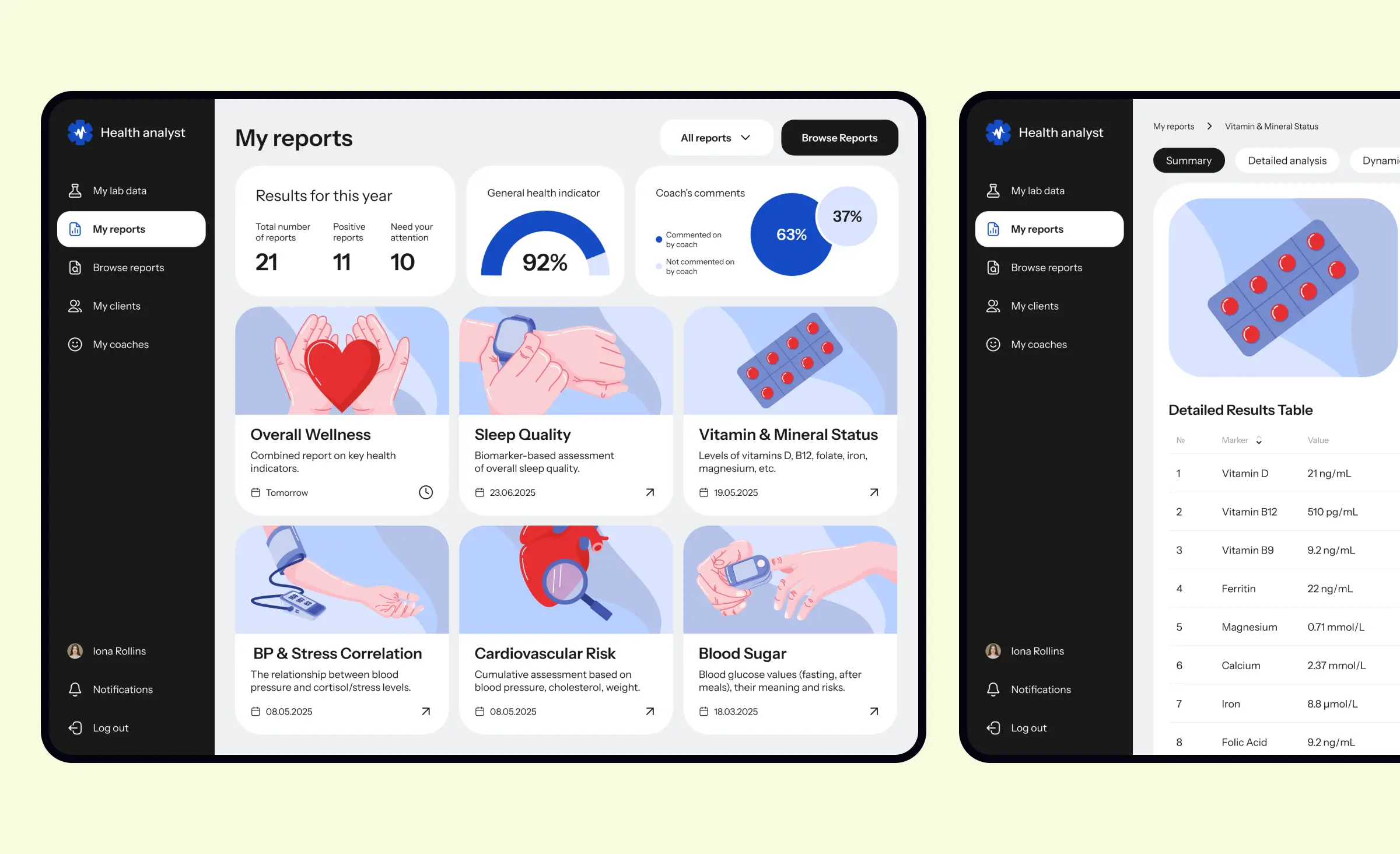
We developed a custom, HIPAA-compliant web platform from scratch that allows patients to upload, organize, and interpret their lab test results with input from healthcare professionals. The solution features an intuitive user interface, secure data storage, payment integration, and a flexible admin panel for scaling and partner branding. By building secure infrastructure, integrating advanced analytics, and ensuring regulatory compliance, we helped our client offer personalized health insights to users and expand their platform to other healthcare businesses. All development was completed under NDA, adhering to strict privacy and medical data protection requirements.
AI-integrated tool for creative professionals
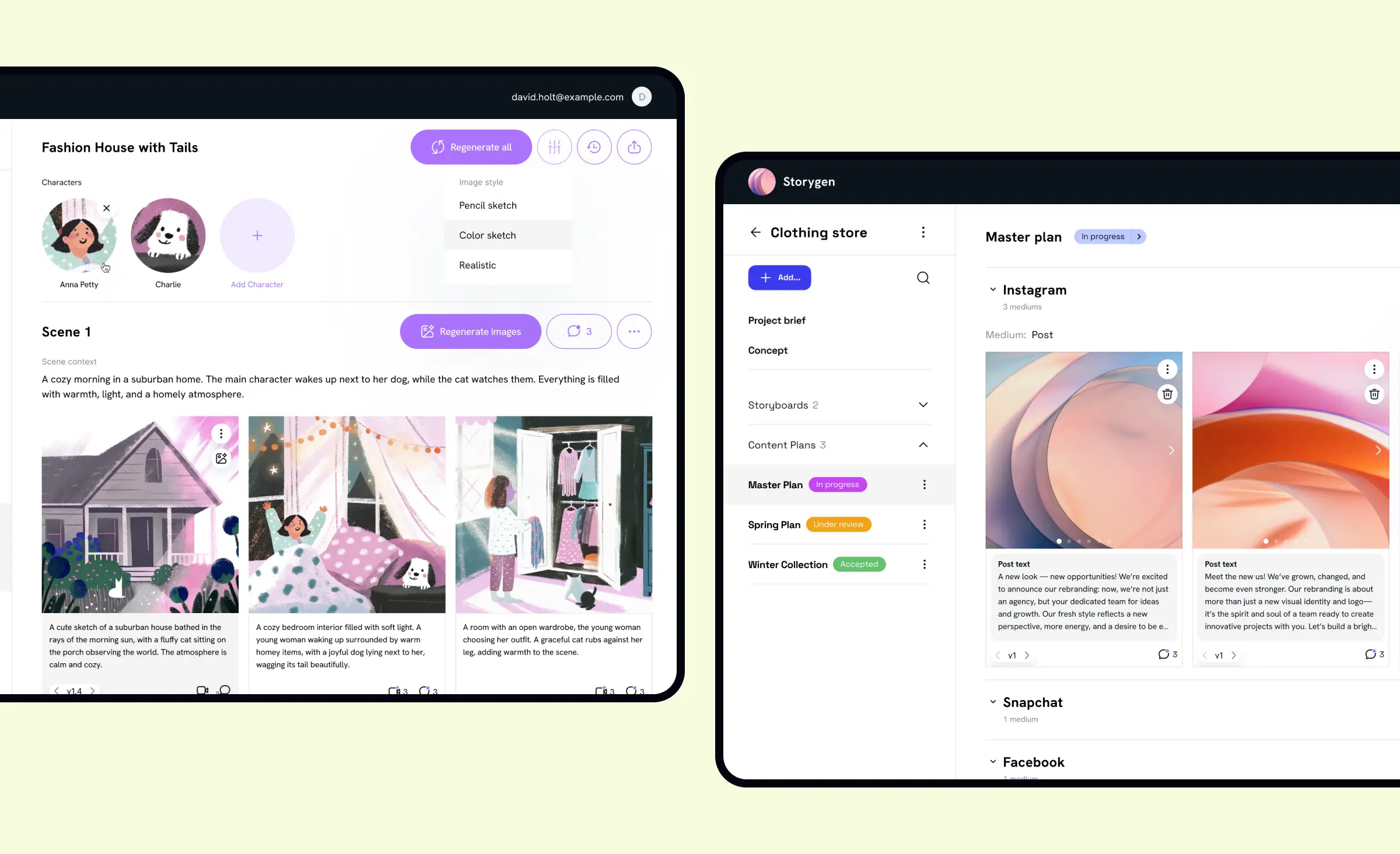
We developed an AI-powered web application that enables creative teams to automate video storyboard generation, content planning, and collaboration through generative AI. Our team identified processes where AI integration would save the most time, guided the client through effective adoption, and designed an intuitive, user-friendly interface tailored for creative professionals. The project resulted in a scalable, consistent solution for automated scenario and image creation, while remaining compliant with the client's privacy and workflow requirements. All work was completed under NDA and delivered to the client's development team within four months.
To conclude
AI in healthcare is changing the way healthcare providers deliver patient care, diagnostics, and run their operations. Today's healthcare systems face big challenges, but AI helps healthcare professionals, clinicians, and medical diagnostics teams work smarter and more efficiently to improve patient outcomes.
Healthcare professionals can now use AI tools for better diagnostics, building personalized treatment plans, and managing clinical practice with less effort. AI technology helps turn patient data into real insights, which supports a stronger healthcare system and better care for everyone.
By implementing AI, health care organizations can make sure patients get safer, faster, and more personalized medicine. With smart tools in place, healthcare professionals can focus on what matters most — quality patient care and better results with every treatment plan.
At Ronas IT, we're ready to help healthcare providers put these technologies to work, making clinical practice simpler and more effective. Working together, we create healthcare solutions that are more precise, secure, and centered around each patient's needs.
Related posts









Related Services
Development
React Native App Development Services


Development
MVP Development Services

Development