Implementing generative AI in business: Use cases and development considerations


Powerful generative AI tools are rapidly changing the way businesses operate, from content creation to customer communication and product development. Behind these changes are advanced generative AI models that can analyze information and actually generate new ideas, text, images, code, and more. Modern businesses now rely on artificial intelligence to get ahead, and a well-trained AI model can automate complex tasks, deliver instant insights, or spark true innovation.
But with opportunities come new questions. How does a company select the right generative artificial intelligence solution or gen AI framework? What's the best data strategy for adopting agentic AI systems, or for integrating a large language model into daily workflows? As AI capability and AI use grow, business leaders need to ensure that every generative model delivers value — while also staying safe, scalable, and secure.
In this article, we'll explore the realities of AI business integration, including why generative AI matters, the most valuable business cases, and what to consider for a successful implementation.
What is generative AI and why businesses need it
Generative AI is a fast-growing branch of artificial intelligence. Unlike traditional AI tools that only analyze existing information, generative AI can actually create new content — such as text, images, music, code, or even videos. Gen AI systems can produce results on demand after they study patterns in large amounts of data.
Some of the most popular generative AI models include large language models which understand and create human language. These models are trained on huge libraries of books, websites, and articles, allowing them to write articles, answer questions, or generate email drafts that sound natural and personalized. There are also generative AI models for images, voice, and design.
How does generative AI work?
At the heart of every generative artificial intelligence system is an AI model. Common types include large language models and other generative models that each specialize in a certain type of content. For example, one AI model might generate new website layouts, while another creates marketing content or even realistic product images.
Businesses can use agentic AI, which refers to intelligent systems that go beyond simple automation. These systems can make decisions, solve problems, and act independently to handle tasks for your company.
A strong data strategy is the foundation for effective AI use in your organization. Good data helps generative AI models produce accurate results and ensures your outputs match your company's expectations.
Why businesses need generative AI
- Competitive advantage: Companies using generative AI get ahead of their rivals by bringing new products to market faster.
- Operational efficiency: Gen AI can handle high-volume, repetitive tasks, freeing up teams to focus on important challenges.
- Improved decision making: With access to smart agentic AI and a solid data strategy, businesses make sharper, data-driven choices.
In short, generative AI models and their advanced capabilities offer business leaders a powerful new set of tools. Companies that invest in these technologies can deliver more value, boost creativity, and seize new market opportunities.
Use cases for generative AI in business
Generative AI offers a wide variety of practical applications that can help businesses across industries. Companies are already finding new ways to boost efficiency, creativity, and engagement using this advanced technology. Below, we highlight some of the most popular and valuable use cases for generative AI in real-world business settings.
Content creation and marketing
Marketing teams use generative AI to automate time-consuming tasks like writing social media posts, drafting blog articles, or designing engaging ad copy. For many businesses, a generative AI application can produce content in seconds that used to take hours or even days. Personalized email campaigns are also possible, helping companies connect with their customers on a more individual level. With the right generative AI tool, you can generate headlines, summaries, and even entire articles tailored to your audience.

An AI-powered video conferencing app designed by Ronas IT Customer service
Generative AI is also transforming customer service. AI agents can handle customer questions, offer support, and even resolve issues 24/7. They deliver personalized answers and adapt to different customer needs. AI tools can also generate dynamic frequently asked questions (FAQ) articles, provide automated troubleshooting tips, and keep your customer knowledge base up to date. This use of AI application technology helps improve customer interaction and boosts both satisfaction and loyalty.
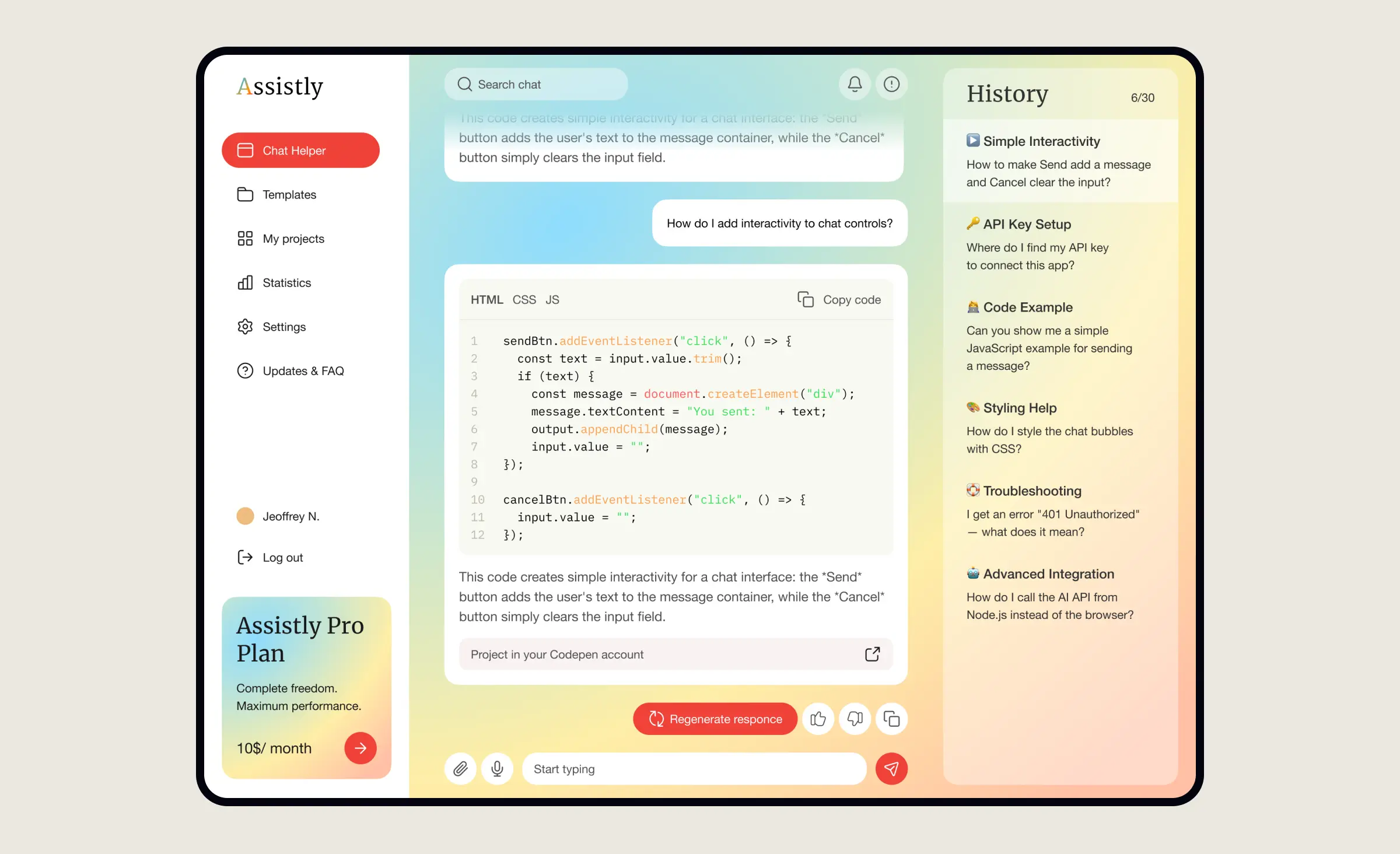
An example of a customer support chatbot designed by Ronas IT Software development
Software teams use generative AI solutions to write and optimize code, generate documentation, or even build testing scripts. Automated coding tasks powered by a generative model can reduce development time and free up developers to focus on creative challenges. AI outputs can include clean, well-documented functions and code comments, making it easier to manage large projects.
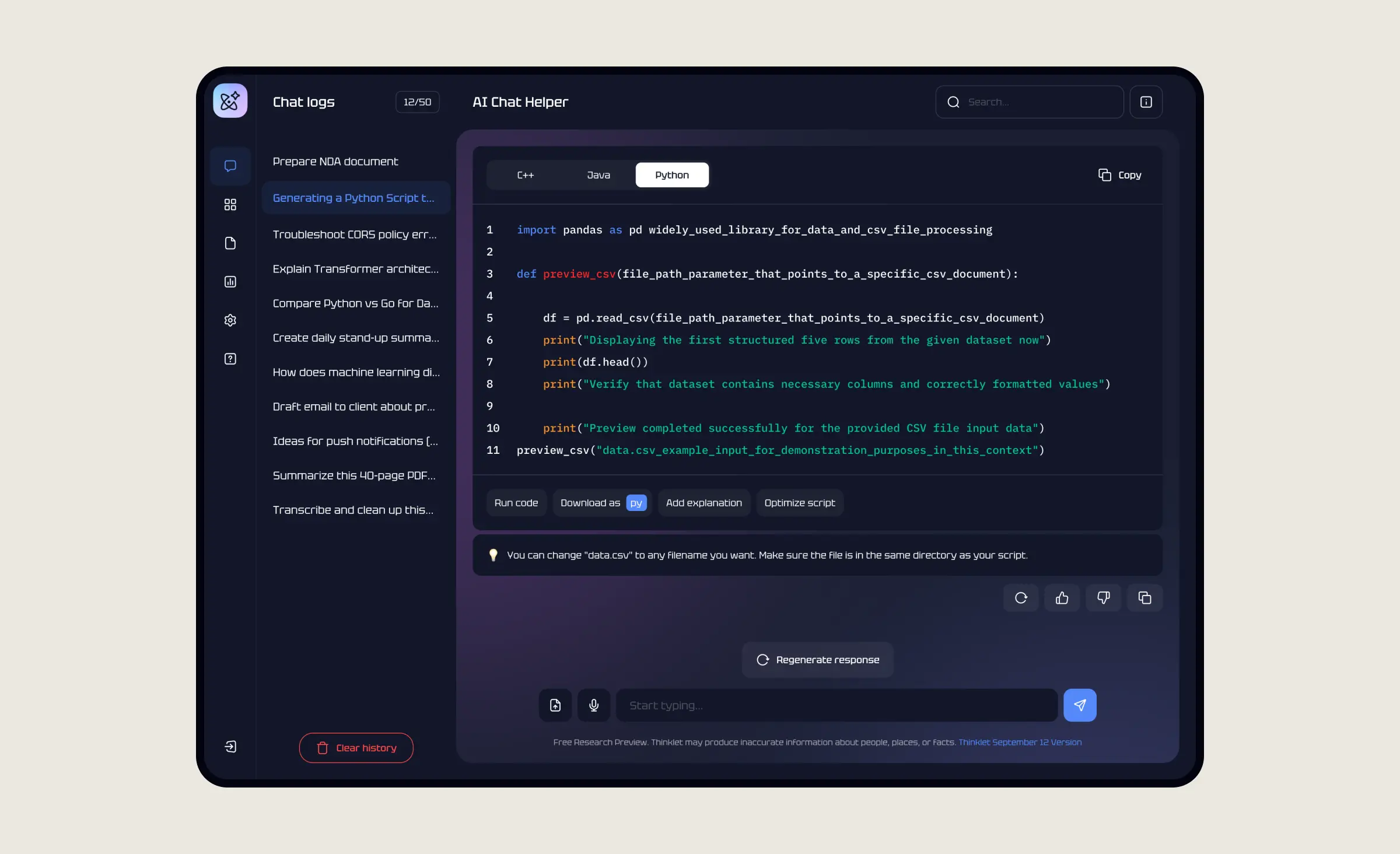
AI chatbot for software development designed by Ronas IT Creative industries
Generative adversarial networks, a specialized type of generative AI tool, help designers create realistic images, textures, and even new design concepts based on simple prompts. Creative professionals often use these AI solutions to experiment quickly with styles, try variants, and automate asset creation. As a result, design teams can generate visual content faster and with more variety than ever before, driving greater customer engagement.
Data analysis
Business analysts use generative AI to turn complex raw data into clear, natural language reports. AI initiatives here include tools that create summaries, trend analyses, and easy-to-read dashboards. With data analytics powered by a generative model, it's much simpler to spot patterns and opportunities. Synthetic data, which is realistic but doesn't come from actual customers, allows companies to safely test new processes or comply with privacy requirements. Many organizations also combine these outputs with insights from platforms like Google Analytics to optimize their strategies.
How to implement generative AI in business
Generative AI can help companies improve products, automate tasks, and deliver new value to customers. Still, a successful gen AI project requires thoughtful planning, careful execution, and ongoing attention to best practices.
Build a strong data strategy
The backbone of any successful generative AI solution is the data it learns from. Companies need to focus on gathering high-quality, relevant information to train or fine-tune generative AI models. Proprietary data gives businesses an edge, but it also demands strict standards for data security and privacy.
When it comes to AI implementation, strong controls over access and usage play a vital role in protecting your customers' information and protecting your intellectual property. Business leaders should set clear data policies before they launch any new AI initiative.
Select and integrate the right models
There are several options for bringing gen AI into your existing processes. You might use open-source solutions, connect with commercial APIs, or invest in custom model development. Each approach has its own pros and cons.
During the integration phase, it's important to make sure the chosen generative AI technology works seamlessly with your current business process and tools. This might involve linking APIs or adopting microservices to create flexible, scalable AI solutions. Infrastructure needs can vary, especially if software development teams must support rapid growth.
Focus on ethics and responsible AI
Ethical issues should not be overlooked in the rush to adopt generative AI. Business leaders need a clear AI strategy that guides responsible use, keeps human judgment in the loop, and addresses risks like bias or unfairness. Transparency is a must for building user trust, so it should be clear how the generative AI model reached certain conclusions. These best practices of responsible development include reviewing the outputs of AI algorithms for accuracy, fairness, and reliability.
Optimize performance and costs
While gen AI can unlock new value, these systems can consume serious computational resources if not managed well. To control costs and maintain operational efficiency, balance model complexity and output quality with the speed of real-time ai application. Keeping track of both performance and expenses requires regular monitoring and clear guidelines for future AI investments. Teams will also need to grow their generative AI skills as tools evolve, making training and hiring another important part of your strategy.
With careful planning and a focus on strong data, ethical safeguards, and robust integration, businesses can harness generative AI to streamline operations and drive innovation. The result is smarter workflows, better outcomes, and the chance to stay ahead in a rapidly changing landscape.
How can Ronas IT help?
When it comes to implementing generative AI in business, having the right partner is key. At Ronas IT, we guide companies through the full cycle of gen AI adoption — from planning to UI/UX design and development.
AI consulting
We support clients at every stage of their AI journey. We offer in-depth consulting to help you define a clear AI strategy that fits your business model, goals, and existing processes. Our AI expertise ensures your next moves are both technically sound and aligned with industry best practices.
Custom generative AI model development
We design and deliver custom generative AI services tailored to your needs. Our engineers have hands-on experience with the latest AI technology, building everything from document generators to advanced conversational agents. If your business needs a unique gen AI solution, we develop it — from the ground up or by fine-tuning proven AI models.
Conversational AI and chatbot development
Our deep background in NLP and NLU allows us to develop AI agent solutions that truly understand user context and intent. We focus on building intuitive, user-friendly conversation design that fits smoothly into business workflows, ensuring a natural experience for your customers and staff.
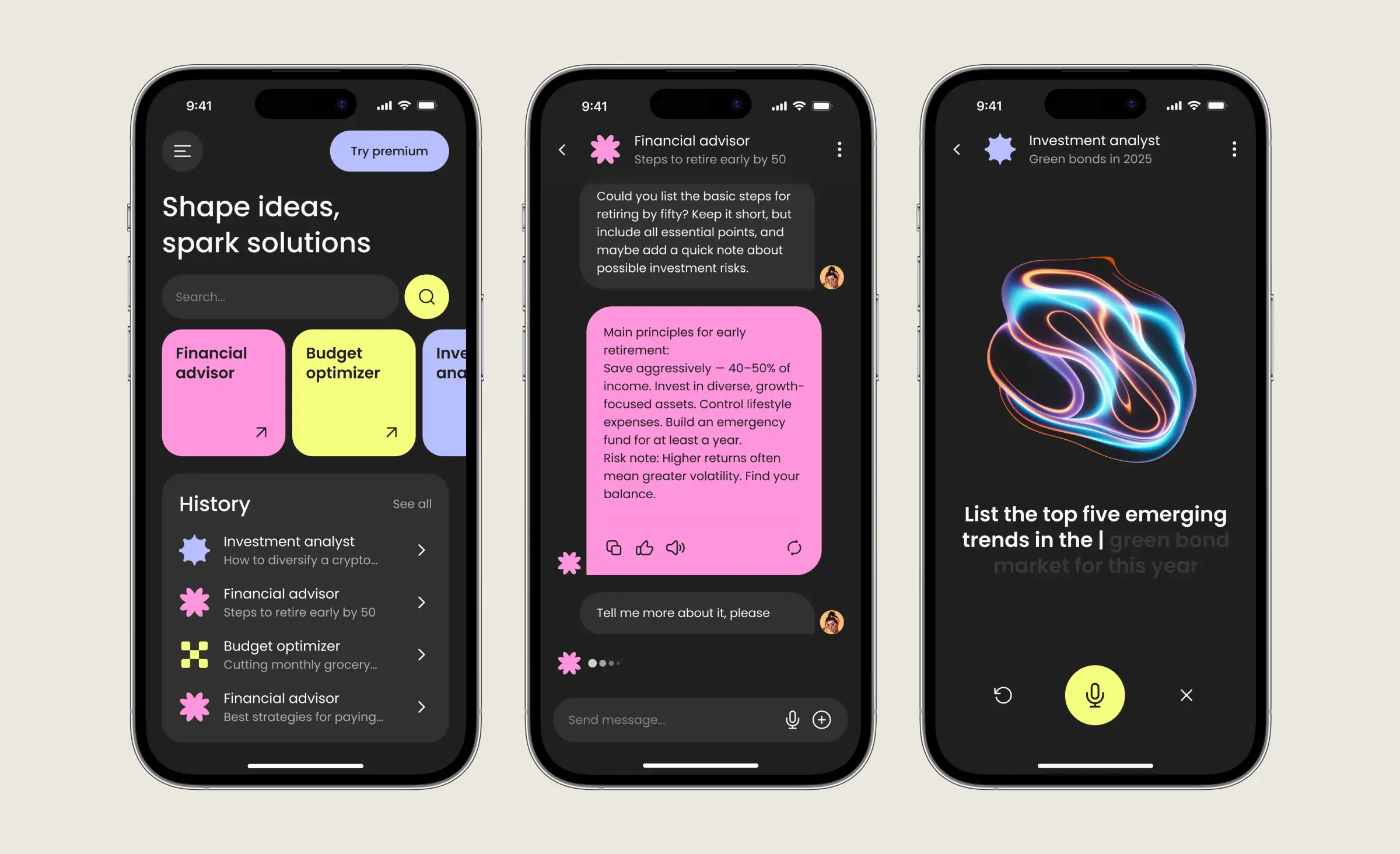
Seamless integration
Our team can integrate generative AI right into your current products or digital infrastructure. Whether you're looking to connect powerful AI tools to your CRM, ERP, messenger, or web platform, we make it seamless. Every AI system we build is designed for high scalability and handles thousands of requests without a drop in performance.
Secure AI deployment
Every project we take on follows strict security and ethical guidelines. As part of our generative AI adoption services, we help teams choose responsible techniques, mitigate bias, and safeguard sensitive data — so your business can innovate confidently.
With Ronas IT, you get world-class AI tools and services starting at $40 per hour, and projects typically launch from 4 months. We give you a clear roadmap and tangible results every sprint, so you know what to expect.
Our AI implementation cases
AI-integrated tool for creative professionals
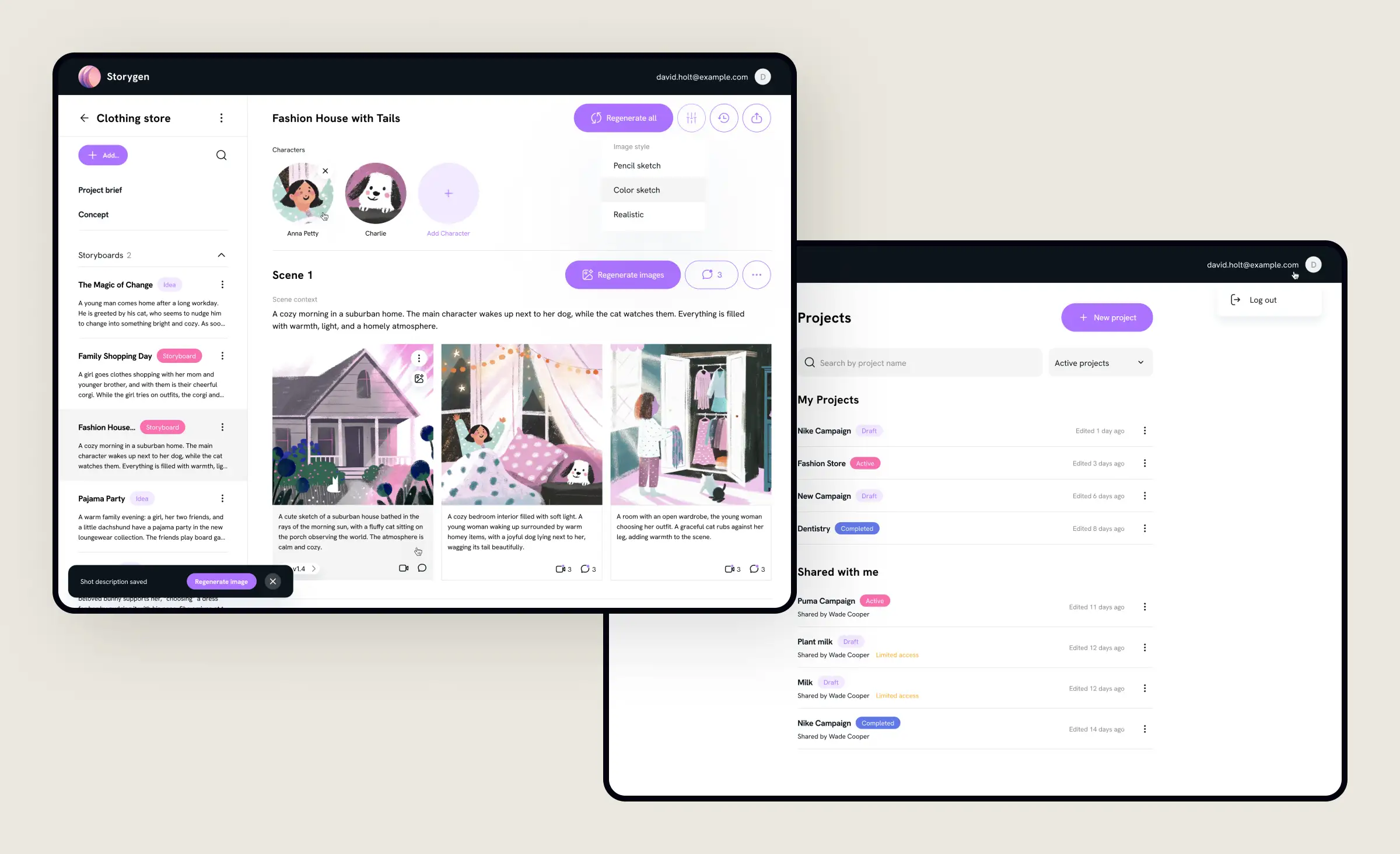
We developed a collaborative AI-integrated web app for a creative agency owner from Saudi Arabia, designed to help screenwriters, designers, and copywriters generate video storyboards, texts, and images more efficiently. Our team conducted in-depth analytics to identify which business processes would benefit most from generative AI, then created an intuitive UX/UI and provided guidance on AI integration. Working closely with the client, we ensured the app's features and workflows were tailored to creative professionals and easy to expand in the future. As a result, the client received a ready-to-develop app concept and a scalable interface.
Habit-formation app
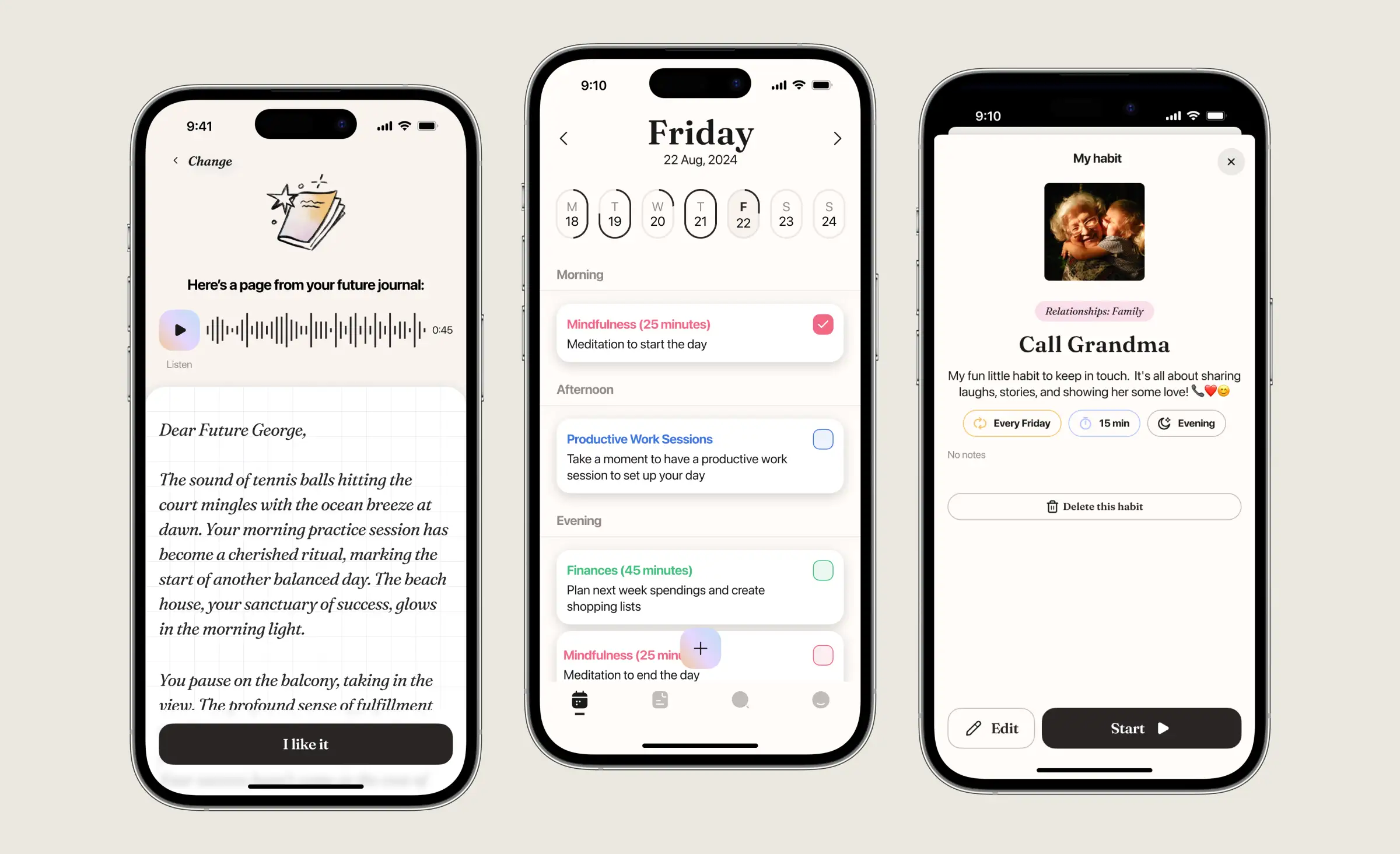
We partnered with a UK-based client to design a neuroscience and AI-powered habit-formation app focused on personal growth and mental well-being. Our team guided the client through every step of the process, from selecting illustration styles to structuring onboarding flows and ensuring the app's logic would support future AI-based journaling features. By collaborating closely, we created a user-friendly, scalable interface in Figma — complete with branding assets and a robust UI kit. This groundwork will help the client smoothly integrate AI functionalities as the project evolves.
Neobank app
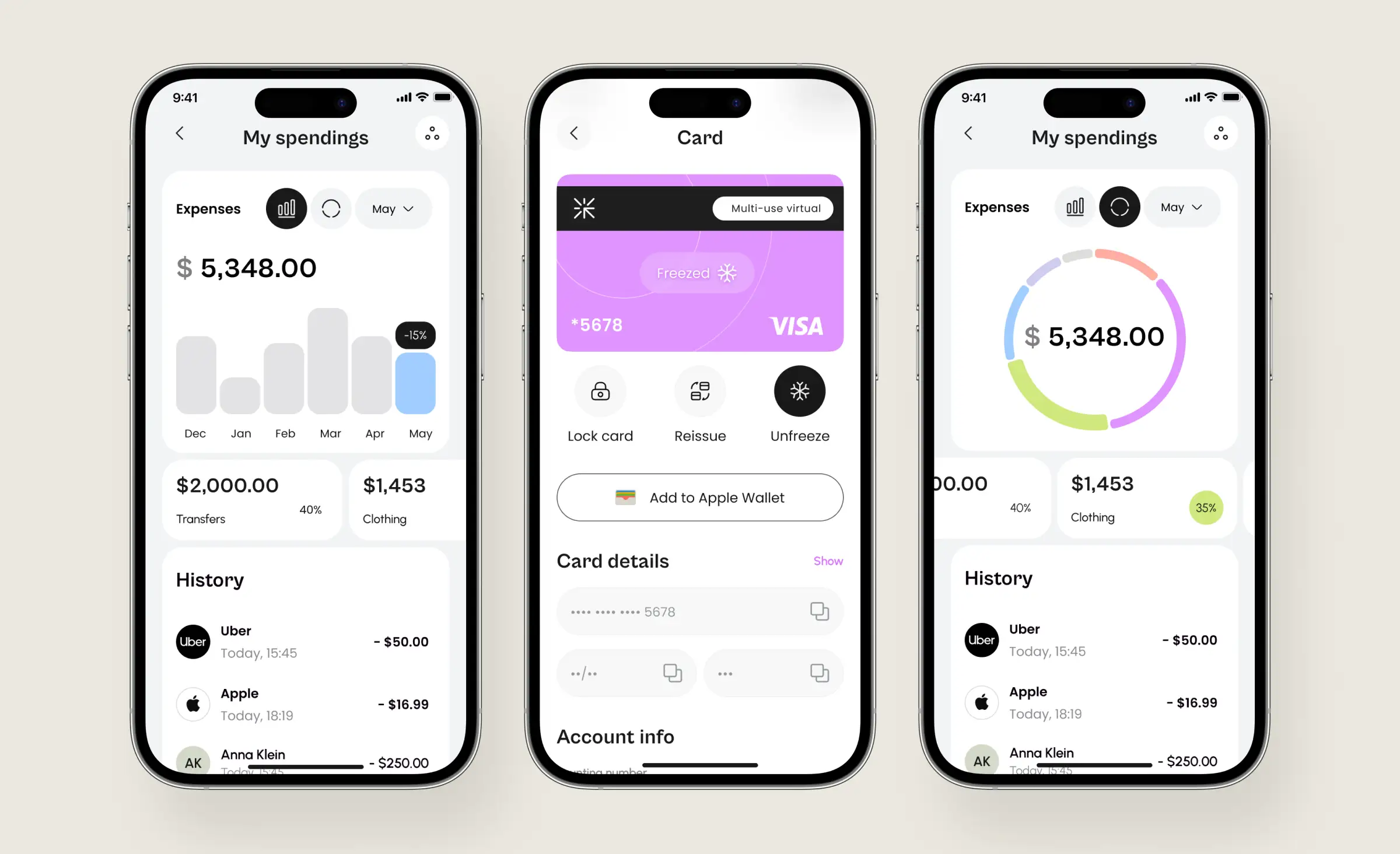
We developed a mobile neobank app for a UAE fintech client, providing both banking and investment functionalities tailored to the region's unique regulatory and technical requirements. Our team supported the client in selecting suitable BaaS solutions, created an intuitive minimalist UI/UX, and managed the entire development process using React Native and Laravel. In addition to robust analytics and compliance-focused infrastructure, we integrated a multilingual AI assistant chat for fast user support and financial queries. The result is a secure, scalable application ready for future expansion with new investment modules.
Conclusion
Implementing generative AI in business is no longer a distant goal — it's a powerful strategy for growth, innovation, and efficiency across industries. As we've discussed, companies that embrace gen ai see dramatic improvements in both productivity and creativity. With the help of a robust generative AI model, businesses can streamline processes, create personalized experiences, and bring new ideas to life through high-quality AI outputs.
Whether you're interested in automating workflows, building engaging customer journeys, or developing unique AI generated content, the potential applications of generative AI are only growing. Smart AI use lets your teams focus on what matters most while AI handles routine or repetitive work, providing support at every level of the organization.
To stay ahead in today's fast-moving digital landscape, consider exploring how generative AI can drive positive change in your business. If you're ready to launch your own gen AI project or want to get more value from your existing data, partnering with experienced professionals will help you get real results, transforming both daily operations and long-term strategy.
Related posts












Related Services
Development
React Native App Development Services


Development
MVP Development Services

Development